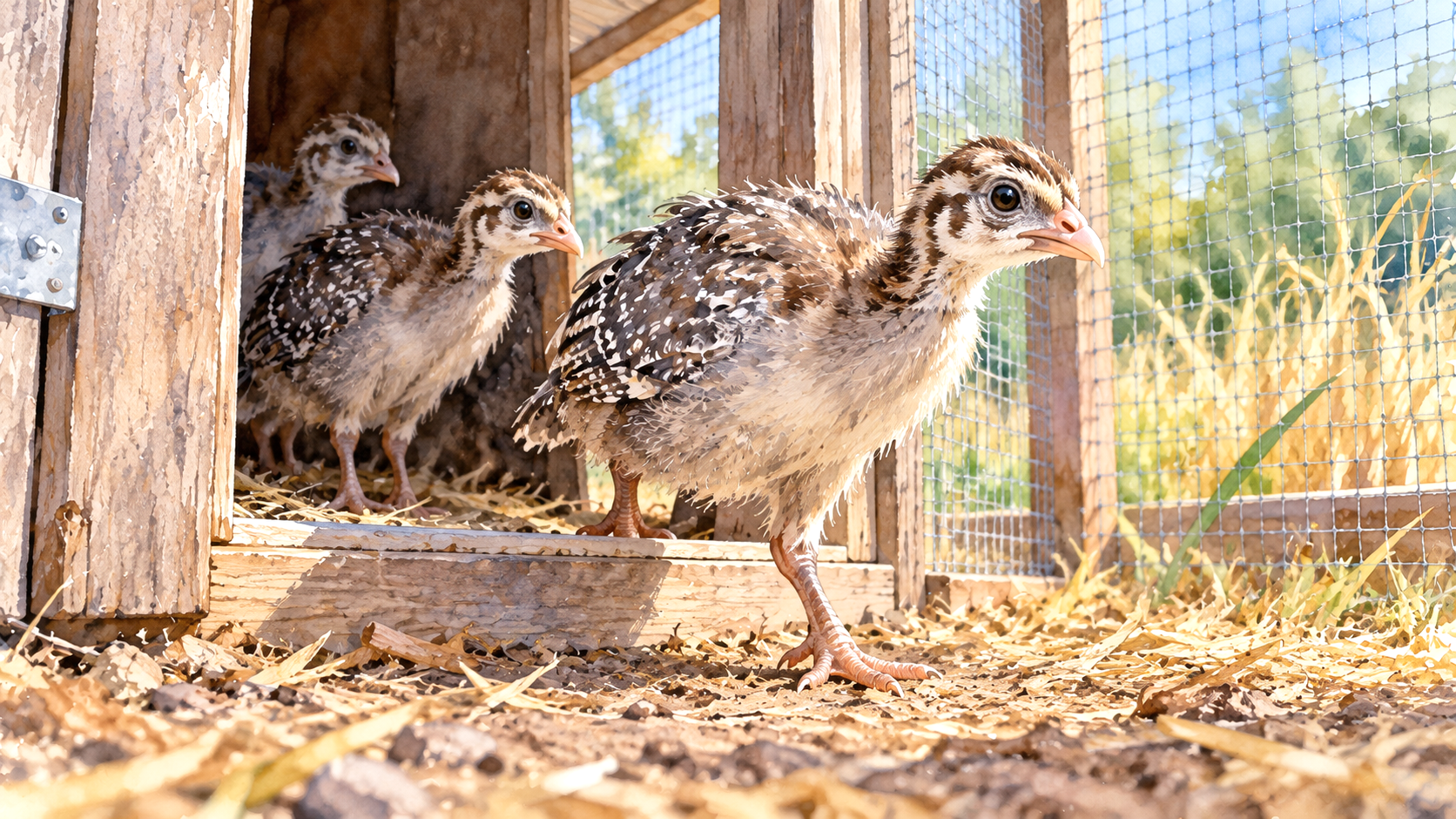
A sunny afternoon can make the outdoors look inviting for young guinea fowl, but air temperature alone does not tell you whether the birds are ready. A keet with exposed down, a wet belly or little experience away from its familiar enclosure can become chilled even when an adult guinea fowl is comfortable.
Guinea keets are generally ready for regular outdoor housing around six to eight weeks of age, once they are fully or nearly fully feathered and the weather and shelter are suitable. A common conservative recommendation is to wait until approximately eight weeks. Brief supervised visits may be possible earlier in warm, dry conditions, provided the keets are healthy and can return immediately to appropriate shelter. Age alone should never determine the decision.
What Age Can Guinea Keets First Go Outside?
Outdoor exposure and permanent outdoor housing are not the same. A short supervised visit to a sheltered pen on a mild day is a limited experience; staying outdoors overnight requires the birds to tolerate the coldest conditions they will encounter without becoming chilled.
The usual guinea keet outdoor transition period is around eight weeks, when most birds have developed substantial feather coverage. Some well-feathered keets can begin brief outdoor exposure sooner when the ground is dry, the air is mild and the visit is continuously supervised. Conversely, late-feathering birds or those facing cold nights may need more time indoors.
| Development stage | Outdoor-readiness interpretation |
|---|---|
| Newly hatched to two weeks | Keep protected; moisture and chilling are especially dangerous |
| Partly feathered young keets | Only consider very brief supervised exposure if genuinely warm and dry |
| Mostly feathered juveniles | Gradually acclimate in a secure pen during suitable weather |
| Fully feathered, approximately six to eight weeks or older | Consider regular outdoor housing if nighttime weather, shelter and security are appropriate |
This is a framework, not an instruction to expose every two- or four-week-old keet to outdoor conditions. The vulnerability of newly hatched guinea fowl to damp grass is particularly pronounced during the first two weeks, and a brief outdoor outing offers no benefit if it creates a chilling risk.
How Much Feathering Is Enough?
Check the entire body, not just the wings. A keet may grow impressive wing feathers while its back, belly, chest or neck remains substantially covered in soft down. Those areas still offer less insulation than a feathered juvenile’s body covering. The week-by-week changes in guinea keet plumage help distinguish early wing development from widespread feathering.
Well-feathered keets generally have juvenile feathers across their bodies and can move normally without continually seeking a heated resting spot in suitably mild surroundings. Still, feathers do not make young birds waterproof or immune to cold drafts. Judge the least-developed member of the group rather than moving all birds because the largest keets look ready.
Check Weather, Ground Conditions and Overnight Lows
A safe outdoor day is mild, dry and relatively calm, with shelter from direct sun and wind. Cold rain, wet vegetation, muddy ground and strong drafts are poor conditions for a keet’s first exposure. Even after the earliest vulnerable weeks, soaked feathers and wet flooring increase heat loss. The special susceptibility of guinea keets to dampness is a reason to wait for genuinely dry ground rather than relying on the forecast alone.
For regular outdoor housing, check nighttime low temperatures, not only afternoon highs. A warm daytime reading can be followed by a sharp drop before sunrise. There is no single outdoor air-temperature threshold that makes every guinea keet safe: feathering, wind exposure, humidity, the availability of a dry sheltered sleeping area and prior acclimation all affect tolerance. The environmental conditions that influence young poultry comfort make a sheltered microclimate more useful than a generalized weather number.
When temperatures are fluctuating widely, postponing a permanent move is safer than expecting the birds to adapt to sudden cold. The separate decision about ending supplemental brooder heat should be resolved using the actual temperatures the birds experience; a keet comfortable inside without heat may still find an exposed outdoor pen too cold.
Prepare a Secure Space for First Outdoor Visits
Use a fully enclosed, predator-resistant pen close enough to supervise easily. The floor should be dry and free of standing water, deep holes, loose wire or objects where a keet could become trapped. Provide a sheltered section with dry footing and both sun and shade. The outdoor housing needs of young guinea fowl include secure confinement because guineas become capable of escaping ordinary open-topped pens.
Check mesh openings at bird level as well as overhead. Juvenile keets may slip through gaps that easily contain an adult, and a predator can reach through weak mesh. The risks posed by common guinea fowl predators are relevant even during a short visit: adult birds, domestic pets and wildlife should never have unrestricted access to an unfamiliar young flock.
How to Introduce Keets to the Outdoors Gradually
Choose a calm, comfortably warm part of the day after the grass and ground have dried. Begin with a short, closely supervised visit to the secure pen rather than leaving keets outside for hours. Watch how they walk, explore, call and react to shelter. Return them inside before they become chilled or overtired; do not treat a short visit as a test they must endure.
If the birds remain comfortable, repeat the experience on similarly suitable days and gradually increase exposure. Extend time based on their behavior and changing conditions, not a rigid minute-by-minute schedule. If the weather turns windy or wet, shorten or cancel the outing. The broader care needs of developing guinea keets continue during acclimation, including access to safe water, appropriate food and observation for distress.
Avoid chasing keets into the pen, repeatedly carrying them between unfamiliar noisy settings or allowing unsupervised wandering as part of acclimation. Predictable, low-stress exposure makes it easier to see whether the birds are coping with the environment.
Signs a Keet Should Be Taken Back Inside
A keet that persistently huddles, shivers, gives repeated distress calls, stands fluffed and inactive or struggles to keep up may be too cold or otherwise unwell. A bird panting with wings held away from its body or repeatedly seeking shade may be overheated. Brief curiosity and alert calling are not inherently problems, but persistent abnormal behavior warrants ending the outing.
Move distressed keets to a suitable protected environment promptly. Wet or chilled birds need safe warmth; an unresponsive bird, one that cannot stand or one that does not improve needs veterinary assessment. Recognizing abnormal guinea fowl health signs is important because illness and chilling can look similar.
When Is Permanent Outdoor Housing Appropriate?
Permanent outdoor housing is reasonable only when keets are sufficiently feathered, healthy, accustomed to the surroundings and able to remain comfortable through the coolest expected hours. Their housing must be dry, ventilated without direct drafts, predator-resistant and appropriately sized. The basic protection provided by guinea fowl housing becomes particularly important at night.
Before the move, verify that water and feed stay accessible, weather cannot flood the resting area, and birds cannot escape through walls or an unsecured roof. A pen that works for a supervised afternoon may not be safe for an unattended night. Do not place keets in a new shelter immediately before severe weather or leave them outdoors simply because they survived one mild test outing.
Outdoor readiness does not automatically mean readiness to mix with full-grown birds or roam freely. Young keets need safe housing and supervision regardless of whether they have become comfortable outside. The ability of guinea fowl to fly and clear barriers also makes overhead containment and escape prevention important during outdoor acclimation.
Outdoor Readiness Checklist
| Readiness check | What to confirm |
|---|---|
| Feather coverage | Body substantially or fully feathered, not just wings |
| Health | Alert, mobile, eating and drinking normally |
| Weather | Mild, calm, dry conditions for initial visits |
| Ground | Dry footing without mud or wet grass |
| Shade and shelter | Protected resting area and escape from direct sun and wind |
| Enclosure | Secure roof, mesh and predator barriers |
| Supervision | Keeper can observe and end the visit promptly |
| Overnight suitability | Actual nighttime temperatures and dry shelter are appropriate before permanent housing |
If one essential condition is missing, postpone the outing or the permanent move. A healthy keet does not benefit from exposure to preventable cold, rain or predators simply because a certain number of weeks has passed.
Questions About Letting Guinea Keets Outside
Can three-week-old guinea keets go outside? They are usually still down-covered and dependent on warmth. Routine outdoor housing is too early; avoid outdoor exposure that risks chilling or dampness.
Can six-week-old guinea keets go outside? Some may be sufficiently feathered for short supervised outings in warm, dry weather. Regular outdoor housing still depends on overnight conditions and individual development.
Is eight weeks a good age to move guinea keets outdoors? Around eight weeks is a commonly recommended planning point, provided they are well feathered and their housing and weather are suitable.
Can keets go outside when the sun is shining? Sunshine alone is not enough. Wind, wet grass, ground temperature and access to shade and shelter also matter.
Can guinea keets go outside in the rain? Avoid first exposure in rain or wet grass, especially for partly feathered birds. Chilling is a serious risk.
How long should the first outdoor visit last? Keep it brief and supervised, returning birds before discomfort appears. Increase time gradually only when conditions remain suitable.
Can fully feathered keets sleep outdoors? They may be ready if healthy and acclimated, with dry, draft-protected, predator-resistant housing and tolerable nighttime temperatures.