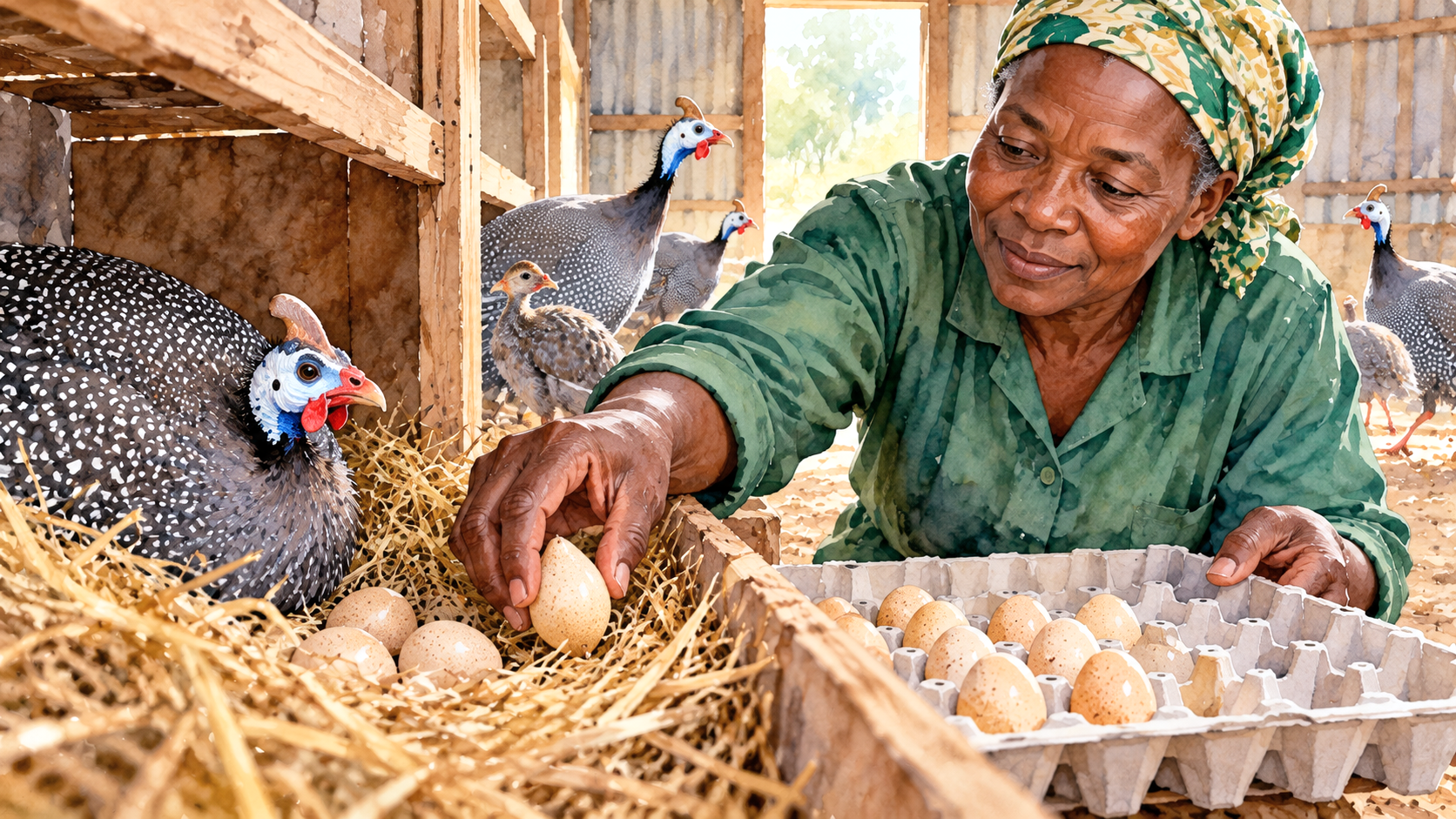
Guinea hens can leave several eggs in a secluded nest before their keeper discovers it. Unlike eggs collected from an accessible nesting area every day, those found outdoors may have an uncertain age or a history of exposure to heat, rain and wildlife. Collecting guinea fowl eggs safely therefore begins with knowing when they were laid and whether they are intended for eating or hatching.
Collect guinea fowl eggs at least once or twice daily, more frequently during extreme temperatures, and separate table eggs from eggs intended for incubation immediately. For eating, refrigerate clean, intact eggs promptly at 40°F (4°C) or below. Fertile eggs being held for hatching need different storage conditions and should not be kept in an ordinary food refrigerator.
How Often Should You Collect Guinea Fowl Eggs?
Check established nesting areas at least once in the morning and again later in the day when hens are actively laying. More frequent collection may be necessary during hot weather, freezing conditions or periods when nests become dirty.
Guinea fowl do not all lay at precisely the same hour, so an early-morning visit alone may miss eggs deposited later. The laying patterns of guinea hens vary between birds and across the breeding season.
Frequent collection limits the time eggs spend exposed to fluctuating temperatures, moisture, dirt and possible damage. For eggs intended for breeding, poultry hatching-egg handling guidance emphasizes regular collection to protect shell cleanliness and embryo viability.
Bring a clean, dry egg carton or dedicated collection basket. Do not mix newly collected eggs with older eggs of uncertain origin, and record the collection date before putting them away.
Inspect Every Egg Before Storing It
Examine eggs under good lighting as they are collected. Look for cracks, leaking contents, broken shell areas, heavy manure deposits and other visible damage.
A guinea egg may feel unusually strong because its shell is comparatively thick, but that does not make it impervious to contamination. Natural guinea eggshell characteristics include considerable variation in shape, color and texture, none of which establishes food safety.
Handle shells gently rather than squeezing them to test their strength. Keep eggs away from dirty equipment and prevent raw poultry meat or animal waste from contacting collection containers.
Discard cracked or leaking table eggs. The USDA’s shell-egg safety guidance explains that cracks can permit bacteria to enter. Eggs that smell normal or have an intact-looking shell may still be contaminated.
Separate eggs into three practical categories: clean and intact table eggs, clean and intact potential hatching eggs, and eggs that must be discarded because their condition or history is unsuitable.
Should You Wash Guinea Fowl Eggs?
Washing depends on the purpose of the egg and the condition of its shell. Eggs laid in a clean nest should require little cleaning, whereas heavily soiled eggs are a sign that nesting conditions need attention.
Freshly laid eggs have a natural protective outer layer called the cuticle, sometimes referred to as the bloom. Washing or vigorous rubbing can damage this layer, while improper wash water can introduce contamination through the shell.
For eggs intended for eating, the safest approach is to begin with visibly clean eggs and minimize unnecessary handling. Penn State Extension’s home-flock egg guidance explains that washing is not required for every home-produced egg and describes precautions when washing is necessary.
If you decide to wash lightly soiled table eggs, use an established egg-cleaning method with water warmer than the egg, appropriate food-safe products and no soaking. Dry them completely and refrigerate promptly. Do not dip eggs into a shared bucket of water, scrub them aggressively or attempt to make a heavily contaminated egg suitable for eating.
Do not use ordinary kitchen washing methods on eggs intended for incubation. Hatching eggs should generally be selected from clean nests rather than washed to compensate for heavy contamination. Damaging the cuticle may reduce protection against microorganisms during storage and incubation.
How to Store Guinea Fowl Eggs for Eating
Store table eggs promptly in a clean refrigerator maintained at 40°F (4°C) or below. Use a refrigerator thermometer rather than assuming the appliance’s setting represents its actual temperature.
The FDA’s egg-storage recommendations advise keeping eggs in a carton and using them within three weeks for best quality. Refrigeration slows quality deterioration and reduces opportunities for bacterial growth, but it does not make an already contaminated egg sterile.
Place eggs on an interior refrigerator shelf, not in the door, where temperatures fluctuate with opening and closing. Keep the carton closed, mark its collection date, and use the oldest suitable eggs first.
| Storage decision | Table eggs | Hatching eggs |
|---|---|---|
| Primary goal | Food safety and eating quality | Preserve embryo viability |
| Temperature | 40°F (4°C) or below | Approximately 55–60°F (13–16°C) before setting |
| Humidity | Normal refrigerator conditions | Around 75% relative humidity |
| Position | Preferably pointed end down in a carton | Pointed end down or positioned for careful turning |
| Time held | Use within about 3 weeks for best quality | Ideally set within 7 days; viability declines with longer storage |
| Cleaning | Minimize handling; use safe methods when needed | Select clean eggs and avoid routine washing |
| Refrigeration | Yes | Not in a standard cold food refrigerator |
These are broad small-flock recommendations. Hatching-egg conditions should follow suitable species-specific or poultry breeding guidance, while table-egg safety takes priority whenever eggs are intended for food.
How Long Can You Keep Refrigerated Guinea Eggs?
A practical target is to use properly collected, intact and refrigerated guinea eggs within three weeks for best quality. The USDA and other food-safety authorities describe longer quality windows for some properly refrigerated shell eggs, but those periods assume appropriate collection, handling and storage.
University of Minnesota Extension recommends refrigeration for safety and notes that eggs generally retain their best quality for approximately three to five weeks under suitable conditions.
Because guinea eggs may come from outdoor nests, do not automatically give every egg the same storage life as a commercially graded egg. The clock cannot be restarted by refrigerating eggs that have already sat outside for an unknown period.
Date cartons with the collection day, avoid repeated warming and cooling, and discard any egg whose safety is uncertain. An egg float test cannot establish that an egg is free of harmful bacteria.
For longer-term food preservation, shell eggs should not be frozen intact because expanding contents can crack the shell. Appropriate freezing methods require removing the contents first.
How to Store Fertile Guinea Eggs Before Incubation
Eggs selected for hatching require conditions that preserve the developing embryo while delaying further development until incubation begins.
For short-term holding, Mississippi State University Extension recommends a temperature near 60°F (16°C) and relative humidity around 75%. Keep hatching eggs in a clean, stable environment protected from direct sunlight and unnecessary vibration.
An ordinary household refrigerator set at or below 40°F is too cold for optimal hatching-egg storage. This creates an essential distinction: eggs intended for eating should be promptly refrigerated, whereas selected fertile eggs awaiting incubation should be kept cool but not excessively cold.
Store eggs with their narrow ends downward. If eggs must be held for several days, adjust their position periodically according to the breeding program. The pre-incubation handling recommendations from Extension advise turning stored hatching eggs daily when they are held beyond roughly four to six days.
Plan to set hatching eggs as soon as practical, preferably within seven days. Hatchability generally decreases as storage becomes longer, even when temperature and humidity are controlled. Avoid holding a large batch for weeks merely to fill an incubator.
These storage recommendations concern the period before incubation. They are not the temperatures or procedures used once active incubation begins.
How to Choose Eggs for Hatching
Not every collected egg is suitable for incubation. Choose clean, intact, reasonably typical eggs from healthy breeding birds. Avoid cracked, severely misshapen, heavily contaminated or unknown-age eggs.
A clean shell helps limit bacterial contamination. Mississippi State’s recommendations for handling hatching eggs emphasize protecting the cuticle, maintaining cleanliness and avoiding bacterial exposure.
Collect potential hatching eggs into clean trays separate from table eggs. Identify the breeding group and date of collection, then keep the eggs under stable conditions until they are set.
An egg’s shell color, pointed shape or firmness cannot establish whether it is fertile. A male guinea fowl must have successfully mated with the hen for natural fertilization, but even that does not guarantee every egg will develop. The breeding behavior of guinea fowl influences whether viable embryos are possible.
Avoid cracking eggs to inspect their contents when they are intended for hatching. Only intact, appropriately handled eggs should proceed to incubation.
What to Do With Eggs Found in Hidden Nests
A concealed nest may contain a mixture of recently laid eggs and older eggs exposed to weather, animals or a sitting hen. Several guinea hens can also contribute eggs to one nest.
The habit of guinea hens laying in concealed locations makes the collection date particularly important. When hidden guinea eggs are discovered, do not treat the entire clutch as fresh simply because a hen visited it recently.
If the age, handling or temperature history is unknown, do not use those eggs as table eggs or assume they are suitable for hatching. Candling and float tests cannot restore freshness, reverse improper exposure or establish that an egg is microbiologically safe.
Where a known nesting site is checked and collected routinely, record individual collection dates. Separate eggs taken from an established, monitored nest from eggs discovered during an irregular search.
Keep Egg Collection Equipment Clean
A collection basket that holds old nesting material, manure or broken egg residue can contaminate otherwise clean eggs. Use containers that can be cleaned and dried thoroughly, and replace damaged cartons rather than repeatedly reusing heavily soiled ones.
Keep poultry equipment away from food preparation surfaces. Wash your hands with soap and water after collecting eggs, handling nesting material or tending birds. The CDC’s backyard poultry guidance explains that apparently healthy poultry can carry organisms such as Salmonella.
Avoid placing dirty collection baskets directly on kitchen counters. Transfer table eggs to clean containers before refrigeration and wash surfaces that have contacted raw eggs or contaminated equipment.
If you distribute or sell eggs, check the rules applicable to your state and sales channel. Requirements for refrigeration, grading, labeling and cleaning can differ from practices permitted for personal consumption.
Questions About Collecting and Storing Guinea Fowl Eggs
How many times a day should you collect guinea eggs?
Twice daily is a practical routine during the laying season. More frequent checks may be appropriate during extreme heat or cold and where nests become dirty.
Should unwashed guinea eggs be refrigerated?
Yes. Refrigeration at 40°F or below is the safer general recommendation for eggs intended for eating in the United States, even when their natural cuticle remains intact.
Can you store guinea eggs on the kitchen counter?
Room-temperature storage is not the recommended approach for table eggs in this US-focused guide. Prompt refrigeration provides better protection against temperature-related bacterial growth.
Should guinea eggs be washed before storage?
Clean eggs generally need little handling. If washing table eggs is necessary, use established safe procedures and refrigerate promptly. Avoid soaking or aggressively scrubbing shells.
How long can guinea eggs stay in the refrigerator?
Use properly handled table eggs within approximately three weeks for best quality. Their safe use depends on collection history, shell condition and continuous refrigeration.
Can fertile guinea eggs be refrigerated before hatching?
A standard food refrigerator is generally too cold for optimal embryo viability. Selected hatching eggs need cool, humid pre-incubation storage rather than ordinary table-egg refrigeration.
Can you hatch eggs collected from a hidden nest?
Only consider eggs with a reasonably known age and suitable handling history. Eggs of unknown age or questionable exposure are poor candidates and may present contamination risks.