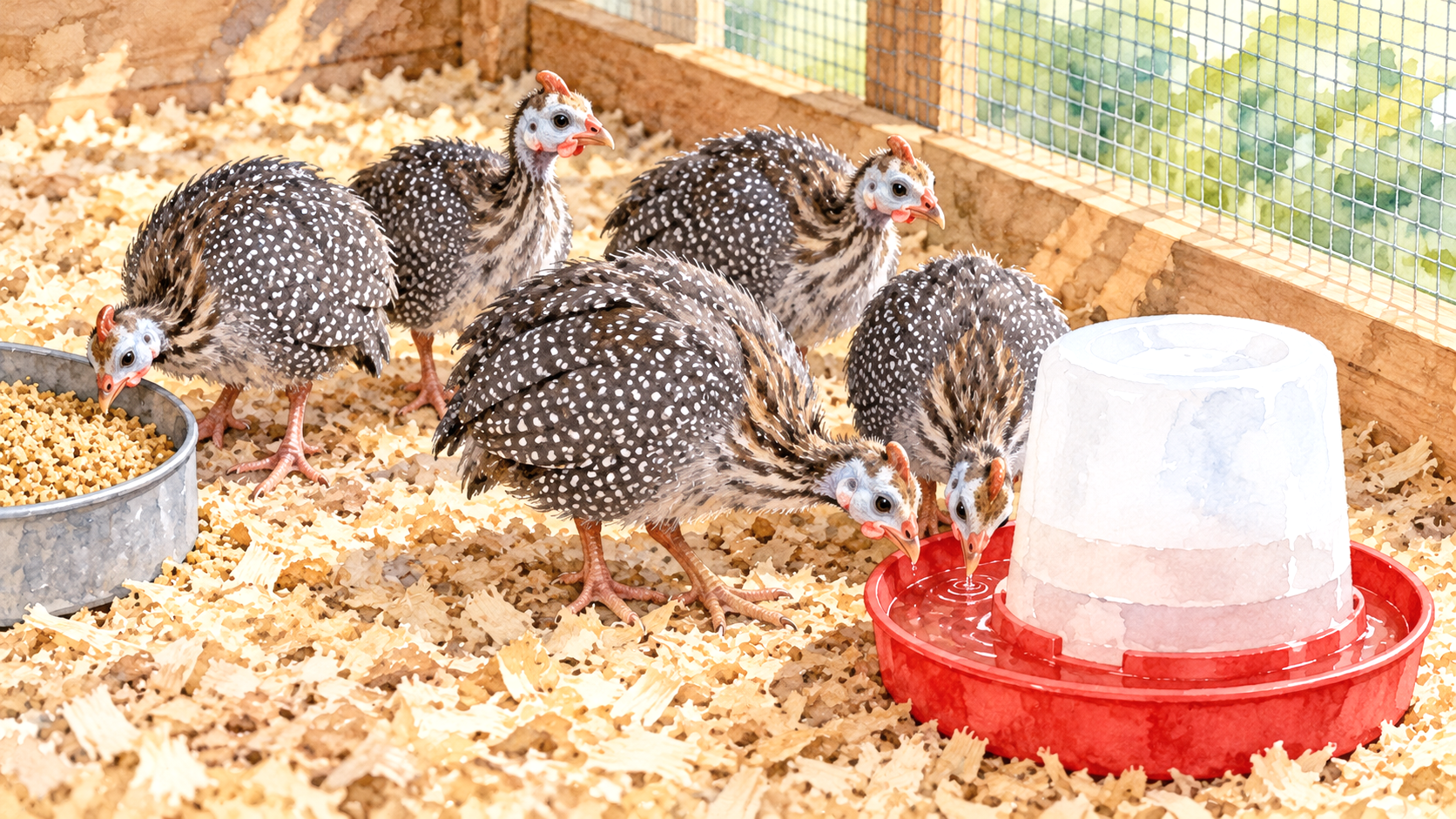
A guinea keet may be walking and calling within hours of hatching, but that early activity can disguise how dependent it remains on warmth, clean water and protection. Young guinea fowl are especially vulnerable to dampness and chilling. Good care means meeting those immediate needs while gradually preparing the birds for a more independent life outdoors.
Keep newly hatched guinea keets warm, dry, securely contained and supplied with suitable starter feed and clean, shallow drinking water. Check their comfort and activity several times daily, maintain clean bedding, and adjust their environment as their feathers and tolerance of cooler conditions develop. Outdoor readiness depends on feathering, weather, health and shelter—not a birthday alone.
Start With a Dry, Warm Environment
After hatching, allow the keets to dry and become active before moving them into a prepared, warmed holding area. A keet that is still wet can lose heat quickly. Transfer birds gently, and make sure each can walk on a surface with traction rather than slick paper or smooth plastic.
A useful starting temperature is approximately 95°F (35°C) at keet height in the heated area during the first week, lowering supplemental warmth by roughly 5°F each week as the birds develop. The temperature recommendations for brooding guinea keets provide a practical reference, but the behavior of the birds matters as much as a thermometer reading. Provide space to move away from the heat source; the whole enclosure should not be uniformly hot.
Watch the group rather than relying on equipment alone. Keets packed tightly beneath the heat may be cold, while birds crowded far from it, panting or spreading their wings may be overheated. Comfortable birds tend to move between feeding, drinking, resting and warmer areas. Recognizing heat stress and chilling in young poultry helps distinguish a genuine comfort problem from ordinary group resting. Detailed equipment placement and enclosure construction belong to the brooder setup rather than this care roadmap.
Keep Food Available and Watch Whether They Eat
Young keets grow rapidly and need a complete starter ration designed for game birds or turkeys rather than grain mixes, scratch feed or an adult-only diet. Nutritional guidance for young guinea fowl commonly recommends a starter containing approximately 24–26% protein during the earliest weeks, followed by a different ration as the birds mature. Follow the label of a suitable complete feed and avoid adding supplements without a reason.
Make feed easy to locate and small enough for keets to peck. Watch them eat instead of assuming a full feeder proves adequate intake. An active keet that repeatedly misses feed, is being pushed away or has difficulty swallowing needs closer assessment. The feeding needs of guinea keets differ from those of adults, so their diet should be chosen for their life stage. Replace wet or contaminated feed promptly and keep feeders out of areas where drinking water spills.
Provide Safe Drinking Water
Fresh water should be accessible whenever the keets are active, using a shallow poultry drinker appropriate for their size. Deep bowls, open buckets and unstable containers can allow small birds to become soaked, trapped or drowned. Keets should be able to approach, drink and step away without climbing into the water.
Inspect waterers repeatedly during the day. Bedding, droppings and feed particles can quickly contaminate them, and a container that has tipped over can leave an entire group without water. Place water away from the main heat source so splashing does not soak the resting area. Good early brooding practices for young poultry combine accessible water with dry surroundings. If a keet appears weak or dehydrated, do not force water down its throat; seek veterinary advice because aspiration can cause injury.
Make Cleanliness a Daily Routine
Remove wet patches, caked droppings and spilled feed as soon as they appear. Bedding should stay absorbent, dry and free of mold. Replace dirty litter before it builds up rather than waiting for the whole area to smell unpleasant. Damp bedding chills keets and favors organisms that can cause disease.
Use separate tools for the keet area, wash equipment before disinfecting and allow cleaned surfaces to dry fully. The principles of cleaning poultry enclosures emphasize removing debris first because disinfectant works poorly through accumulated organic material. Keep wild birds, rodents and unnecessary visitors away from the young flock, and avoid moving dirty footwear between adult-bird housing and keet areas.
Handling the birds also requires hygiene. Backyard poultry can carry germs even when they look healthy, so wash hands after contact with keets, feed containers or bedding, and keep birds and their equipment out of food-preparation areas.
Check Every Keet Rather Than Only the Flock
A group can look lively while one weak bird remains behind the feeder or rests unusually often. Make brief observations throughout the day: are all keets standing normally, eating, drinking, moving freely and resting comfortably? Watch for persistent huddling, panting, drooping wings, abnormal droppings, labored breathing or a keet repeatedly separated from the group.
A newly hatched bird may be tired, but persistent inability to stand, severe weakness, breathing difficulty or a sudden decline requires prompt attention. Do not assume every weak bird merely needs more heat. Chilling, overheating, injury, infection and poor access to water can overlap, and several sick or dying birds warrant urgent veterinary assessment. Changes in guinea fowl health and disease signs are particularly important when symptoms appear across the group.
Handle keets gently and only as necessary. Cup the body securely, support the legs and avoid squeezing the chest. Children should not carry birds around unsupervised, and pets should never have access to the young flock.
Adjust Care as the Keets Become More Active
As feathers develop, keets become stronger, move more quickly and may start making short fluttering attempts. Increase usable space before crowding leads to trampling, dirty bedding or competition at the feeders. Continue providing a warmer resting area until the birds can maintain their temperature appropriately under their actual conditions.
The basic appearance of a guinea keet changes as its down is replaced by juvenile feathers, but looking partly feathered does not establish outdoor readiness. The way guinea fowl gradually develop flight ability also makes escape prevention increasingly important. Check screens, doors and overhead containment before the birds can reach openings that were irrelevant during their first days.
Use their behavior to guide routine adjustments. Comfortable, well-fed keets that explore calmly, rest normally and remain dry are responding differently from birds that crowd constantly, pant or avoid particular areas. Make one measured change at a time so its effect can be observed.
Prevent Chilling and Dampness Before Outdoor Life
Wet grass is a particular hazard during early guinea keet care. The risk from moisture during the first two weeks is significant because young keets can become dangerously chilled after moving through dew or rain even if the mother or the outside air seems relatively warm.
Do not equate sunshine with safe ground conditions. A shaded corner, morning dew, damp soil or a sudden shower can change the environment quickly. Maintain a reliably dry resting surface and a sheltered location protected from wind. If a keet becomes soaked or chilled, move it to a safe warm environment and seek veterinary help if it is weak, unresponsive or fails to improve.
Natural hatching does not remove this vulnerability. Even when a guinea hen raises her own keets, her chicks may not keep pace or reach shelter quickly enough in wet conditions.
Prepare for Outdoor Housing Without Rushing the Move
Preparing for outdoor life means more than deciding whether the keets are big enough. Their eventual housing must be dry, well ventilated without cold drafts, protected from predators and free of gaps that a young bird can slip through. Feeders and waterers must remain reachable, and the birds need a secure place to retreat when weather changes.
Before moving them, review whether their feather cover is adequate, whether supplemental heat is still needed, and whether nighttime conditions differ substantially from the daytime forecast. The practical principles of transitioning brooded guinea fowl outdoors emphasize sufficient feathering and acclimation. There is no benefit in moving a vulnerable group into cold, exposed conditions simply because it has reached a commonly quoted age.
Protection from predators is especially important while young birds are still small enough to escape through ordinary poultry fencing. Outdoor introductions should be controlled and supervised, with the birds’ behavior and weather conditions determining whether the arrangement remains suitable. Specific transition ages and full outdoor schedules are separate from this general roadmap.
A Simple Daily Guinea Keet Care Checklist
| Check | What to look for |
|---|---|
| Warmth | Birds spread comfortably, with a choice of warmer and cooler areas |
| Feed | Fresh suitable starter, with every keet able to eat |
| Water | Clean, shallow and stable drinkers |
| Bedding | Dry surface without wet patches or spoiled feed |
| Health | Normal standing, movement, breathing and droppings |
| Security | No predator access, loose screens or escape gaps |
| Development | Adjust space and warmth as feathers and activity increase |
Review these items in the morning and again later in the day, checking more often during the earliest period or after environmental changes. A steady routine helps you notice gradual problems before they become emergencies.
Questions About Caring for Guinea Keets
What do guinea keets need immediately after hatching? A warm dry environment, suitable starter feed, safe drinking water and protection from injury and chilling once they are dry and active.
Do guinea keets need a heat source? Young keets generally need supplemental heat until sufficiently feathered and able to tolerate their environment. Their behavior and measured temperatures help guide adjustments.
Can guinea keets drink from a regular bowl? Deep open bowls are unsafe. Use a shallow poultry waterer designed to prevent tiny birds from becoming trapped or soaked.
How often should I check the keets? Observe them several times daily, especially while very young, after heat adjustments or when weather or equipment changes.
Why is wet grass dangerous for guinea keets? Their small bodies can lose heat rapidly when their down gets wet, leading to chilling even when adults are comfortable.
Can guinea keets live with adult guinea fowl straight away? Newly hatched keets require protected care. Introducing them to adults must account for aggression, size differences, disease exposure and whether they can reach food and warmth safely.
When can guinea keets move outdoors? The decision depends on feathering, weather, shelter, health and acclimation. A single age is not sufficient by itself.