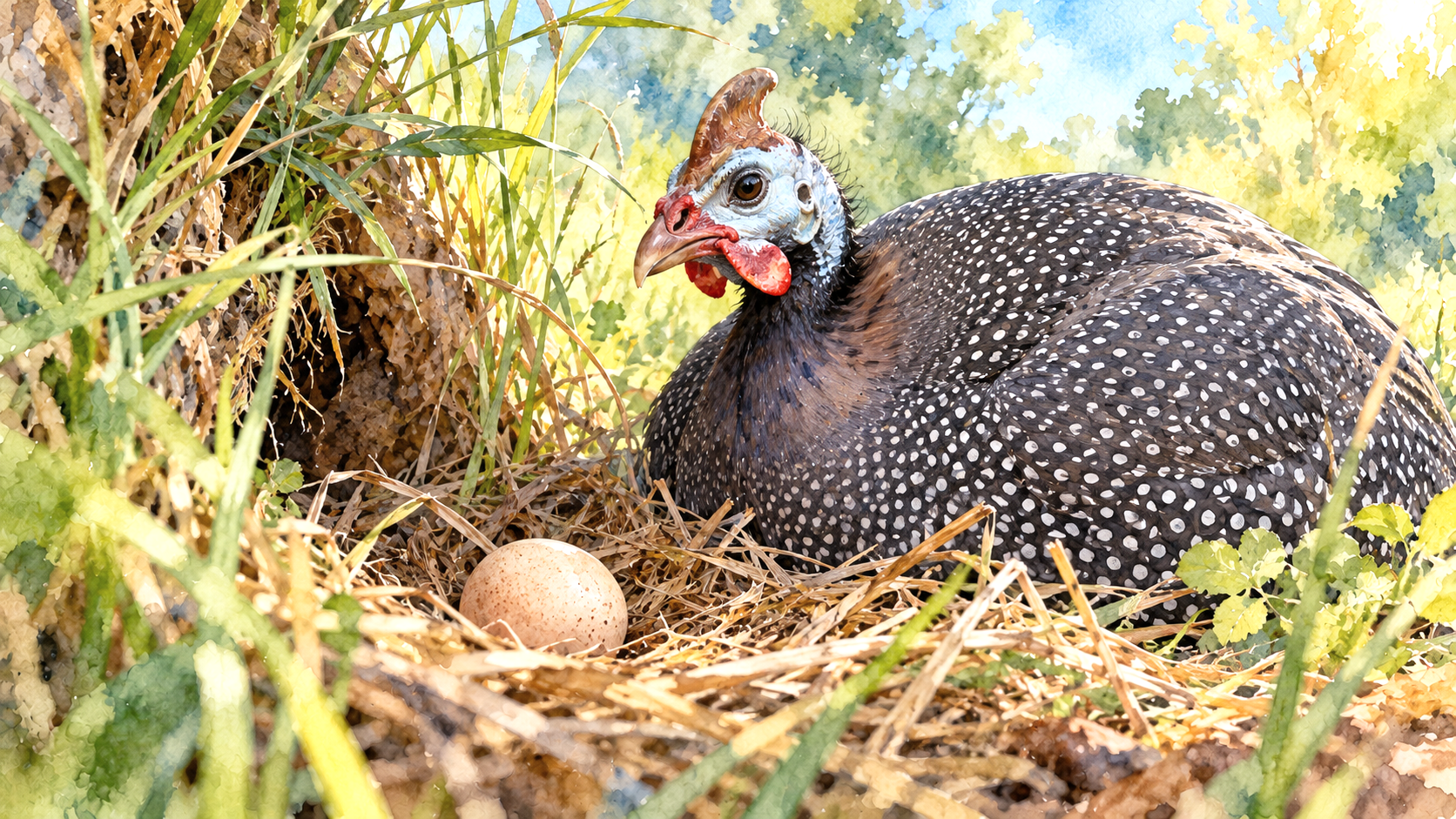
A guinea hen can look fully grown long before her first egg appears. A keeper who raises keets through summer may expect eggs by autumn, only to find that the birds do not begin laying until the following spring. That delay can be normal: reproductive maturity and the season favorable for laying do not always arrive together.
Guinea fowl commonly begin laying at about 6–9 months of age, or roughly 24–36 weeks, but some start earlier and others considerably later. The first egg depends on the hen’s development, genetics, nutrition, health and seasonal light conditions. On a US farm, a young hen reaching maturity as days shorten may not start until the next breeding season.
Typical Age at First Egg
Research on domestic helmeted guinea fowl (*Numida meleagris*) reports a range of ages rather than one universal onset. In one study, most hens began laying at 27–28 weeks, although two started at 21 weeks. Development of the ovary and oviduct was closely associated with the start of egg production.
A separate survey of indigenous guinea fowl flocks recorded first laying at 6–8 months. Other production research has reported first eggs at about 31–36 weeks, while differences among color varieties ranged from 28 to 42 weeks in one comparison.
These figures come from different strains and farming conditions. They are useful planning ranges, not a deadline by which every healthy hen must have laid. A bird’s hatch date matters, but so does the time of year when she reaches reproductive maturity.
Why Spring Often Determines the First Laying Date
Guinea fowl are generally seasonal layers. Increasing daylight helps stimulate reproductive activity, so hens kept under ordinary natural light commonly begin or resume laying during spring. In northern US states, shorter autumn and winter days can postpone the first egg even after a young hen has reached a suitable age.
For example, a keet hatched in May might become physically mature during late autumn. Rather than laying immediately, she may begin when spring daylight and environmental conditions become more favorable. Another hen of the same age raised under different conditions could begin sooner.
In temperate production studies, guinea fowl began laying in early April, illustrating the seasonal influence. Studies from tropical farming systems also associate laying with favorable seasonal conditions, although their rainy-season patterns should not be applied directly to US climates.
A calendar prediction should therefore use both the bird’s age and her likely breeding season. The conditions under which guinea fowl range outdoors may change across seasons, but roaming alone does not determine whether a hen is ready to lay.
What Makes Some Hens Start Earlier or Later?
Genetic background can affect reproductive development. In a comparison of guinea fowl varieties, pearl birds began laying at 28 weeks, while white birds in the same study began at 42 weeks. Variation among guinea fowl color strains demonstrates why an age quoted for one flock cannot be guaranteed for another.
Adequate feeding is also essential. A pullet that is underweight, unwell or receiving an unsuitable diet may develop more slowly. Growing birds need stage-appropriate nutrition, and the transition to an adult guinea fowl ration should account for their age and reproductive condition. Providing extra calcium or high-protein feed cannot force an immature bird to begin laying safely.
Stressful conditions may also interfere with reproduction. Repeated disturbance, overcrowding, poor ventilation, parasite burdens and an inability to access feed can affect health and body condition. Suitable guinea fowl housing and predictable care help support normal development, although neither guarantees an early first egg.
Controlled lighting and nutritional programs can alter the onset of production. One experimental guinea fowl program using an extended photoperiod reported earlier egg production, but those intensive conditions should not be copied casually in backyard housing. Lighting changes should preserve adequate darkness for rest and be planned with qualified poultry guidance.
Signs a Young Guinea Hen Is Approaching Her First Egg
There is no single outward sign that reliably predicts the exact day a hen will lay. Some birds become more interested in sheltered ground or concealed nesting spots as the season approaches. Changes in activity or vocal behavior may accompany maturity, but they also occur for unrelated reasons.
First confirm that the bird is female. Male and female guinea fowl look alike, and visual guesses can be misleading; adult sex identification relies heavily on vocal evidence. A young bird that has not yet developed clear sex-specific characteristics may still be difficult to identify as a male or female.
If a presumed hen is mature and no eggs have been found, she may be using a hidden nesting site. Do not assume that every missing egg indicates delayed maturity. Observe where birds spend time without flushing them from dense vegetation or disturbing a nest repeatedly. A hen that is weak, straining, unusually quiet or walking abnormally needs veterinary attention rather than continued monitoring for an egg.
Preparing Before the First Eggs Arrive
As hens approach maturity, provide a complete age-appropriate diet, clean water, dry shelter and suitable quiet areas in which they can settle. Keep feed changes gradual, and avoid abrupt disruptions to the flock merely because the predicted first-laying date is near.
An appropriately managed feeding routine for guinea fowl helps ensure growing hens can meet their energy and nutrient needs. Accessible shelter is equally important, particularly if birds are allowed outdoors and might otherwise select distant or exposed locations for laying.
A male is not required for a hen to produce her first egg. Male presence matters when the goal is fertilized eggs, not when determining whether a pullet has reached the start of laying. The composition of a guinea fowl breeding group becomes relevant when producing keets, but cannot replace appropriate nutrition, maturity and favorable conditions.
When Is a Delay Worth Investigating?
A hen around six months old without eggs is not automatically late, particularly if the season is unfavorable. A healthy bird nearing nine months may still be developing or waiting for spring. By contrast, a bird that is well beyond the expected range during favorable laying conditions warrants a closer look at sex identification, feed quality, body condition, health and possible hidden nesting.
The onset of laying is influenced by sexual maturity and management conditions, so a single age cutoff cannot diagnose a problem. Seek veterinary advice if a mature hen appears ill, shows abdominal swelling or straining, has difficulty standing, or otherwise behaves abnormally. Do not attempt to manipulate her abdomen or vent to force an egg out.
For a healthy flock, the most useful record is each bird’s approximate hatch date, followed by the month of first confirmed laying. Over time, those records provide a better prediction for your own stock than a generalized calendar age.
Common Questions About First Laying
Can guinea fowl start laying at five months?
Yes, early first eggs have been recorded under particular research or management conditions. Five months is earlier than the usual planning range and should not be expected from every backyard hen.
Will guinea hens lay at six months?
Some do. Six months is within the lower end of commonly reported onset ranges, but many hens begin later, especially if maturity coincides with shortening days.
Do guinea hens have to be one year old to lay?
No. Many produce their first eggs before one year of age. Waiting until the first spring after hatching can make an otherwise normal hen appear older at first laying.
Do guinea fowl need a male to start laying?
No. Females can lay unfertilized eggs without a male. A male is needed for naturally fertilized eggs intended for hatching.
Do guinea hens begin laying in winter?
They can under certain conditions, including managed lighting, but natural seasonal patterns generally make winter a less likely starting period in much of the United States.
Can two hens hatched together start laying months apart?
Yes. Genetics, condition, health and individual reproductive development differ, even when birds share a hatch date and housing.