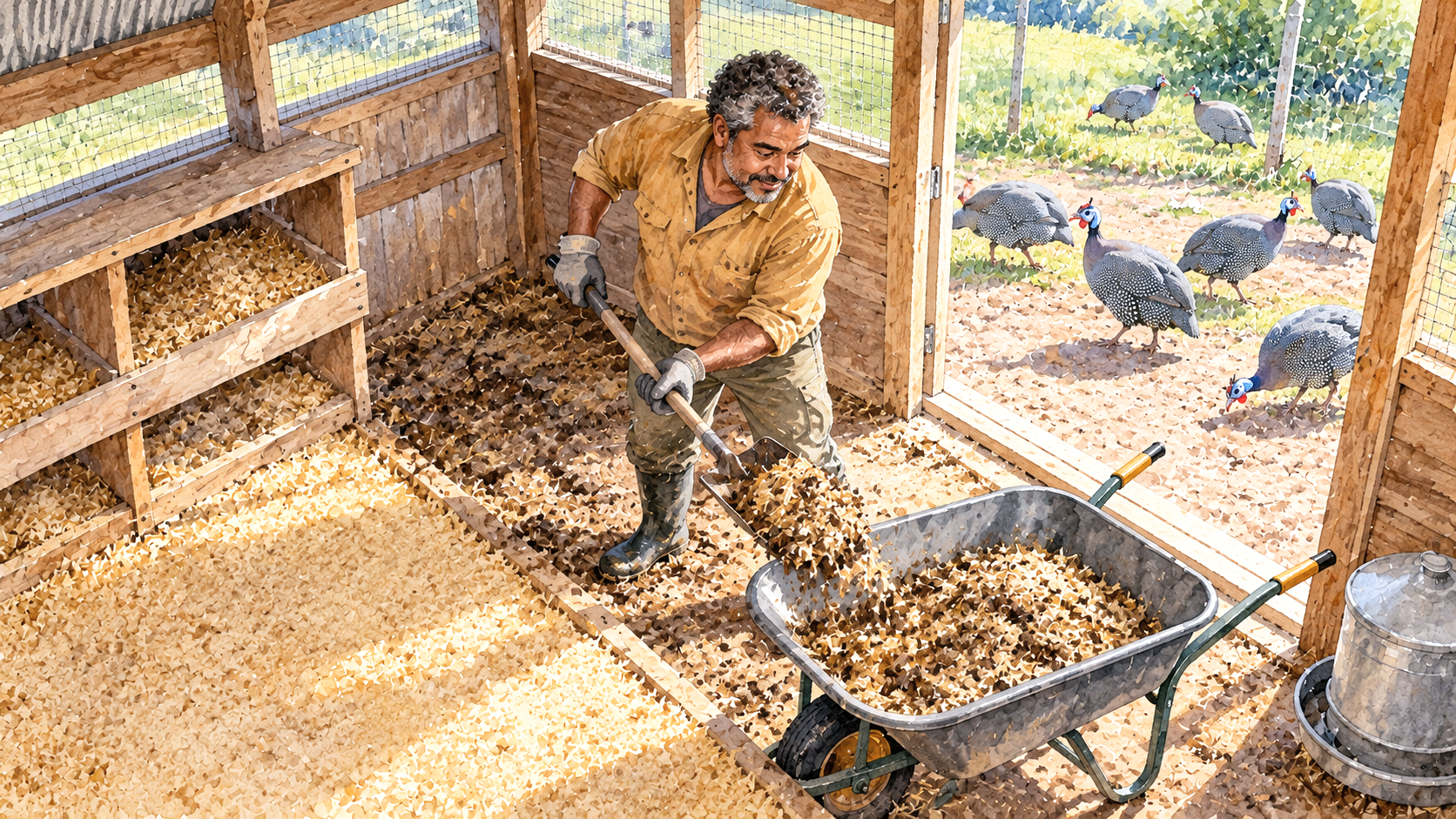
A guinea fowl coop can look reasonably clean while manure accumulates beneath the roosts, bedding becomes damp around drinkers, and dust settles on ventilation openings. Keeping the coop sanitary requires regular manure removal, dry bedding, clean equipment, and periodic washing of its interior surfaces. The frequency depends on flock size, housing conditions, and how much time the birds spend indoors.
Guinea fowl commonly use elevated roosts for sleeping, concentrating droppings beneath their resting positions. These areas usually need more frequent attention than sections of the floor that receive little traffic. Cleaning should address where waste actually accumulates rather than follow an inflexible calendar.
How Often Should You Clean a Guinea Fowl Coop?
A practical maintenance schedule separates daily inspections from periodic bedding replacement and thorough cleaning. The following intervals are starting points, not fixed requirements for every flock.
| Frequency | Cleaning and maintenance tasks |
|---|---|
| Daily | Remove obvious manure accumulations, wet bedding, spilled feed, and contaminated water |
| Weekly | Scrape roosts, clean manure collection surfaces, inspect bedding throughout the coop, and wash feeding equipment |
| Monthly or as needed | Replace heavily used bedding, clean neglected corners, and inspect ventilation openings |
| Periodically | Empty the coop for thorough washing, appropriate disinfection, drying, and maintenance |
Small coops housing several birds continuously may require much more frequent bedding replacement than large shelters used mainly overnight. Routine poultry sanitation is most effective when cleaning responds to waste accumulation rather than waiting for a scheduled deep clean.
A keeper should also inspect areas hidden behind equipment, beneath nesting boxes, and around door thresholds. A visibly clean central walkway does not mean the entire building is sanitary.
Remove Manure Before It Builds Up
Droppings accumulate particularly quickly beneath guinea fowl roosts. Scraping these areas regularly prevents waste from forming thick deposits that become difficult to remove and contaminate nearby bedding.
A removable dropping board positioned beneath the roosts can simplify maintenance. Smooth, nonporous surfaces are generally easier to scrape and wash than unfinished timber. If manure falls directly onto bedding, remove the concentrated deposits before spreading or turning the surrounding material.
Allowing manure to accumulate increases the organic material available for microbial decomposition. Moist droppings can release ammonia, which irritates poultry respiratory tissues. The relationship between manure moisture, ammonia, and ventilation explains why routine removal is particularly important in enclosed housing.
A noticeable ammonia smell indicates that conditions need attention. Increasing airflow alone will not correct an ongoing buildup of wet manure.
Replace Bedding When It Becomes Damp or Contaminated
Bedding should cushion movement, absorb moisture, and remain comfortable underfoot. Suitable materials may include low-dust wood shavings, chopped straw, or other poultry-safe substrates appropriate to the floor and climate.
For guinea fowl, cushioning is particularly relevant because they may descend from elevated perches onto the floor. Appropriate guinea fowl flooring and bedding help reduce hard landings while maintaining a manageable resting environment.
Remove bedding that is saturated, moldy, heavily soiled, or compacted into a damp layer. Adding fresh material over a persistent wet patch may conceal contamination without resolving it. Relatively clean, dry bedding can sometimes remain in place while affected sections are replaced, depending on the bedding system.
Deep-litter systems require active moisture control, aeration, and regular observation. They are not an excuse to leave manure unattended. If the litter becomes persistently wet, develops mold, or releases ammonia, remove the affected material and correct the conditions responsible.
Avoid dusty sawdust, moldy hay, and materials containing chemical treatments unsuitable for poultry.
Keep Water and Feed Equipment Sanitary
Drinkers should be checked every day for droppings, bedding, sediment, and feed particles. Empty contaminated water, scrub deposits from accessible surfaces, rinse thoroughly, and refill with clean water. Biofilm can develop on surfaces that remain continuously wet, particularly inside drinking containers and fittings.
Feeders require attention when damp feed collects along edges or in corners. Remove spoiled material instead of mixing it into a fresh ration. Equipment should be positioned to limit contamination without restricting birds’ access to food or drinking water.
The cleaning requirements for poultry feeders and drinkers also extend to the area where washing takes place. Clean poultry equipment outdoors in a designated location, not in kitchen sinks or household food-preparation areas.
Spilled feed should be removed promptly because it can attract rodents and insects. Protecting stored feed and poultry buildings from wildlife also helps reduce contamination entering the coop.
Wash and Disinfect the Coop Properly
Thorough cleaning and disinfection are separate procedures. Washing removes visible material; disinfection reduces susceptible microorganisms remaining on properly prepared surfaces.
Move the guinea fowl into a safe, separate enclosure before beginning a complete cleanout. Remove bedding, manure, feathers, and loose debris, then scrape accumulated deposits from roosts, floors, nesting equipment, and accessible wall surfaces. Wash with water and suitable detergent, paying attention to joints and corners where organic material becomes trapped.
After rinsing, apply an EPA-registered disinfectant suitable for the intended poultry-housing use, following its label for dilution, contact time, rinsing, and safe reentry. Effective poultry-house disinfection requires organic debris to be removed first because dirt and manure can interfere with disinfectant performance.
Never mix bleach with ammonia-containing cleaners, acids, or other disinfectants. Mixing incompatible products can release dangerous gases. Avoid spraying chemicals in occupied housing, and let the enclosure dry completely before adding clean bedding and returning the birds.
If a serious infectious disease is suspected, routine household cleaning may be inadequate or inappropriate. Obtain veterinary or animal-health authority guidance before moving birds, litter, or potentially contaminated equipment.
Find and Correct Persistent Moisture
Recurring dampness usually indicates a condition that cleaning alone cannot solve. Common causes include leaking drinkers, condensation, rain entering through openings, and inadequate drainage.
Inspect the same areas after rainfall and during temperature changes. Water stains beneath windows, moisture around roof joints, and repeatedly wet patches beside drinkers can reveal the source. Repairing a leak prevents the same bedding from becoming contaminated again.
Ventilation openings also need periodic cleaning. Dust and cobwebs can restrict airflow, increasing moisture retention inside the building. Poultry biosecurity and housing maintenance work best when equipment and buildings are kept in serviceable condition.
During winter guinea fowl management, inspect condensation and moisture accumulation more frequently, particularly when windows and openings remain partly closed against cold winds.
Maintain the Coop Without Disturbing the Flock Unnecessarily
Cleaning activities can frighten guinea fowl, especially when unfamiliar equipment, loud noises, or sudden movements are involved. Carry out routine tasks calmly and avoid cornering birds while scraping surfaces or changing bedding.
Wear gloves, dedicated footwear, and suitable protective clothing. Disturbing dried manure or litter can release dust containing microorganisms and other irritating particles. Avoid dry sweeping methods that create substantial airborne dust, and use appropriate respiratory protection when conditions warrant it. Precautions for handling potentially contaminated poultry litter are particularly important when illness is suspected.
Cleaning tools should remain dedicated to the poultry area or be thoroughly cleaned before use elsewhere. Wash hands after handling birds, equipment, or waste, even when gloves were worn.
During maintenance, inspect roost attachments, sharp edges, loose fasteners, and deteriorating floor surfaces. These problems may become apparent only after bedding or manure has been removed.
Questions About Guinea Fowl Coop Cleaning
Can guinea fowl manure be composted?
Yes. Guinea fowl manure can be composted with suitable carbon-rich materials, provided the composting process is properly managed. Fresh poultry manure should not be applied directly around edible crops because of pathogen risks and its concentrated nutrient content.
Can you pressure-wash a guinea fowl coop?
Pressure washing can remove stubborn deposits from suitable surfaces, but it may force moisture into timber joints and disperse contaminated droplets. Use controlled pressure, keep birds away, and allow adequate drying before the coop is occupied again.
Should nesting boxes be cleaned as often as the floor?
Nesting material should be replaced whenever it becomes wet, heavily soiled, or contaminated by broken eggs. The nesting areas used by guinea hens may need less frequent cleaning than manure-heavy roosting areas, depending on how the birds use them.
Can old bedding be reused after drying?
Bedding contaminated with manure, mold, or persistent moisture should be discarded rather than dried and returned to the coop. Reuse can reintroduce contaminants without offering meaningful sanitation benefits.
One thought on “How to Clean and Maintain a Guinea Fowl Coop”