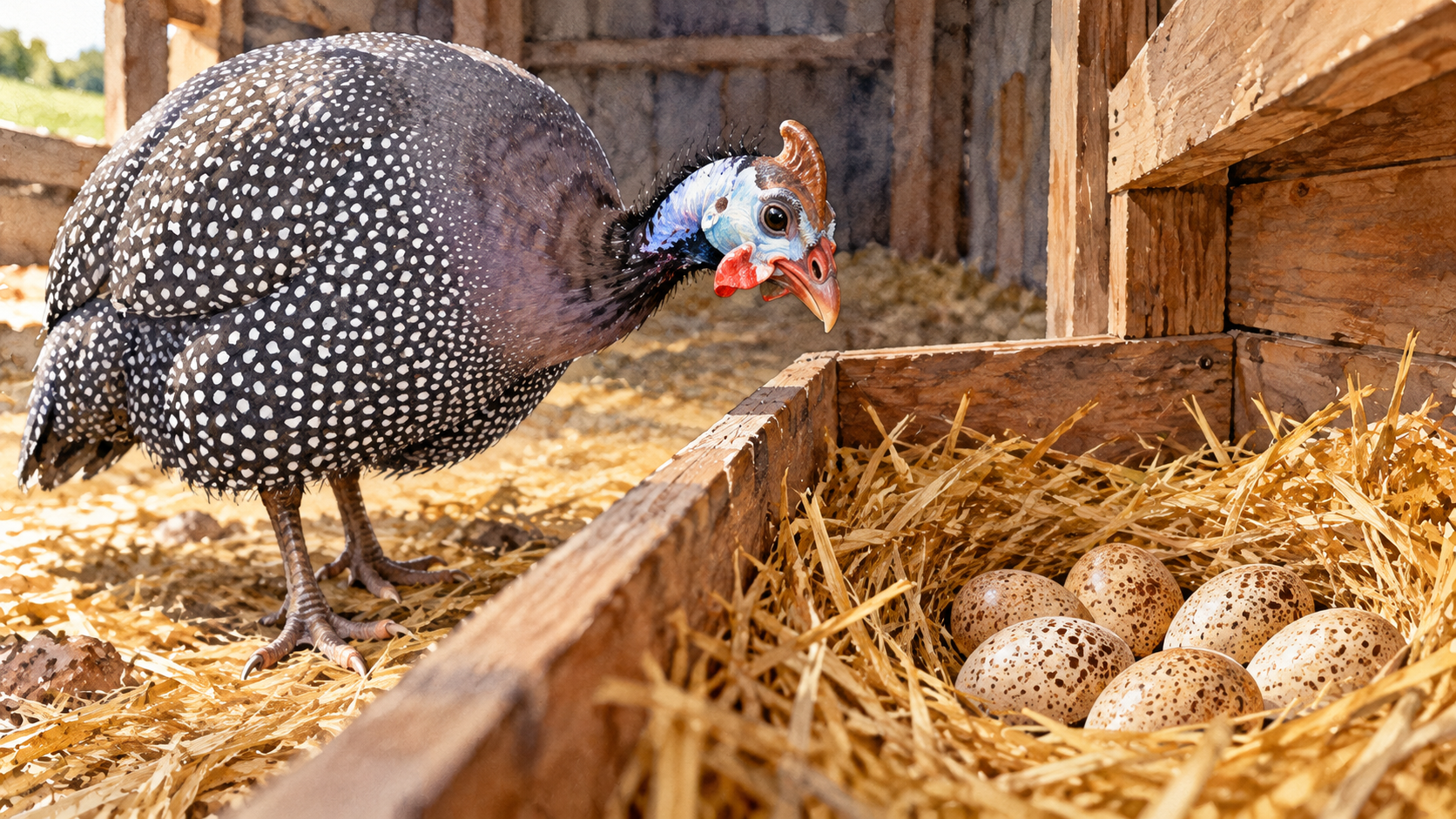
Guinea fowl do not strictly need nesting boxes to lay eggs, but providing suitable nesting areas is useful when you want hens to lay inside their coop. Unlike chickens, guinea hens often prefer shallow nesting spots on the ground and may ignore conventional elevated boxes altogether. Some accept enclosed nest boxes, particularly when accustomed to them, while others favor sheltered corners with loose bedding.
For flocks raised primarily for eggs, accessible nesting areas make production easier to manage. However, their success depends on how well the arrangement accommodates the birds’ preferences rather than how many boxes are installed.
Will Guinea Hens Use Chicken Nesting Boxes?
Standard chicken nesting boxes can be suitable for guinea hens, but acceptance varies. Poultry housing guidance for guinea fowl recommends providing nesting boxes for egg-producing flocks and notes that ordinary chicken boxes are generally acceptable.
Guinea hens are ground-nesting birds, however, and conventional raised boxes may be less appealing than sheltered floor-level locations. Guinea Fowl International’s nesting recommendations favor creating protected nesting opportunities near the ground, including areas partially screened by hay bales. Such arrangements can provide privacy without forcing hens into narrow, enclosed compartments.
A hen that ignores a nesting box is not necessarily experiencing a laying problem. Guinea fowl often establish individual preferences, and seasonal egg production continues whether a suitable box is available or not.
Where Should Guinea Fowl Nesting Boxes Be Placed?
Position nesting areas at floor level or only slightly above it, preferably in quiet sections of the coop away from frequent movement. A corner partially screened from the main activity area may be more attractive than an exposed box facing a busy entrance.
The arrangement should provide some visual privacy without completely obstructing the hen’s surroundings or exit. Guinea hens often favor nesting locations with cover and opportunities to leave quickly when disturbed. Observations of guinea fowl nesting behavior describe a preference for sheltered ground locations rather than conventional elevated poultry boxes.
Avoid placing nesting areas directly beneath guinea fowl roosts, where droppings can contaminate the nesting material. Locations exposed to leaking roofs, drafts, or excessive heat are also unsuitable.
Nest sites should remain accessible to the keeper without requiring the birds to be chased or unnecessarily disturbed.
What Size and Design Work Best?
A floor-level box measuring approximately 14–18 inches wide, 14–18 inches deep, and 12–16 inches high is a reasonable starting design for an adult guinea hen. These are practical dimensions rather than scientifically established species-specific standards. The entrance must allow the bird to enter, turn, and leave comfortably.
Wooden boxes, sturdy plastic containers with appropriately sized openings, and sheltered floor-level compartments can all work. An open-fronted design may appeal to hens that dislike entering a fully enclosed space.
Use clean, dry straw or suitable wood shavings to provide a comfortable nesting surface. Avoid exposed nails, sharp plastic edges, unstable containers, and materials that can trap a bird’s feet or head. The surrounding floor should remain dry, since suitable poultry housing depends partly on maintaining absorbent bedding and sanitary conditions.
A sheltered patch of bedding beside a hay bale may attract guinea hens more successfully than a purpose-built box. Where hay bales are used, they must be positioned securely so they cannot topple onto birds.
How Many Nesting Boxes Do Guinea Fowl Need?
There is no well-established, guinea-fowl-specific ratio of nesting boxes to hens. As an initial arrangement, one accessible nesting place for every three or four laying females may be reasonable, with adjustments based on whether the hens actually use the available spaces.
Providing additional boxes will not necessarily prevent several hens from choosing the same nesting location. Guinea fowl may share preferred sites, and some individuals will ignore otherwise suitable boxes.
The number of female guinea fowl in a flock is more relevant to nesting capacity than the total number of birds, since males do not require laying boxes. Monitor whether hens can access their preferred areas without being displaced or crowded.
How Can You Encourage Guinea Hens to Lay Indoors?
Nesting sites are more likely to be accepted when they are available before the laying season begins. Guinea hens may establish habitual laying locations, making an existing preference difficult to change later.
For egg-producing flocks, keeping hens inside suitable housing until around midday can encourage indoor laying, since many guinea hens lay earlier in the day. This approach is included in extension guidance on managing guinea fowl for egg production. It requires adequate space, feed, drinking water, ventilation, and comfortable conditions; confinement should never compromise welfare merely to influence nesting behavior.
The age at which guinea fowl begin laying influences when nesting facilities need to be ready. Placing suitable nesting areas before the first eggs appear gives hens opportunities to investigate them without disrupting an established laying routine.
Avoid repeatedly moving occupied nests or forcibly placing birds inside boxes. If a hen persistently rejects a particular location, changing its privacy, entrance, or bedding may be more useful than adding several identical boxes.
Questions About Guinea Fowl Nesting Boxes
Can several guinea hens lay eggs in the same nesting box?
Yes. Several hens may use a favored location, sometimes contributing eggs to a shared clutch. However, simultaneous attempts to occupy a small space can cause disturbance, so alternative nesting places should remain available.
Will guinea hens sit on eggs inside nesting boxes?
Some may become broody in a sheltered indoor nest, but providing a box does not guarantee incubation. Guinea fowl nesting and hatching behavior varies among individuals, and a hen may continue laying without attempting to hatch her eggs.
Should nesting boxes have lids or curtains?
A partial cover can provide privacy, but neither feature is essential. Any curtain or cover must be securely fitted, allow ventilation, and avoid loose material that could entangle or frighten the birds.
Do male guinea fowl need access to nesting boxes?
No. Males do not use nesting boxes for egg laying. They may investigate or enter them occasionally, but the nesting arrangement should primarily accommodate the laying females.
One thought on “Do Guinea Fowl Need Nesting Boxes?”