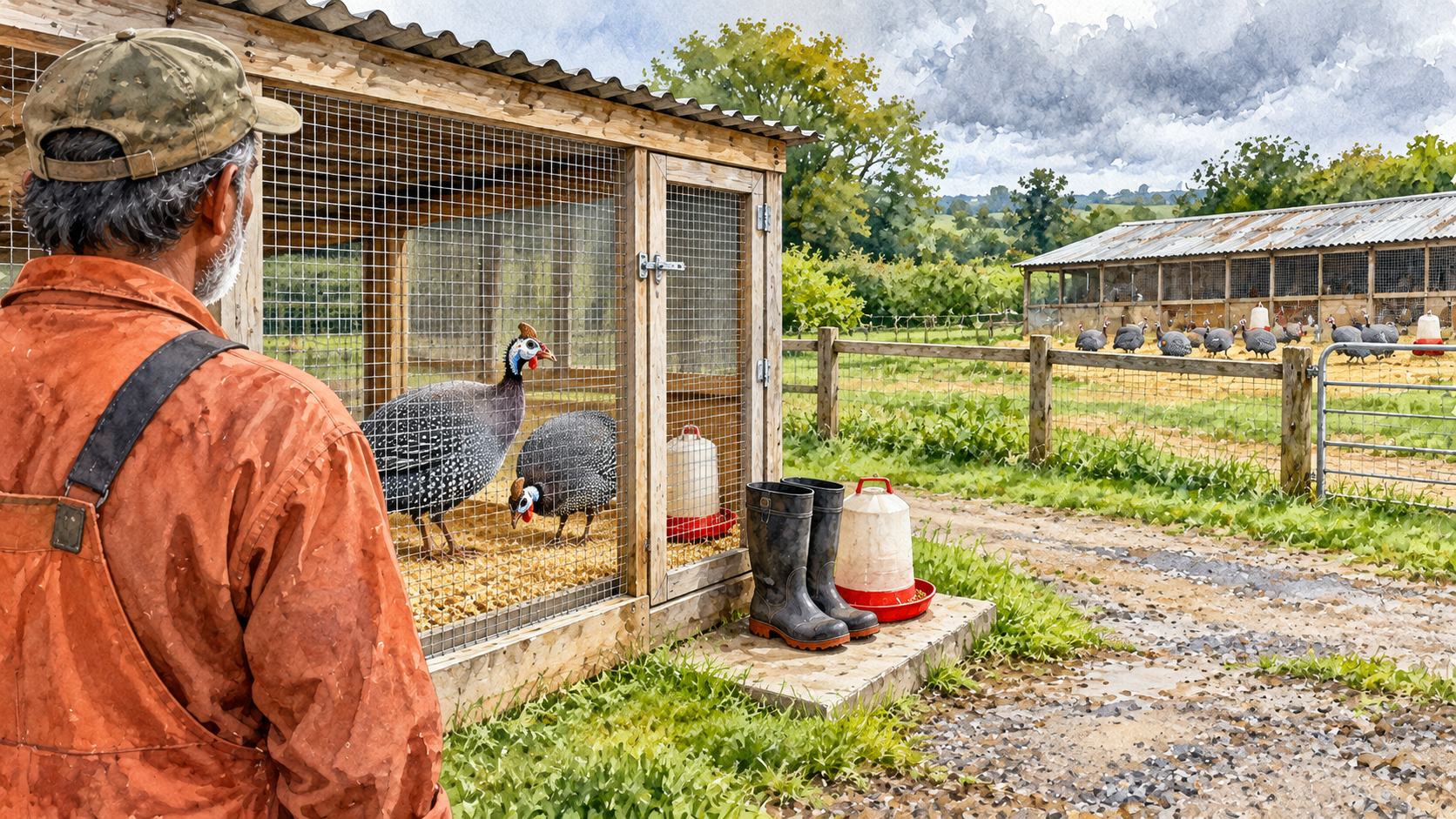
Quarantine new guinea fowl for at least 30 days before allowing them to join an established flock. Keep them in separate housing, use dedicated equipment, and monitor their health throughout the isolation period. This reduces the risk of introducing infectious diseases and parasites carried by apparently healthy birds. The 30-day separation recommendation for newly acquired poultry is a precaution rather than proof that every possible infection has been excluded.
Quarantine must be completed before the birds begin social introductions. Allowing newcomers to share a fence, drinking area, or enclosure with resident birds can compromise disease separation, even when the groups cannot physically mix.
Set Up a Separate Quarantine Enclosure
Use a detached building or secure pen that prevents direct contact with established poultry. Ideally, it should also prevent shared drainage, contaminated bedding, and unnecessary movement between bird areas. There is no universally established safe separation distance for every backyard farm; building layout, airflow, equipment movement, and wildlife access all influence exposure.
Guinea fowl can fly over ordinary fencing, so the quarantine enclosure needs a secure roof or covered run. Provide dry bedding, ventilation, weather protection, and enough room for the birds to move and rest comfortably. The housing needs of guinea fowl remain important during isolation, and the birds should not be crowded into a small temporary cage for an entire month.
Keep wild birds, rodents, and other animals away from the enclosure. Contaminated water, wild-bird droppings, and wildlife access to feed can create additional disease risks. Position feed and water where wildlife cannot readily reach them, and avoid allowing runoff from the isolation area to enter existing poultry housing.
Prepare the facility before the birds arrive so they can be transferred directly into their quarantine accommodation without passing through the established flock.
Prevent Disease From Moving Between Flocks
Separate feeding and cleaning equipment is essential. Assign the newcomers their own feeders, drinkers, buckets, feed scoop, and bedding tools. These items should remain within the quarantine area because infectious material can travel on equipment, clothing, and footwear.
Care for the established flock first and the quarantined birds afterward. This reduces the likelihood of carrying contamination from the newcomers into the main enclosure. Wear dedicated boots and outer clothing for quarantine work, then remove or clean them before entering other poultry areas. Wash your hands after handling the birds or their supplies. Poultry can also carry germs capable of causing illness in people, even when the animals appear healthy.
Remove wet bedding and manure as needed, and clean contaminated surfaces before applying any poultry-appropriate disinfectant. Follow the product label for dilution, contact time, and safe animal reentry. Disinfectants should not be sprayed directly onto birds or mixed with other cleaning chemicals.
Monitor the Birds Throughout Quarantine
Observe each guinea fowl daily, preferably while it is undisturbed. Appetite, drinking, movement, breathing, posture, and droppings provide useful information about changes in condition. Newly transported birds may initially appear unsettled, but persistent abnormalities should not be attributed automatically to relocation stress.
Watch particularly for respiratory difficulty, nasal discharge, facial swelling, unusual weakness, poor coordination, or unexpected deaths. These signs can occur with different illnesses and cannot establish a diagnosis without appropriate examination or testing. A bird that suddenly stops eating or cannot stand normally needs prompt veterinary assessment.
Keep a brief record of the arrival date, birds’ source, daily observations, and any veterinary findings. Individual identification is useful when several guinea fowl are being quarantined together, especially if only one develops symptoms.
The health condition of birds before purchase provides background information, but a satisfactory inspection at the seller’s property does not eliminate the need for quarantine.
What if a Guinea Fowl Becomes Sick?
Do not introduce any member of a quarantine group into the resident flock while a potentially infectious illness remains unresolved. Contact a poultry veterinarian if a bird develops persistent or serious symptoms, and explain when and where the birds were purchased. Other guinea fowl sharing its enclosure may also have been exposed, even if they appear healthy.
A fixed 30-day deadline should not override veterinary advice. If illness develops, the observation period may need to restart or be extended, depending on the suspected disease, testing, and outcome. The health problems affecting guinea fowl require different diagnostic approaches, so giving medication without identifying the cause may delay appropriate care.
Sudden unexplained deaths, serious neurological signs, or severe respiratory illness may indicate a reportable poultry disease. Contact a veterinarian or state animal-health authority promptly. Suspected serious avian disease can also be reported to USDA at 1-866-536-7593.
When Can New Guinea Fowl Leave Quarantine?
After at least 30 days, the newcomers may be ready to leave isolation if they remain healthy, have no unresolved exposure concerns, and have completed any veterinary testing or additional observation considered necessary. A healthy appearance alone cannot rule out every infection, so the birds’ source and health history remain relevant.
Do not add birds from another seller midway through the quarantine period and assume that the original end date still applies. A newly introduced bird creates another potential exposure, and the combined group may need a new observation period.
Once the health-related separation is complete, adult newcomers can begin gradual social introductions with the resident guinea fowl. Familiarization through a barrier and supervised contact are separate from quarantine; social acceptance should not be used as evidence of disease safety.
Clean and disinfect the emptied quarantine enclosure before using it for another group.
Practical Questions About Guinea Fowl Quarantine
Can guinea fowl from the same breeder quarantine together?
Generally, yes, when they arrive together and are healthy and compatible. Birds from unrelated sources are better managed separately because their exposure histories may differ.
Can a garage serve as a quarantine area?
Only if it provides adequate ventilation, safe temperatures, suitable space, and protection from vehicle exhaust, chemicals, and household contamination. A detached outbuilding is usually preferable to an attached garage.
Does quarantine require testing for every disease?
Not routinely. Testing depends on the birds’ source, health history, symptoms, local disease risks, and veterinary recommendations. No single test excludes every poultry infection.
Can guinea fowl receive visitors during quarantine?
Unnecessary visitors should be avoided. Anyone who must enter should follow the same clothing, footwear, and handwashing precautions as the primary caretaker.
2 thoughts on “How to Quarantine New Guinea Fowl”