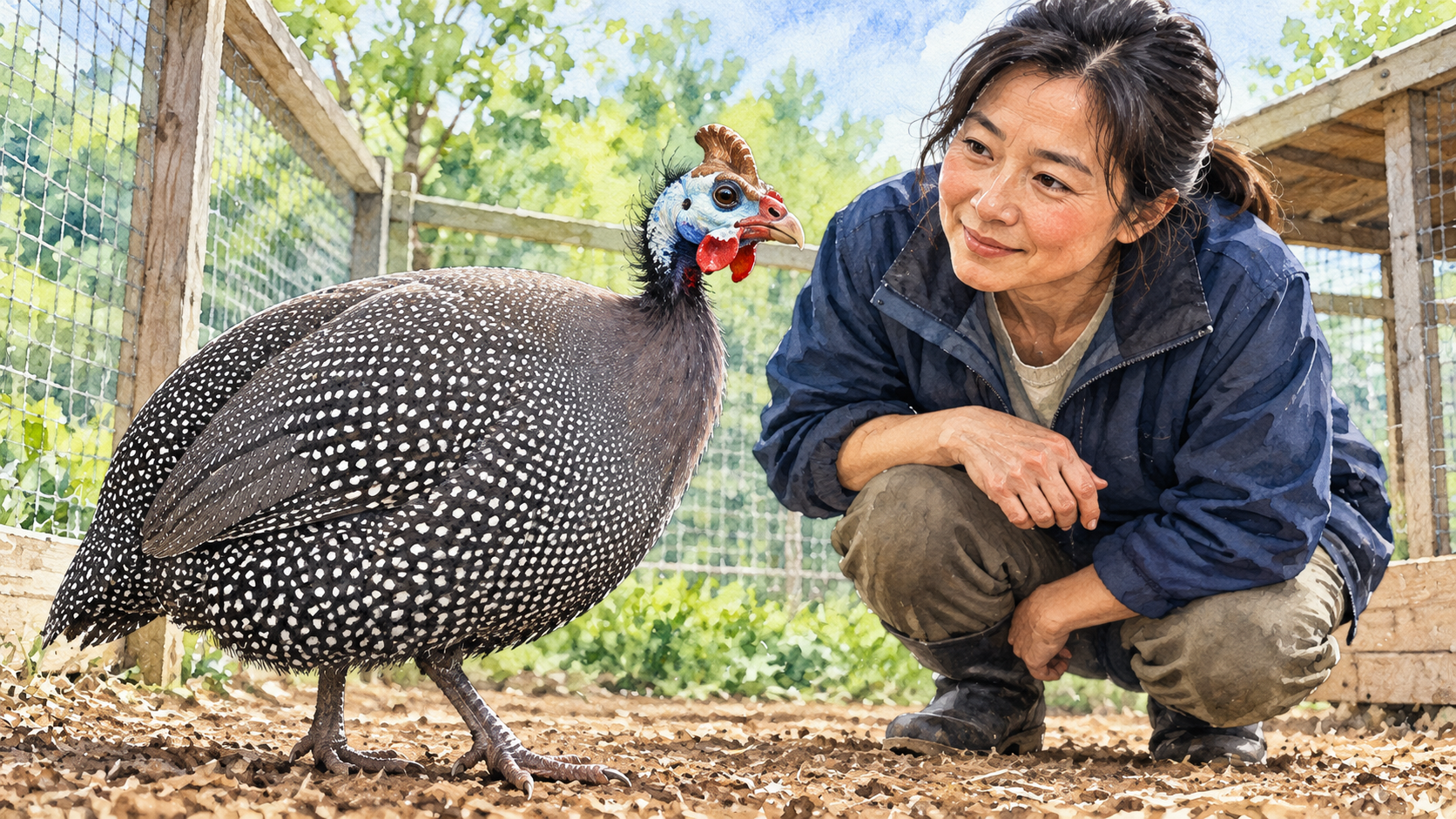
Choosing healthy guinea fowl begins before a bird is handled. Watch how the flock moves, feeds, breathes, and responds to its surroundings, then examine individual birds for problems that may be less obvious from a distance. A healthy guinea fowl should be alert, able to stand and walk normally, breathe without visible effort, and have clear eyes, clean nostrils, and an appropriate body condition for its age. Newly hatched keets should also have dry, well-formed down, steady footing, and no obvious abnormalities around the navel.
No visual inspection can guarantee that a guinea fowl is disease-free. Some infections produce few outward signs during their early stages, while transport stress may temporarily affect an otherwise healthy bird’s behavior. A dependable purchase decision combines observation, suitable handling, the condition of the seller’s flock, and credible health records rather than relying on appearance alone.
Observe the Birds Before Handling Them
An undisturbed flock reveals more about its condition than birds that have just been caught or placed in a transport box. Ask the seller to let you watch the guinea fowl in their usual enclosure for several minutes. Healthy birds generally remain responsive to activity around them, move with coordination, and show interest in their surroundings. Guinea fowl may be wary of unfamiliar people, so moving away from a visitor or producing alarm calls is not automatically a sign of poor health.
Pay attention to individuals that behave differently from the rest of the group. A bird standing motionless with its eyes partly closed, remaining hunched for an extended period, or repeatedly separating itself from active companions deserves closer examination. Normal poultry health indicators include alertness, coordinated movement, appropriate body condition, and regular feeding and drinking, although a brief observation cannot establish whether every bird is behaving normally throughout the day.
The surrounding flock provides useful context. If several birds appear lethargic, have discharge around their eyes, or show difficulty breathing, buying the one individual that looks healthy is still risky. Some infectious conditions affect birds differently or produce signs only after an incubation period. The seller should be willing to explain any unusual behavior rather than immediately dismissing it as normal for guinea fowl.
Adult birds may also react strongly to unfamiliar handling, particularly when they have been raised with limited human contact. Distinguishing fear from illness requires observing the bird before the disturbance occurs. Persistent weakness, poor balance, or respiratory difficulty is more concerning than ordinary avoidance of a stranger.
Examine the Eyes, Nostrils, and Breathing
A close examination should begin with the head because several important warning signs are visible without manipulating the bird extensively. Guinea fowl have naturally exposed facial skin, prominent wattles, and a hard casque, so their normal anatomy should not be confused with swelling or disease. The usual appearance of an adult guinea fowl provides a useful reference when evaluating birds with unfamiliar head shapes or pigmentation.
The eyes should be open, clear, and responsive, without persistent watering, swelling, cloudiness, or crusted material around the eyelids. Both nostrils should appear unobstructed and free from abnormal discharge. During a careful external examination of poultry, changes affecting the eyes, nostrils, facial tissues, and breathing can help identify birds requiring veterinary assessment.
Watch the guinea fowl while it is standing quietly. Breathing should not involve persistent gasping, pronounced tail movements with each breath, or repeated stretching of the neck to obtain air. Wheezing, coughing, unusual respiratory sounds, and mucus around the nostrils are reasons to postpone the purchase. Open-mouth breathing can also occur during overheating or acute stress, so it should be interpreted alongside temperature, handling, and the bird’s overall condition rather than assigned a diagnosis.
A bird with facial swelling or breathing abnormalities should not be considered healthy simply because it remains active. The warning signs associated with poultry respiratory illness overlap across several diseases and environmental problems, making a diagnosis impossible from appearance alone.
Check Body Condition, Feathers, and Skin
Feathers can conceal substantial differences in body condition. A guinea fowl may look rounded and well developed while having reduced breast muscle beneath its plumage. Ask the seller whether the bird can be examined gently, and assess its body condition without squeezing the chest or restricting breathing. The breastbone should be palpable, but an unusually sharp keel accompanied by little surrounding muscle can indicate poor condition. Excessive weight or a very prominent abdomen can also warrant closer evaluation.
Compare birds of similar age and breeding background rather than assuming every guinea fowl should have identical proportions. Domestic populations vary in size, and normal adult guinea fowl weights are not a substitute for examining muscle condition. An adult that is substantially smaller or thinner than familiar flockmates may have a different history, but unexplained weight differences should be discussed with the seller.
The feathers should generally form an orderly covering, without widespread breakage, extensive bald areas, or irritated skin. Normal molting can produce temporary unevenness, so isolated loose feathers do not establish illness. Persistent unexplained feather loss is a different concern, especially when accompanied by scabs, redness, repeated scratching, or visible parasites.
Examine accessible areas around the feather bases, beneath the wings, and near the vent when the bird can be handled safely. Lice may be visible moving among feathers, while mites or their associated debris can be more difficult to identify. Poultry health examinations include checking for external parasites, wounds, lesions, and abnormal feather condition. A brief inspection cannot exclude every parasite, but obvious infestation should prevent an immediate purchase.
Look at the Legs, Feet, and Walking Pattern
An apparently healthy guinea fowl should be able to bear weight on both legs and move without persistent limping, stumbling, or dragging a foot. Watch the bird turn, walk across its usual flooring, and negotiate small changes in direction. A bird that repeatedly loses its balance or sits because it cannot stand normally requires veterinary evaluation before being considered for purchase.
The shanks and feet should be free from significant swelling, open wounds, abnormal thickening, or painful-looking lesions. Check the undersides of the feet when examination is possible without distress. Raised sores, substantial scabs, and swelling around the foot pads can indicate injury or inflammatory conditions, although their precise cause cannot be established from appearance alone.
Guinea fowl have naturally strong legs and may move quickly when approached, so a sudden burst of movement is not a substitute for observing normal walking. An injured bird can sometimes run briefly before showing difficulty again. Changes in movement, balance, or coordination are important warning signs, particularly when they occur alongside weakness or abnormal head positioning.
Avoid purchasing a lame bird on the assumption that it merely needs rest unless an avian veterinarian has assessed the condition and the buyer is specifically prepared to provide appropriate ongoing care.
Inspect the Vent and Droppings
The vent should not have extensive crusted manure, abnormal discharge, bleeding, exposed tissue, or obvious inflammation. A small amount of occasional soiling does not establish disease, but persistent wet or heavily contaminated feathers around the vent deserve investigation. Young keets require particular attention because fecal material can sometimes accumulate around the vent and interfere with normal elimination.
Droppings offer additional information when viewed in the context of the entire flock. Poultry normally produce fecal material together with white urates, and their appearance can vary with diet, water intake, and other factors. Repeated watery diarrhea, blood, excessive mucus, or striking changes affecting several birds are more concerning than one unusual dropping.
The condition of the enclosure helps determine whether abnormal droppings are an isolated observation or part of a wider problem. Dirty drinking equipment, saturated bedding, and extensive manure accumulation increase health risks and make it harder to distinguish normal waste from disease-associated changes. A clean, consistently maintained poultry environment is an important consideration when evaluating the source of birds.
Neither droppings nor vent appearance can establish a specific diagnosis without appropriate testing. Birds with persistent digestive abnormalities should receive veterinary attention rather than being sold as healthy.
What Healthy Guinea Keets Should Look Like
Newly hatched keets require a different assessment from fully feathered adults. A healthy keet should have dry, fluffy down, clear eyes, a clean beak, reasonably strong movement, and a normal-looking navel area. It should be able to stand, move toward warmth, and show an appropriate response to its surroundings once it has recovered from hatching.
A freshly emerged keet may initially appear damp or tired before it has dried and recovered. That temporary condition should not be confused with a bird remaining weak, unable to stand, or visibly abnormal after the expected recovery period. The developmental differences between newly hatched and older guinea keets are important when comparing birds of different ages.
Examine the navel area for persistent openings, swelling, abnormal discharge, or attached tissue that should not be present. Check that the toes are normally positioned and that the keet can stand without repeatedly falling. A keet with severe leg deformities, obvious abdominal swelling, or persistent respiratory difficulty should not be accepted as an ordinary healthy hatchling.
The brooder itself provides valuable evidence. Keets should have access to appropriate heat, dry bedding, safe drinking equipment, and suitable feed. A group that remains persistently huddled, appears unusually inactive, or is repeatedly getting wet may be experiencing environmental problems. The early care requirements of guinea keets differ from those of adult birds, and unsuitable brooding conditions can undermine the health of otherwise viable hatchlings.
For shipped keets, examine the birds immediately upon collection or delivery and document serious concerns according to the seller’s stated procedure. A shipping guarantee does not replace the need to assess the condition of each arrival.
Questions to Ask the Seller Before Paying
A reliable seller should be able to provide consistent answers about the birds being offered. These questions establish the history behind what can be observed during a short visit.
| Question | What the answer helps establish |
|---|---|
| How old are the birds, and when did they hatch? | Whether their size and development are appropriate |
| Were they hatched here or obtained elsewhere? | Their source and possible exposure history |
| Have there been recent illnesses or unexpected deaths? | Whether the flock has experienced unresolved health problems |
| Have any birds received veterinary treatment? | Relevant medical history and outstanding concerns |
| What feed are they currently eating? | Whether feeding has been appropriate and consistent |
| Have the birds been exposed to newly introduced poultry? | Possible recent disease exposure |
| Is there documentation of applicable testing or certification? | Whether relevant health claims can be substantiated |
Ask about health problems affecting the entire flock, not only the individuals available for sale. An apparently healthy bird may have shared equipment, housing, or airspace with affected animals. A seller who recently experienced unexplained mortality should be able to describe the circumstances and whether veterinary investigation occurred.
Documentation also matters when a seller advertises birds as tested, certified, or disease-free. The National Poultry Improvement Plan provides a voluntary federal-state framework for specified poultry disease testing and certification. Its classifications cover particular diseases and participating operations, not every possible infection. Ask which certification or testing status applies to the seller’s birds rather than assuming that the phrase NPIP certified guarantees complete freedom from disease.
Age and sex claims deserve similar scrutiny. A breeder selling mature females should be able to explain how their sex was established, while a seller advertising newly hatched keets as guaranteed females should provide a credible basis for that claim. Sex identification in young guinea fowl can be difficult, so unsupported guarantees should not determine the purchase.
When purchasing locally, request an opportunity to observe the birds in their normal accommodation. At an auction or poultry swap, where that may be impossible, the buyer has less information about housing history and previous exposure. Purchases at poultry swaps carry additional uncertainty because birds from different sources may be brought into close proximity, and sellers may have limited records available.
The Condition of the Seller’s Property Matters
A clean bird in a dirty, overcrowded enclosure is not necessarily a safe purchase. Evaluate whether the seller’s facilities provide sufficient space, fresh water, appropriate feed, ventilation, and protection from weather. Persistent wet litter, strong ammonia odors, visibly contaminated drinkers, or multiple sick-looking birds suggest management problems that deserve investigation.
Look at how different groups are housed. Newly acquired birds, young keets, and mature poultry should not automatically be mixed without consideration of their different needs and disease risks. The basic standards for responsible guinea fowl housing include appropriate shelter and predator protection, although a seller may use different suitable designs.
A reputable breeder should also handle birds without unnecessary force or prolonged distress. Rough catching, overcrowded transport crates, and careless handling can cause injury even when birds were healthy beforehand. Excessive struggling during a short examination may make some observations difficult, so the seller should be willing to allow calm inspection and answer questions about anything that cannot be assessed directly.
A professionally maintained facility is not automatically disease-free, and a modest family farm is not necessarily a poor source. The quality of care, health records, and condition of the birds provide stronger evidence than the appearance or size of the business.
When to Walk Away From a Guinea Fowl Purchase
A purchase should be postponed or declined when serious warning signs cannot be explained satisfactorily. Particularly concerning observations include persistent breathing difficulty, pronounced weakness, inability to stand normally, obvious untreated wounds, significant facial swelling, repeated diarrhea, or several birds showing similar abnormalities.
The seller’s response is relevant. Someone who refuses reasonable questions about recent mortality, discourages any inspection, or insists that visibly sick birds are healthy without veterinary assessment creates unnecessary uncertainty for the buyer.
Do not purchase an obviously ill bird merely because the seller offers a discount. It may require substantial veterinary treatment, and bringing it home could expose existing poultry to infection. The possibility of serious contagious poultry disease also means that unexplained deaths, severe respiratory signs, neurological abnormalities, or sudden illness affecting multiple birds should be taken seriously. Suspected reportable disease requires prompt contact with the appropriate veterinarian or animal-health authority.
A single cosmetic imperfection does not necessarily make an animal unsuitable. An old, healed injury or an unusual feather pattern may have little effect on welfare. However, determining whether an abnormality is harmless requires appropriate evidence, especially when the bird’s ability to move, feed, or behave normally may be affected.
The purpose of the inspection is not to find a physically perfect guinea fowl. It is to identify a bird that appears healthy, has been responsibly maintained, and comes with enough reliable information to make a defensible purchasing decision.
Additional Questions About Inspecting Guinea Fowl Before Purchase
Can a guinea fowl look healthy and still carry disease?
Yes. Some infections have incubation periods during which infected birds show few or no visible abnormalities. A normal appearance reduces certain immediate concerns but cannot replace dependable sourcing, relevant health records, and appropriate disease-prevention precautions.
Should you handle every guinea fowl before buying it?
Not necessarily. Handling every bird may be impractical and can create unnecessary stress, particularly in a large group. Observe all birds from a distance first, then arrange careful examination of the individuals being purchased where appropriate. Birds requiring examination should be restrained safely without restricting breathing.
Does a clean-looking beak guarantee that a guinea fowl is healthy?
No. A clean beak and nostrils are favorable observations, but they provide information about only part of the bird’s condition. Respiratory illness, internal disease, injury, or poor body condition may be present without visible material around the beak.
Can you trust a seller who offers a health guarantee?
A written guarantee can clarify what happens if a bird develops problems shortly after purchase, but its value depends on the actual terms. Ask what conditions are covered, whether documentation is required, and whether the seller offers a refund, replacement, or another remedy. A guarantee does not establish that the bird is medically healthy at the time of sale.
One thought on “How to Choose Healthy Guinea Fowl Before Buying”