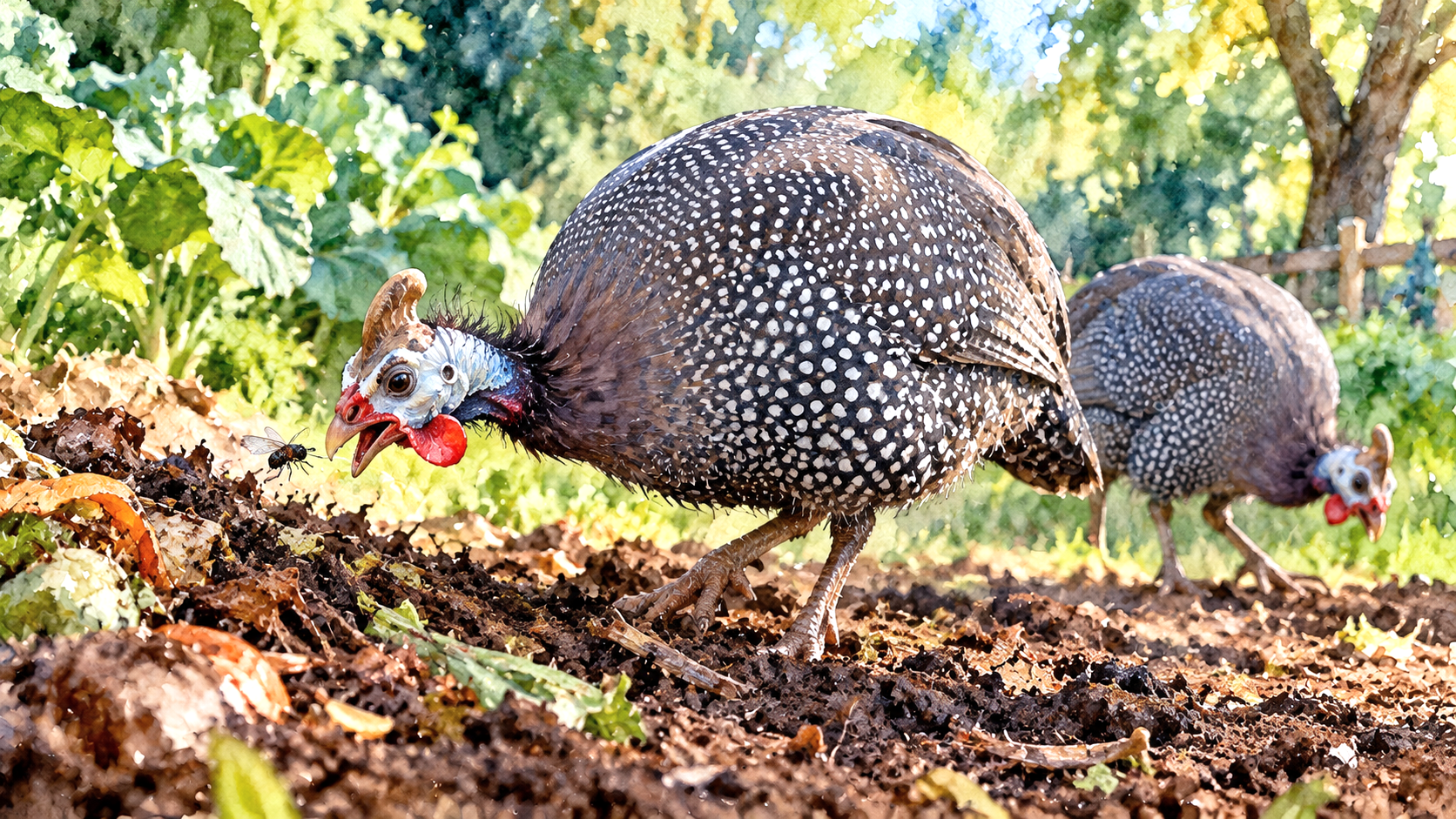
Guinea fowl eat mosquitoes, flies, beetles, grasshoppers, termites, ants, caterpillars, and many other insects. However, they are predominantly ground-foraging birds, so insects resting on vegetation, crawling through grass, or moving across soil are generally more accessible than those flying high above them. Their appetite for insects is one reason guinea fowl are commonly raised on farms and rural properties. Although their diet includes numerous insect groups, the amount they consume depends on prey availability, habitat, season, and individual foraging behavior. Eating a particular insect also does not establish that guinea fowl can substantially reduce its population.
Do Guinea Fowl Eat Mosquitoes?
Guinea fowl can consume mosquitoes, and mosquitoes are included among the invertebrates eaten by domestic guinea fowl. Nevertheless, there is little direct scientific evidence measuring how frequently they capture mosquitoes or whether their feeding produces meaningful reductions in mosquito abundance.
Unlike swallows, swifts, and other birds specialized for capturing flying insects, guinea fowl spend most of their feeding time walking and pecking at accessible food. They may encounter mosquitoes resting on vegetation or moving close to the ground, but they are not specialized aerial hunters.
Mosquito behavior further limits these encounters. Many species rest in shaded vegetation during the day and become more active around dusk or after dark. For example, Culex mosquitoes commonly feed between dusk and dawn, when guinea fowl are less likely to be actively foraging.
Mosquitoes also develop through aquatic stages. Their larvae and pupae live in water, making them largely inaccessible to guinea fowl searching terrestrial habitats. The life cycle of Aedes mosquitoes illustrates how insects can complete much of their development without entering the birds’ usual feeding environment.
Consequently, a flock may occasionally consume adult mosquitoes without significantly affecting the number emerging from nearby breeding sites.
Do Guinea Fowl Eat Houseflies and Other Flies?
Flies are part of the recorded diet of helmeted guinea fowl, although the quantity consumed varies between habitats and studies. Birds are most likely to encounter flies when they settle on surfaces, move through vegetation, or become accessible near the ground.
A field investigation examining the diet of helmeted guinea fowl in South African grasslands identified flies among numerous invertebrates recovered from the birds’ crops. Worms and beetles accounted for considerably larger portions of the animal material examined, suggesting that flies were not a dominant food source in that population.
Houseflies are relatively mobile, and their ability to take flight quickly can make them difficult for terrestrial birds to capture. Some guinea fowl may opportunistically catch individual flies, particularly when the insects are resting, but repeated fly-catching is not their principal feeding behavior.
Fly larvae may also be encountered in suitable ground material, although guinea fowl should not be encouraged to search through decaying carcasses, contaminated manure, or rotting waste. Such environments can contain harmful microorganisms and toxins.
The presence of guinea fowl therefore offers no assurance that flies breeding around livestock buildings, compost, or manure will decline significantly.
Which Beetles and Ground Insects Do Guinea Fowl Eat?
Beetles are among the better-documented animal foods consumed by wild helmeted guinea fowl. Their accessibility makes them suitable prey for birds that spend much of the day examining soil, leaf litter, and low vegetation.
Crop-content investigations from deciduous fruit farms in South Africa identified weevils, darkling beetle larvae, sap beetles, and seed bugs among the invertebrates consumed. The same investigation recorded grasshoppers and moth larvae, with different prey groups appearing more frequently during different seasons.
The insects guinea fowl may encounter include:
- Ground beetles: Adult beetles moving across soil or beneath loose vegetation.
- Weevils: Small beetles associated with plants, seeds, and agricultural crops.
- Darkling beetles and larvae: Insects found in soil, litter, and other suitable habitats.
- Grasshoppers and locusts: Jumping insects accessible among grasses and field vegetation.
- Crickets: Ground-dwelling insects that may be exposed while birds forage.
- Caterpillars: Moth and butterfly larvae feeding on plants or moving across the ground.
- Ants and termites: Social insects encountered around colonies, exposed soil, and foraging trails.
- Earwigs: Ground-associated insects that may be eaten when uncovered.
Not all of these insects are agricultural pests. Some ground beetles, for example, prey on other invertebrates and are valuable components of agricultural ecosystems. Guinea fowl are opportunistic feeders rather than birds that consistently distinguish beneficial insects from harmful ones.
Termites, Ants, and Other Social Insects
Termites can form an important component of guinea fowl diets in suitable habitats. Unlike many solitary insects, termites occur in colonies and may become locally abundant when workers, soldiers, or winged reproductive individuals are accessible.
Research on wild helmeted guinea fowl in northern Cameroon identified termites as an important food source. Their contribution varied with local environmental conditions and the availability of other foods.
Ants are also consumed, although some species can defend themselves through biting, stinging, or chemical secretions. Guinea fowl may investigate exposed nests or collect individual ants from vegetation and the ground, but neither ants nor termites are consumed uniformly across every habitat.
These observations are useful evidence of dietary flexibility. They do not establish that domestic guinea fowl will consistently suppress termite colonies or eliminate ant infestations around buildings.
Why Guinea Fowl Eat More Insects in Some Seasons
Insect availability changes with rainfall, temperature, vegetation growth, and agricultural activity. During warm, productive periods, numerous insects become active near the ground, creating additional feeding opportunities.
A study of scavenging helmeted guinea fowl in Benin found that animal material represented a greater proportion of the birds’ crop contents during the rainy season than during the dry season. Similar seasonal relationships have been documented in other guinea fowl populations.
The effect is not restricted to the number of insects present. Vegetation structure influences how readily birds can see and capture prey. Short grass may expose moving beetles and grasshoppers, whereas dense vegetation can conceal insects or prevent guinea fowl from reaching them easily.
Flock movement introduces further variation. Birds roaming across extensive areas may encounter more types of insect habitat, but they do not necessarily search each location thoroughly. Guinea fowl using familiar open spaces may spend little time in the dense vegetation where certain insects are most abundant.
Can Guinea Fowl Reduce Mosquitoes, Flies, and Beetles on a Property?
The most defensible conclusion is that guinea fowl consume a variety of insects without providing predictable control of any particular group.
Beetles, grasshoppers, and other terrestrial insects are generally more accessible to guinea fowl than fast-flying insects. Even among ground-dwelling species, predation depends on encounter rates, prey defenses, and the availability of alternative food.
Evidence from guinea fowl feeding studies establishes that insects form part of the diet, but identifying insect remains inside a bird does not reveal how much the surrounding population has declined. Such a conclusion requires field measurements comparing insect abundance under controlled conditions.
Mosquitoes may continue emerging from standing water, flies may reproduce in suitable organic material, and beetles can move into a property from surrounding habitat. A guinea fowl flock cannot reasonably be expected to intercept every insect entering or developing in these environments.
Similarly, the evidence concerning guinea fowl eating ticks demonstrates that observed consumption and measurable population suppression are not interchangeable. Findings involving one arthropod group should not be extended automatically to mosquitoes, flies, or beetles.
Guinea fowl can contribute natural predation within the areas they forage, but their overall usefulness for farm pest control depends on the species involved and the wider management conditions.
Feeding Guinea Fowl Without Relying on Insect Consumption
Even a property supporting large numbers of insects may not provide a nutritionally adequate diet throughout the year. Guinea fowl consume plant material alongside animal prey, and their nutrient intake changes as natural food sources become more or less available.
A balanced adult guinea fowl ration should remain available rather than withholding essential nutrition in an attempt to increase insect hunting. Restricting food can compromise welfare without establishing that the birds will capture more of the insects a keeper wants removed.
For guinea fowl kept in a confined run, natural insect encounters may be relatively limited, particularly when vegetation is sparse. Appropriate foraging enrichment can encourage normal feeding behavior without requiring the birds to depend on whatever insects enter their enclosure.
Insect-rich locations also require attention to chemical exposure. Guinea fowl should not forage in areas where pesticide residues, treated seeds, or contaminated insects could expose them to harmful substances. Their dietary safety depends on avoiding contaminated food as well as providing suitable nutrition.
Questions About Guinea Fowl Eating Insects
Do guinea fowl eat cockroaches?
Guinea fowl may eat cockroaches they encounter, particularly species moving through accessible outdoor habitats. However, there is no reliable evidence that keeping guinea fowl eliminates cockroach populations, especially species living inside buildings.
Do guinea fowl eat wasps and bees?
They may occasionally consume bees, wasps, or other stinging insects, but these are not established as major components of their diet. Stings can also injure birds, so guinea fowl should not be deliberately encouraged to disturb nests.
Will guinea fowl eat Japanese beetles?
Japanese beetles are potential prey because adult beetles frequently occur on vegetation accessible to foraging birds. Direct evidence establishing how frequently guinea fowl consume them or whether they significantly reduce infestations is limited.
Do guinea fowl eat insects at night?
Guinea fowl are predominantly daytime foragers and ordinarily spend the night resting. Nocturnal insects may escape most encounters with the flock unless they remain accessible during daylight.
Can guinea keets eat insects?
Yes. Small insects can form part of a developing keet’s natural diet, but young birds still require an appropriately balanced guinea keet starter ration. Large, hard-bodied, or potentially stinging insects should not be deliberately introduced as food for newly hatched keets.