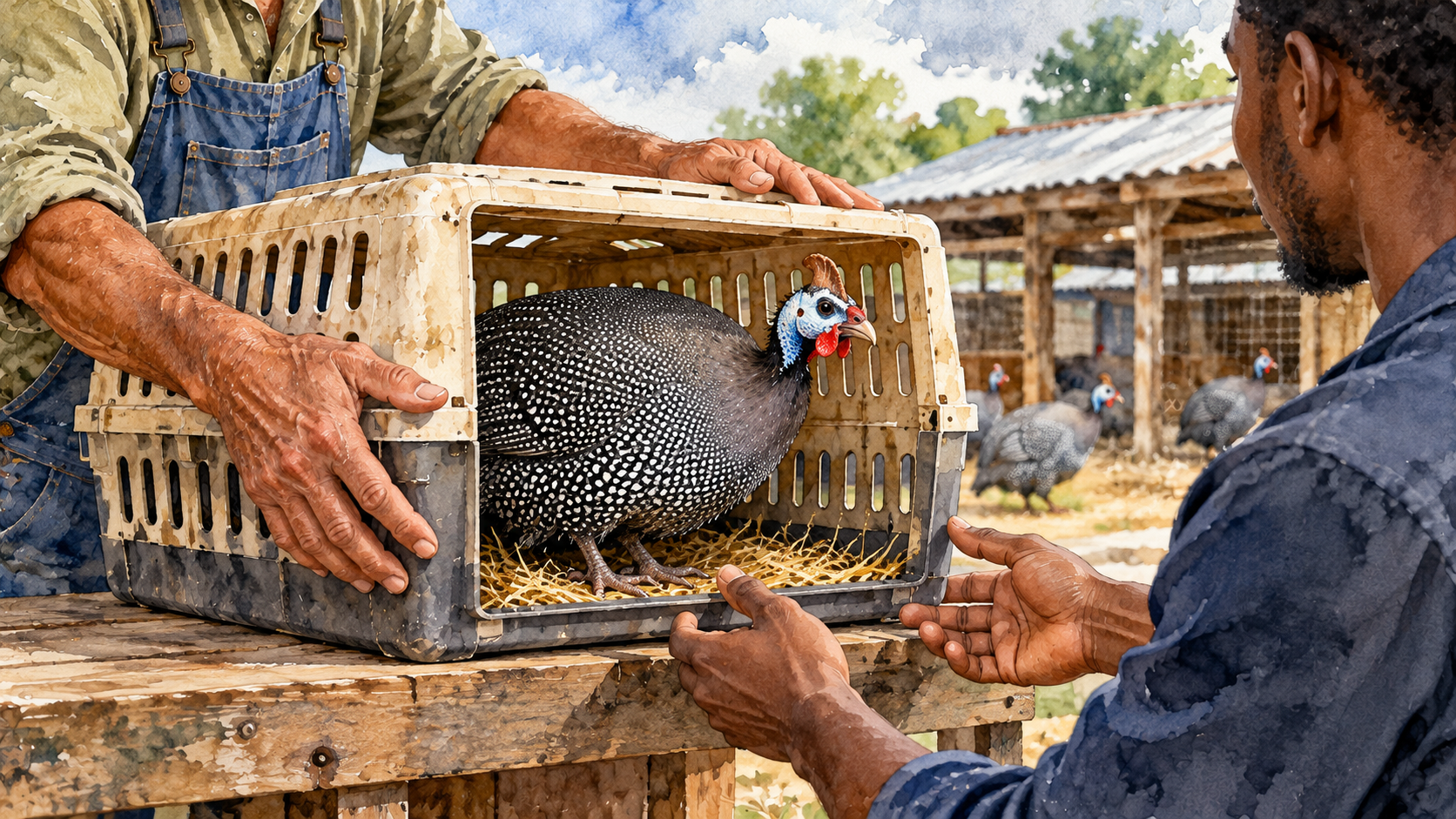
Guinea fowl generally cost $5–$12 per newly hatched keet, $15–$35 per adult bird, and approximately $30–$60 per dozen hatching eggs in the United States. These are practical shopping ranges rather than fixed market prices. Common Pearl Gray keets are often among the least expensive options, while established adults, unusual color varieties, and specially selected breeding stock may command higher prices.
Age, quantity, seller location, availability, and shipping requirements can substantially change the final amount. Some hatcheries advertise keets for less than $5 each but require large minimum orders, while smaller purchases may cost considerably more per bird. A buyer ordering six guinea fowl may therefore pay a higher unit price than someone purchasing thirty, even when both orders contain the same variety.
Guinea Fowl Purchase Prices in 2026
Current US hatchery listings and private-sale advertisements provide the following reference points. Prices are in US dollars and exclude additional charges unless otherwise stated.
| Guinea fowl type | Approximate purchase price | Pricing considerations |
|---|---|---|
| Common day-old keets | $5–$9 each | Quantity discounts and minimum orders are common |
| Small-quantity keet orders | $8–$12 each | Higher unit prices may apply to smaller groups |
| Assorted-color keets | $4–$10 each | Seller chooses some or all colors |
| Selected color varieties | $6–$15+ each | Unusual colors may command premiums |
| Older juvenile guinea fowl | $10–$25 each | Price generally increases with age |
| Adult guinea fowl | $15–$35 each | Sex, condition, location, and availability influence price |
| Selected breeding adults | $30–$50+ each | Documented breeding characteristics may increase value |
| Hatching eggs | $30–$60 per dozen | Local eggs may cost less; specialty eggs may cost more |
The lower end of these ranges is supported by assorted keets advertised at $4 each, while some hatcheries list individual birds considerably higher when purchased in small quantities. A six-keet minimum purchase option priced at $12 per bird illustrates how smaller orders can differ from bulk pricing.
Adult prices are less standardized because mature guinea fowl are frequently sold through local farms and private advertisements rather than national hatcheries. Their asking prices are therefore more variable, and a listed price does not establish what every buyer will pay.
These figures provide a reasonable starting point for comparing offers, but availability and seller terms should be checked before placing an order.
How Much Do Guinea Keets Cost?
Newly hatched guinea fowl, known as keets, are the most widely available form sold by commercial poultry hatcheries. Standard Pearl Gray keets frequently cost approximately $5–$8 each, although the quantity ordered can move the price above or below that range.
For example, Pearl Gray keets are listed at $7.77 each for smaller orders, with the advertised price falling to $5.91 each for orders of 30–59 birds and $5.18 for 60 or more. The minimum order is six keets. Another hatchery lists Pearl Gray keets at $7.49 for smaller quantities, with reduced prices for larger purchases.
A buyer purchasing just a few birds should therefore avoid calculating the total using a supplier’s lowest advertised price. That price may apply only to orders substantially larger than the intended flock.
The age of the keets also affects their value. Newly hatched birds are usually less expensive than juveniles that have already been fed, housed, and raised for several weeks. A seller asking more for older birds may be accounting for the additional time and resources invested before sale, although the asking price should still reflect the birds’ actual condition.
Most standard hatchery keets are sold as unsexed birds, meaning the seller does not guarantee whether individual keets are male or female. Buyers who specifically need laying females should not assume that purchasing six unsexed keets will produce six hens. The limitations of identifying the sex of guinea keets can influence the value of birds advertised with a guaranteed sex.
How Much Do Adult Guinea Fowl Cost?
Adult guinea fowl commonly appear in local US advertisements for approximately $15–$35 each. A healthy, fully grown bird with a known age and sex may sell for more than an unsexed juvenile, particularly where mature birds are difficult to obtain.
Private-sale examples illustrate the variation. A 2026 listing for four adult guinea fowl at $100 works out to $25 per bird. Another local advertisement offered mature guinea fowl for $20 per bird in pairs. These are individual asking prices rather than a national market average, and such listings may expire or change.
A higher adult price may reflect an established breeding history, a less common color, or a seller’s investment in raising the birds. It should not automatically be interpreted as evidence of superior quality. Two birds of the same age and variety may differ considerably in health, condition, and reproductive history.
Where a seller advertises mature hens, confirm whether the birds have actually been sexed and whether their age is known. The physical differences between male and female guinea fowl can be subtle, and a seller’s confidence does not replace dependable identification.
For adult purchases, local collection is often more practical than arranging long-distance transport. The buyer can examine the birds before payment, assess their condition, and avoid some of the complications associated with transporting mature poultry. The health of guinea fowl before purchase is especially important when buying birds from unfamiliar private sellers.
How Much Are Guinea Fowl Hatching Eggs?
Guinea fowl hatching eggs commonly cost approximately $30–$60 per dozen through specialist breeders and hatcheries, although local private sellers may charge less and some specialty listings exceed that range.
A dozen guinea fowl hatching eggs is advertised at $49.99, equivalent to approximately $4.17 per egg before any additional charges. Other breeders sell eggs individually or require purchases in multiples of twelve. For example, assorted guinea fowl hatching eggs listed at $4.30 each represent $51.60 for twelve eggs, although availability is seasonal.
Egg prices can differ according to the breeder’s reputation, the varieties represented, and whether the buyer is purchasing a specified color or an assortment. The price of a dozen eggs should not be confused with the cost of obtaining twelve live keets. Fertility and hatchability are separate considerations, and not every purchased egg will necessarily develop and hatch.
Shipping can further affect the result because hatching eggs may be damaged by rough handling, unsuitable temperatures, or delays. A relatively expensive local purchase may sometimes be preferable to cheaper eggs transported over a long distance, depending on the circumstances.
The choice between buying guinea keets, adults, or hatching eggs should account for the buyer’s equipment and experience. The sticker price of the eggs alone does not establish the eventual cost per surviving bird.
Do Different Guinea Fowl Colors Cost More?
Color can influence purchase price, but not every variety costs substantially more than Pearl Gray. Commonly produced Lavender, Royal Purple, and White guinea fowl may be priced only slightly above standard birds when purchased from a hatchery maintaining large breeding populations.
For example, Royal Purple keets are advertised at $7.99 each in smaller quantities, compared with $7.49 for Pearl Gray birds from the same supplier. These prices illustrate a modest premium rather than a dramatic difference. More unusual varieties may be priced higher, especially when only a few breeders maintain them or their production is limited.
Certain specialty birds also carry prices associated with their breeding background rather than plumage alone. Meat-oriented French Pearl guinea fowl, for instance, may be sold through specialized suppliers at different prices and minimum quantities from ordinary hatchery keets. Some French guinea keets are listed at $4.50 each for orders of fewer than 50, demonstrating that a specialized production strain does not necessarily cost more per bird.
Color descriptions should be compared carefully. A seller may advertise an unusual variety using a name that another breeder applies differently. The different domestic guinea fowl color varieties are distinguished by inherited pigmentation and spotting patterns, but color names are not equally standardized across all commercial sellers.
A premium is easier to evaluate when the breeder provides photographs of mature birds, accurate variety descriptions, and useful information about the breeding stock. An uncommon name alone is not a sufficient reason to pay a substantially higher price.
How Quantity Discounts Affect Guinea Fowl Prices
Many hatcheries use tiered pricing, reducing the cost per keet as the order size increases. Larger orders can improve production and shipping efficiency for the seller, but they may also require the buyer to purchase more birds than originally intended.
Consider the difference between purchasing six Pearl Gray keets at $12 each and thirty at $7.22 each. The smaller order costs $72 before additional charges, while the larger order costs $216.60. The second purchase has a lower price per bird but requires more than three times as much money upfront and produces five times as many birds.
A 2026 hatchery price schedule lists those separate small-order and bulk-order options. Its tiered pricing also shows why comparing only the advertised individual price can be misleading.
Minimum order quantities are particularly important. One breeder may accept six keets, another may require fifteen, and a specialty assortment may be available only in groups of thirty. Some suppliers permit different guinea fowl colors to be combined to satisfy the minimum, while others restrict orders to particular products.
The appropriate number of guinea fowl for a farm should be decided before taking advantage of quantity discounts. A lower per-bird purchase price is not a bargain if it forces the buyer to obtain animals that cannot be properly accommodated.
Why Prices Change by Season and Location
Guinea fowl availability is seasonal at many US hatcheries. Commercial shipments commonly concentrate around late spring and summer, although exact hatch dates depend on the supplier and its breeding program. The supply of locally raised birds may also increase when seasonal breeding produces larger numbers of keets.
A 2026 assortment listing priced at $4 per keet illustrates how seasonal hatch dates and limited availability can influence purchasing opportunities. A low advertised price may be attached to a narrow collection window or a limited number of birds rather than year-round inventory.
Local demand also affects prices. In areas where several farms raise guinea fowl, buyers may have more opportunities to purchase birds directly from breeders. In regions where guinea fowl are uncommon, obtaining a particular age or variety may require transportation from another state.
Geographic differences are especially noticeable when comparing adult birds. Mature guinea fowl sold for local pickup do not have a standardized national price, and sellers may adjust asking prices according to availability, demand, age, and breeding history.
For buyers seeking a particular color or group size, ordering during the supplier’s regular season may provide more choices than searching after the main hatch period has ended. However, the lowest price is not necessarily associated with the earliest reservation date, and availability should be confirmed before payment.
Shipping, Minimum Orders, and Other Purchase Charges
The advertised price of a guinea fowl may not be the amount ultimately charged at checkout. Shipping, packaging, small-order fees, minimum purchase requirements, and applicable taxes can alter the total considerably.
Some suppliers include shipping within the advertised price, while others calculate it separately according to destination and order size. One hatchery offering Pearl Gray keets from $7.77 each advertises shipping as included, whereas other suppliers use different pricing structures. A higher per-bird price can therefore produce a lower final invoice when compared with a cheaper listing that adds substantial delivery charges.
Live-poultry shipping also involves animal welfare considerations. Keets must be transported under appropriate conditions, and shipping dates may be restricted by temperature, location, or carrier arrangements. Extreme weather can make an otherwise available purchase unsuitable for immediate shipment.
Interstate poultry movements may be subject to state animal-health requirements. The USDA’s National Poultry Improvement Plan establishes testing and certification programs relevant to poultry breeding and movement, but individual state entry requirements should also be checked. Some destinations have additional restrictions, and not every hatchery ships guinea fowl to every US state.
Before purchasing, calculate the full invoice using the intended quantity, delivery location, and shipping method. A comparison based on total delivered cost is more useful than comparing the lowest advertised unit prices.
Comparing the Cost of Buying Six Guinea Fowl
A six-bird purchase illustrates how the type of seller can influence the initial price. The following example uses realistic 2026 advertised prices and assumes that any supplier minimums are satisfied.
| Purchase option | Unit price | Cost for six |
|---|---|---|
| Pearl Gray keets from a small-order hatchery option | $12.00 | $72.00 |
| Pearl Gray keets from a hatchery listing | $7.77 | $46.62 |
| Locally purchased juveniles at $15 each | $15.00 | $90.00 |
| Locally purchased adults at $25 each | $25.00 | $150.00 |
These amounts represent the purchase price of the birds, not the complete expense of obtaining and raising them. The $7.77 keet option, for example, comes from a supplier requiring a minimum order of six. The adult and juvenile examples reflect representative private-sale asking prices rather than guaranteed offers available in every region.
A purchase of six hatching eggs would be even cheaper than some live-bird orders at certain local prices, but six eggs cannot be assumed to produce six healthy keets. Their eventual hatch results depend on fertility, egg condition, storage, handling, and incubation.
The cost of raising guinea fowl after purchase is a separate expense involving housing, equipment, feed, bedding, and veterinary care. Those costs should not be overlooked when choosing between a less expensive young bird and a higher-priced mature one.
Questions About Buying Guinea Fowl at Different Prices
Are guinea fowl cheaper at livestock auctions?
They can be, particularly when several birds are sold together or local demand is low. However, auction prices vary widely, and buyers may have limited opportunities to assess the birds’ health, age, or background. A low price does not eliminate the potential risks associated with purchasing unfamiliar poultry.
Can you buy just one guinea keet?
Some breeders may sell a single keet for local pickup, but commercial hatcheries frequently impose minimum quantities for shipping. Guinea fowl are social birds, so keeping a guinea fowl alone is not generally a suitable long-term arrangement. A single keet purchase may make sense only when the buyer already has an appropriate group of similarly aged companions and can introduce the bird safely.
Do female guinea fowl cost more than males?
They sometimes do when sex has been established reliably, particularly if buyers want females for egg production. However, many hatcheries sell young keets without sex guarantees, and prices for mature birds vary according to the seller and local demand. An advertisement describing a bird as female should not automatically justify a premium without dependable identification.
Is it cheaper to buy guinea fowl directly from a breeder?
Direct local purchases can avoid some shipping and packaging charges, but breeders may charge more for unusual colors, documented breeding stock, or mature birds. Comparing the actual price, age, condition, and collection arrangements provides a better assessment than assuming one type of seller is always cheaper.
One thought on “How Much Do Guinea Fowl Cost to Buy?”