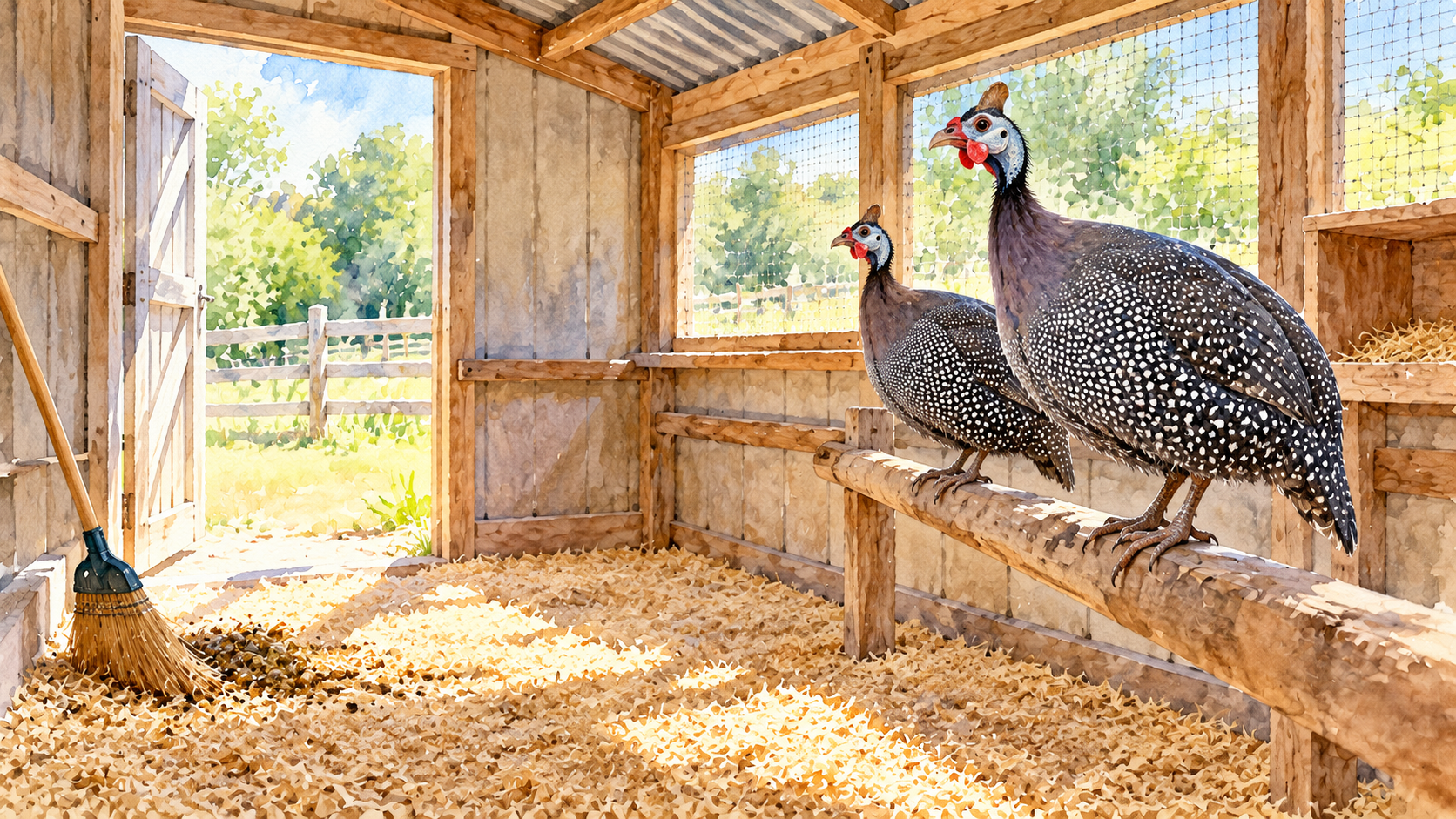
Guinea fowl have a mild natural bird smell, but healthy birds living in clean, dry conditions should not make their housing smell strongly offensive. Most unpleasant guinea fowl odors come from accumulated droppings, damp bedding, spilled feed, or inadequate ventilation rather than from the birds’ feathers and skin. A sharp ammonia smell is a warning about air quality, not an unavoidable part of keeping guineas.
What Do Guinea Fowl Naturally Smell Like?
Up close, a guinea fowl may have a faint earthy or feather-like odor, particularly after rain or dust bathing. There is no established evidence that domestic guinea fowl normally produce a distinctive, powerful body odor that makes them smellier than other poultry. The smell noticed around a flock is more often associated with the environment in which they live.
Birds that spend much of the day outdoors disperse their droppings over a broader area. The small-flock guinea fowl housing guidance recommends shelter, enough room, and absorbent floor litter for confined birds. Whether a flock is free-ranging or confined affects where manure accumulates, so two equally sized flocks can create very different smells.
Why Does a Guinea Fowl Coop Smell Bad?
Droppings building up under roosts
Guinea fowl often sleep perched above the ground, concentrating manure below the places they roost. That can create a noticeable odor in an otherwise acceptable coop. The location of guinea fowl roosts influences where this buildup occurs, particularly when birds return to the same perch night after night.
Wet bedding and spilled water
Moisture makes manure-related odors more persistent and encourages ammonia release. A USDA Agricultural Research Service review of litter moisture found that increasing moisture and temperature can raise ammonia emissions from poultry litter. Although those measurements mainly concern chicken operations, the underlying decomposition process is relevant to guinea fowl housing as well.
Leaking drinkers, rain entering through gaps, and bedding that cannot dry are common contributors. Appropriate water access and waterer placement should minimize spills without restricting the birds’ drinking supply.
Insufficient airflow
A closed, stuffy building retains moisture and gaseous waste. Poultry air-quality research identifies ammonia as an irritant linked to moisture, litter conditions, and ventilation. Sealing a coop tightly in cold weather may keep some warmth inside but can worsen the indoor environment. Winter housing arrangements must allow fresh-air exchange without exposing birds to direct chilling drafts.
Spoiled feed or persistently dirty surfaces
Feed scattered into damp litter can decay and create a sour or musty smell. Manure on perches, walls, and around waterers adds to the odor burden. A regular coop sanitation routine addresses these accumulating materials; spraying fragrance into the housing does not remove them.
What Different Coop Smells May Indicate
| Smell or observation | Likely environmental concern | Practical response |
|---|---|---|
| Light, earthy poultry smell | Ordinary birds and limited dry manure | Continue routine checks |
| Sharp, stinging ammonia odor | Manure breakdown and poor air quality | Improve fresh-air exchange and address wet litter immediately |
| Musty smell | Damp bedding, feed, or possible mold | Locate and remove wet or spoiled material safely |
| Sour, rotting smell | Decomposing feed or organic waste | Inspect sheltered corners and feeding areas |
| Sudden unusual odor without an obvious source | Cause uncertain | Inspect housing and birds; consult a veterinarian if illness signs appear |
Smell is a clue, not a diagnostic test. It cannot identify a particular poultry disease, prove that ammonia concentrations are safe, or establish the condition of an individual bird.
When Odor Becomes a Welfare or Human Health Problem
Ammonia is more than a nuisance. A 2026 USDA research report on poultry-house ammonia describes adverse effects on birds and agricultural workers from elevated exposure. Current poultry air-quality guidance also emphasizes that humidity, litter condition, and ventilation affect exposure. Because smell sensitivity varies, the absence of a noticeable odor cannot guarantee safe air.
If entering the coop makes your eyes water, irritates your throat, or produces a stinging ammonia sensation, leave the space and address airflow and accumulated wet waste rather than remaining inside to investigate for a prolonged period. Keep birds out of severe exposure where this can be done safely, and seek veterinary advice if they show breathing difficulty, watery eyes, or marked lethargy. Changes in guinea fowl behavior and breathing deserve evaluation on their own merits, not diagnosis by the smell of the coop.
How to Tell Whether the Smell Is Under Control
Evaluate conditions where the birds actually spend their time, especially near the floor and beneath nighttime perches. Dry, loose bedding, intact waterers, a lack of accumulated wet manure, and noticeable fresh-air movement are more useful signs than masking the smell. The Guinea Fowl International bedding guidance likewise treats ammonia odor as a reason to investigate moisture and litter management.
Odor often increases temporarily after rain, a drinker spill, or a stretch of humid weather. If the same problem repeatedly returns, the housing layout, drainage, stocking pressure, or ventilation may need correcting. Coop space and bird density influence how quickly waste accumulates in a confined area. A clean-smelling building should also remain comfortable for its occupants, not merely pleasant to someone standing at the doorway.
Common Questions About Guinea Fowl Smells
Do guinea fowl smell worse than chickens? There is no dependable species-wide evidence that guinea fowl naturally smell worse. Housing moisture, manure accumulation, ventilation, and flock density usually matter more than the bird’s name.
Do free-range guinea fowl make the yard smell? Their droppings are generally spread across a wider area, so odors are less concentrated than under a frequently used indoor roost. Areas where birds gather repeatedly can still smell.
Is a strong ammonia smell normal in a guinea fowl coop? No. It signals a need to investigate wet litter, manure buildup, and fresh-air exchange. Do not rely on your nose to measure exposure precisely.
Can guinea fowl feathers smell after rain? Damp feathers may have a temporary earthy smell. A persistent foul odor, especially alongside abnormal behavior or damaged skin, warrants closer assessment rather than an assumption that the smell is normal.