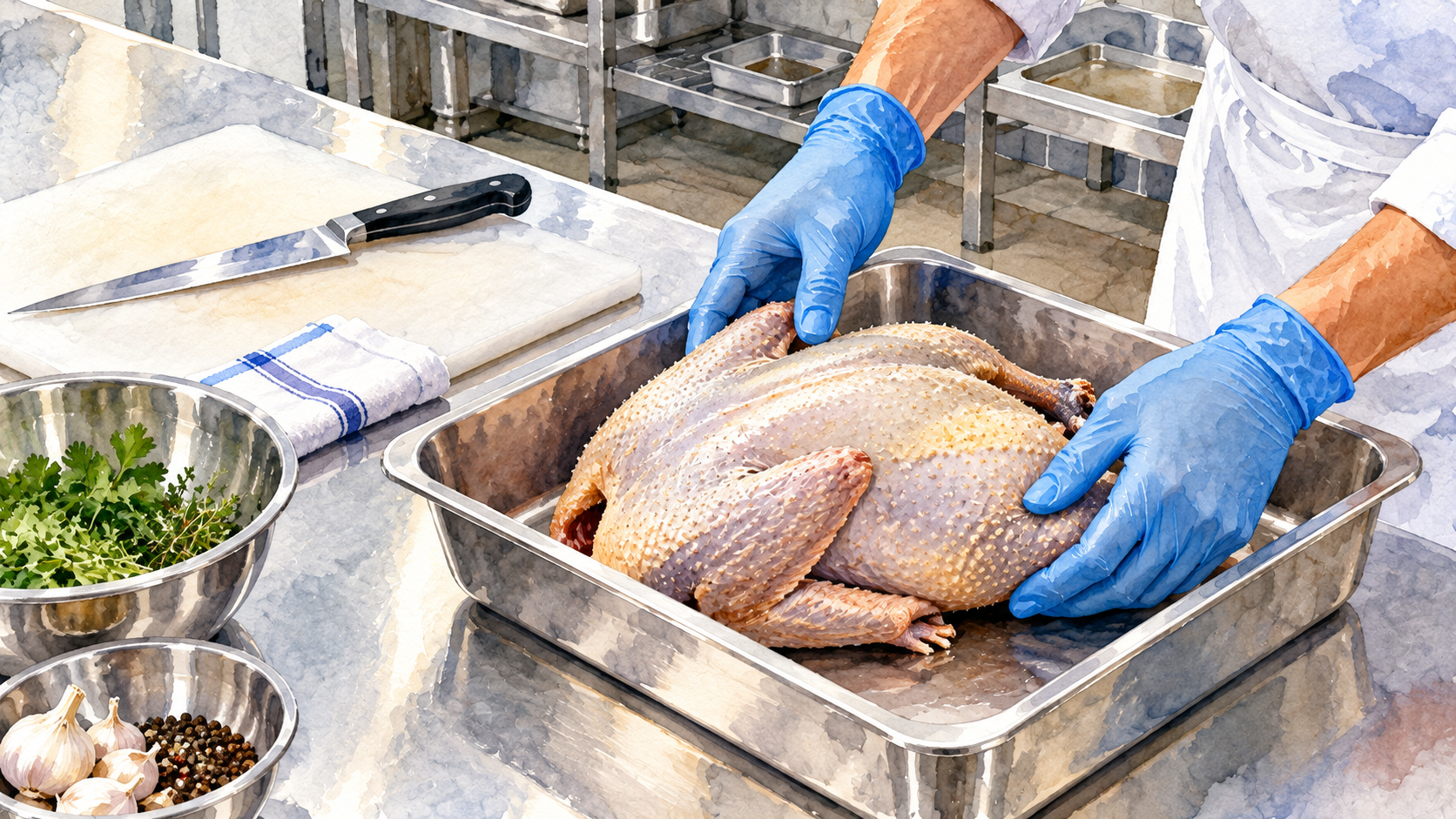
Processing guinea fowl for meat involves more than removing feathers and preparing a carcass. The birds must be handled humanely, the work area must prevent contamination, and meat must be chilled promptly. A method that works for one household or licensed processor may not be lawful for another producer selling poultry across state lines.
Safe guinea fowl processing requires a humane, competent slaughter procedure; clean equipment and potable water; careful separation of dirty and clean operations; protection against fecal contamination; and rapid carcass chilling. Before processing birds, confirm whether the operation is for personal consumption, custom processing or sale, because federal and state requirements differ. Anyone without training or suitable facilities should use an appropriately licensed or exempt professional processor.
Is It Legal to Process Guinea Fowl at Home?
In the United States, guinea fowl fall within the federal definition of poultry covered by the Poultry Products Inspection Act. Processing birds for your own household is different from processing or selling meat to other people. The federal poultry inspection law establishes inspection requirements and limited exemptions, but it does not create one nationwide permission for every kind of backyard sale.
Federal provisions may include personal-use, custom, producer-grower or small-operator exemptions. Each has its own conditions involving ownership of birds, annual volume, sales channels, sanitation, records, labeling or distribution. The guidance on poultry slaughter exemptions is an appropriate starting point for determining which arrangement may apply. Exempt meat is not automatically eligible for restaurant sales, interstate commerce or any other intended market.
Check your state agriculture department and local authorities before processing, advertising or selling guinea fowl meat. States can impose additional licensing and inspection requirements. Confirm that your selected facility, mobile unit or custom processor is permitted to handle guinea fowl and the intended destination of the meat.
What Does Humane Guinea Fowl Slaughter Require?
Guinea fowl are alert, flighty birds, and careless catching or restraint can cause panic, injuries and unnecessary suffering. Work should be organized to minimize waiting, noise, struggling and repeated handling. Never process a bird simply because it is already injured or severely ill without first determining whether it is fit for food production.
In federally inspected poultry slaughter establishments, good commercial practices require handling that avoids needless injury and slaughter that results in thorough bleeding, with breathing stopped before scalding. Poultry are regulated differently from livestock under the federal Humane Methods of Slaughter Act; that distinction does not eliminate requirements for humane poultry handling or relevant state animal-welfare laws.
Stunning and slaughter must be carried out by a trained, competent person using methods and equipment appropriate for the bird. A method must reliably achieve the required state of unconsciousness or death and be verified before the carcass enters hot water. The federal poultry-processing overview describes the general role of slaughter, bleeding and feather removal.
This article does not replace practical training in restraint, stunning, bleeding or confirmation of death. Inadequate technique can leave birds conscious, cause preventable suffering and create an unsafe carcass. If competency, equipment or legal authorization is uncertain, arrange professional processing.
How Should the Processing Area Be Organized?
The safest workflow moves carcasses in one direction from dirty tasks toward clean tasks and finally to chilling. The dirty side includes live-bird holding, slaughter, bleeding and feather removal. The cleaner side includes evisceration, final carcass handling and packaging. Keeping these areas separate reduces the chance that feathers, manure or scald water will contaminate exposed meat.
The home poultry-processing guidance emphasizes a clean facility, dependable water supply and a staged workflow. Surfaces should be washable, lighting sufficient to spot contamination, and equipment arranged so clean carcasses never contact dirty containers, feathers or waste.
| Processing stage | Essential control |
|---|---|
| Live-bird holding | Calm handling and clean, ventilated conditions |
| Slaughter and bleeding | Trained humane procedure; confirm death before scalding |
| Scalding and feather removal | Appropriate equipment; avoid contaminating carcasses with dirty water |
| Evisceration | Prevent puncturing or spilling digestive contents |
| Inspection and final handling | Set aside suspect or contaminated carcasses for proper evaluation |
| Chilling | Reduce internal carcass temperature promptly using clean, monitored methods |
| Packaging and storage | Use food-safe materials and maintain the cold chain |
Prepare separate receptacles for feathers, inedible waste and any carcass that must be held for inspection or disposal. Keep pets, pests and unauthorized visitors away from all processing surfaces.
Which Equipment and Supplies Are Needed?
A properly equipped setup may include clean transport crates, suitable stunning and slaughter equipment operated by trained personnel, a bleeding area, a thermostatically controlled scalding system, feather-removal equipment, food-grade tables, sharp and clean processing tools, reliable thermometers, potable water, sanitary waste containers and a chilling system.
The sanitation standards for processing facilities emphasize cleanable equipment and water suitable for food production. Use separate tools or thoroughly clean and sanitize shared equipment when moving from dirty to clean tasks. Washable protective clothing, handwashing facilities and a plan for contaminated materials are equally important.
Do not assume a kitchen sink, household bathtub or uncleaned garden hose automatically provides a food-safe processing setup. Any tool or surface touching exposed meat must be suitable for food contact and maintained in sanitary condition.
Why Is Scalding and Feather Removal a Food-Safety Concern?
Scalding loosens feathers so they can be removed, often with mechanical help. Because dirty feathers and skin enter the water, scalding equipment can become a source of cross-contamination if poorly managed. The temperature and operating conditions must suit the equipment and the processor’s approved method; excessive heat can damage skin, while inadequate control can interfere with effective feather removal.
The overview of commercial poultry feather removal describes the main stages, but does not establish a single suitable temperature for every small-scale guinea fowl operation. Follow validated equipment instructions and local processing requirements rather than copying a temperature from an unrelated poultry species.
Never place a bird into scald water until it is confirmed dead and breathing has stopped. Replace or manage water to control contamination, and avoid moving dirty feathers or tools into the clean carcass area.
How Can You Prevent Contamination During Evisceration?
Removing the internal organs creates a significant opportunity for digestive contents to contact edible meat. Careless cutting or pressure can release material from the intestines or crop. Clean technique, appropriate tools and enough working space are essential.
In official establishments, federal poultry contamination-control requirements require procedures to keep visibly fecal-contaminated carcasses out of the chiller and control contamination throughout slaughter and dressing. A food-safety inspection directive emphasizes preventing contamination at its source rather than assuming final washing will correct poor processing.
Examine the carcass for accidental punctures and visible material. Do not rely on a quick rinse to make a heavily contaminated or questionable carcass safe. Follow applicable inspection, trimming, reprocessing and condemnation rules; when in doubt, consult a trained processor or inspector. Carcasses from birds that died before slaughter or show signs of disease should not simply be processed into food.
How Quickly Must Guinea Fowl Carcasses Be Chilled?
Carcasses must be chilled promptly after dressing to limit bacterial growth. A small operation may use properly maintained ice-water chilling equipment or another approved method, while larger plants rely on monitored commercial systems. Whatever the method, the key is controlled, measured chilling rather than leaving warm carcasses on tables.
The requirements for poultry chilling explain how carcasses and edible organs are cooled after processing. Use a calibrated thermometer to check the thickest part of a carcass without contacting bone, and maintain a cold chain suited to the operation’s rules.
For home storage, food-safety guidance calls for refrigeration at 40°F (4°C) or below and freezing at 0°F (-18°C) or below. These storage temperatures do not replace any establishment-specific chilling performance requirements. Use sufficient clean ice and refrigeration capacity for the entire batch rather than assuming that a cooler filled with warm birds will chill them promptly.
How Should Carcasses Be Packaged and Stored?
Once properly chilled and cleared for food use, place guinea fowl carcasses in clean, food-grade packaging that protects against leakage, contamination and freezer damage. Label packages as required for the applicable processing and sale arrangement, and keep batches traceable to their processing dates.
Refrigerated raw poultry is highly perishable. The recommended food-storage limits advise using or freezing fresh poultry within one to two days under typical home refrigeration conditions. Food destined for sale may have different approved handling, labeling and shelf-life controls.
Transport meat in clean insulated equipment capable of maintaining safe temperatures. Do not put chilled packages back into the same unwashed crates used for live birds, feathers or inedible material.
How Should Waste and Wastewater Be Handled?
Feathers, blood, offal and process wastewater must be managed without attracting pests, polluting drains or waterways, or contaminating edible product. Prepare covered waste containers and confirm permitted disposal methods before processing begins. Local wastewater and solid-waste requirements can differ from one jurisdiction to another.
Avoid discharging untreated processing waste into ditches, streams or storm drains. Dispose of condemned or potentially infectious material according to veterinary and regulatory directions. Cleaning should remove organic debris before applying an appropriate food-contact sanitizer at its labeled concentration and contact time.
What If a Bird Appears Sick or the Carcass Looks Abnormal?
Never assume that slaughtering a sick guinea fowl will make its meat safe. Birds showing unexplained respiratory disease, neurological abnormalities, marked weakness or signs of a flock outbreak need veterinary evaluation. Certain diseases require reporting and may restrict bird movement or processing.
The warning signs of serious poultry disease include sudden deaths and unusual respiratory or neurological symptoms. Carcasses showing widespread abnormalities or signs of disease require inspection-based decisions about their fitness for human food; trimming an abnormal area is not necessarily sufficient.
The health checks used before preparing guinea fowl for processing also matter where a flock has received veterinary medication. Check withdrawal intervals with the prescribing veterinarian before processing treated birds. If several birds are unexpectedly ill or dead, stop processing and obtain professional advice.
Is a Professional Poultry Processor the Safer Choice?
For a first-time keeper, a qualified processor is often the most practical option. A suitable facility has staff trained in humane methods, carcass handling, chilling and sanitation, along with the equipment needed to manage several birds without sacrificing food safety.
Ask whether the facility accepts guinea fowl, whether it operates under inspection or a lawful exemption, and what documentation, packaging and transport conditions apply. The federal guidance on qualifying for poultry inspection exemptions helps distinguish legitimate processing arrangements from assumptions about small-flock exemptions.
If you intend to sell meat, confirm the processor’s authorization for your intended market before booking. A custom-processed bird, for example, is not automatically permitted to be resold simply because it was handled in a commercial-looking facility.
What Happens When Guinea Fowl Meat Reaches the Kitchen?
Sanitary processing reduces contamination risk but does not guarantee raw meat is free of harmful microorganisms. Prevent raw poultry and its juices from contacting ready-to-eat foods, clean hands and preparation surfaces, and maintain refrigeration until cooking.
The safe internal cooking temperature for all poultry, including guinea fowl, is 165°F (74°C) measured with a food thermometer. Cooking temperature is a final food-safety control; it does not justify processing visibly diseased birds or allowing carcasses to become heavily contaminated.
Questions About Processing Guinea Fowl for Meat
Can I slaughter guinea fowl on my own farm? Possibly, depending on personal use, applicable federal exemptions, state law and local requirements. Selling the meat raises additional obligations.
Are guinea fowl covered by U.S. poultry inspection rules? Yes. Guinea fowl are included in federal poultry regulations.
Do I need special equipment? You need competent humane slaughter arrangements and food-safe equipment for dressing, sanitation and rapid chilling. The exact setup depends on scale and applicable rules.
Can I process a bird that died overnight? No. Poultry that died from causes other than slaughter should not be treated as ordinary meat for human consumption.
Can I rinse a contaminated carcass and use it? Washing alone cannot be relied upon to correct serious fecal contamination. Applicable inspection and disposition rules determine what can be salvaged.
Is home processing meat automatically legal to sell? No. Household-use and custom-processing permissions do not automatically authorize sale, and exemptions have specific conditions.
What temperature should guinea fowl meat reach when cooked? All poultry should reach 165°F (74°C) internally, verified with a thermometer.