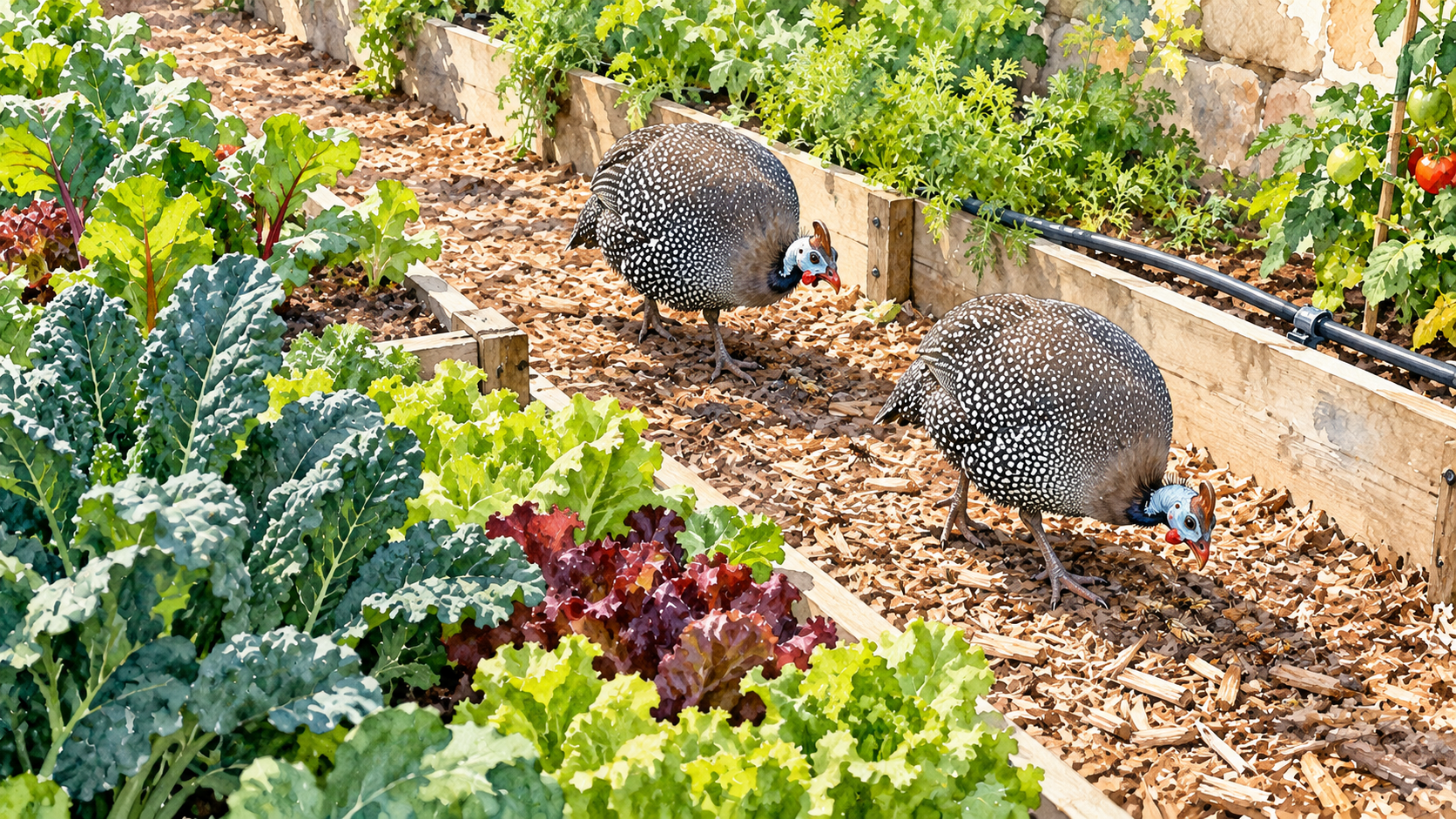
Guinea fowl can forage for insects in a vegetable garden without causing as much digging damage as chickens, but unrestricted access is not always a good idea. Their movement through planting beds can flatten young seedlings, disturb mulch, and expose vegetables to poultry droppings. They may also peck at tender vegetation or ripening produce.
The safest choice for an actively growing food garden is to keep guinea fowl outside the planting beds, allowing them to forage along surrounding paths and noncrop areas. Limited access can be considered before planting or after harvest, provided manure contamination and the next crop’s harvest date are taken into account.
What Guinea Fowl Can Do for a Vegetable Garden
Guinea fowl spend considerable time searching for insects, seeds, and other edible material. The University of Maine’s guidance on guinea fowl around gardens recognizes their insect-feeding benefits while warning that they can develop an interest in vegetables.
They may consume beetles, grasshoppers, caterpillars, and other invertebrates encountered while foraging. The diet of domestic guinea fowl also includes vegetation and seeds. Ground-dwelling insects are accessible, but pests protected inside leaves or fruits may escape the birds. Guinea fowl also cannot distinguish harmful insects from beneficial predators.
Their insect-foraging behavior can reduce some insect populations without guaranteeing control of every vegetable pest.
Can Guinea Fowl Damage Vegetable Plants?
Guinea fowl are generally less vigorous scratchers than chickens. Small-flock guidance from the University of Kentucky describes their ability to forage with relatively little garden disturbance. However, this does not make every vegetable bed suitable for unrestricted access.
Young seedlings and transplants
Small seedlings are vulnerable to physical disturbance. Birds moving through closely spaced rows can bend stems, dislodge shallow-rooted plants, and crush emerging leaves. Newly transplanted vegetables may suffer similar damage before becoming established.
Established plants and ripening produce
Mature plants usually withstand occasional contact better, but accessible fruits can attract pecking. The University of Maine advises avoiding garden access during fruiting periods if vegetables are to be protected. Fruits resting on soil also face droppings contamination.
Mulch, soil, and foot traffic
Although guinea fowl scratch less than chickens, repeated traffic can displace mulch and disturb soil around plants. Wet beds are especially vulnerable to surface damage and compaction, so birds should be kept out of saturated growing areas.
Which Garden Areas Are Suitable?
| Area | Access recommendation | Main reason |
|---|---|---|
| Seeded or newly planted beds | Avoid | Fragile seedlings |
| Established vegetable beds | Generally exclude | Trampling and droppings |
| Fruiting beds | Exclude | Pecking and contamination |
| Paths outside crop beds | Conditional | Need effective separation |
| Empty beds after harvest | Conditional | Future food-safety implications |
| Grassy borders | Usually suitable | Alternative foraging space |
Keeping poultry in adjacent foraging areas is often more workable than sharing the actual beds. Established free-ranging routines need not include access to crops.
Poultry Droppings Create a Food-Safety Concern
Guinea fowl manure may introduce harmful microorganisms into vegetable beds. Raw-eaten leafy greens and low-growing produce are particularly concerning because soil and droppings can reach edible portions.
The USDA’s organic raw-manure standard requires at least 120 days between incorporating raw manure and harvesting crops whose edible portion contacts soil, or at least 90 days for other food crops. Those rules apply to specified organic production situations; they are not a guarantee that incidental poultry droppings in a harvest-ready bed become safe after a set time.
A University of Delaware extension discussion of converting poultry runs also emphasizes manure-associated pathogens and the risks for raw-eaten crops. Excluding birds from actively harvested beds is more dependable than trying to manage fresh contamination among ready-to-eat vegetables.
How to Keep Guinea Fowl Out of Sensitive Plantings
Separate planting beds from foraging paths
A secure garden boundary or covered growing area prevents wandering birds from entering crops. Low fencing may deter walking access but does not reliably stop birds that can fly. Their natural flight ability makes a secure top or fully enclosed garden more dependable than a low open fence. Avoid loose netting that could entangle birds.
Protect the most vulnerable crops first
Prioritize seedlings, leafy vegetables, and low fruiting plants. Well-secured covers and crop cages provide physical separation. Purdue’s vegetable pest-management guidance also explains how targeted crop protection may be preferable to blanket pest control. Covers need suitable ventilation and accommodation for pollination.
Provide alternative foraging space
Grass strips and uncultivated borders give the birds somewhere else to hunt. Maintain suitable feed and water rather than withholding nutrition to force more insect hunting. The space available to the flock affects how concentrated their activity becomes near crops.
Watch for repeat entry
Birds that repeatedly approach or cross the garden boundary require stronger separation. Supervision alone is unreliable. Their tendency to wander beyond preferred areas makes access management especially important on compact properties.
Are Guinea Fowl Better Than Other Garden Pest Controls?
Guinea fowl are opportunistic foragers, not precise garden pest-control tools. They cannot replace identifying damage, inspecting plants, or protecting crops from pests that feed inside foliage or fruit. Integrated pest management for vegetable gardens emphasizes healthy crop conditions and matching interventions to the actual problem. Many insects cause tolerable damage, and not every leaf with holes needs treatment.
Even an active flock may miss insects in hidden locations or consume beneficial species. For actively growing vegetables, keeping poultry outside the beds usually gives a more predictable balance of foraging activity and crop protection.
When Guinea Fowl Near a Vegetable Garden Make Sense
A large garden surrounded by grass, paths, or orchard ground may benefit from the birds foraging outside cultivated beds. A small, densely planted garden with vegetables harvested raw offers fewer safe opportunities. Poultry-keeping and nuisance rules also vary by municipality.
The workable arrangement is one that protects the harvest while allowing normal poultry foraging elsewhere. Where reliable separation is impossible, excluding guinea fowl from the vegetable garden is the better decision.
Common Questions About Guinea Fowl in Vegetable Gardens
Will guinea fowl eat tomato plants? They may peck accessible tomatoes, particularly ripe fruits, although behavior varies. Keep birds out of fruiting beds.
Can guinea fowl eat insects without destroying the garden? Yes, some flocks cause relatively little physical disturbance, but trampling, pecking, and droppings are still possible.
Can guinea fowl enter vegetable beds after harvest? Possibly, but droppings can affect future crops. Consider the next planting and harvest schedule before allowing access.
Will raised beds keep guinea fowl out? Not reliably. Birds can jump or fly into accessible beds; secure barriers are more dependable.