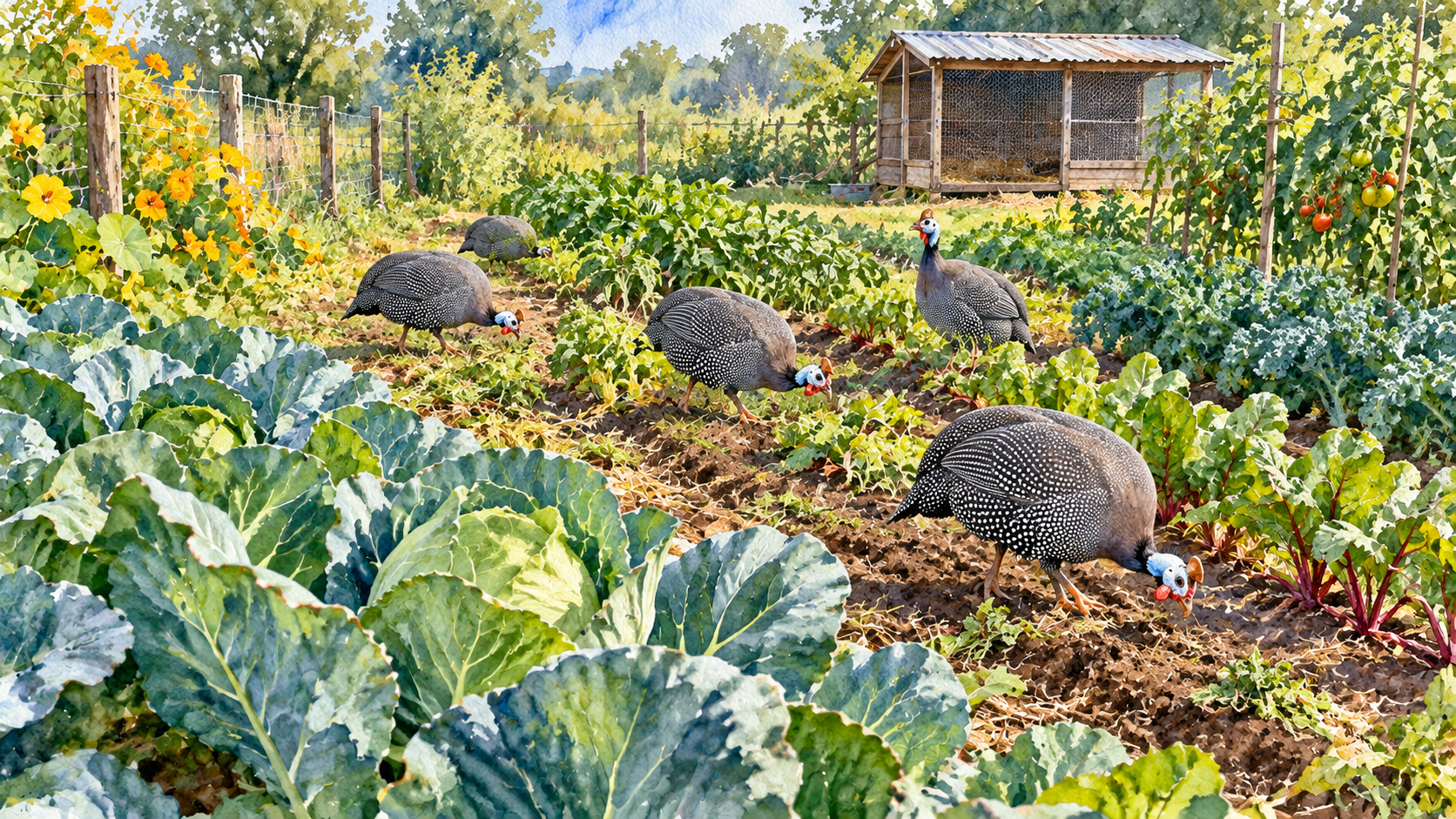
Guinea fowl are raised on farms primarily for meat, eggs, insect foraging, and alarm calling. Some farmers also keep them as ornamental poultry because of their distinctive plumage and active behavior. These birds can serve several purposes within the same flock, making them an interesting option for homesteads and small agricultural properties that are not focused exclusively on conventional poultry production.
Their usefulness comes with practical limitations. Guinea fowl are noisy, inclined to roam, and often less tolerant of close handling than domesticated chickens. Their free-ranging behavior and husbandry needs can make them suitable for spacious rural properties while creating difficulties on smaller farms near neighboring homes. The value of keeping them depends on which benefits a farmer actually needs and whether the property can accommodate their behavior.
Raising Guinea Fowl for Meat
Meat production is an established agricultural use of domesticated guinea fowl. Their meat is commonly described as lean, with a relatively firm texture and a flavor frequently compared with gamebirds. It is consumed roasted, braised, and in other poultry preparations, particularly where specialty meats have an established culinary market.
Guinea fowl are generally smaller than the commercial broiler chickens bred for rapid growth and substantial breast-meat yield. Their suitability for meat production therefore depends on the intended product rather than an expectation that they will match conventional broiler performance. A small farm may raise them for household consumption, local specialty demand, or breeding stock intended for meat production. Growth rate, carcass size, feeding arrangements, and processing requirements influence how useful they are for each purpose.
The gamebird production information identifies domesticated guinea fowl as poultry raised for agricultural markets, including meat. Farmers planning to sell processed birds must consider applicable federal and state poultry inspection rules, permitted processing arrangements, and local sales requirements rather than assuming that every small-flock processing exemption authorizes retail sales.
Keeping Guinea Hens for Eggs
Guinea hens produce edible eggs that can be collected for household use, hatching, or lawful local sales. Their eggs are generally smaller than standard large chicken eggs, with comparatively thick shells and a familiar poultry-egg flavor. They can be used in ordinary cooking and baking, although recipes requiring a particular quantity of liquid egg may need adjustments because individual eggs differ in size.
Guinea fowl are seasonal layers under many traditional management systems, so egg availability may fluctuate considerably throughout the year. A flock that produces eggs during spring and summer should not automatically be expected to maintain the same output through winter. The number of eggs guinea fowl lay annually varies with age, genetics, environmental conditions, nutrition, and flock management. This makes them more suitable for farms comfortable with seasonal egg availability than operations requiring highly predictable year-round collection.
Egg gathering can be another consideration because free-ranging guinea hens may establish concealed nests away from their housing. Their natural nesting preferences can complicate collection, especially on properties with tall vegetation or extensive outdoor areas. Eggs intended for consumption require appropriate hygiene and refrigeration, and the CDC’s backyard poultry food-safety guidance recommends discarding cracked eggs and cooking eggs thoroughly to reduce foodborne illness risks.
Using Guinea Fowl for Insect Foraging
Insect foraging is one of the best-known reasons for introducing guinea fowl to a farm. These birds spend considerable time searching through grass, vegetation, and exposed ground for edible invertebrates. Their diet can include grasshoppers, beetles, caterpillars, ticks, and other small organisms encountered while moving around the property.
Farmers sometimes value this behavior in pastures, orchards, and areas surrounding agricultural buildings. Guinea fowl can consume insects while continuing their ordinary feeding activity, which gives them a possible supplementary role in an integrated pest-management program. The agricultural use of guinea fowl for insect foraging is well established, although the quantity and kinds of prey consumed vary according to habitat and seasonal availability.
Tick consumption deserves particular caution because it is often presented as a guaranteed benefit. Although guinea fowl can eat ticks, their presence does not necessarily produce meaningful reductions in tick populations. A 2024 peer-reviewed investigation of guinea fowl and lone star ticks found no evidence that the birds provided effective biological control of those ticks or their associated pathogens. The researchers also found evidence that guinea fowl themselves could serve as hosts for immature ticks. Consequently, guinea fowl eating ticks should not be confused with proven protection against tick bites or tick-borne diseases.
Insect foraging also cannot replace adequate nutrition. Guinea fowl need suitable feed and dependable access to drinking water regardless of how many insects are available. Their overall usefulness for farm pest control should be evaluated alongside established pest-management measures rather than treated as a substitute for them.
Raising Guinea Fowl as Farm Alarm Birds
Guinea fowl have a reputation for announcing unfamiliar activity with loud, conspicuous calls. Approaching people, strange animals, sudden movement, and unexpected disturbances can trigger vocal responses that attract attention across a farmyard. This behavior has led some farmers to keep them as informal alarm birds around barns, poultry housing, and other frequently used areas.
Their alertness is useful only within limits. Guinea fowl react to perceived disturbances rather than accurately identifying every threat, so harmless events can produce the same loud response as a potential predator. They also cannot reliably defend livestock or prevent an intruder from entering a property. Their watchbird behavior provides an audible warning, not physical security.
The associated noise can be a substantial disadvantage. Some guinea fowl vocalizations carry considerable distances, particularly when several birds respond simultaneously. Frequent calls may become disruptive around neighboring homes or businesses, even where poultry keeping is otherwise permitted. The noise produced by guinea fowl is therefore a significant consideration when deciding whether their alarm behavior is beneficial or undesirable.
Ornamental and Exhibition Purposes
Not every guinea fowl flock is maintained primarily for agricultural output. Some owners keep the birds because of their spotted feathers, unusual head structures, and distinctive appearance among other farm poultry. Pearl, lavender, white, and additional domestic color varieties offer different visual characteristics that appeal to breeders and poultry enthusiasts.
Guinea fowl may also be exhibited at poultry shows where the event accepts them. Exhibition breeders select birds according to the applicable variety descriptions and show requirements, although attractive plumage alone does not establish that an individual bird meets a recognized standard. The selection of poultry for exhibition and other small-flock purposes reflects the range of reasons people maintain domestic birds beyond food production.
Feathers are sometimes collected for crafts and decorative uses, particularly those with the familiar spotted pattern. This is generally a secondary benefit rather than the principal reason most farms maintain a flock.
Advantages and Disadvantages of Keeping Guinea Fowl for Multiple Purposes
A guinea fowl flock can provide several benefits without requiring the farmer to choose a single purpose. Birds maintained for household eggs may also forage for insects, produce occasional meat, and sound alarms when disturbed. This combination can appeal to diversified homesteads where modest contributions across several activities are more desirable than maximizing one particular form of production.
However, the different purposes can create competing management requirements. Free-ranging may give birds greater opportunities to forage, but it also makes egg collection, boundary control, and predator protection more complicated. Confinement can simplify supervision and access to nesting areas, provided the enclosure supplies adequate space, shelter, and opportunities for normal activity. The advantages and disadvantages of free-ranging versus confinement influence which benefits a farmer can realistically obtain from the same flock.
Keeping guinea fowl also involves costs that persist regardless of their intended use. Feed, housing, equipment, bedding, veterinary care, and protection against predators all require resources. Farms should not assume that a bird’s willingness to forage makes it inexpensive to maintain. Secure accommodation is particularly important because guinea fowl may choose exposed outdoor roosts when suitable housing habits have not been established.
Their active movements can additionally increase contact with wild birds and environments where poultry pathogens circulate. Appropriate flock biosecurity measures include protecting feed and water from contamination, maintaining clean equipment, and monitoring birds for signs of illness. A farm should not prioritize insect consumption or unrestricted roaming over disease prevention and animal welfare.
Guinea fowl are most useful where their natural behaviors support the farm’s objectives rather than interfere with them. A property seeking seasonal eggs, specialty meat, supplementary insect foraging, and conspicuous alarm calls may benefit from keeping them for several purposes. Where quiet surroundings, strict containment, or predictable production are essential, some of those same characteristics become disadvantages.