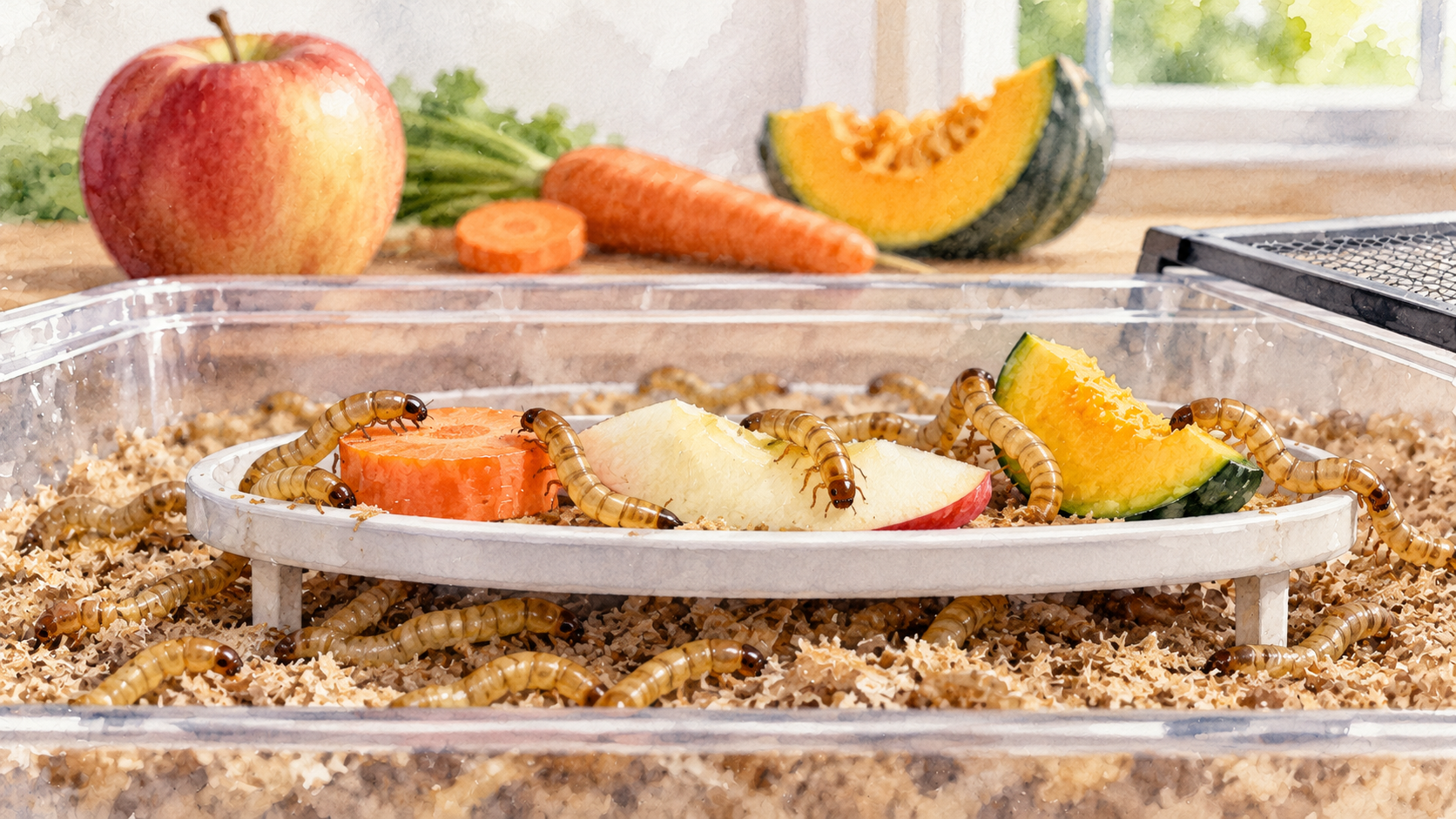
Mealworms can eat a variety of fresh fruits and vegetables, including carrots, potatoes, apples, squash and leafy greens. These foods are particularly useful as moisture sources for yellow mealworms (Tenebrio molitor), which obtain water by feeding on fresh produce. Produce should be offered in small, clean portions alongside an appropriate dry rearing substrate. Too much fresh food can wet bedding, encourage mold and attract unwanted organisms.
Which Fruits and Vegetables Can Mealworms Eat?
Carrots, potatoes, squash and apples are commonly used fresh foods. Lettuce, cabbage, beetroot and other suitable leafy vegetables can provide moisture. A review of insect-rearing methods identifies potatoes, apples, carrots and beets as established water sources.
Carrots are firm and convenient to slice; potatoes are moist and easy to portion; apples soften with age; squash varies in firmness; lettuce wilts quickly; cabbage requires inspection; and beetroot can be offered in small slices. A mealworm feeding study describes leafy greens as conventional moisture sources.
Produce types differ in moisture, sugar content and deterioration speed. Choose based on cleanliness, freshness and ease of removing leftovers.
How Fruits and Vegetables Help Mealworms Stay Hydrated
Mealworms obtain moisture from food and their environment. Fresh produce supplies accessible water without an open dish that could wet bedding or create a drowning hazard.
In research comparing water sources, carrot-fed larvae had higher body moisture than those without additional water, while increasing the amount of carrot did not always yield further improvements.
A review of mealworm growth conditions notes that vegetables help supply water, but excessive substrate moisture can encourage microbial problems. Produce supplements hydration rather than replacing the main dry substrate.
How to Prepare Produce Before Giving It to Mealworms
Choose sound, fresh produce. Wash away soil, remove stickers and packaging, and reject moldy, rotting or chemically contaminated material.
Slice firm carrots, potatoes, apples or squash to expose a moist surface. Very large pieces are harder to monitor and may deteriorate before being consumed. Raw produce is generally convenient.
Place pieces on the substrate surface rather than burying them, making inspection and removal easier. Ingredients exposed to pesticides or cleaning chemicals should not be presumed safe simply because they were washed.
How Much Fruit or Vegetable Should You Offer?
Offer only as much fresh produce as the colony can consume before deterioration begins. There is no universal serving size: colony size, temperature, airflow, produce and existing moisture all matter.
Start small, with a few thin pieces for a modest colony, and check within 24 hours. Remove deteriorating leftovers and increase portions only when they are consumed without soaking the substrate.
Firm vegetables may remain usable longer than soft fruit or greens. The EntoFARM rearing guide recommends manageable amounts and promptly removing uneaten or moldy material.
Which Fruits and Vegetables Need Extra Caution?
Very juicy produce, including watermelon, overripe berries and soft tomatoes, can release moisture rapidly into bedding and deteriorate in warm containers.
Routine guidance often discourages citrus, partly because of acidity and wet, deteriorating residues. This should not be mistaken for proof that any tiny citrus exposure is inherently toxic. Firm carrots or squash are usually easier to manage.
Avoid green or sprouted potatoes, moldy or heavily spoiled material and produce with uncertain chemical exposure. Deliberately chosen produce differs from raising mealworms on mixed food scraps, which creates additional feed-safety questions.
How to Prevent Fruit and Vegetables From Spoiling in a Mealworm Container
Too much moisture against dry feed supports clumping, mold, mites and unwanted microbial growth. Inspect produce frequently and remove pieces that turn slimy, moldy, discolored or rotten.
Replace contaminated substrate where necessary instead of covering it with new bran. Mealworm care guidance recommends fresh produce for hydration alongside dry bedding.
Ventilate appropriately and inspect beneath produce, where deterioration may start unseen. Persistent condensation or sour odors are reasons to reassess food quantities and substrate condition. The normal mealworm diet involves more than providing wet scraps.
Do Mealworms Prefer Some Produce Over Others?
Mealworms may consume different ingredients at different rates. Faster consumption does not necessarily indicate superior nutrition; texture, water, freshness and colony conditions affect feeding.
A study of alternative moisture sources evaluated how water-rich materials influence growth and larval composition rather than just consumption.
Carrots are durable, apples soften, leafy greens wilt, and squash varies in water content. Choose ingredients that remain manageable in the actual rearing conditions instead of assuming one universal favorite.
Questions About Feeding Mealworms Fresh Produce
Can mealworms eat raw carrots? Yes. Raw carrot slices are a widely used moisture source.
Do mealworms need fruit if they receive vegetables? No. Vegetables can supply moisture without fruit.
Can mealworms eat vegetable peels? Some clean, sound peels may be suitable; avoid spoiled or contaminated peels.
Can too much fruit kill mealworms? Excess fruit can wet bedding, encourage mold and create poor rearing conditions.
One thought on “Can Mealworms Eat Fruit and Vegetables?”