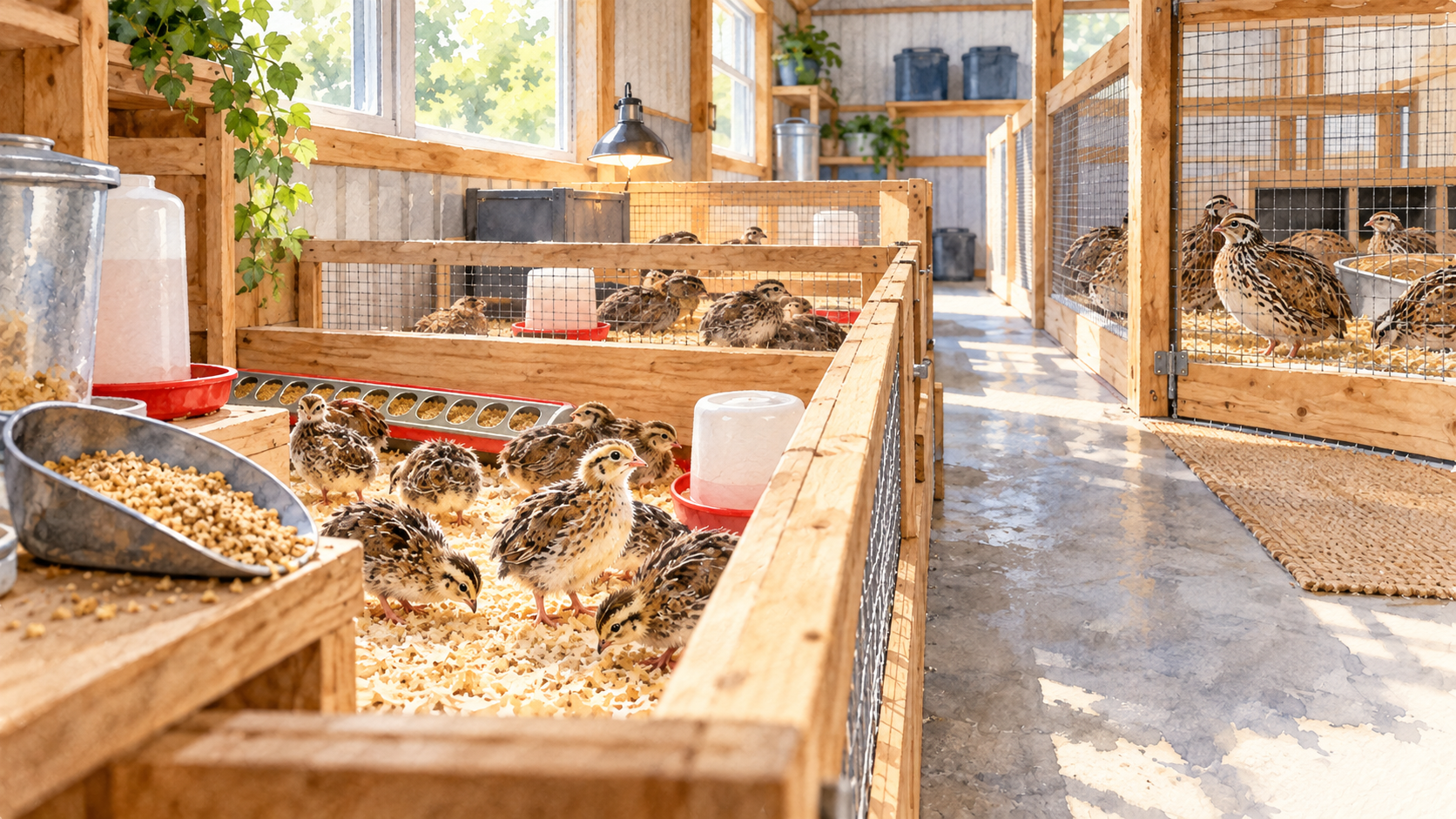
Raising quail chicks from hatch to adulthood requires a warm, secure brooder, suitable starter feed, safe drinking water, dry housing, and gradual management changes. Japanese Coturnix can reach reproductive maturity at about 6–8 weeks, while northern bobwhite follow a longer developmental schedule. The first few weeks are especially demanding because chicks are vulnerable to chilling, overheating, drowning, and injury.
Quail Chick Rearing Timeline From Hatch to Adulthood
| Age | Development | Priority |
|---|---|---|
| Hatch–7 days | Down-covered and temperature-dependent | Heat, safe water, starter feed |
| Weeks 2–3 | Rapid growth and feather development | Reduce heat gradually, improve space and security |
| Weeks 4–5 | More feathers and temperature tolerance | Assess heating and housing readiness |
| Weeks 6–8 | Coturnix approach reproductive maturity | Adult housing, nutrition, group management |
| Beyond 8 weeks | Coturnix generally mature; bobwhite may still be developing | Species-specific adult routines |
These are Coturnix-centered approximations rather than deadlines. Published brooding recommendations and Coturnix maturity information support the general schedule.
The First Week: Warmth, Water, and Getting Chicks Eating
Move dry, active hatchlings into a prepared warm brooder with starter feed and fresh water readily accessible. First-day hatchling care calls for close observation. Feed must be finely sized for small beaks. Use a shallow, quail-appropriate drinker: poultry brooding guidance recommends pebbles or marbles to protect very small gamebirds from exposed water channels. Chicks should alternate between resting, eating, drinking, and exploring. Persistent huddling, panting, or weakness needs attention.
Reducing Brooder Heat as Quail Grow
| Age | Approximate heated-area temperature |
|---|---|
| Days 1–7 | 90–95°F |
| Days 8–14 | 85–90°F |
| Days 15–21 | 80–85°F |
| Days 22–28 | 75–80°F |
| Days 29–35 | 70–75°F |
The species-specific brooding schedule reduces heat roughly 5°F weekly. This is a warm-area guideline, not a requirement that the whole brooder be equally heated. Give chicks room to move toward or away from warmth. Cold chicks may huddle and call loudly; overheated chicks may pant and avoid the warm area. Development, feathering, and room temperature determine when supplemental heating can end.
Feeding Quail Chicks Through Their Growth Stages
Use a nutritionally complete game-bird starter suitable for the species and life stage. Quail feeding programs generally retain starter feed until approximately six to eight weeks, with subsequent feeds chosen for growing, laying, breeding, or meat production. Coturnix may mature and begin laying sooner than bobwhite. Never substitute adult layer feed for a young chick ration: its calcium balance is unsuitable for nonlaying birds. Baby quail nutritional needs differ from adult feed selection. Keep feed clean and accessible to smaller flock members.
Maintaining Clean Housing and Safe Water
Inspect bedding and drinking areas daily; remove damp litter and spilled feed, clean drinkers, and avoid slippery surfaces. Young poultry rearing guidance stresses dry housing, dependable water, ventilation, and protection from extreme temperatures. Fresh air is necessary, but direct cold drafts over chicks are undesirable. As birds grow, expand usable room and feeder access to avoid trampling, pecking, and competition.
Weeks Two Through Four: Feathers, Activity, and Space
Young quail become more active, develop wing feathers, and may start jumping or making short flight attempts. Early flight development makes escape prevention important well before adulthood. Keep covers secure but ventilated, check gaps and overhead hazards, and adjust equipment as growing birds crowd feeders. By weeks four and five many Coturnix have substantial feathers, but maturity and cold tolerance vary.
Preparing Young Quail for Adult Housing
Assess feather coverage, condition, weather, shelter, secure boundaries, ventilation, and food and water access before moving a flock. Outdoor readiness is not determined by age alone. Permanent housing must provide the space needed as quail grow and appropriate protection. Do not automatically mix young birds with established adults: adult flock introduction can expose smaller birds to aggression and competition.
When Do Quail Chicks Become Adults?
Japanese Coturnix commonly reach reproductive maturity around six to eight weeks; bobwhite mature later. Lighting, strain, condition, and nutrition influence timing. Breeding readiness is only one part of adult management. Maturing males may chase, mate, or become territorial, requiring attention to group structure. The reliability of sex identification depends on species and plumage variety.
Daily Checks That Matter Throughout Rearing
- Morning: Check alertness, warmth, feed and water access.
- Daytime: Observe feeding, flock interactions, wet bedding, and movement.
- Evening: Confirm heating if required, water, enclosure security, and normal flock behavior.
Persistent weakness, inability to stand, labored breathing, serious injuries, or exclusion from feed need prompt attention; severe signs merit veterinary assessment. Keep newly introduced birds appropriately separated for health precautions and retain simple records of changes and recurring problems.
Common Questions About Raising Young Quail
Can quail chicks be raised without a mother? Yes. A properly managed brooder supplies the warmth, water, nutrition, and protection they need.
When can supplemental heat stop? Many Coturnix can manage without it around four to six weeks once feathered, depending on their surroundings and individual condition.
Can young quail eat adult feed? Not automatically. Growing birds need an appropriate starter or grower ration; layer feed is not suitable for newly hatched chicks.
Do all quail mature at the same age? No. Coturnix generally mature faster than northern bobwhite, and strain and management also influence development.