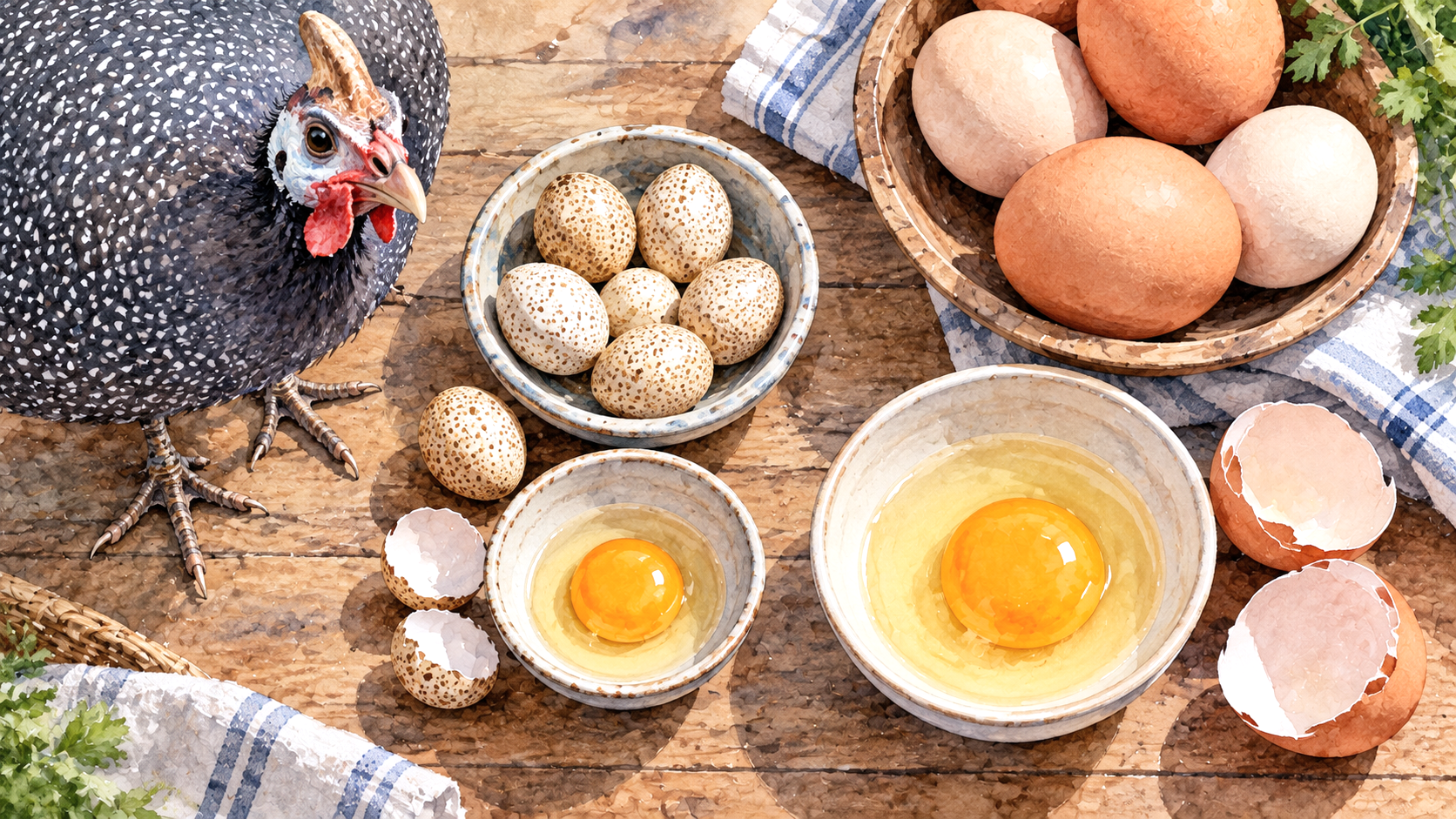
A guinea fowl egg can look like a miniature chicken egg at first glance, but pick one up and the differences become easier to recognize. It is generally smaller, often […]
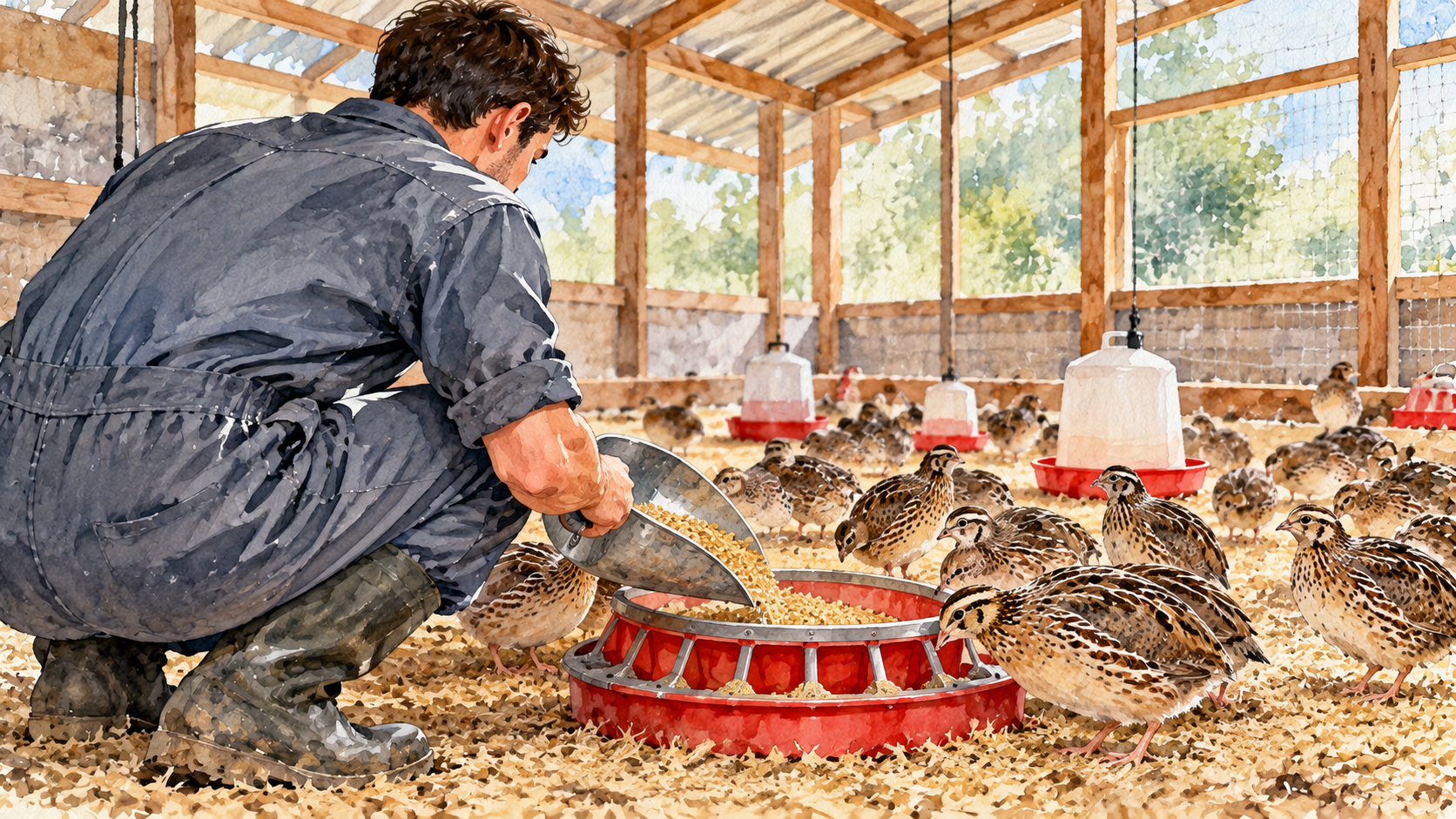
How to Raise Quail for Meat
To raise quail for meat, begin with healthy meat-oriented stock, provide age-appropriate feed and secure grow-out housing, monitor growth and flock health, and arrange lawful, humane processing before birds reach […]
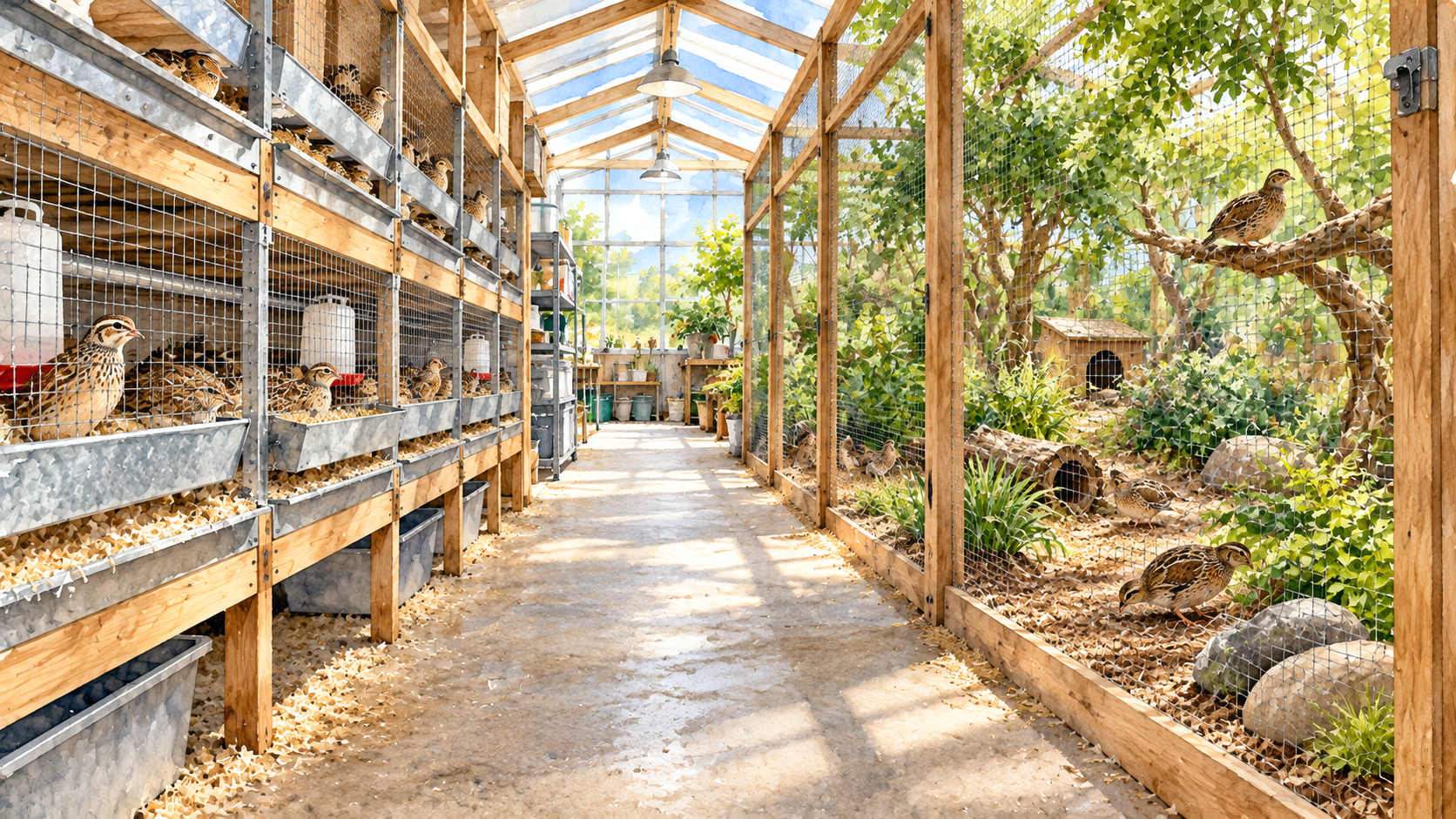
Cages vs. Aviaries for Quail: Pros and Cons
Cages vs. aviaries for quail: compare welfare, egg production, hygiene, injuries, labor, and flock management before choosing a housing system.
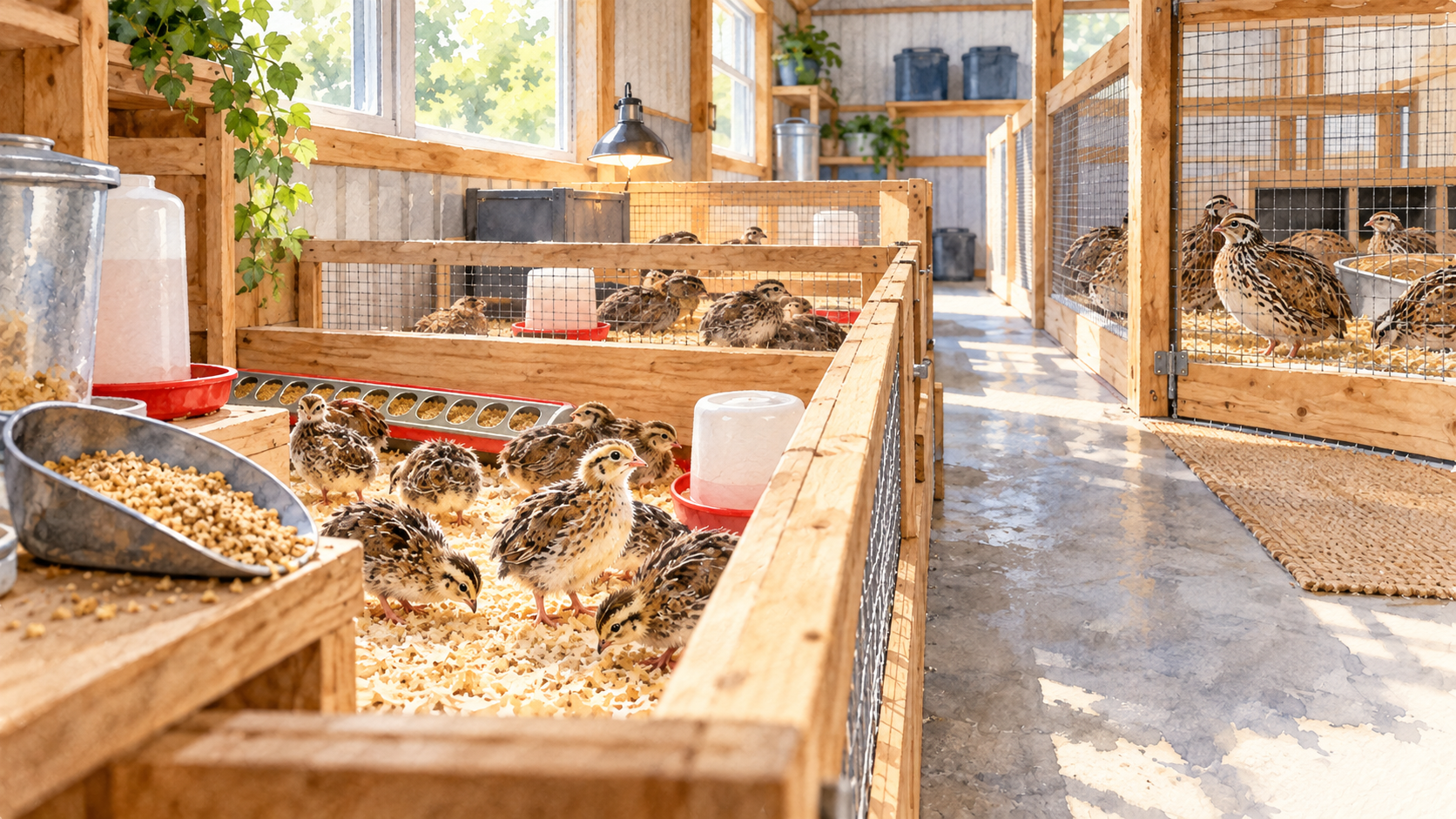
How to Raise Quail Chicks From Hatch to Adulthood
Raising quail chicks from hatch to adulthood requires a warm, secure brooder, suitable starter feed, safe drinking water, dry housing, and gradual management changes. Japanese Coturnix can reach reproductive maturity […]
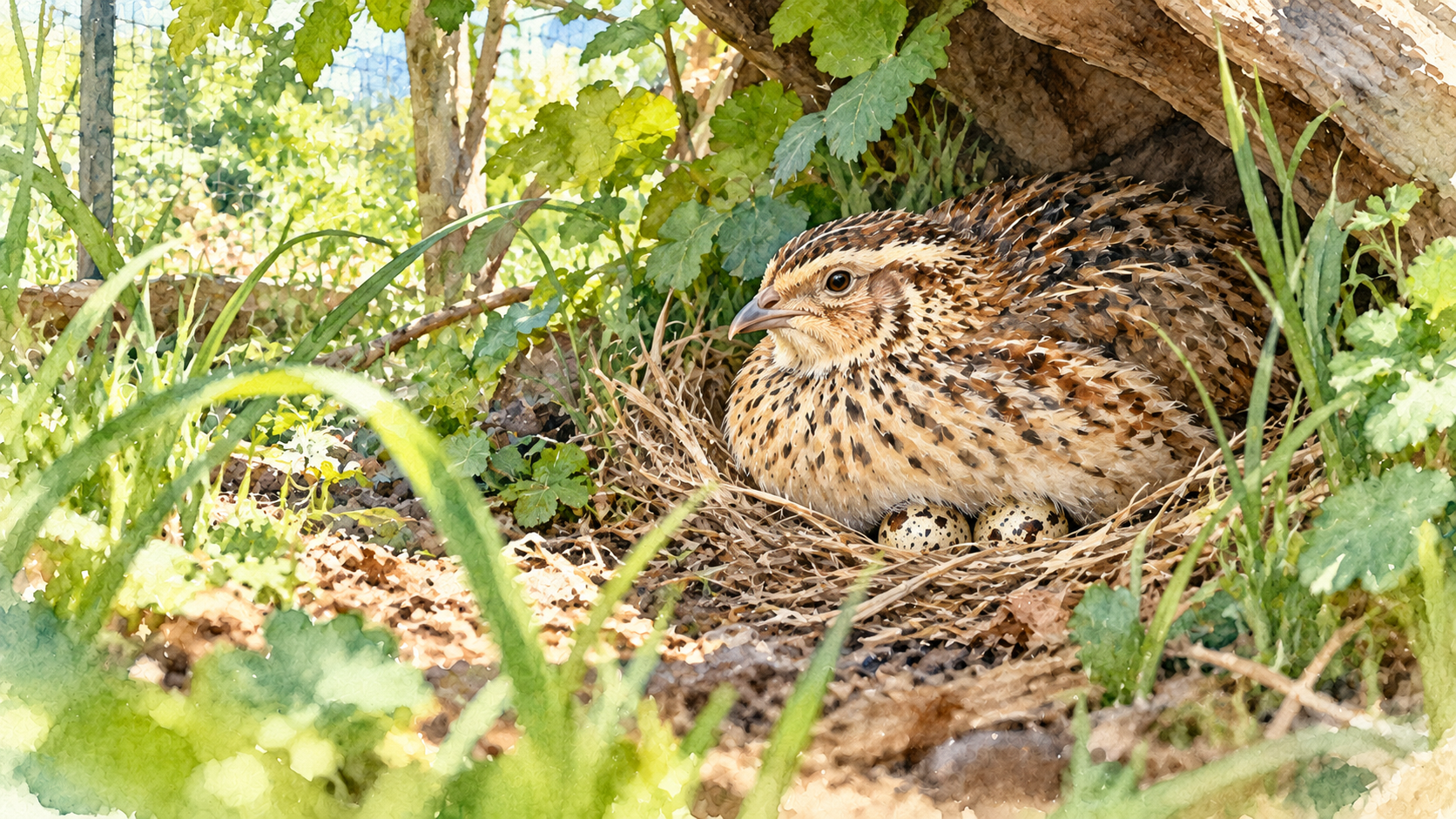
How to Hatch Quail Eggs Without an Incubator
Quail eggs can hatch without an incubator if a suitable broody bird keeps them warm and protected throughout development. A naturally brooding quail hen or a carefully selected broody bantam […]
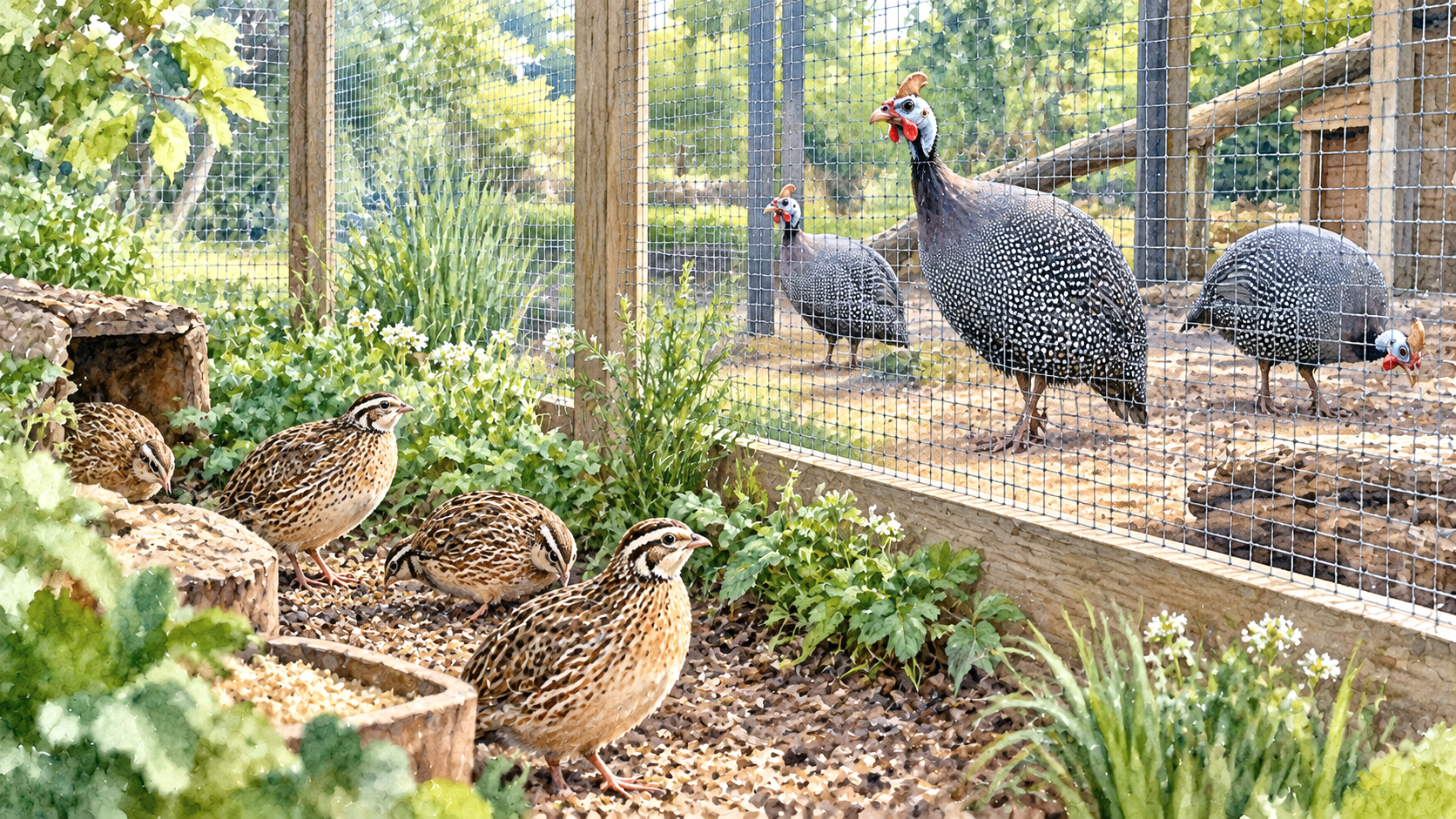
Can Guinea Fowl Live With Quail?
A guinea fowl investigating a feed tray might barely notice the quail standing beside it. If the larger bird suddenly turns, lunges or begins chasing another guinea, however, the smaller […]
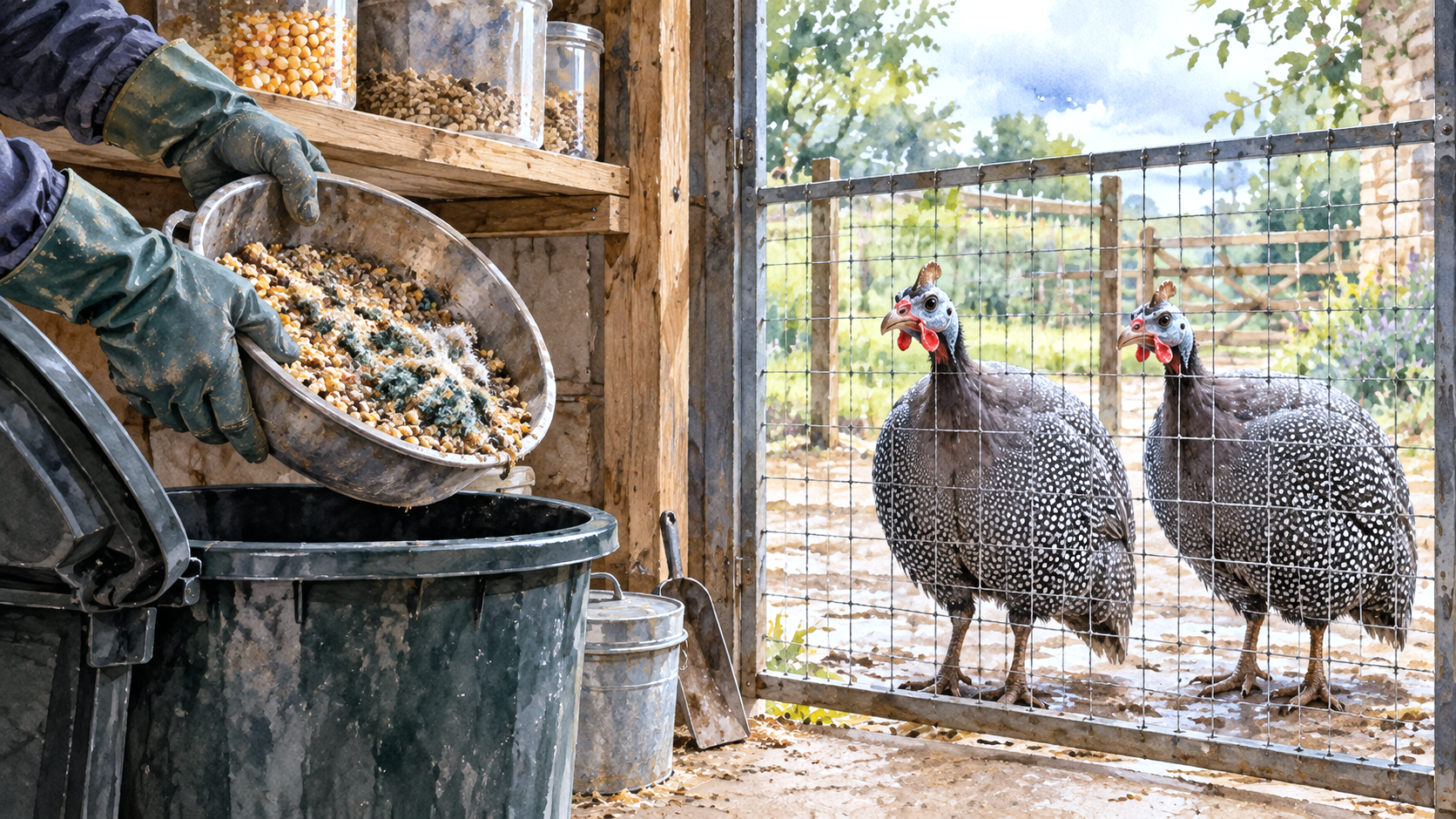
What Foods Are Unsafe for Guinea Fowl?
Guinea fowl will investigate fallen fruit, kitchen scraps, spilled grain, and unfamiliar vegetation, but not everything they peck at is safe to eat. Avocado, chocolate, caffeinated products, rhubarb leaves, raw […]
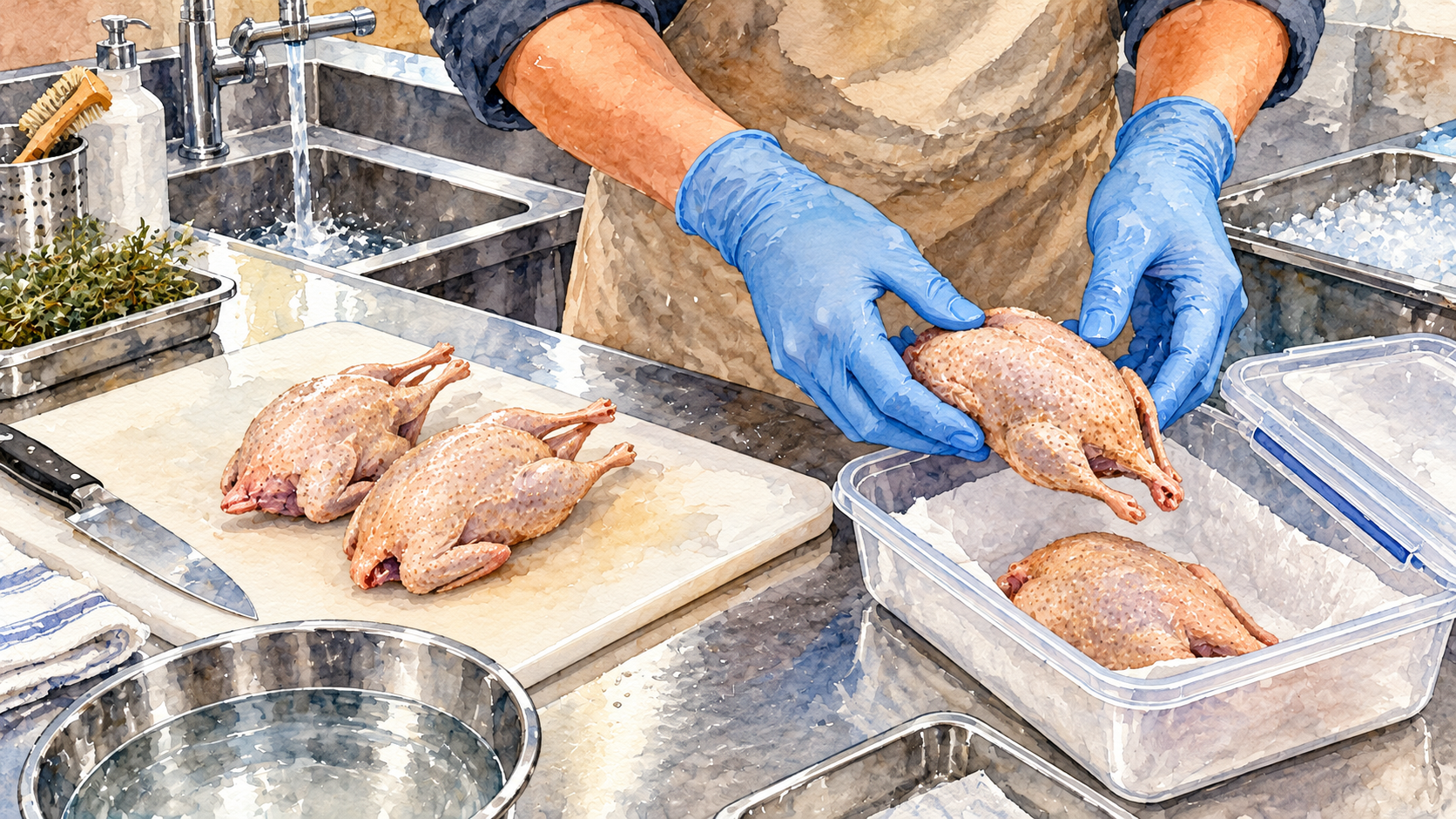
How to Process Quail for Meat Safely
Processing quail for meat safely requires humane handling, suitable facilities, hygienic carcass preparation, prompt chilling, and compliance with applicable food-safety regulations. Although quail are small, their meat can carry harmful […]
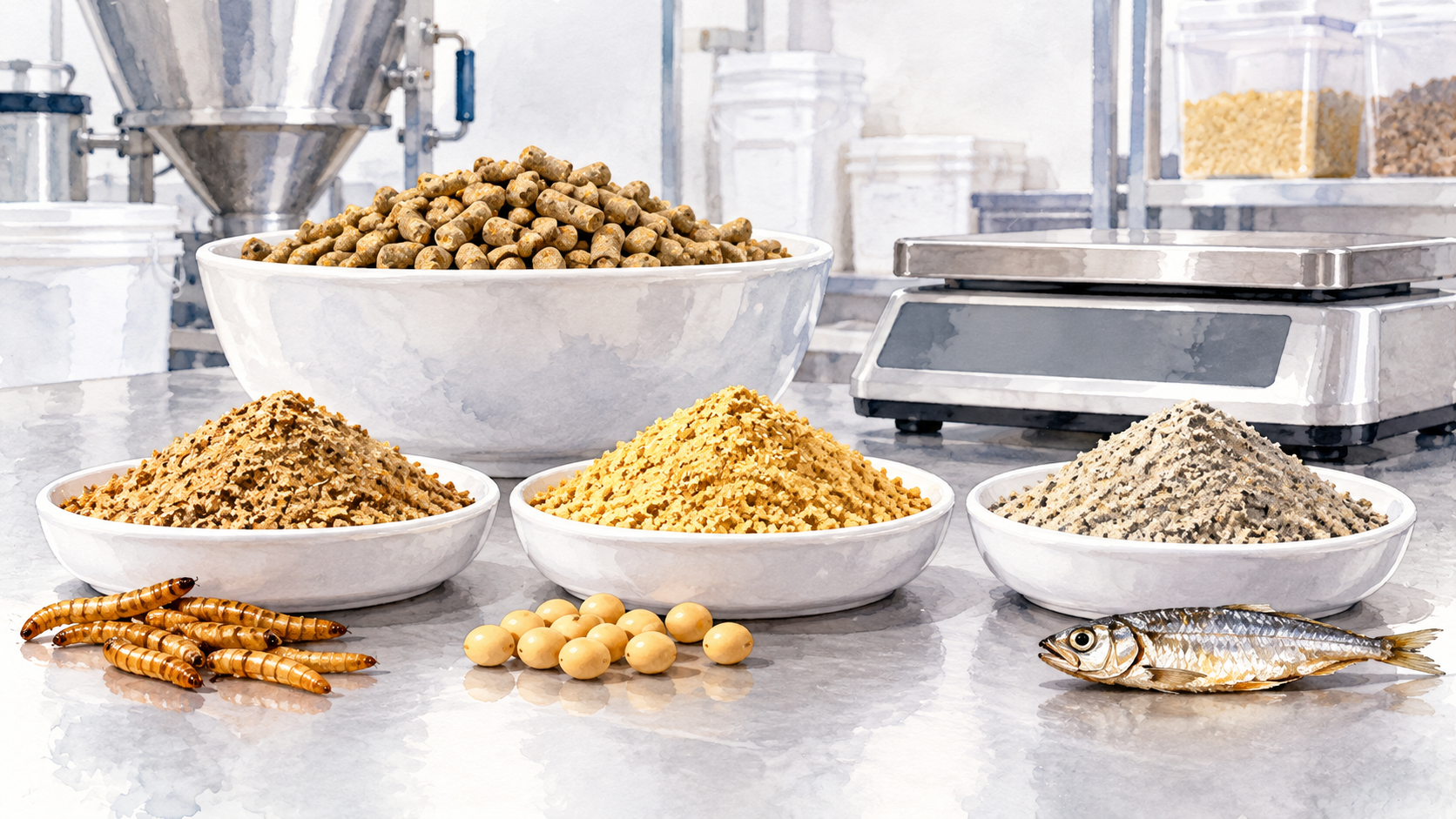
Can Mealworms Replace Soybean Meal or Fishmeal in Animal Feed?
Mealworms can replace some soybean meal or fishmeal in certain animal feeds, but they are not universally suitable as complete, one-for-one replacements. Research on yellow mealworm (Tenebrio molitor) ingredients has […]
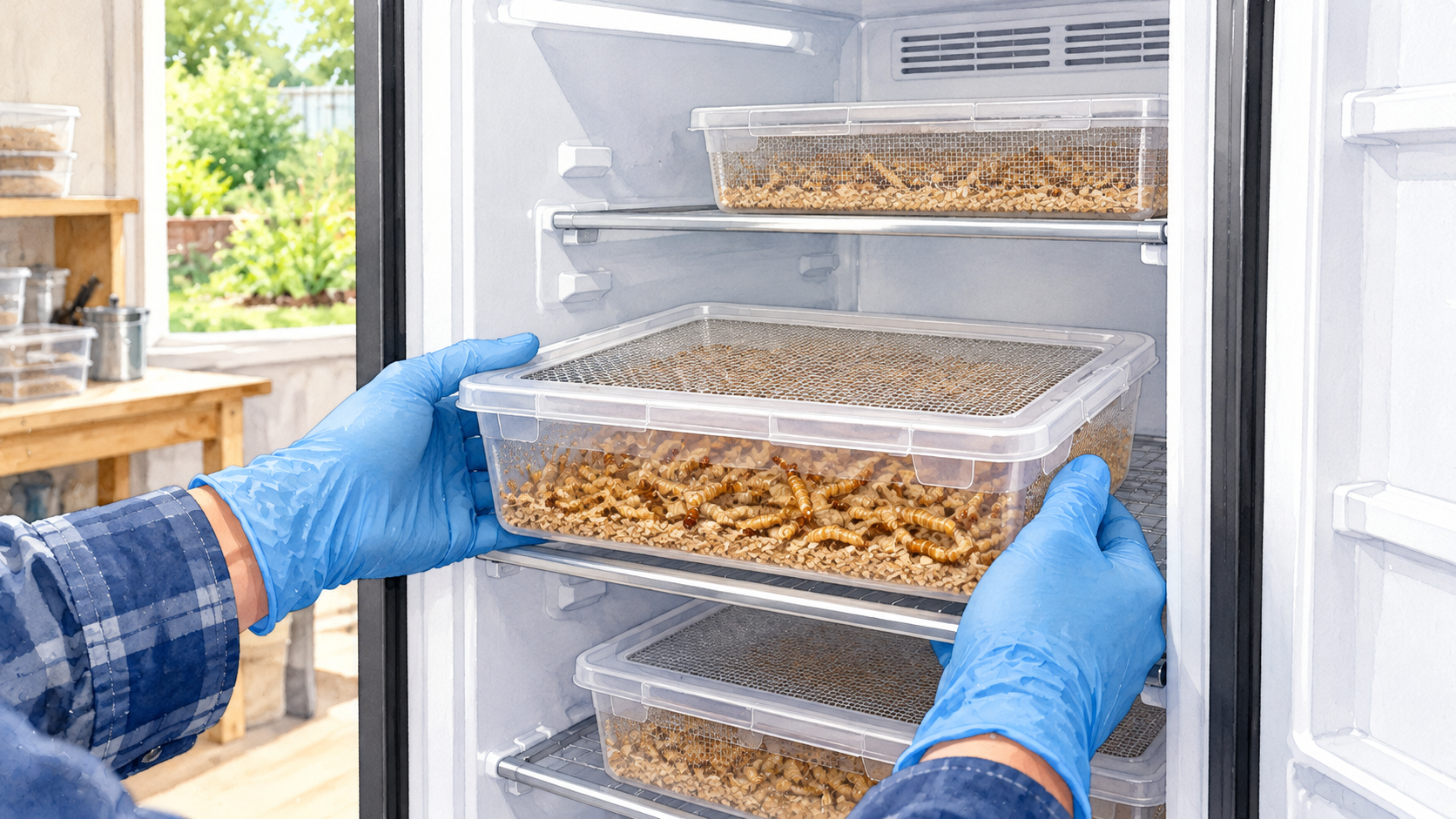
Can You Refrigerate Mealworms?
You can refrigerate live mealworms to slow their growth and delay pupation. Cooler temperatures reduce the activity and metabolism of yellow mealworm (Tenebrio molitor) larvae, allowing them to remain in […]