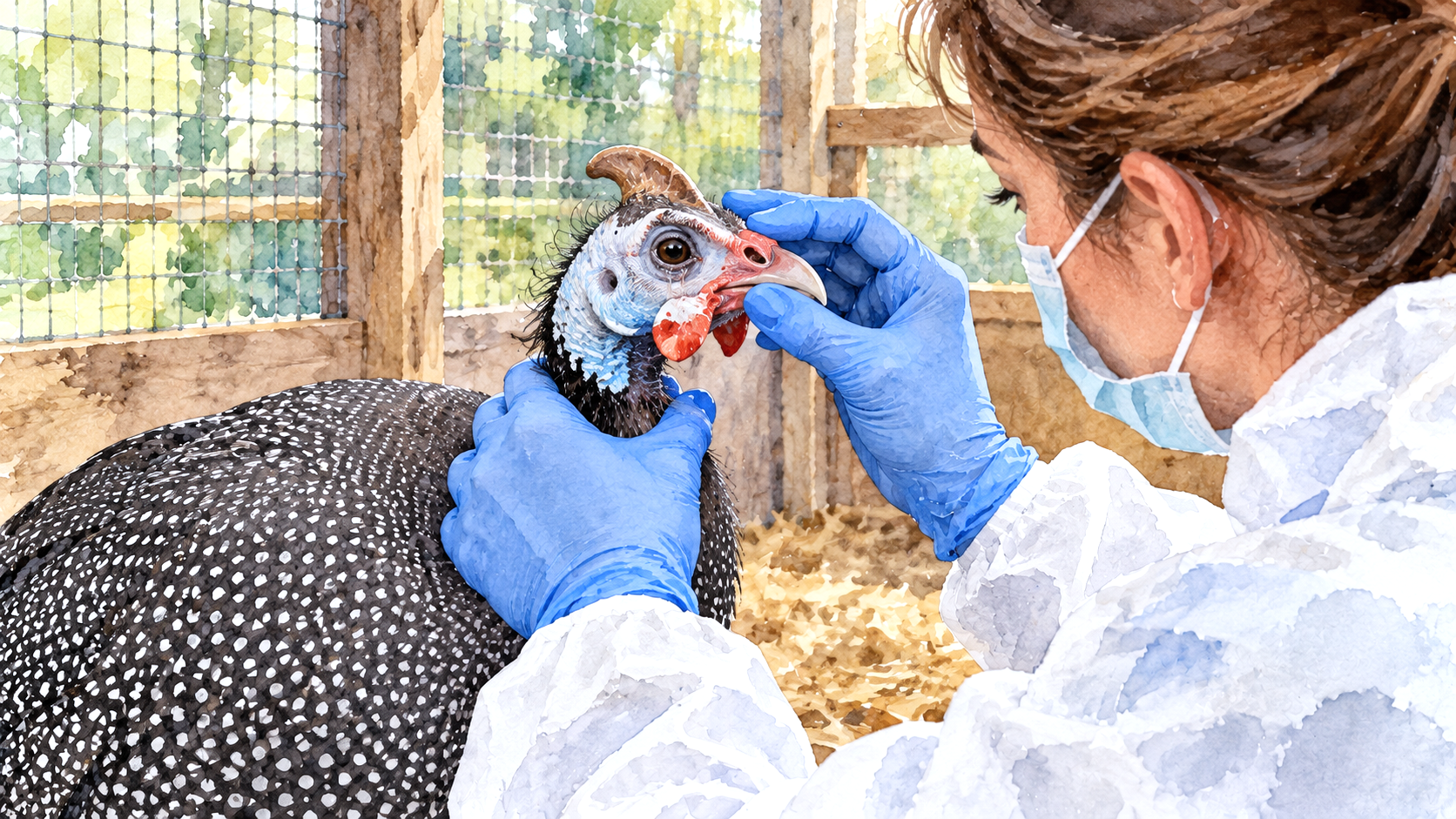
A guinea fowl that develops swollen sinuses, nasal discharge or noisy breathing may have an infectious respiratory problem. Mycoplasmas are among the organisms worth investigating, but their presence cannot be established from symptoms alone. Some infections are mild or difficult to notice, while others are complicated by additional pathogens or involve joints.
Guinea fowl can get mycoplasma infections for sure. Mycoplasma synoviae (MS) has been isolated from naturally affected guinea fowl, and experimental research has demonstrated that it can cause disease in this species. Mycoplasma gallisepticum (MG) is another important avian mycoplasma, although its effects are better characterized in chickens and turkeys. A veterinarian may use PCR testing and, when appropriate, blood testing or culture to investigate suspected infection.
Which Mycoplasmas Are Relevant to Guinea Fowl?
Mycoplasmas are small bacteria without a cell wall. Numerous species occur in birds, but not all cause disease and not all affect the same hosts. The main pathogenic mycoplasmas recognized in poultry differ in host range and the tissues they affect.
The clearest direct evidence for guinea fowl concerns MS. Researchers isolated Mycoplasma synoviae from guinea fowl with naturally occurring joint inflammation and showed that the isolate could also cause illness in experimentally infected guineas. The experimental outcome depended partly on how birds were exposed, so those findings should not be treated as a prediction of every field case.
| Organism | Relevance to guinea fowl | Principal concern |
|---|---|---|
| Mycoplasma synoviae (MS) | Natural isolation and experimental pathogenicity documented | Respiratory or sinus disease; joint inflammation in some infections |
| Mycoplasma gallisepticum (MG) | Important poultry pathogen with a broader avian host range; guinea-specific clinical evidence is less extensive | Respiratory illness and possible flock persistence |
| Mycoplasma meleagridis | Primarily a turkey-associated pathogen | Not a leading routine diagnosis for guinea fowl |
The host range and clinical patterns of MS include guinea fowl among susceptible birds. In contrast, descriptions of MG respiratory disease rely mainly on evidence from chickens and turkeys. Owners should avoid assuming that every poultry mycoplasma infects guineas equally often or produces identical effects.
What Symptoms Might an Infected Guinea Fowl Show?
Some infected birds may have few obvious signs. Others can show sneezing, watery eyes, nasal discharge, swollen sinus areas near the eyes, reduced activity or a decline in feeding. A bird experiencing difficulty breathing may extend its neck, breathe with an open beak or become reluctant to move. Joint involvement may cause swollen joints, lameness or an unwillingness to stand normally.
These symptoms are not specific to mycoplasma. Dust, ammonia, other infections, injury and broader health problems can produce overlapping changes. The early warning signs of illness in guinea fowl are useful for deciding when to seek help, not for assigning a bacterial species without laboratory evidence.
A guinea with severe breathing effort, marked weakness, collapse or rapidly progressing joint swelling requires urgent veterinary examination. More than one sick bird suggests shared exposure or transmission, but the number of affected birds does not identify the organism.
Can Mycoplasma Cause Swollen Joints or Lameness?
Yes, particularly in infections involving MS. The name synoviae refers to the joint-associated form of disease, and the documented guinea fowl isolate caused synovitis in research. Joint inflammation can make birds reluctant to perch, slow to walk or visibly lame.
However, the clinical behavior of MS in poultry is variable, and an infected bird may show only mild respiratory signs or none at all. Painful feet, trauma and other causes of difficulty walking in guinea fowl must still be considered. A veterinarian may need to assess a joint sample or other evidence before attributing lameness to mycoplasma.
How Do Mycoplasma Infections Spread?
Mycoplasmas can spread between birds through respiratory contact, and infectious material may be carried between enclosures on hands, footwear, equipment or the movement of infected birds. Transmission is influenced by the organism, duration of infection and the type of contact. Infected birds may remain carriers after visible signs subside.
The transmission routes described for MG and the spread of MS through birds and contaminated equipment show why apparently recovered birds deserve caution. Mycoplasmas generally do not survive for long periods outside their hosts compared with some other poultry pathogens, but that does not make dirty equipment or direct bird contact safe.
Keep sick birds from directly mixing with healthy ones while obtaining veterinary guidance. The risk of adding unfamiliar birds to an established flock is heightened when a carrier infection is possible, even if a newcomer appears active and healthy.
Can Mycoplasmas Pass Through Hatching Eggs?
Vertical transmission—passing an organism from an infected breeder hen into an egg—is recognized for both MG and MS in poultry. It matters because apparently healthy breeding birds can introduce infection into young stock. However, the magnitude and frequency of egg transmission in guinea fowl specifically are less clearly established than in chickens and turkeys.
The documented egg transmission of MS and the breeder-flock risks associated with MG justify asking about the source flock’s testing history when buying hatching eggs or keets. A clean-looking eggshell is not proof that an egg is free of internally transmitted organisms.
Can Mycoplasma Affect Guinea Fowl Egg Production?
Some mycoplasma infections affect reproductive performance in commercially studied chickens, including reductions in egg production or changes in eggshell quality. For MS, certain strains are associated with eggshell apex abnormalities in chickens. Comparable reproductive effects should not be assumed to occur at the same rate or with the same appearance in guinea fowl.
The reproductive and eggshell effects described for MS in laying chickens provide a reason to consider flock health when breeding performance changes, but they do not diagnose a guinea hen. The usual seasonal laying patterns of guinea fowl are also influenced by factors other than infection. Sudden declines accompanied by respiratory signs, swollen joints or poor hatch outcomes deserve veterinary investigation.
How Is a Mycoplasma Infection Tested?
A veterinarian may collect samples from the choanal cleft, trachea or other appropriate respiratory sites and request a species-specific PCR assay. PCR detects genetic material from the organism and is widely used for diagnosing avian mycoplasmosis. Appropriate sampling sites depend on the symptoms, suspected mycoplasma and laboratory requirements.
The diagnostic methods for MG include PCR, culture and serologic testing. MS diagnosis similarly relies increasingly on molecular testing. Culture requires specialized media and can be slow, while blood antibody tests may indicate prior exposure rather than prove that the organism explains current symptoms.
A negative test does not always rule out infection. Sample quality, timing, recent medication and the stage of infection can affect detection. Conversely, detecting mycoplasma does not automatically prove it is the only cause of illness; other respiratory pathogens or environmental irritants may be present. Ask the veterinarian whether flock-level testing or follow-up samples are needed.
What Happens After a Positive Test?
The veterinarian will consider the bird’s clinical condition, other affected flockmates, likely routes of spread and the intended purpose of the flock. Management may involve supportive care, minimizing stress, improving air quality and restricting movement of birds between groups. A positive result can have implications for breeders because apparently healthy carriers may remain a source of infection.
Antimicrobial drugs may reduce clinical signs in some mycoplasma infections, but treatment does not necessarily eliminate carriage. The limitations of antimicrobial control for MG are a major reason that prevention and sourcing birds from monitored flocks are emphasized. Guinea fowl may be kept for eggs or meat, so legal drug use, veterinary direction and withdrawal periods must be considered; do not use a chicken medication schedule or unsupported dose.
If several birds show severe respiratory signs or unexpected deaths, do not assume mycoplasma is the only explanation. Seek urgent advice because some serious poultry diseases require regulatory reporting.
How to Reduce the Risk of Mycoplasma in a Guinea Fowl Flock
Buy breeding stock and hatching eggs from suppliers willing to discuss flock health status and relevant laboratory testing. The National Poultry Improvement Plan provides voluntary testing and classifications for important poultry infections, including MG and MS, but participation does not mean that every possible pathogen has been excluded or that every classification applies automatically to a given guinea flock.
Limit direct contact between birds of unknown health status, clean shared equipment, keep footwear and handling supplies separated between groups, and avoid moving visibly sick birds. The everyday poultry biosecurity practices focus on controlling contact, wildlife access and dirty equipment. The benefits of clean, ventilated guinea housing include reducing dust, ammonia and crowding, which can worsen respiratory illness even when they are not the original infectious cause.
If mycoplasma has been confirmed, develop a testing and flock-management plan with a poultry veterinarian before selling eggs, moving breeding birds or introducing new stock. Routine biosecurity is more dependable than trying to recognize every carrier by appearance.
When Is Veterinary Help Urgent?
Prompt examination is appropriate for persistent sneezing, facial swelling, nasal discharge, reduced feeding or new joint swelling. Open-mouth breathing with effort, collapse, severe weakness or rapidly increasing illness across the flock requires urgent help. The warning signs that need prompt poultry disease reporting include unusual deaths and severe respiratory or neurological signs. U.S. owners can contact their state veterinarian or USDA at 1-866-536-7593 if a serious reportable disease is suspected.
Questions About Mycoplasma in Guinea Fowl
Can guinea fowl catch Mycoplasma synoviae? Yes. Natural infections and experimental disease have been documented in guinea fowl.
Can guinea fowl get Mycoplasma gallisepticum? MG has a broad avian host range, but guinea-specific evidence is less developed than that for chickens and turkeys. Laboratory testing is important when infection is suspected.
Does a swollen eye mean mycoplasma? No. Several infections, injuries and irritants can cause swelling around the eyes.
Can a guinea fowl carry mycoplasma without looking ill? Yes. Some infections are mild or subclinical, and carrier birds may continue to matter for flock transmission.
Can mycoplasma cause limping? MS may involve joints and contribute to lameness, but many other conditions can make guinea fowl walk abnormally.
Can mycoplasma pass into hatching eggs? Egg transmission is documented for major poultry mycoplasmas, although guinea-specific rates are not well established.
Will antibiotics eliminate mycoplasma from a flock? Not necessarily. Treatment may lessen illness without clearing infection, so veterinary testing and flock-level planning matter.
What test should I request? Ask a poultry veterinarian about a suitable species-specific PCR assay and whether serology or additional testing is appropriate.