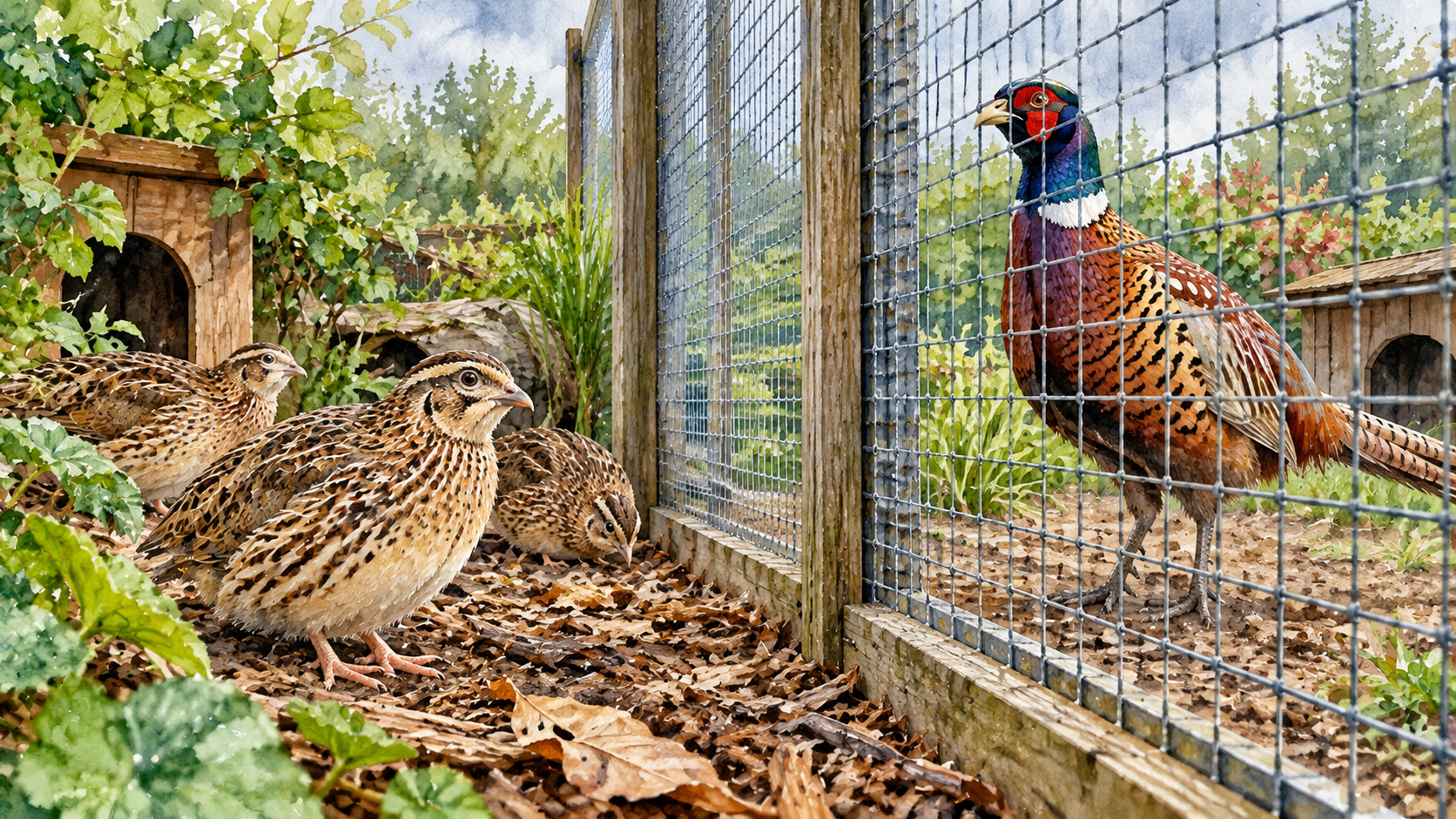
Domestic Coturnix quail and pheasants can be raised on the same farm, but they should generally live in separate enclosures. Differences in body size, flight behavior, space requirements and aggression make unrestricted mixing risky, especially for the smaller quail.
Pheasants are active, powerful gamebirds. A pheasant suddenly flying or rushing through a feeding area may injure a quail without deliberately attacking it. Both species can also share infections through litter, droppings and equipment. Separate secure housing helps manage welfare and disease.
Why Is Keeping Quail With Pheasants Risky?
Adult ring-necked pheasants are much larger than Coturnix. Quail usually forage and rest on the ground, while pheasants can move quickly and fly forcefully. A mixed pen must therefore support incompatible movement patterns.
Pheasants are particularly sensitive to disturbance, according to gamebird-rearing guidance from the University of Minnesota. A mixed group that seems peaceful briefly may behave very differently during breeding, feeding, or a sudden fright.
Can Pheasants Injure or Kill Coturnix Quail?
Yes. Accidental trampling, jostling and pecking can seriously injure a quail. An approaching pheasant may also frighten Coturnix into sudden upward flight, causing collisions with the enclosure.
Direct aggression further increases risk. Veterinary guidance on gamebird aggression identifies pheasants and quail among birds susceptible to damaging pecking. A larger bird’s calm behavior at one time does not guarantee future safety.
Do Pheasants Need More Space Than Quail?
Pheasant production often calls for substantial movement space, especially where birds are being raised for flight. Penn State’s pheasant production guidance discusses large flight pens and different space allowances for various rearing systems.
A mixed pen cannot be judged by simply adding space allowances for each species. Larger pheasants may still dominate open areas and entrances while quail gather in a few low shelters. Protect the usable space domestic Coturnix require independently.
Why Extra Space Does Not Guarantee Compatibility
More room can reduce crowding, yet it does not eliminate territorial chasing, sudden flight or competition at common feeders. A large aviary may still produce concentrated conflict at doors, water stations and hiding places.
The welfare differences between quail cages and aviaries include how safely birds can use their surroundings. Separate spaces remain more reliable than assuming a larger mixed enclosure will work.
Can Pheasants and Quail Share an Aviary?
An undivided aviary is not automatically suitable for both. Pheasants may fly strongly across areas where quail rest, while Coturnix themselves can jump upward when alarmed. Roof and wall design must protect against collisions as well as escapes.
Pheasant flight-pen recommendations reflect a different set of needs from ground-focused quail housing. A divided aviary with independent equipment is generally a safer compromise, though shared air and tools still create biosecurity issues.
Can Male Pheasants Be Aggressive Toward Quail?
Some male pheasants become territorial during breeding. They may chase, strike or peck other birds, and smaller quail have limited capacity to withstand these interactions. Females may also displace or peck quail.
Poultry feather-pecking guidance explains how stress, crowding and social behavior can escalate to serious injuries. The causes of aggression within Coturnix flocks are already challenging without much larger neighbors.
Can Quail and Pheasants Spread Diseases to Each Other?
Yes. Both are gallinaceous gamebirds susceptible to some shared infections. Droppings, dirty drinking systems, equipment and direct contact can move pathogens between groups even when one species displays few symptoms.
Diseases do not affect all gamebirds identically. A pathogen comparatively mild in pheasants may be serious in susceptible quail, which makes separation and species-specific monitoring important.
Ulcerative Enteritis
Ulcerative enteritis is caused by Clostridium colinum. The Merck Veterinary Manual documents infection in pheasants, quail and other birds, including Japanese Coturnix.
Susceptibility is especially high in bobwhite quail, with generally milder illness reported in certain other gamebirds. Infected carrier birds may shed bacteria in feces after recovery. Mixed litter and shared equipment create avoidable exposure.
Histomoniasis (Blackhead Disease)
Histomoniasis, caused by Histomonas meleagridis, can affect both pheasants and quail. The disease is commonly associated with cecal worm eggs and contaminated ground or droppings.
The FDA’s blackhead disease explanation identifies both as susceptible gamebirds and describes transmission through infected worm eggs and invertebrates. Presence of pheasants does not mean infection is present, but shared foraging ground creates a possible route.
Avian Influenza and Other Infections
Both pheasants and Coturnix can be susceptible to avian influenza and other poultry pathogens. Severity varies by virus and species, and direct contact or contaminated equipment may spread infection.
USDA poultry biosecurity guidance recommends limiting contact between populations. Sudden illness or unexplained deaths require veterinary or animal-health advice, not an assumption that the cause is routine stress.
Can Quail and Pheasants Eat the Same Feed?
Not necessarily. Diet needs change with species, age and reproductive condition. Veterinary guidance on gallinaceous bird nutrition distinguishes maintenance, growth and breeding diets.
Shared feeders make it difficult to monitor intake. Pheasants may dominate access or use differently sized feed, while quail need the appropriate ration for adult Coturnix. Independent stations in separate housing are simpler to manage.
Can Pheasants Bully Quail Away From Feed and Water?
Yes. A quail may repeatedly retreat from a feeder when a larger pheasant approaches, even if no attack occurs. Over time this can restrict food and water access while the equipment appears adequately filled.
The proper positioning of Coturnix feeders and drinkers accounts for their smaller reach. Multiple stations reduce competition but do not guarantee that a larger species will not monopolize the most convenient points.
Do Quail and Pheasants Need Different Hiding Places?
Coturnix usually use low ground-level retreats, while pheasants require cover suited to much larger bodies and stronger flight. Shared shelters can become unsafe if a pheasant blocks the opening or reaches a smaller bird inside.
The ground-resting habits of Coturnix favor accessible low refuge. Separate enclosures allow shelter dimensions and placement to fit each species without creating crowded traps.
Can Pheasant Chicks and Quail Chicks Be Brooded Together?
Separate brooders are safer. Newly hatched Coturnix are exceptionally small. Pheasant chicks develop into much larger birds and can displace or accidentally trample them, while feeders, drinking systems and brooder space may need different dimensions.
Pheasant brooding advice emphasizes space, quiet and accessible equipment. The brooding requirements for Coturnix chicks should be provided independently rather than relying on early peaceful behavior.
Can Quail and Pheasants Live in the Same Building?
They can occupy separate pens or rooms within a building. Solid barriers should prevent pecking and physical contact, and pheasant droppings must not fall into lower quail cages. Each group needs its own feeding, drinking and resting arrangements.
Shared air, dust, footwear and tools can still transfer organisms. Poultry biosecurity guidance remains relevant even after the birds are separated by partitions. Independent structures offer clearer separation where practical.
Does Quarantine Make Keeping Quail With Pheasants Safe?
Quarantine can identify some problems before new birds join a property, but healthy-looking carriers and variable incubation periods mean it cannot guarantee freedom from disease. It also cannot correct size, aggression or flight-related incompatibilities.
The quarantine process for newly acquired Coturnix remains useful, while ongoing species separation continues to reduce avoidable exposure.
What if Quail and Pheasants Are Already Living Together?
Observe quail for persistent hiding, feather damage, panic, and exclusion from feed or water. A mixed group may appear peaceful when young and become less compatible when pheasants mature or breeding behavior changes.
Prepare separate, secure Coturnix accommodation before moving the smaller birds. Use safe quail handling and relocation practices to limit further stress. Injuries, weakness or sudden deaths require veterinary assessment rather than attributing every problem to aggression.
Common Questions About Quail and Pheasants Living Together
Can Coturnix share a pheasant aviary? An undivided aviary is generally not recommended because larger birds can injure, frighten or displace quail.
Will pheasants attack quail? Some may chase or peck them, and accidental trampling or flight collisions also pose risks.
Can pheasants give quail diseases? Yes. Shared pathogens include ulcerative enteritis and histomoniasis, although risks depend on infection and exposure.
Can the species live next to each other? Yes, in distinct secure enclosures with species-appropriate equipment and continuing biosecurity precautions.