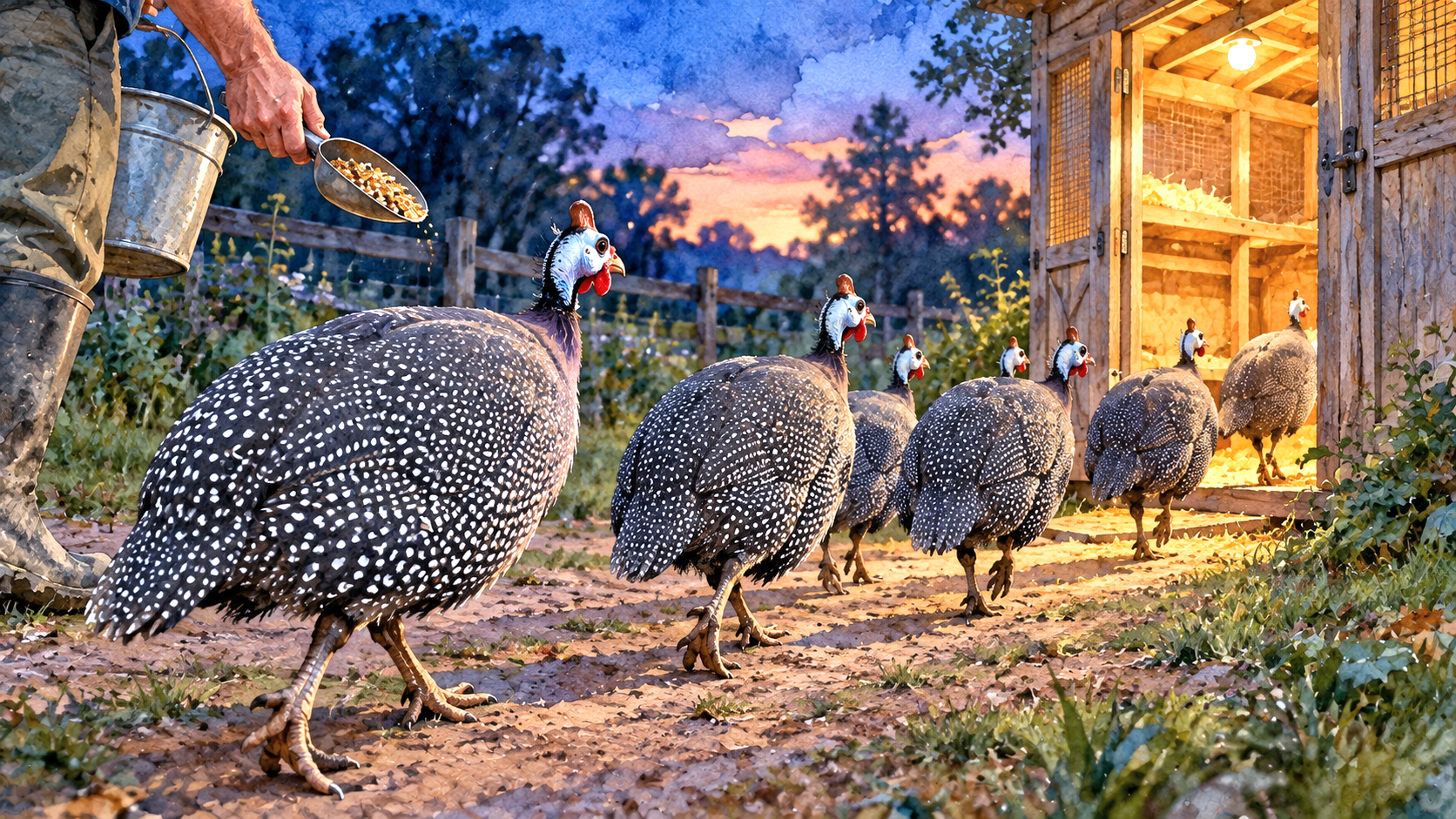
Guinea fowl can learn to return to their coop every evening, but they do not always develop this habit without training. Some naturally prefer sleeping in trees or on rooftops, particularly when those locations are higher or more familiar than the roosts inside their shelter.
The most effective approach is to establish a consistent evening feeding cue, calmly guide the flock into the coop before sunset, and repeat the routine until the birds begin returning independently. Training is generally easier with young guinea fowl, although adults can also learn through repetition.
Establish a Consistent Evening Feeding Routine
Food can help guinea fowl associate the coop with a predictable daily event. Choose a distinctive call, whistle, or container sound and use it whenever you provide their evening feed. Keep the cue consistent so the birds learn to recognize it.
Begin while the flock is still close to its shelter. Make the sound, place an appropriate portion of feed inside the coop, and allow the birds to enter voluntarily. Repeat the association daily rather than changing the cue or feeding location. Experienced keepers use regular feeding times and familiar food rewards to encourage guinea fowl to return home.
Training rewards should form part of a nutritionally appropriate diet rather than replacing balanced feed with excessive treats. Guinea fowl can consume various insects and seeds while foraging, but their normal feeding requirements must still be satisfied. Never deprive birds of essential food or drinking water to make them respond to a call.
Once the flock reliably approaches when summoned, begin delivering the cue from a greater distance. The objective is for the birds to associate the sound with returning to their shelter, not merely gathering around the person carrying food.
Bring the Flock Inside Before Sunset
Start the evening routine while there is sufficient daylight for guinea fowl to locate the entrance comfortably. Waiting until darkness makes the process harder because guinea fowl have poor night vision and may become reluctant to leave an elevated outdoor perch.
Aim to have the birds approaching their coop well before sunset, especially during the early training period. The exact time will change throughout the year, so adjust the schedule to local daylight rather than using the same clock time every season.
A useful sequence is to call the flock, allow it to approach the feeding area, place the evening ration inside, and close the entrance after every bird has entered. When birds hesitate, give them time to investigate rather than immediately attempting to catch them.
The tendency of guinea fowl to seek elevated outdoor roosts can become more difficult to overcome once the birds have settled for the night. Bringing them indoors before they begin selecting their sleeping places is therefore preferable to retrieving them afterward.
Teach Guinea Fowl to Respond to Gentle Herding
A flock that understands a feeding cue may still occasionally need guidance toward the coop. Gentle herding provides a way to move birds without catching each individual.
Walk slowly behind the flock, maintaining enough distance that the birds move forward without panicking. Two lightweight herding sticks held to either side can help indicate the intended direction, but they should not be used to strike, poke, or forcibly push the birds. The herding approach used by experienced guinea fowl keepers relies on calm movement and repeated practice.
Keep the route to the coop clear. If birds turn away from the entrance, reduce pressure and allow them to settle before trying again. Running after guinea fowl often causes them to scatter or take flight, making their movement less predictable.
Practice herding when the birds are calm and there is no immediate urgency. Short, successful sessions help establish a familiar response that can also be useful when birds need to enter shelter ahead of severe weather.
Make the Coop Entrance Easy to Recognize
Sometimes guinea fowl approach their shelter but refuse to pass through the doorway. A narrow entrance, steep ramp, or dark interior may discourage them, particularly when several birds attempt to enter together.
Provide a clear approach with secure footing and enough opening width for birds to move through without crowding. Dominant individuals may occasionally block the entrance or chase flockmates away, so observe whether particular birds are being prevented from entering.
A subdued interior light switched on before sunset may help guinea fowl recognize the coop as an accessible resting area. Guinea Fowl International recommends evening lighting and accessible entrances as practical aids to nighttime training. Lighting should be securely installed and should not expose birds to excessive brightness or interfere unnecessarily with normal dark-period rest.
The birds also need a comfortable place to settle after entering. Suitable indoor guinea fowl roosts can make the shelter more attractive than an empty building with nowhere elevated to rest.
Correct a Habit of Sleeping in Trees or on Rooftops
Guinea fowl that repeatedly sleep outdoors may already have developed a preferred evening routine. Changing that habit can require a period of supervised confinement in suitable housing, followed by renewed practice with the feeding cue.
Where birds begin gathering near a particular tree before dusk, call them earlier and guide them toward the coop before they fly up. Avoid climbing after birds or attempting to knock them from branches. Such actions can cause falls, uncontrolled flight, and unnecessary injury.
If a bird is already perched outdoors after dark, do not pursue it in a way that might frighten it into flying blindly. Assess whether it can be recovered safely, and obtain experienced assistance where necessary. Repeated nighttime losses may make a secure enclosed arrangement necessary rather than continued unrestricted access.
The importance of sheltered overnight housing remains relevant even when guinea fowl appear comfortable sleeping outdoors. The training objective is a dependable, safe resting habit rather than simply encouraging the birds to approach the farmyard.
Maintain the Habit After Training
Once the flock begins entering voluntarily, continue using the familiar evening cue. Inconsistent routines can weaken an established response, especially when birds discover appealing outdoor roosting locations.
A simple head count each evening helps identify missing individuals before the coop is secured. Pay particular attention after changes to the flock, relocation of feeding equipment, or disruptions to the usual schedule.
Newly acquired guinea fowl may not immediately follow the behavior of established birds. The acclimation required before birds begin free-ranging is separate from teaching a dependable evening return, although both influence whether newcomers recognize the coop as home.
Training also needs to accommodate normal differences between individuals. Some birds learn quickly, while others require additional guidance. A flock should not be considered reliably trained until its members return consistently without stressful intervention.
Common Questions About Evening Coop Training
How long does it take to train guinea fowl to return at night?
Some flocks develop a reliable routine within several days or weeks, while others take longer. Age, previous housing habits, consistency, and individual behavior influence progress. No fixed training period guarantees success.
Will guinea fowl follow chickens into the coop?
Some may follow familiar chickens, but this is not dependable. Guinea fowl can prefer different resting locations, and keeping guinea fowl with chickens introduces social considerations that should not be overlooked.
Can an automatic coop door replace evening training?
An automatic door can secure an enclosure at a scheduled time, but it cannot guarantee that every guinea fowl has entered. Closing it while birds remain outside may leave them exposed overnight. Automatic systems should be used only when the flock’s return behavior is dependable and the keeper can account for missing birds.
Can older guinea fowl learn a new bedtime routine?
Yes, although adults accustomed to outdoor sleeping may be more resistant to changing their habits. Consistent feeding cues, calm guidance, and temporary access restrictions can help establish a new routine without forceful handling.
One thought on “How to Train Guinea Fowl to Return to the Coop at Night”