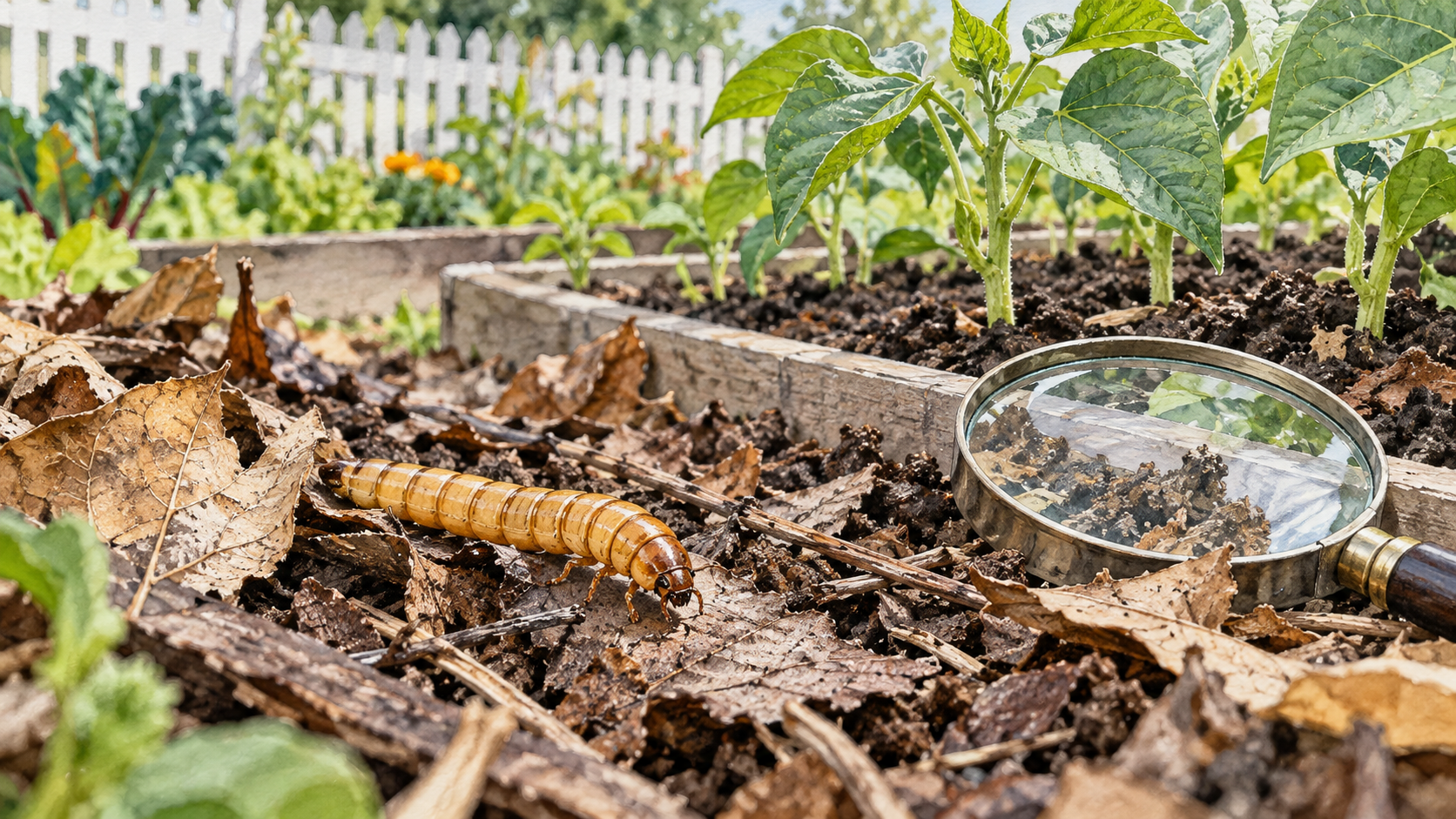
Mealworms and other darkling beetle larvae can be beneficial decomposers in gardens, but some related species also damage seeds, seedlings and young plants. Finding a firm, yellowish larva in soil does not automatically mean the garden has a pest problem. Its identity, where it was found and whether plants are being damaged matter more than its resemblance to a farm-raised mealworm.
The familiar yellow mealworm (Tenebrio molitor) mainly uses grain-based material and other decaying organic matter. Gardeners may instead encounter different members of the darkling beetle family (Tenebrionidae), including so-called false wireworms. Those insects do not all have the same feeding habits.
Are Garden Mealworms Beneficial or Harmful?
Many darkling beetles occupy leaf litter, decaying wood and other organic debris where they consume dead plant matter, fungi and sometimes dead insects. Their feeding contributes to the physical breakdown and recycling of organic material. Virginia Cooperative Extension describes these habitats and explains that the beetle family includes numerous species with different diets.
Other darkling beetles feed on living crops. According to University of California integrated pest management guidance, some species damage emerging bean seedlings, chewing foliage or cutting young plants near the soil surface. The presence of darkling beetles alone therefore establishes neither a benefit nor a threat.
Are the Larvae Really Yellow Mealworms?
The farm-raised yellow mealworm is the larval stage of Tenebrio molitor. It is typically golden yellow, elongated, segmented and somewhat hard-bodied, with three pairs of small legs near the head. Its adult form is a dark beetle. Utah State University Extension describes how yellow and dark mealworms can be recognized.
However, the term “mealworm” is also used loosely for larvae of other darkling beetles. Some garden-dwelling species are smaller than mature T. molitor and occur naturally in soil rather than stored grain. Color alone does not reliably determine species, and a larva found beneath mulch should not be labeled a yellow mealworm without supporting features or an adult specimen.
For the familiar farmed species, what a mealworm is explains its identity, while mealworm appearance covers its visible traits.
Why Mealworm-Like Larvae Appear in Garden Soil
Darkling beetles often shelter beneath stones, mulch, boards, plant litter or decaying wood. These sheltered places help protect them from light and drying conditions. Larvae may also occur where decaying roots and other organic material provide suitable food. Their presence is not by itself evidence of plant feeding.
True yellow mealworms are more closely associated with damp grain, milling residues and stored feed than with active feeding on garden crops. Iowa State University Extension notes that they also occur in accumulations of moist organic matter. Garden seed or animal-feed storage near a growing area can therefore help explain a local occurrence.
Outdoor members of the beetle family have broader ecological roles, discussed separately in darkling beetles in soil and compost.
How Darkling Beetle Larvae Contribute to Decomposition
Larvae that consume dead plant material break it into smaller particles and return some of it to the environment as droppings. Fungi and other soil organisms continue to transform that material. This is one small component of garden decomposition rather than proof that darkling beetles substantially improve soil fertility or replace composting.
Different species use different food sources, and not every garden darkling beetle is an efficient decomposer of tough leaves or woody material. Extension descriptions of darkling beetle habitats distinguish insect scavengers and decomposers from species associated with stored products. Deliberately releasing farm-raised mealworms into garden beds is not a demonstrated way to improve composting or soil health.
For the separate question of processing selected organic materials in managed colonies, see composting with mealworms.
When Can Darkling Beetles Damage Vegetables?
Some darkling beetles, including Blapstinus species, can damage young crops. Adult beetles may chew stems and emerging leaves, while some related larvae feed beneath the surface. The risk is most significant around seedling emergence, particularly where susceptible plants and sufficient beetle numbers occur together.
California’s cucurbit pest guidance reports that certain darkling beetles can girdle or cut young seedlings near the soil line and occasionally feed on flowers or fruit later in the season. Dry bean guidance describes comparable early-crop injury. These findings concern particular pest species and crops, not the ordinary yellow mealworm as a universal garden pest.
Chewed seedlings also have many possible causes, including cutworms, slugs and other insects. Finding a darkling beetle nearby does not establish that it caused the damage. The assessment should connect a correctly identified insect with actual feeding signs before drawing conclusions.
Mealworms, False Wireworms and True Wireworms
The names are easy to confuse because the larvae may all look elongated, shiny and relatively firm. False wireworms belong to the darkling beetle family, while true wireworms are larvae of click beetles (Elateridae). These are different groups with different species and feeding behaviors.
University of California’s wireworm guidance documents how true wireworms can injure sprouting seeds, roots and underground plant parts. Darkling beetle pest guidance uses the term “false wireworms” for certain larvae that resemble them. A detailed side-by-side distinction belongs in mealworms versus wireworms.
For a garden discovery, record the larva’s approximate size, body form, number and location. An adult beetle, a clear photograph or identification by a local extension service may be needed to distinguish closely resembling larvae.
How to Decide Whether a Garden Finding Is a Concern
The most useful first question is whether the garden contains a healthy, ordinary population of decomposers or a crop-feeding species associated with observed damage. A small number of larvae in undisturbed mulch or rotting organic matter, with no injured plants nearby, generally gives less reason for concern than repeated injury to newly emerging seedlings accompanied by suspected pest beetles.
Look at the circumstances rather than applying a blanket rule to every brown or yellow larva. Pay particular attention to the growth stage of nearby crops, whether stems have been cut or chewed, and whether the insects are repeatedly associated with that injury. Species identification matters before deciding that any intervention is justified.
If an active infestation is actually confirmed, control options belong in the separate garden infestation guide (DM133). Unidentified larvae should not trigger indiscriminate treatment of a garden bed.
Should You Encourage Mealworms in a Garden?
There is no clear reason to introduce farm-raised yellow mealworms deliberately into vegetable beds. Their established food preferences favor suitable grain-based and decaying materials, and there is no dependable evidence that releasing them increases vegetable growth or improves garden compost at a useful scale. A managed mealworm colony serves a different purpose from the community of organisms already present in healthy garden soil.
Naturally occurring darkling beetles can be left undisturbed where they are correctly identified as harmless and there is no evidence of crop damage. Conversely, growers should recognize that certain darkling beetle species can be genuine agricultural pests, especially during vulnerable seedling stages. The sound approach is identification and observation, not treating all darkling beetles as uniformly beneficial or harmful.
Garden Questions About Mealworms
Do mealworms eat live garden plants? The familiar yellow mealworm is mainly associated with grain and decaying material. Some other darkling beetle species can feed on living seedlings, so the insect’s identity matters.
Are mealworms a sign of healthy soil? Their presence alone cannot establish soil health. They may reflect available organic matter or nearby stored grain residues.
Are darkling beetles the same as ground beetles? No. Darkling beetles belong to Tenebrionidae, while ground beetles belong to Carabidae; many ground beetles are predators of other invertebrates.
Should every mealworm-like larva in a vegetable bed be removed? No. First consider identification and whether crop injury is actually occurring. Some are harmless decomposers, while other species may need assessment as pests.