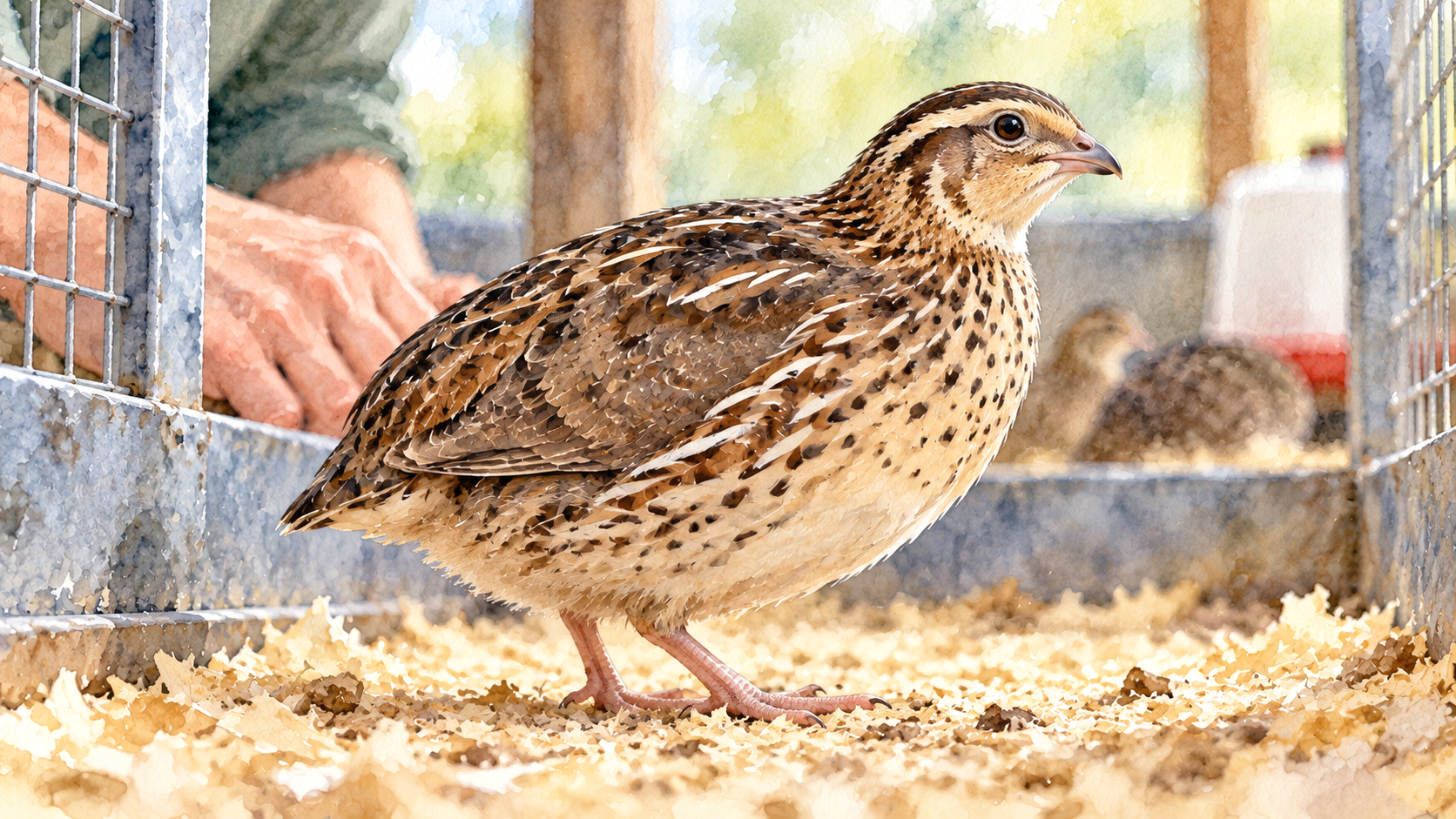
Healthy quail should look alert, move normally, breathe quietly, and have clean eyes, nostrils, and vents. Their feathers should generally be in good condition, and they should respond to their surroundings without appearing persistently weak, distressed, or unusually inactive. These are useful signs when choosing birds, although a quail can look healthy and still carry an infection.
Inspecting birds before purchase helps identify obvious problems and evaluate the seller’s care practices. For domestic Japanese or Coturnix quail, combine observation, a brief physical examination when appropriate, and questions about age, health history, and husbandry.
What Does a Healthy Quail Look Like?
A healthy quail is usually attentive to activity around it. It may walk, forage, rest, preen, or move toward food and water. It does not need to be constantly active, but it should respond normally when awake and should not appear consistently weaker than its companions. Normal characteristics of healthy poultry include bright eyes, clean nostrils, maintained feathers, appropriate body weight, and comfortable breathing.
| Area | Reassuring signs | Warning signs |
|---|---|---|
| Eyes | Bright, clear, open | Swelling, discharge, persistent closing |
| Nostrils | Clean | Mucus or crusting |
| Breathing | Quiet and effortless | Gasping, wheezing, open mouth at rest |
| Feathers | Generally clean and maintained | Wounds, extensive damage or soiling |
| Vent | Clean, no abnormal discharge | Persistent wetness, swelling or caked droppings |
| Feet | Normal movement and weight bearing | Limping, swollen joints, inability to stand |
| Condition | Appropriate muscle and weight | Marked thinness or abnormal swelling |
| Behavior | Responsive and alert | Severe lethargy or imbalance |
Not every abnormality indicates an infection; molting and flock interactions can affect feathers. The seller should nevertheless explain any concerning finding.
Observe the Quail Before Anyone Handles Them
Watch birds quietly in their usual enclosure before catching them. Coturnix may run, crouch, or jump when approached; nervousness alone does not establish poor health. Look instead for individuals that remain hunched, fail to respond, lose balance, or sit apart while others feed. Changes in energy, appetite, movement, and breathing can signal serious poultry health problems. Multiple affected birds are a reason to reconsider the entire purchase.
Check the Eyes, Nostrils, and Breathing
Eyes should normally be clear and free of swelling or discharge, while nostrils should not be obstructed with mucus. Observe resting breathing: persistent gasping, wheezing, or open-mouth breathing requires concern. Heat and fright may temporarily alter breathing, but unexplained distress must not be dismissed. Respiratory and neurological warning signs occur in several poultry illnesses and cannot be diagnosed visually. Avoid purchasing visibly distressed birds and seek veterinary advice when serious illness is suspected.
Examine Feathers, Skin, and the Vent
Plumage should be reasonably clean and maintained for the bird’s age and condition. Inspect for broken feathers, bald patches, irritation, bleeding, parasites, and abnormal vent discharge. The normal range of Coturnix colors and patterns means unusual pigmentation alone is not a health defect. Some wear can occur from mating or molt, but extensive wounds and persistent soiling warrant caution.
Assess the Body, Legs, and Feet
With the seller’s cooperation and safe handling, feel for reasonable breast-muscle coverage and excessive prominence of the keel bone. The normal weight differences among quail lines mean one target weight does not fit every bird. Check whether it stands evenly, walks without limping, and has no obvious foot wounds, swelling, or damaged toes. Stumbling or persistent abnormal movement can indicate illness or injury. Do not prolong handling of an already distressed animal.
Does the Bird Match the Seller’s Description?
Request a hatch date or reliable age estimate and ask how the bird was sexed. An adult is not necessarily young or actively laying. In some Coturnix colors, breast markings help sex mature birds; other varieties require different methods. The accuracy of male and female identification depends on maturity and plumage.
What Should You Ask the Quail Seller?
- What is the species, variety, and age or hatch date?
- What feed are the birds accustomed to?
- Have there been recent illnesses, unexplained deaths, or recurring problems?
- Have the birds received veterinary treatment or medication?
- Are health testing or flock records available?
- Were the birds raised here or acquired elsewhere?
- What happens if an animal is found seriously ill immediately after purchase?
Specific answers are more valuable than a blanket promise of good health. For applicable populations, the National Poultry Improvement Plan provides voluntary disease-specific testing and certification programs; participation does not mean every bird is free of every pathogen. Sound poultry biosecurity practices provide further useful evidence of responsible management.
Inspect the Conditions Where the Birds Are Kept
Consider water cleanliness, feed access, ventilation, litter condition, predator protection, and whether flockmates are repeatedly being attacked. A working enclosure need not be spotless, but accumulated wet waste, strong ammonia odor, and contaminated drinkers raise concerns. Removing organic waste and properly cleaning equipment reduces contamination risks.
Warning Signs That Should Stop a Purchase
| Finding | Why it matters |
|---|---|
| Persistent breathing difficulty | Possible serious illness |
| Inability to stand or repeated falling | Injury, weakness, or neurological concern |
| Severe lethargy or unresponsiveness | Potential underlying problem |
| Bleeding or major wounds | Needs prompt care |
| Multiple sick-looking birds | Source-flock health concern |
| Unexplained recent deaths | Potential unresolved health problem |
| Seller refuses reasonable questions | Prevents informed risk assessment |
A treatable bird still deserves care, but a buyer should not be expected to accept unknown risks. A pre-purchase check cannot diagnose every disease; it identifies circumstances where declining or delaying the purchase is prudent.
Can a Quail Look Healthy but Still Be Sick?
Yes. Some infections have incubation periods without visible symptoms, and certain birds may carry pathogens while appearing normal. Disease agents can move through birds, clothing, equipment, and contaminated materials. Inspection reduces uncertainty but cannot guarantee freedom from disease.
What Makes a Quail Worth Buying?
A good purchase is a bird that appears healthy, matches its description, and comes with credible information on age and background. An ordinary-colored bird from well-managed stock may be more suitable than a rare variety with missing records. The choice of chicks, growers, or adults affects which characteristics can be assessed: adult body condition and sex may be easier to evaluate, while young chicks demand particular attention to activity and hatchery practices.
Common Questions About Buying Healthy Quail
How can you tell if a quail is healthy before buying it? Look for clear eyes, clean nostrils and vents, normal breathing, alert behavior, good body condition, and steady movement. Ask about flock health history.
Should you buy a quail with missing feathers? It depends on the extent and cause. Minor wear may be harmless, but inflammation, wounds, extensive damage, or ongoing pecking warrant caution.
Can a healthy-looking quail carry disease? Yes. Some infections produce no immediate visible signs, so appearance does not guarantee freedom from pathogens.
Is it safe to buy from a flock with sick birds? Postpone purchase until the cause is investigated and the flock’s health status is clarified.
2 thoughts on “How to Choose Healthy Quail Before Buying”