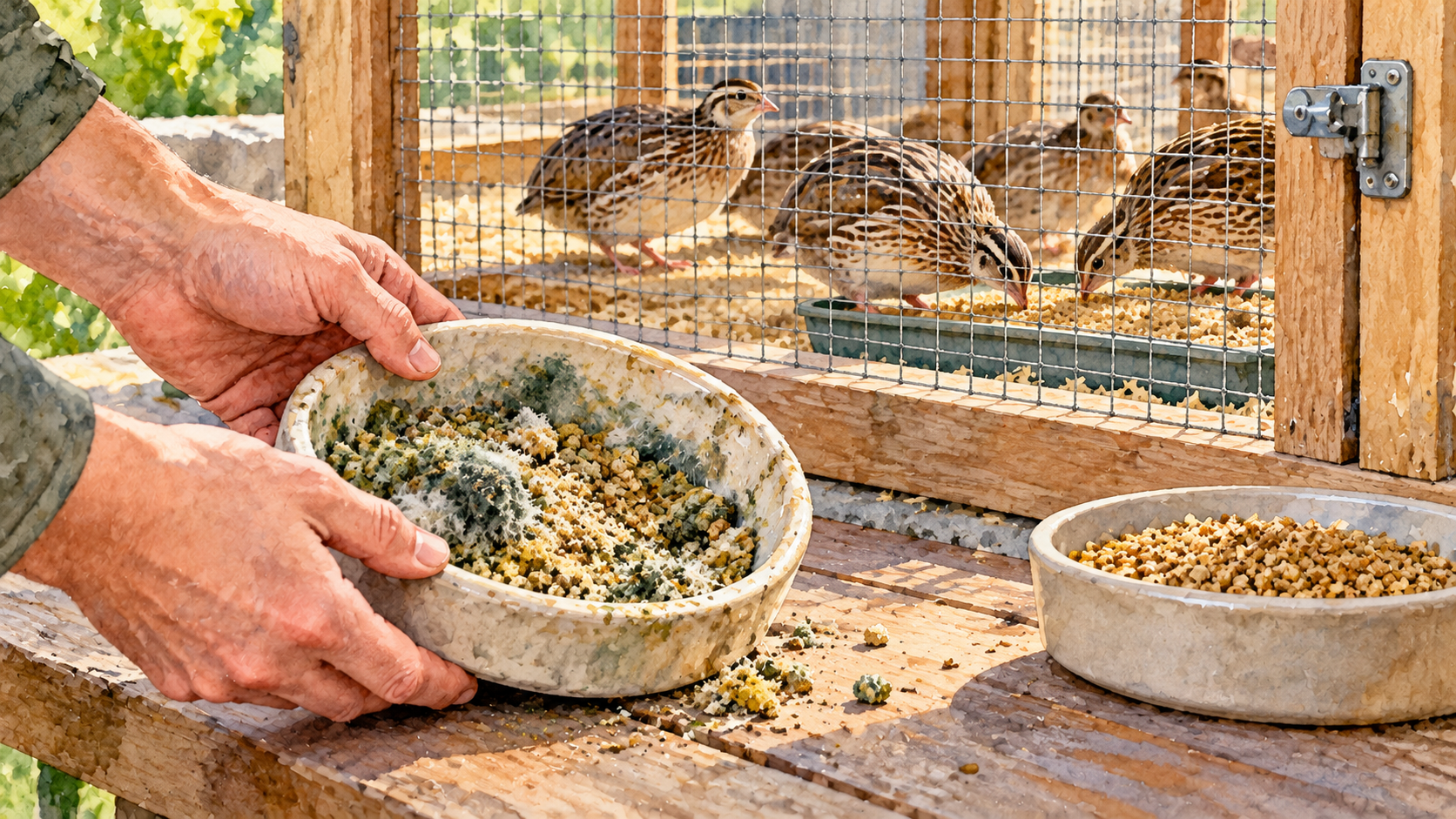
Quail should not be given chocolate, caffeine-containing foods or drinks, alcohol, avocado, moldy feed, heavily salted scraps, or food contaminated with pesticides and other chemicals. Unknown plants, spoiled leftovers, and unapproved supplements also present avoidable risks. Although quail naturally eat various seeds, plants, and invertebrates, that does not mean every food available in a kitchen, garden, or barn is safe for them.
The degree of danger depends on the substance, the quantity swallowed, and the species and condition of the bird. Some foods contain recognized avian toxins, while others are primarily concerning because of spoilage, excessive salt, contamination, or nutritional imbalance. Evidence for a specific ingredient may come from other bird species rather than controlled studies in quail, so sensible precautions should not be confused with claims that every substance has a proven lethal dose in quail.
Which Foods Should You Never Deliberately Give Quail?
The most important items to keep out of quail enclosures are those with established hazards in birds or other poultry. Chocolate and cocoa contain theobromine and caffeine, avocado contains persin, and alcoholic beverages introduce a substance birds should never be encouraged to consume. High-salt processed foods, moldy grains, and unidentified plants present additional risks that are avoidable by keeping them out of feed trays.
The veterinary guidance on nutritional diseases in birds identifies chocolate, caffeinated beverages, alcohol, avocado, onions, apple seeds, and salty processed foods among items to avoid. That guidance primarily concerns companion birds, not experimental toxic-dose thresholds for quail. Nevertheless, these are unsuitable foods to offer deliberately when safer alternatives are readily available.
The distinction between a known toxic substance and an unsuitable food is important. A mold-contaminated ration is a serious food-safety concern, whereas a small accidental encounter with an ordinary salted crumb cannot automatically be described as fatal. Both justify prevention, but the appropriate urgency after exposure depends on what was eaten and how much.
Why Should Quail Never Eat Chocolate or Drink Coffee?
Chocolate contains methylxanthines, particularly theobromine and caffeine, which can affect the cardiovascular and nervous systems. Cocoa powder and baking chocolate can contain particularly concentrated amounts of these compounds. Coffee, energy drinks, tea containing caffeine, and caffeine supplements should likewise be kept out of quail feeding areas.
The veterinary review of chocolate toxicosis explains how these substances can interfere with normal heart rhythm and neurological function in susceptible animals. The exact toxic dose for different quail species is not well established, which makes it inappropriate to calculate a supposedly safe amount using figures developed for dogs or other animals.
Keep confectionery crumbs, cocoa-containing baked goods, and drink containers away from the birds. If a quail has swallowed a significant or uncertain amount of chocolate or a concentrated caffeine product, contact an avian veterinarian promptly rather than waiting for visible symptoms.
Is Avocado Toxic to Quail?
Avocado is best avoided entirely when feeding quail because it contains persin, a substance associated with poisoning in several bird species. Leaves, stems, seeds, and fruit have all been implicated, with plant parts differing in toxicity. Avocado should therefore not be treated as an ordinary vegetable scrap or a suitable occasional treat.
The veterinary evidence on avocado toxicosis documents cardiac damage in susceptible birds and notes that sensitivity differs by species. Budgerigars and some other captive birds can be particularly vulnerable, while certain poultry species show greater resistance. These findings do not establish the exact susceptibility of every quail species, but there is no practical reason to experiment with avocado when feeding captive quail.
Avoid leaving avocado peels or pits where birds can investigate them. Dropped fruit beneath an avocado tree is another potential source of exposure if quail have access to that area. Suspected ingestion warrants veterinary advice, especially when the amount or plant part is uncertain.
Should Quail Eat Onions, Garlic, or Kitchen Scraps?
Onions and other concentrated allium foods are best excluded from quail treats. Onions are included in avian veterinary lists of foods to avoid, although specific toxicity thresholds and reactions cannot be assumed identical across all bird species. Garlic is sometimes discussed differently in poultry feeding research, but that does not justify providing concentrated garlic supplements or treating large portions of seasoned food as safe for quail.
Kitchen scraps are especially problematic when their ingredients are unknown. A casserole, sauce, or seasoned leftover may contain onions, substantial salt, alcohol, or several ingredients unsuitable for birds. Cooking does not necessarily eliminate chemical hazards, and a food that is safe for people is not automatically appropriate for quail.
Keep the separate question of suitable occasional quail treats distinct from the hazards of mixed leftovers. The simplest prevention is to offer identifiable ingredients rather than heavily seasoned prepared dishes.
Why Are Moldy Feed and Spoiled Grains Dangerous?
Mold-contaminated grains, seeds, and complete feed are among the most consequential hazards in quail feeding. Certain fungi produce mycotoxins that can damage organs or impair animal health, and contamination may begin while crops grow or after feed is exposed to unsuitable storage conditions.
The FDA’s guidance on chemical contaminants in animal food describes aflatoxins and other fungal toxins associated with grains and animal feed. Some mycotoxins can remain after processing, and the presence or absence of obvious surface mold does not reliably establish whether feed contains them. Aflatoxins are particularly concerning because of their ability to damage the liver.
Discard feed that smells musty, shows suspicious mold growth, has become wet and spoiled, or comes from a known contaminated batch. Do not simply scrape off visible mold, mix questionable grain with fresh feed, or assume heating will remove all potential toxins. The FDA’s handling guidance for moisture-damaged grain illustrates why determining whether contaminated material can ever be used for animal feed requires specialized assessment rather than ordinary farm judgment.
Can Quail Eat Salty or Processed Human Foods?
Heavily salted snack foods, cured meats, salty seasoning mixtures, and concentrated salt products should not be offered to quail. Sodium is an essential nutrient, but excessive intake can be harmful, particularly when birds cannot maintain normal hydration. The concern is the concentration and amount consumed, not the idea that every trace of salt is poisonous.
The veterinary explanation of salt toxicosis describes excess sodium intake as a recognized problem in poultry and other animals. Serious exposure can disrupt neurological and metabolic function. Quail-specific thresholds vary or may not be established, so deliberate salt supplementation outside a suitable feed program is not justified.
Processed snacks can also contain multiple unsuitable ingredients, including onion powder, chocolate, caffeine, and flavoring additives. A safer approach is to keep salty table leftovers out of enclosures rather than deciding whether a particular brand of snack is harmless in small amounts.
Are Apple Seeds, Fruit Pits, and Unknown Plants Safe?
Do not deliberately offer apple seeds, crushed stone-fruit pits, or unidentified leaves and berries. Certain seeds and kernels contain cyanogenic compounds capable of releasing cyanide under suitable conditions, while many ornamental and wild plants contain unrelated toxins. Actual risk depends on plant identity, preparation, quantity, and species susceptibility.
The avian nutrition guidance identifying apple seeds among foods to avoid supports a precautionary approach, but does not establish that one accidentally swallowed intact seed will inevitably poison a quail. Remove seeds and pits when preparing fruit rather than making assumptions about harmless doses.
Garden access deserves particular attention because quail may peck unfamiliar vegetation without recognizing human categories of edible and poisonous plants. Plant identification should come before allowing access to questionable berries, ornamental clippings, or prunings. The fact that an insect or mammal eats a plant is not evidence that it is suitable for quail.
Can Pesticides and Contaminated Insects Poison Quail?
Yes. Insects, seeds, and vegetation may be unsuitable when collected from areas exposed to insecticides, herbicides, rodenticides, or other hazardous chemicals. Contamination is not necessarily visible, and an insect that appears normal may have contacted a recently treated surface.
The veterinary guidance on household hazards for birds identifies pesticides and related chemicals among important exposure risks. Although much of this guidance concerns pet birds, the general principle applies to quail foraging in environments where chemical treatment has occurred.
Avoid gathering insects from sprayed lawns, treated crops, roadsides, or areas where bait products are used. The natural insect-feeding behavior of quail should not be taken as permission to offer insects of unknown origin. Store pesticides and chemical bait where neither birds nor their feed can become contaminated.
Why Are Unapproved Supplements and Medicated Feeds Risky?
A vitamin, mineral, herbal powder, or livestock supplement is not automatically beneficial simply because it is marketed as natural or suitable for another species. Excesses of certain nutrients can be harmful, particularly fat-soluble vitamins and minerals that have narrow safe intake ranges.
The veterinary overview of nutritional disorders in birds describes problems associated with nutritional imbalances and excessive vitamin D. A properly formulated ration already contains vitamins and minerals, so additional supplements should be used for an identified purpose rather than added routinely without assessing the whole diet.
Medicated feeds introduce another issue: a medication approved for chickens, turkeys, or another species is not automatically authorized for quail. This matters particularly when eggs or meat may enter the human food supply. Follow product labeling and obtain veterinary advice about species suitability, medication use, and any applicable food-animal restrictions rather than making substitutions independently.
Can Feed Contaminated With Droppings or Rodents Make Quail Sick?
Feed contaminated with animal droppings, urine, dead insects, or nesting material can introduce pathogens and other hazards. Rodents and wild birds may enter open feed containers, and their presence can make feed hygiene difficult even when the ration itself was originally appropriate.
The USDA’s poultry biosecurity recommendations emphasize limiting exposure to wildlife and protecting feed and equipment from contamination. Keep unused feed in suitable sealed containers, inspect storage areas for pest activity, and avoid returning contaminated material to the main supply.
A quail feeder should also be examined for damp accumulations beneath the surface, not merely topped up when it looks low. The arrangement and maintenance of quail feeders affect whether birds can consume clean feed without pecking through soiled material.
What Should You Do if a Quail Eats Something Dangerous?
Remove access to the suspected substance immediately and contact an avian veterinarian or an emergency veterinary service when toxic ingestion is possible. Keep the food package, plant sample, ingredient list, or photographs available for identification. Record approximately when exposure occurred, which birds could have eaten the material, and the estimated quantity if it is known.
Do not wait for obvious illness after exposure to a recognized toxin such as chocolate, concentrated caffeine, or avocado. Conversely, do not assume every unusual behavior after eating has the same cause. The general warning signs of illness in quail can overlap with potential poisoning, but symptoms alone cannot reliably identify the substance involved.
Do not attempt to induce vomiting, administer activated charcoal, force-feed, or give improvised antidotes without direct veterinary instruction. Treatment depends on the material, amount, and bird’s condition, and inappropriate home interventions can cause further harm.
How Can You Prevent Accidental Food Poisoning in a Quail Flock?
Most food-related exposures can be reduced by controlling what enters the enclosure. Keep kitchen scraps separate from poultry feed, discard questionable grain, identify vegetation before allowing birds to forage, and prevent chemical products from contaminating feeding areas. These measures are relevant whether the flock consists of domestic Japanese quail, bobwhites, or other captive quail species.
The normal foods eaten by quail explain why birds investigate a broad range of materials, but feeding behavior is not a reliable safety test. A bird may peck a hazardous item simply because it is small enough to investigate.
Feed should be stored dry, protected from pests, and checked for spoilage before use. New foods should not be introduced when their identity or safety is uncertain. A consistent routine makes unexpected exposure easier to detect and prevents one keeper’s discarded food from becoming another keeper’s unrecognized flock hazard.
Common Questions About Foods Quail Should Avoid
Can quail eat chocolate? No. Chocolate contains theobromine and caffeine, which can be toxic to birds and other animals. Keep chocolate and cocoa products out of quail enclosures.
Is avocado safe for quail? Avocado is best avoided because persin has caused poisoning in susceptible bird species. Quail-specific sensitivity is not fully characterized, so deliberate feeding is not advisable.
Can quail eat moldy grain if the mold is removed? No. Some fungal toxins can remain in feed even after visible mold has been removed. Discard suspect grain rather than trying to salvage it for the flock.
What should I do if my quail swallows a potentially poisonous food? Remove further access, identify the material and approximate exposure, and promptly contact an avian veterinarian. Do not attempt home poisoning treatments without professional instructions.