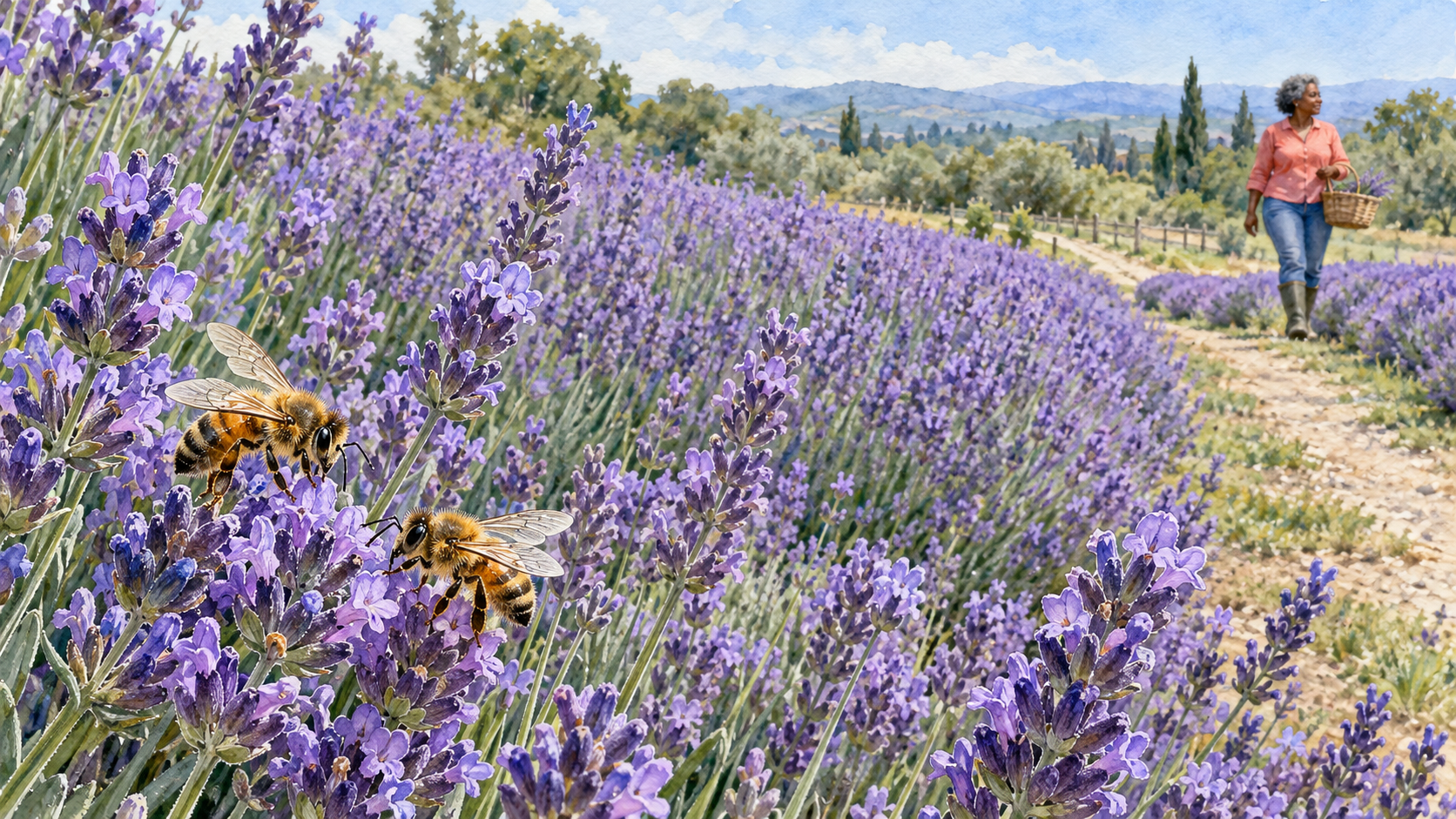
Honey bees are generally peaceful while collecting nectar and pollen, but they can become defensive when their colony is threatened. Workers protect the nest, developing brood and food stores. Responses range from investigation to stinging, and depend on genetics, weather, nutrition and disturbance.
Western honey bees (Apis mellifera) do not ordinarily seek out people or farm animals to attack. Defensive behavior is most closely associated with the area near an established colony.
Are Honey Bees Naturally Aggressive or Defensive?
Colony protection is more accurately called defensiveness because it occurs in response to potential threats. A nest contains food reserves and immature bees, making protection important to colony survival.
The review of defensive behavior describes guarding, stinging responses and alarm signaling as coordinated forms of protection. This behavior is normal, but its intensity differs widely among colonies.
Why Are Honey Bees Usually Calm When Foraging?
A bee visiting flowers is primarily collecting nectar or pollen, not protecting brood or stores. The colony-wide signals that intensify defense are generally absent far from the nest.
The UC Davis discussion of honey bee temperament distinguishes relatively calm foragers from bees responding near a colony. An individual forager can still sting if trapped or injured. Foraging duties are covered in What Do Worker Honey Bees Do?.
What Causes Honey Bees to Become Defensive?
Vibrations, sudden movements, nest disturbance, unfamiliar animals and alarm pheromone may all contribute. Rough hive handling or repeated impacts can produce reactions in otherwise quiet colonies.
The study of guarding and alarm responses explains guard sensitivity to visual, chemical and mechanical cues. These triggers do not affect all colonies in the same way.
How Do Guard Bees Protect a Hive?
Guard workers inspect arrivals near the entrance and use chemical cues to distinguish nestmates from intruders. Some approach, investigate or confront potential threats, while additional workers may be recruited if necessary.
The research on nest-defense specialization separates guarding from active stinging. Not every worker serves as a guard, and the defensive workforce changes with colony circumstances.
How Do Honey Bees Warn Each Other of Danger?
Alarm pheromones help draw other workers’ attention to a disturbance. Isopentyl acetate is an important compound associated with the sting apparatus, and its release can increase defensive recruitment.
The review of honey bee chemical signaling explains how alarm compounds interact with worker behavior. Alarm pheromone does not cause every nearby bee to sting automatically. Other social signals are explored in How Do Honey Bees Communicate?.
Why Are Some Colonies More Defensive Than Others?
Genetic background influences how quickly and strongly workers respond to threats. A queen’s offspring may inherit characteristics that contribute to the overall temperament of their colony.
A 2023 comparison of honey bee breeding lines documented differences in defensive reactions to physical and chemical stimuli. Genetics are influential, but health and environment can change a colony’s behavior.
Can Weather Make Honey Bees More Defensive?
Cold, wind, rain and unsettled conditions can restrict foraging and sometimes coincide with stronger defensive reactions near a disturbed hive.
The extension explanation of changing hive temperament lists weather and season among several influences. These conditions do not predict the response of every colony: food supplies, previous disturbance and inherited temperament also matter.
Does Food Shortage Affect Temperament?
During nectar shortages, attempts by other bees to steal stored honey can intensify entrance defense. A 2021 study of honey robbing observed changes in both defensive and foraging behavior.
Nutritional stress matters as well. A 2026 experimental study of pollen deprivation found increased defensive responses. Food requirements are discussed in What Do Honey Bees Eat?.
Can Predators Make Honey Bees More Defensive?
Animals repeatedly disturbing a hive or feeding on bees near its entrance may provoke sustained protective activity. Guards respond to movement, odors and other evidence of a possible intruder.
The research on defensive behavior and nest threats distinguishes routine entrance monitoring from more intense protective responses. Reactions depend on the type and persistence of the disturbance.
Do All Bees in a Hive Defend It?
Defensive duties are performed mainly by workers, but only some are actively guarding at a given time. Others focus on nursing, food handling or foraging, and may join defensive responses when alarm signals are present.
Drones have no stingers, while queens do not routinely perform external nest defense. The different adult roles are explained in Queen, Worker, and Drone Honey Bees Explained.
Are Bees More Defensive Near Their Hive?
Coordinated defense is most likely near brood and stored food. Foraging bees visiting flowers are less likely to react as a group than workers near a threatened colony.
The study of foraging and nest defense identifies the nest as the main setting for colony protection, although unusually defensive bees may respond at greater distances. There is no one fixed defensive perimeter for every hive.
Can a Calm Colony Become More Defensive?
A colony’s response can change as food resources decline, predators appear or workers encounter repeated disturbance. Season and worker health may also contribute.
The research on genetics and environmental effects on defensiveness shows that temperament is not determined by genetics alone. Persistently unusual colony behavior and its management belong to a separate article.
Are Honey Bees Dangerous to Farm Animals?
Bees usually coexist with grazing animals when their nests remain undisturbed. However, animals bumping or repeatedly approaching a hive can trigger defensive responses, and multiple stings can be dangerous.
The guidance on nest-defense intensity distinguishes ordinary encounters from coordinated responses. Detailed sting avoidance is outside this article’s scope.
Questions About Honey Bee Aggression
Do honey bees attack without provocation? They generally react to perceived threats, which may not always be obvious to an observer.
Are honey bees more aggressive than bumblebees? Their nest defense differs by species and context; see Honey Bees vs. Bumblebees.
Can a foraging honey bee sting? A female worker can sting when physically threatened, even away from her hive.
Does a larger colony mean greater aggression? Population size can affect the number of available defenders but does not determine temperament on its own.