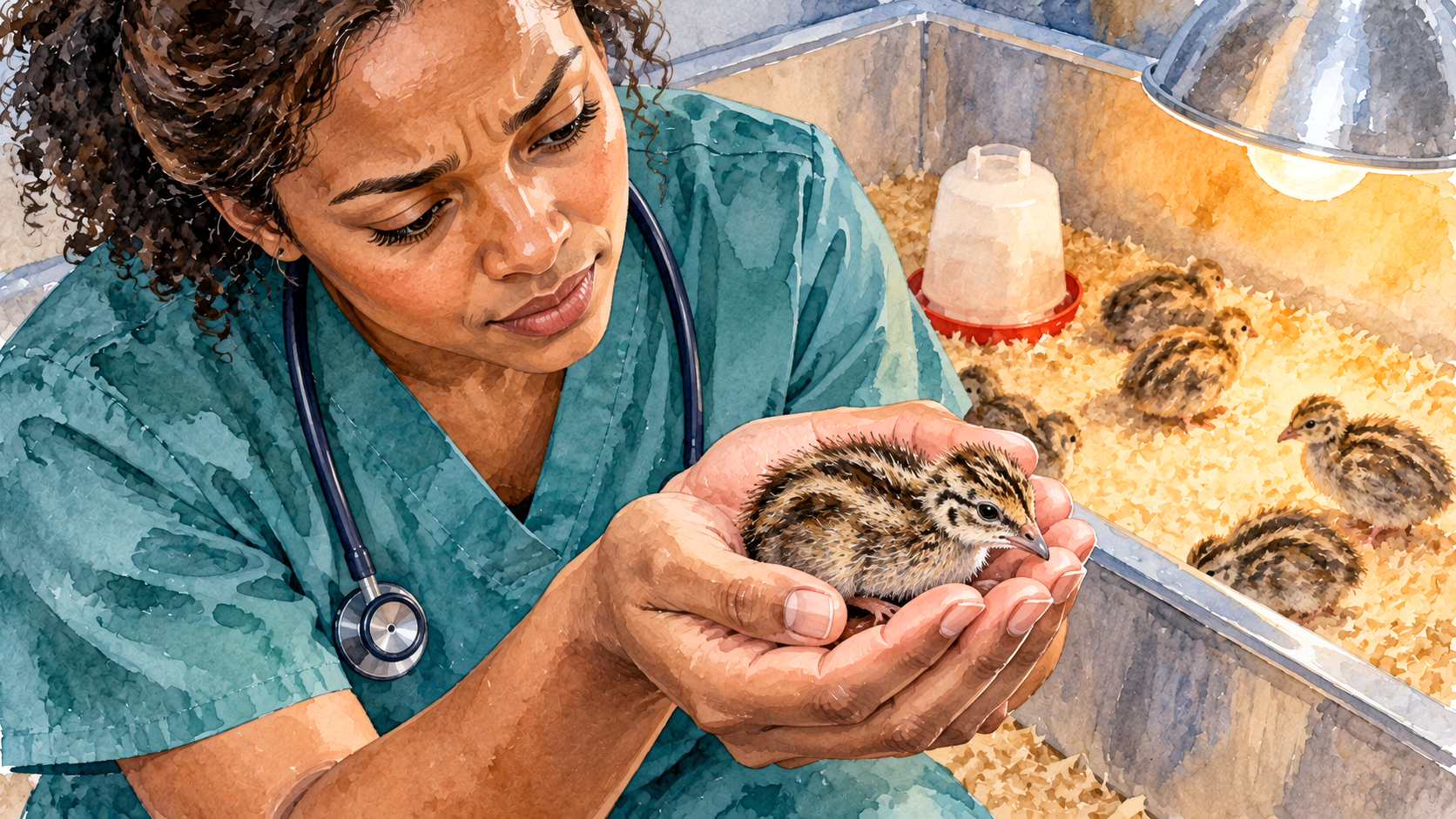
Losing a guinea keet is distressing, particularly when the rest of the brood seemed healthy only hours earlier. Young guinea fowl can deteriorate quickly, and several very different problems can produce the same outward signs of weakness, huddling or refusal to eat. Guessing a disease from one symptom can delay the steps that protect the remaining birds.
Guinea keets may die from chilling or overheating, dehydration, poor access to suitable feed, damp or crowded housing, infection, injury, or problems originating around hatching. When losses begin, immediately check the brooder environment, food and water, separate visibly sick birds safely, and contact a poultry veterinarian promptly—especially if more than one keet is affected. Sudden or unexplained multiple deaths also warrant contacting animal-health authorities.
What Should You Check First When Keets Start Dying?
Begin with conditions affecting every bird. Verify actual warmth at keet height, check that the birds can reach a cooler area, and look for water leaks, wet litter, poor ventilation and malfunctioning equipment. Confirm that drinking water is available, the drinker has not tipped, and every keet can reach appropriate feed.
Then observe the birds individually. A keet lying apart from companions, unable to stand, breathing with difficulty or refusing water needs urgent attention. The basic care requirements of newly hatched guinea keets provide a baseline for detecting what has changed, but restoring an environmental problem does not replace veterinary assessment of a sick bird.
| What you notice | Possible concerns | Immediate response |
|---|---|---|
| Tight huddling and persistent distress calls | Chilling, drafts, illness | Measure temperature; provide appropriate warmth |
| Panting, wings held outward, avoiding heat | Overheating or respiratory distress | Check heat and ventilation; obtain veterinary help if severe |
| Empty drinker, dry bedding around feeder, lethargy | Dehydration or poor access | Restore safe fresh water; seek help for weak birds |
| Several keets not eating or losing condition | Feed access, inappropriate ration, infection | Check feed and arrange veterinary assessment |
| Wet belly, red or unhealed navel soon after hatch | Possible navel or yolk-sac infection | Isolate safely; obtain prompt veterinary assessment |
| Bloody or watery droppings with weakness | Intestinal disease or other illness | Contact veterinarian; do not diagnose from droppings alone |
| More than one sudden unexplained death | Environmental incident or infectious disease | Restrict movement and contact veterinarian or authorities |
The warning signs associated with serious poultry disease include sudden deaths, reduced appetite, breathing difficulties, abnormal movements and unusual droppings. Several conditions can overlap, so a flock history and examination matter.
Could Your Guinea Keets Be Too Cold?
Chilling is an important early risk because tiny keets have limited ability to regulate body temperature, particularly when their down becomes damp. A brooder may display a suitable temperature near the heater while the floor or corners remain cold. A draft, power interruption or spill can cause an abrupt problem even if care was adequate the previous day.
The special susceptibility of guinea keets to dampness is especially serious during their first two weeks. Check for condensation, wet drinking areas, cold surfaces and bedding that has clumped around the birds. Move chilled birds into a dry, properly warmed space without placing them directly against a dangerously hot surface.
Do not assume every huddled keet is merely cold. Infection and weakness can cause similar behavior. A keet that remains inactive, cannot stand or fails to respond after environmental conditions are corrected needs urgent professional help.
Could the Brooder Be Too Hot?
Overheating can cause dehydration, weakness and death. Young birds may move to the far side of the enclosure, pant, hold their wings away from their bodies or avoid a heat source. A lamp that has slipped downward, a thermostat failure or a brooder without a cooler zone can make escape from excessive heat impossible.
Check the safe positioning of brooder heaters and temperature gradients before changing settings. Measure temperature at the birds’ level in both heated and cooler sections. Use appropriate equipment adjustments rather than abruptly removing all warmth from birds that may still depend on it.
Open-mouth breathing is also a possible sign of respiratory disease, not proof of overheating. If breathing remains abnormal after the environment is made safe, seek urgent veterinary assessment.
Are the Keets Drinking Enough Water?
A waterer can look full yet still be inaccessible. Its drinking edge may be too high, blocked by bedding, unstable or surrounded by stronger birds. Newly hatched or shipped keets may take time to locate water, and an individual that becomes weak may stop drinking despite a functioning container.
Use a stable, shallow poultry waterer and observe each bird drinking. Replace contaminated water and remove wet litter around the container. The water-safety needs of young guinea keets include preventing birds from becoming soaked or trapped, not simply keeping a bowl nearby.
Do not force liquids down a weak keet’s throat. Improper administration can cause aspiration. A bird that cannot stand, swallow normally or drink voluntarily requires veterinary guidance rather than improvised syringe-feeding.
Could the Feed Be Wrong or Inaccessible?
Young guinea fowl require a complete, age-appropriate starter feed. A ration intended only for adult birds, scratch grains or household scraps may not meet the needs of rapidly growing keets. The starter requirements of guinea fowl are commonly around 24–26% protein during early growth, though the appropriate product and feeding stage should follow a suitable complete-feed label.
Feed should be fresh, dry and small enough to eat. Check whether the feeder is accessible to the smallest keet and whether stronger birds crowd it out. The specific diet appropriate for young guinea fowl is distinct from simply leaving grain on the floor.
Discard moldy or spoiled feed and clean contaminated feeders. A keet that has stopped eating may be ill even if the diet is correct, so changing feed alone should not postpone care when weakness or mortality is occurring.
Why Are Keets Dying Within Days of Hatching?
Deaths shortly after hatch can involve more than brooder management. Some birds emerge weak following developmental difficulties, prolonged hatching or egg contamination. In others, an improperly healed navel can allow bacteria to enter and infect the residual yolk sac.
The features of navel and yolk-sac infection in young poultry include an inflamed or unhealed navel, poor activity, failure to gain weight and deaths during the first days or weeks. These findings are not enough for a keeper to diagnose the condition without veterinary examination.
Check the abdomen visually without squeezing it, and note any wet area, swelling, odor or persistent unhealed opening. Keep suspect birds in a clean, appropriately heated place and contact a veterinarian. Do not puncture the abdomen, remove material from the navel or administer leftover antibiotics without professional direction.
Can Coccidiosis or Other Infections Kill Keets?
Yes. Young poultry may become seriously ill from intestinal parasites, bacteria or viruses. Coccidiosis is one potential cause of weakness, diarrhea and losses, but similar signs can result from several other problems. The general warning signs of guinea fowl illness overlap substantially and should not be treated as definitive proof of a particular infection.
Look for reduced activity, poor appetite, drooping posture, breathing changes, abnormal droppings and birds that fall behind the group. Record which birds are affected and how quickly symptoms developed. Avoid choosing a medication solely because droppings are bloody or watery; appropriate testing and treatment depend on the actual cause, the birds’ age and product labeling.
Infections can spread through contaminated litter, feed, water, equipment or contact with other poultry. Limiting the movement of germs into poultry housing reduces exposure but cannot identify an existing disease. Sudden or increasing losses should be evaluated promptly.
Could Crowding, Injury or Unsafe Bedding Be Involved?
A brooder may become crowded faster than expected as keets grow. Birds can pile in corners when frightened, trample smaller flockmates or block access to feed and water. Slippery surfaces can also contribute to leg injuries, and loose threads or poorly fitting mesh may trap toes or wings.
Review the changes in guinea keet size and movement when deciding whether an enclosure that once worked still has enough usable space. Inspect behind equipment, along wall corners and beneath the heater for trapped or injured birds. Provide secure footing, safe clearance and an escape-proof cover.
A small keet injured by a larger bird may hide its weakness until it is severely affected. If adult guinea fowl have access to young keets, separate them immediately when chasing, trampling or pecking injuries occur.
What if Several Keets Die Suddenly?
Treat repeated deaths or a rapid change across the group as urgent. First rule out immediately correctable hazards such as a failed heater, overheated container, contaminated water or toxic fumes, but do not assume finding one problem excludes an infectious disease.
Restrict unnecessary movement of birds, people and shared equipment. Contact a poultry veterinarian or diagnostic laboratory promptly. Unexpected poultry deaths and severe disease signs may require reporting to state animal-health officials. In the United States, owners can contact their state veterinarian or the federal poultry disease reporting line at 1-866-536-7593.
Ask the veterinarian or diagnostic laboratory how to preserve a recently dead bird for examination. Refrigeration may be appropriate for some submissions, but follow the laboratory’s instructions; do not freeze, discard or open a potentially important specimen without guidance. A professional postmortem examination can identify causes that cannot be determined from behavior alone.
What Should You Do for a Sick Keet While Getting Help?
Move the affected bird to a clean, draft-protected area with appropriate warmth and safe access to water. Keep it under observation while minimizing handling and stress. Isolation should prevent direct contact with healthy keets without putting the sick bird in a cold or unfamiliar environment.
Do not give random antibiotics, dewormers, human medicines or concentrated supplements in an attempt to treat every possible cause. Different illnesses require different treatment, and incorrect dosing can injure a tiny bird. Veterinary advice is especially important for birds struggling to breathe, unable to stand, showing seizures or deteriorating rapidly.
Wash hands after handling birds or bedding. Poultry can carry germs even when they look healthy, so clean equipment outside food-preparation areas, use dedicated footwear when possible, and keep young children away from sick birds.
Keep a Record to Find the Cause
Write down each keet’s age, hatch source, time symptoms began and any deaths. Record brooder temperatures, changes in heating equipment, water failures, feed changes, wet bedding, new bird introductions and whether affected birds shared a particular area.
Patterns can guide veterinary investigation. Problems beginning after a heater adjustment raise different questions from losses concentrated in newly hatched birds with abnormal navels. Deaths that continue despite corrected conditions make professional testing particularly important.
The purpose of the log is not to assign a diagnosis without evidence. It is to preserve details that are easy to forget once the immediate emergency has passed and to help prevent similar losses in future broods.
Questions About Guinea Keets Dying
Why are my keets dying one by one? Possibilities include environmental stress, inadequate access to food or water, infection and individual weakness. Check conditions immediately and seek veterinary assessment when losses continue.
Can wet bedding kill guinea keets? Wet bedding can contribute to rapid chilling, especially in very young keets. Replace it and correct spills, but investigate illness when birds remain weak.
Why did a healthy-looking keet suddenly die? Some conditions progress rapidly or show few visible signs. A veterinary examination or postmortem may be needed to identify the cause.
Can a keet die from overheating? Yes. Excessive heat and the resulting dehydration can be dangerous, particularly without a cooler area.
Does bloody diarrhea mean coccidiosis? Not necessarily. Several problems can affect droppings; testing and clinical assessment are needed before choosing treatment.
Should I give antibiotics to all the keets? Not without veterinary guidance. Antibiotics do not treat every cause of mortality and inappropriate use can be harmful.
When is it an emergency? Trouble breathing, collapse, inability to stand, seizures, or multiple sudden unexplained deaths require prompt veterinary help and may warrant animal-health reporting.