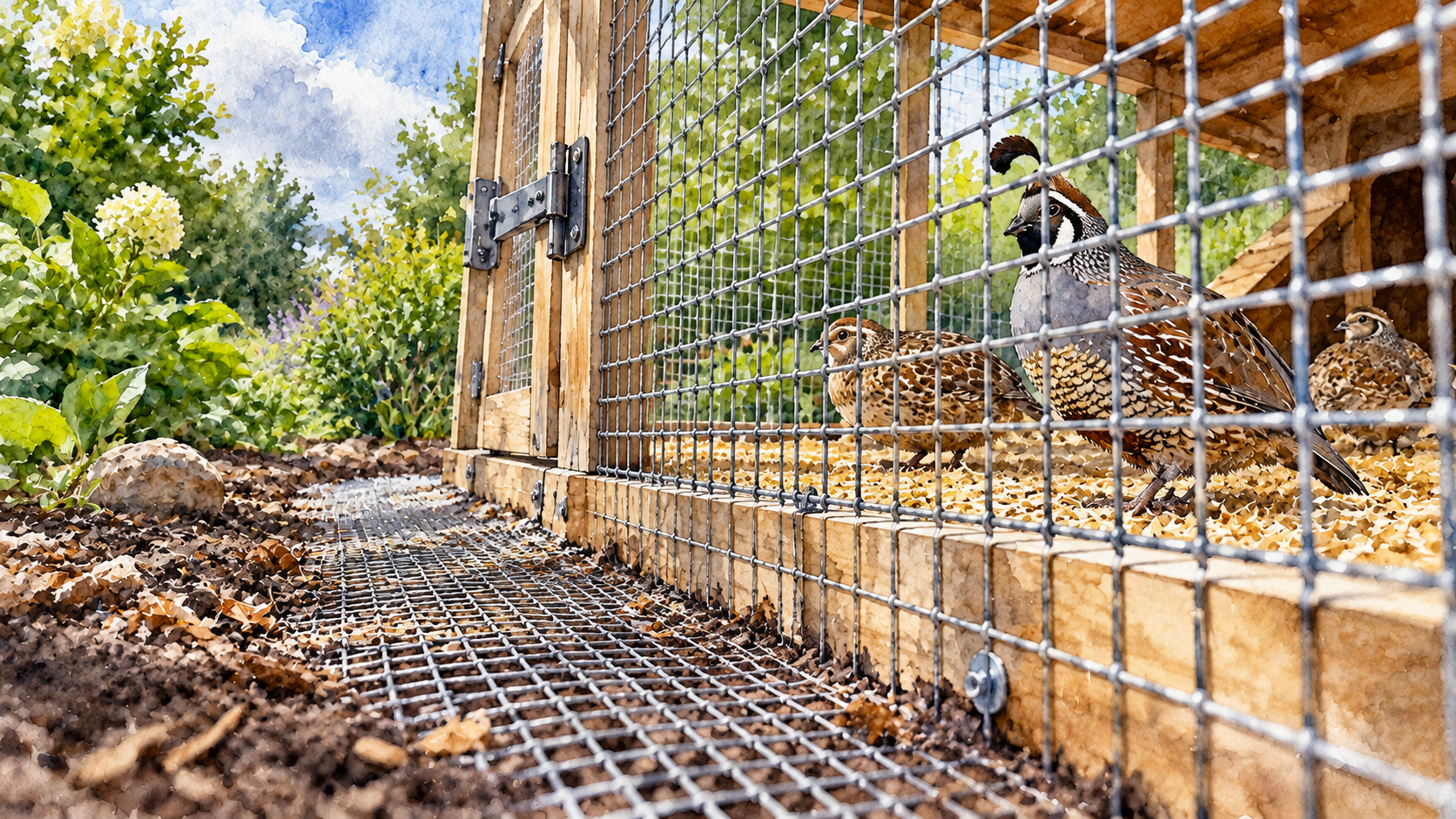
A secure enclosure is the most important defense against predators when raising domestic Coturnix quail. These small birds cannot reliably protect themselves from an animal that enters their pen, and their instinctive reaction to danger can cause panic, jumping, or flight into surrounding surfaces.
The best way to protect quail from predators is to secure all six sides of their living space: four walls, roof, and ground perimeter. Strong welded mesh, reliable latches, protected ventilation openings, and regular inspections work together. A modest enclosure with carefully secured joints can be safer than an expensive structure with a gap beneath a door.
What Makes a Quail Enclosure Predator-Resistant?
A predator-resistant enclosure forms a continuous barrier. Securing walls alone is not enough if an animal can enter beneath the floor, open a door, or slip between roof and frame. Because quail are small, gaps that look harmless in chicken housing may be dangerous here. Even an animal unable to enter might reach through the mesh and injure birds beside the wall.
Inspect the enclosure from outside and focus on where different materials meet. The importance of closing holes and securing poultry buildings extends beyond attacks: wildlife can contaminate water and feed.
| Component | Potential weak point |
|---|---|
| Walls | Weak mesh, large openings, loose attachments |
| Roof | Missing covering, damaged netting, unsecured seams |
| Ground perimeter | Digging and gaps beneath walls |
| Doors | Loose hinges, basic latches, poorly fitting frames |
| Ventilation | Unscreened or damaged openings |
| Equipment access | Gaps around feeders, drinkers or removable trays |
Is Chicken Wire Strong Enough to Protect Quail?
Ordinary chicken wire may contain poultry, but its thin flexible strands and often large openings make it inadequate as a primary predator barrier. Animals can damage it, bend it, or reach through. Welded hardware cloth is generally a better choice because its rigid crossings resist distortion and its openings can be smaller.
Half-inch hardware cloth is a common starting option. Quarter-inch openings may help exclude smaller animals, though wire strength, local threats, and installation quality matter as much as opening size. A strong panel provides little protection if its fasteners fail. When planning quail coop construction, select mesh and fastening methods together.
How Should Hardware Cloth Be Attached?
Use attachments suitable for the frame, such as screws with broad washers or properly secured battens. These spread force along the mesh instead of relying on a few light staples. Strengthen corners and overlapping panels so pushing cannot create a flexible opening.
Inspect the inside for sharp wire ends, projecting screws, and rough cuts. A frightened quail can injure itself on hazards that might seem minor during ordinary handling. Reinforcing weak joints is often more valuable than buying heavier wire without improving its attachment.
How Do You Stop Predators From Digging Under a Quail Pen?
Ground-level housing needs protection at the junction between fencing and soil. An outward-facing hardware-cloth apron securely attached to the enclosure base can obstruct animals attempting to dig immediately beside the wall. An appropriately designed buried barrier is another option.
Choose according to soil, drainage, and local conditions; a loose strip laid beside the fence is not reliable protection. Elevated cages also require inspection beneath the floor and around removable waste trays. The design of an outdoor quail pen determines which ground barrier is practical and how it should remain anchored over time.
Why Do Quail Pens Need Overhead Protection?
Coturnix can launch upward when frightened, despite spending most of their time on the ground. A missing roof creates two dangers: escape and entry from above. Protect the entire pen overhead, including activity areas beyond a solid weatherproof shelter.
Strong rigid mesh or another suitable engineered covering can work if fixed securely against wind and other loads. Flexible netting should not automatically be treated as predator-proof; it can sag, tear or entangle birds. Covered poultry areas also help limit exposure to wild birds and contaminated droppings associated with avian influenza.
How Can You Secure Doors and Latches?
Doors wear from repeated use. Hinges loosen, frames settle, and gaps develop around edges. A secure door closes closely against the frame and uses sturdy hinges and latches that cannot be nudged open accidentally.
Avoid relying only on simple hooks or loose slide bolts. A second locking action may provide greater resistance. Walk-in enclosures can benefit from vestibules or double doors so one barrier remains closed while the keeper enters. The safe handling of startled quail is easier when access points do not expose the whole flock to escape.
Can Predators Reach Quail Through the Wire?
Yes. A predator may be unable to enter but still able to injure birds resting against the boundary. Coturnix often sleep or gather near walls, so simply preventing a full-body entry is not always sufficient.
Protective solid lower panels in exposed areas or appropriate secondary shielding can limit reach-through access. Low retreats placed away from vulnerable edges may give birds another place to settle. Preserve adequate ventilation, visibility, and safe movement rather than sealing the enclosure entirely.
How Do You Protect Feed and Water?
Accessible grain, spilled feed and unsecured storage attract unwanted animals. Keep feed in sturdy closed containers, prevent buildup around feeders, and position equipment so wildlife cannot reach through the enclosure.
Leaking drinkers and standing water also encourage repeated visits. Wildlife-prevention measures for poultry facilities include securing feed, fixing leaks and reducing standing water. These measures make the area less attractive but cannot replace a physical barrier.
Does Outdoor Lighting Keep Quail Safe?
Motion-activated lighting may reveal activity near doors or boundaries, but it cannot reliably prevent access. Animals may become accustomed to lights, while continuous brightness can disturb the birds’ normal resting cycle.
If lighting is installed, direct it toward exterior access points rather than into sleeping areas. A camera can help show when or where a barrier has been approached, but neither lighting nor recording closes gaps or secures latches.
How Often Should You Inspect Predator Barriers?
Weather, shifting soil, corrosion, damaged mesh and repeated door use gradually undermine protection. Check obvious weak points during daily visits, and inspect more thoroughly after severe weather, falling branches or signs of animal activity.
Review mesh seams, attachments, hinge alignment, door bottoms, roof joints, ground aprons, ventilation openings, equipment access and nearby spilled feed. Routine repair of poultry screens and building openings is especially important for small birds because a modest gap can defeat otherwise robust security.
What Should You Do if an Enclosure Has Been Breached?
Prioritize the birds and avoid confronting or handling wildlife. If the structure is unsafe, move surviving quail to secure temporary accommodation without unnecessary chasing. Assess visible injuries and obtain veterinary help promptly for wounds, weakness or abnormal behavior.
Find the actual entry point before returning the flock. The safe transport and temporary relocation of quail helps reduce further handling stress. Do not attempt wildlife capture, poisoning, killing or relocation without checking applicable laws and authorized methods; exclusion is the focus here.
Can a Secure Enclosure Also Support Quail Welfare?
Yes. Strong barriers need not mean barren, restrictive housing. A protected enclosure can still offer dry resting areas, dust bathing, ground cover and movement. Its walls keep unwanted animals outside while the interior supports natural behavior.
The welfare differences between cages and aviaries include usable movement space, cover, flooring and social interactions. Shelters should give birds places to withdraw without creating traps where flockmates can corner them.
Common Questions About Protecting Quail
Is hardware cloth better than chicken wire? Yes. Securely attached welded hardware cloth with suitable openings is generally more resistant to predator entry than lightweight chicken wire.
Do quail need protection during the day? Yes. Some threats occur in daylight, so containment should remain secure around the clock.
Can an animal dig beneath a quail pen? Yes. Ground-level housing may need a securely attached buried barrier or outward-facing mesh apron.
Will motion lights keep predators away? They may help reveal nighttime activity but cannot replace strong walls, a secured roof, ground protection and reliable latches.
5 thoughts on “How to Protect Quail From Predators”