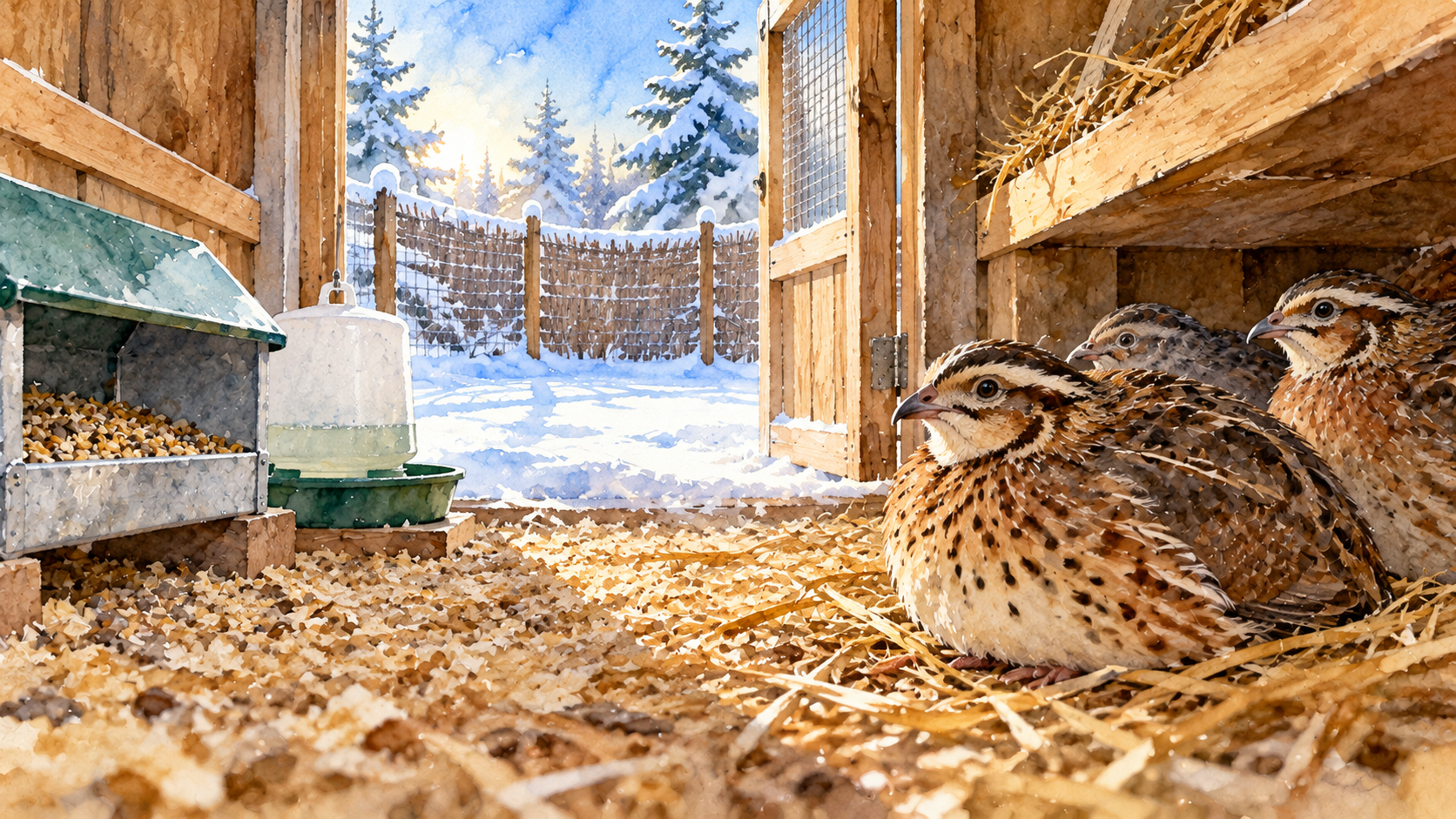
Winter care for domestic Coturnix is less about heating the whole enclosure and more about keeping it dry, sheltered, ventilated and supplied with unfrozen water. Healthy fully feathered adults can handle cold better than their size suggests, but moisture, wind, frozen equipment and inadequate shelter can make conditions hazardous.
Prioritize draft-free resting areas, fresh airflow, dry flooring and dependable liquid water. Some vulnerable birds or extreme conditions require extra warmth, but heating should never substitute for shelter or introduce fire risk.
Prepare Quail Housing Before Winter Arrives
Inspect the roof, walls, doors, and joints before sustained freezing begins. Summer openings can admit wind-driven snow, and thawing runoff can enter a shelter from the ground even when the roof does not leak. Repair damaged barriers and consider where snow will accumulate.
Coturnix rest on the ground rather than on high roosts. Their sheltered floor is therefore particularly important. The ground-level resting behavior of Coturnix favors dry low retreats instead of elevated winter sleeping bars.
Position water and feed so birds can access them without repeatedly crossing icy or exposed ground. The structure should remain accessible for daily inspections after heavy snowfall.
Protect Quail From Wind Without Sealing the Coop
Block direct air currents where quail rest, but retain controlled ventilation. Drafts strike birds directly, while ventilation replaces stale humid air with fresh air. Confusing the two can lead to a tightly sealed, damp building.
Solid lower panels, stable weather screens and low sheltered retreats can reduce wind exposure. Small-scale poultry housing guidance describes fresh air without direct drafts as essential. For ground-resting Coturnix, protection should work at floor height.
Fasten temporary weather coverings firmly; loose plastic can flap, tear, block vents or fall into the pen. Never seal emergency access or obstruct the enclosure’s only air exchange.
Why Ventilation Still Matters in Freezing Weather
Bird respiration, droppings and water spills release moisture. Decomposing manure produces ammonia. When all ventilation is closed to conserve warmth, indoor humidity rises and harmful gases remain near the flock.
Winter poultry guidance on moisture and ventilation emphasizes removing humid air while avoiding drafts. Although developed for chickens, the moisture-management principle applies to Coturnix.
Arrange vents so stale air escapes and incoming cold air does not blow directly across the birds’ resting spaces. Suitable vent placement depends on size, insulation and local conditions.
Signs the Enclosure Needs Better Air Exchange
Condensation on windows, water on walls and frost forming beneath roofing indicate moisture problems. When frost melts, it can drip directly onto bedding. Persistent dusty air and a sharp ammonia smell provide further warnings.
Poultry air-quality research links moisture and ventilation with ammonia exposure. Smell alone is not a reliable safety test because people can become accustomed to it; assess the visible condition of the enclosure too.
Keep Bedding Dry Throughout the Winter
Coturnix spend most of their lives close to the floor. Damp litter can chill birds and leave their feet in contact with cold, contaminated surfaces. Inspect beneath drinkers and sheltered corners where a small spill may freeze before it becomes obvious.
The Japanese quail welfare assessment recommends dry, friable solid-floor litter that supports natural behavior. Remove saturated or compacted patches rather than hiding them beneath fresh material.
Freeze-thaw cycles can turn apparently firm manure crusts into wet, odorous waste. The moisture and dust properties of quail bedding help determine whether a material performs well through winter changes.
Prevent Drinking Water From Freezing
A frozen drinker provides no water even when its reservoir looks full. Inspect drinking cups, nipples and exposed lines frequently; small fittings may freeze before the main container does.
Commercial heated poultry drinkers and compatible heating bases may help where safe electrical service exists. Cold-weather poultry water advice recommends checking equipment, maintaining liquid water and keeping a spare waterer.
A non-electric alternative is exchanging containers frequently enough to keep water liquid. Snow and ice should never be the normal drinking supply. The water needs of quail remain relevant during winter.
| Water system | Benefit | Watch for |
|---|---|---|
| Heated poultry drinker | Maintains liquid water automatically | Power failure and protected wiring |
| Compatible heated base | May suit existing containers | Equipment compatibility |
| Swapped unheated containers | No power needed in the pen | Frequent replacement schedule |
| Protected lines and cups | Reduces exposure | Frozen fittings |
Should You Heat a Quail Coop in Winter?
Supplemental heating is not mandatory for every healthy acclimated adult Coturnix flock. Whether it is appropriate depends on severity and duration of cold, individual condition and enclosure protection. A damp drafty pen cannot be made safe simply by adding a heater.
Young incompletely feathered birds, sick or underweight individuals and birds poorly acclimated to conditions can require different accommodation. Cold tolerance of quail is a separate species- and condition-dependent issue, not a single temperature threshold for all birds.
Avoid Unsafe Heating Equipment
Unsecured heat lamps can ignite bedding, dust or wood. Ordinary space heaters and heating pads not approved for animal housing also create risks. Poultry winter safety guidance specifically warns about heat-lamp fires.
Use only equipment suited to damp agricultural environments, installed according to manufacturer instructions and local electrical requirements. Protect wiring from birds, water and flammable material, and do not depend on improvised extension cords.
Prevent Frost, Ice and Condensation Problems
Frost inside a coop often forms where humid air contacts a cold surface. When weather warms, melted frost may drip onto the birds and their litter. Inspect roof edges, window frames, thresholds and drinkers for repeated accumulation.
Keep walking and resting areas free of unsafe ice without pouring hot water into occupied bedding, which can refreeze. The relationship between damp poultry houses and frost-related injury shows why controlling humidity is a core prevention measure, even though chicken-specific injury treatment is outside this guide.
Manage Snow Around Outdoor Quail Pens
Heavy snow can overload roofs, sag netting and block entrances or vents. Overhead barriers need to be designed for expected snow and wind loads rather than assuming lightweight seasonal netting can bear winter accumulation.
After storms, inspect supports from a safe location and stay out from under damaged or sagging roofing. Clear safe access to water and food, and avoid piling meltwater against the structure. Outdoor quail pen drainage and overhead security remain important through freeze-thaw cycles.
Should Quail Go Outside When There Is Snow?
Healthy adults may explore a sheltered outdoor area in cold conditions, but should not be forced onto icy, wet or windswept ground. Provide a dry refuge that they can reach without crossing hazardous footing.
Farmed-quail welfare guidance on outdoor access recognizes both the behavioral stimulus and management challenges. A covered sheltered activity area may provide enrichment, but unrestricted roaming adds the escape and predation risks of free-ranging Coturnix.
Watch for Cold Stress and Vulnerable Birds
Individual quail vary by age, condition, feathering and acclimation. Fluffing feathers or seeking cover can be normal responses, but persistent weakness, abnormal breathing, isolation or difficulty walking should not be attributed automatically to weather.
Ensure timid birds can access sheltered areas, water and feed without being displaced. The warning signs of illness in quail require attention in every season. Seek prompt veterinary help for injured, weak or unresponsive birds and move them to safe accommodation appropriate to their needs.
Keep Food Accessible During Winter
Protect feeders from drifting snow, condensation and leaks. Check that the ration is not frozen into damp clumps and that birds can reach it without competition from more dominant flockmates.
Continue an age-appropriate nutritionally complete feed; winter alone does not justify arbitrary diet changes. The nutritional requirements of adult quail should guide feeding. A flock that stops eating normally may be affected by illness, water restrictions or access problems.
Maintain Winter Biosecurity
Wild birds can spread infections through droppings and contaminated water. Snow, mud, boots and shared tools may carry contamination into poultry areas. Keep feed protected and avoid access by wild birds even when winter seems to reduce animal activity.
The USDA wildlife-biosecurity recommendations include repairing screens, excluding birds, securing feed and addressing water leaks. Snow can hide gaps and ice can prevent doors from shutting properly; check the predator-resistant barriers around quail housing after storms.
Multiple unexplained illnesses or sudden deaths warrant veterinary and state animal-health advice rather than an assumption that the cause is cold.
A Practical Winter Quail Care Checklist
Every day: verify liquid water, inspect bedding, make sure vents work, assess every bird’s movement and behavior, check feed, and ensure doors close securely.
After storms and major temperature changes: examine roofs and barriers for damage, check for internal condensation and frost, test heated water equipment, clear blocked access safely and look for new drafts or wet resting areas.
These checks are more useful than assuming preparation ends once the building is insulated.
Common Questions About Keeping Quail in Winter
Can Coturnix stay outside all winter? Healthy fully feathered adults may be housed outdoors with suitable protection, but climate, acclimation and vulnerable birds change what is safe.
Do quail need a heater in winter? Not automatically. Some healthy adult flocks cope without supplemental heat, while extreme conditions or vulnerable birds may need carefully controlled warmth.
How do you keep quail water from freezing? Use an appropriate heated system or exchange containers often enough to maintain liquid water. Check cups and nipples separately.
Should all vents be closed in winter? No. Ventilation must continue while direct drafts are kept away from ground-level resting areas.