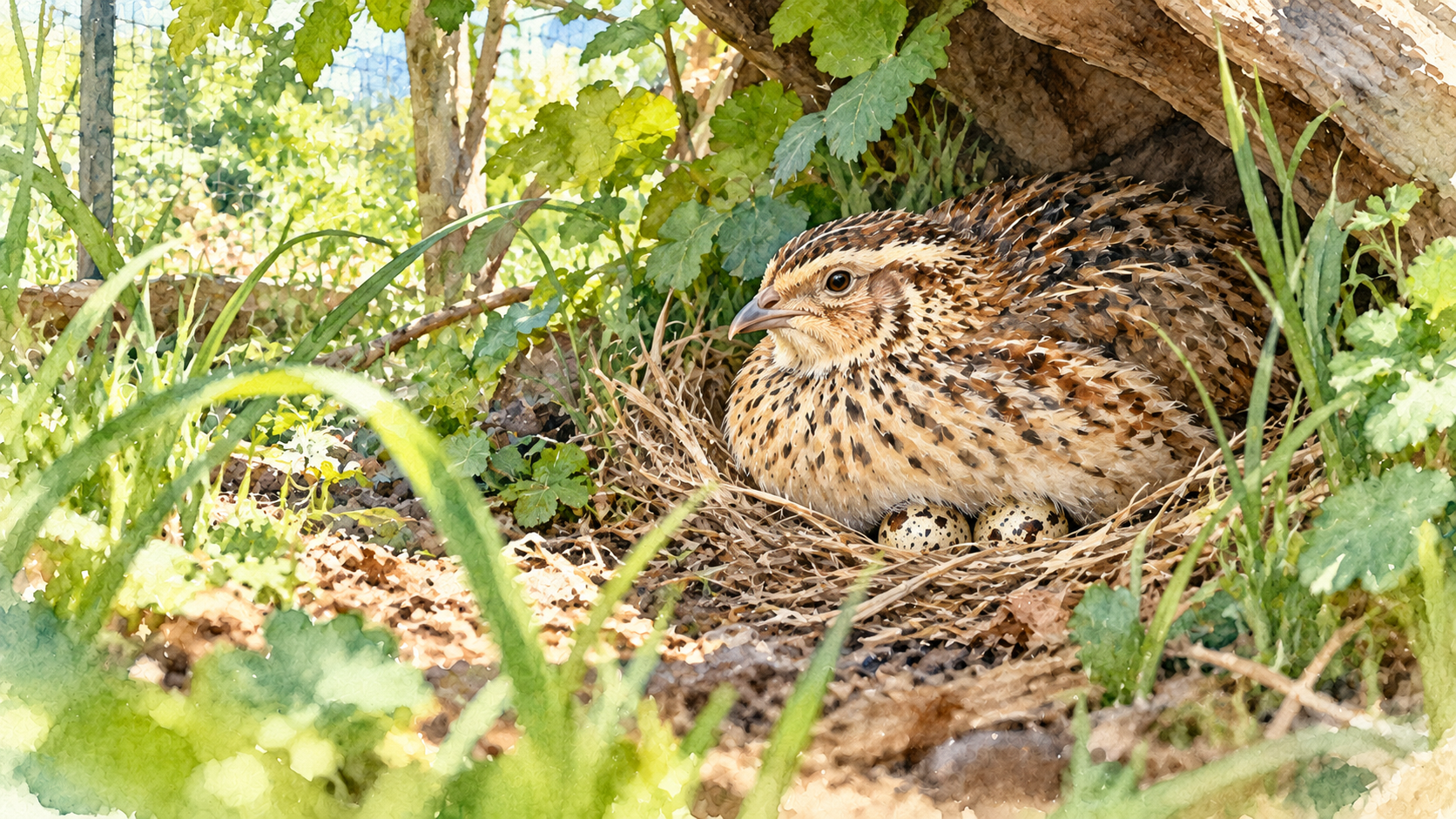
Quail eggs can hatch without an incubator if a suitable broody bird keeps them warm and protected throughout development. A naturally brooding quail hen or a carefully selected broody bantam chicken may provide viable incubation. Heating pads, lamps, hot-water bottles, and sunny windowsills are unreliable and may kill embryos or create fire hazards.
Can Quail Hatch Their Own Eggs Naturally?
Some quail incubate their own fertile eggs, but nesting reliability differs by species and domestic line. Japanese Coturnix kept for egg production often show little sustained sitting behavior, while bobwhite quail retain natural nesting tendencies. An individual hen still needs suitable surroundings and the inclination to remain on her nest. Natural quail incubation and maternal care cannot be guaranteed simply because fertile eggs are available. Natural hatching recommendations favor a hen already consistently broody.
Hatching Quail Eggs Under a Broody Quail Hen
Use a dry, quiet, protected nesting site with appropriate bedding and convenient access to water and feed. The hen needs to cover all eggs comfortably; no single clutch size works for every bird. Avoid disturbance from other birds, predators, and unnecessary handling. A bird visiting the nest occasionally is not equivalent to one sitting consistently.
Quail nesting preferences influence site selection. Do not repeatedly lift the hen, rearrange the clutch, or relocate an established nest without a welfare reason. Even a dependable sitter may abandon her eggs.
Can a Broody Chicken Hatch Quail Eggs?
A calm, reliably broody bantam chicken may incubate smaller quail eggs, but a large bird can displace or break them. Natural poultry hatching guidance favors a quiet, protected nest and a suitably sized sitter. Never assume a chicken will safely rear quail chicks after they emerge: trampling, pecking, and differences in maternal behavior are possible. Arrange a secure alternative for chicks in advance.
The species calendar matters. Japanese Coturnix eggs usually hatch after about 17–18 days, compared with roughly 21 days for chicken eggs, while bobwhite quail require about 23–24 days. These documented incubation differences make mixed egg clutches impractical without careful planning.
How to Prepare Eggs for Natural Incubation
Use suitably stored fertile eggs with clean, intact shells and normal shapes. Looking at a shell cannot prove fertility. Pre-incubation storage conditions affect later hatchability, including under a hen. Once placed beneath a reliably broody bird, minimize handling: her body supplies warmth and her natural movements reposition eggs. Embryonic requirements for warmth, gas exchange, moisture loss, and turning do not change with incubation method.
Why Household Heating Methods Are Unreliable
| Method | Principal limitation |
|---|---|
| Heating pad | Uneven warmth and overheating risk |
| Heat lamp | Hot spots, drying, and fire hazard |
| Hot-water bottle | Temperature falls as water cools |
| Sunny windowsill | Unpredictable solar heating and cooling |
| Electric blanket | Inconsistent egg-level temperature |
| Warm room | Insufficient heat for continuous development |
An egg feeling warm does not establish proper development conditions. The documented effects of incubation-temperature errors include poor hatchability and embryo death. Improvised heaters also cannot reliably manage ventilation, humidity, and turning. Do not put quail eggs directly on heating pads or near unregulated heat sources in an attempt to hatch them.
What If You Do Not Have a Broody Bird?
Without a suitable broody bird, there may be no viable natural option. An experienced poultry keeper with a proven sitter could potentially help, subject to flock health, egg size, and chick safety. Borrowing a proper incubator or finding someone equipped to incubate the eggs is safer than experimenting with household heat. If your primary objective is starting a flock, buying chicks instead of hatching eggs may be more practical. For eggs abandoned during development, obtain suitable equipment promptly rather than improvising.
How to Recognize an Unsuccessful Natural Hatch
A hen taking short feeding or drinking breaks has not necessarily abandoned her clutch. Prolonged absence, exposed eggs, broken shells, or repeated nest disturbance calls for closer evaluation. Infertility, contamination, and embryo death can affect natural as well as artificial incubation. Do not break eggs because a predicted hatch date has passed: establish when sustained sitting began and whether embryos may remain alive.
Common Questions About Hatching Quail Eggs Naturally
Can quail eggs hatch without electricity? Yes. A consistently broody bird can incubate fertile eggs without electrical equipment, provided nesting conditions are suitable.
Can you hatch quail eggs in a cardboard box? A box alone cannot incubate eggs. A broody hen may use a suitably protected nesting container, but the bird supplies the incubation.
Can you make a quail hen sit on her eggs? No reliable method forces sustained broodiness. Suitable surroundings may encourage natural nesting but cannot guarantee it.
Will a broody chicken accept quail eggs? Some will incubate them, but compatibility during incubation does not ensure the much smaller chicks will be safe afterward.