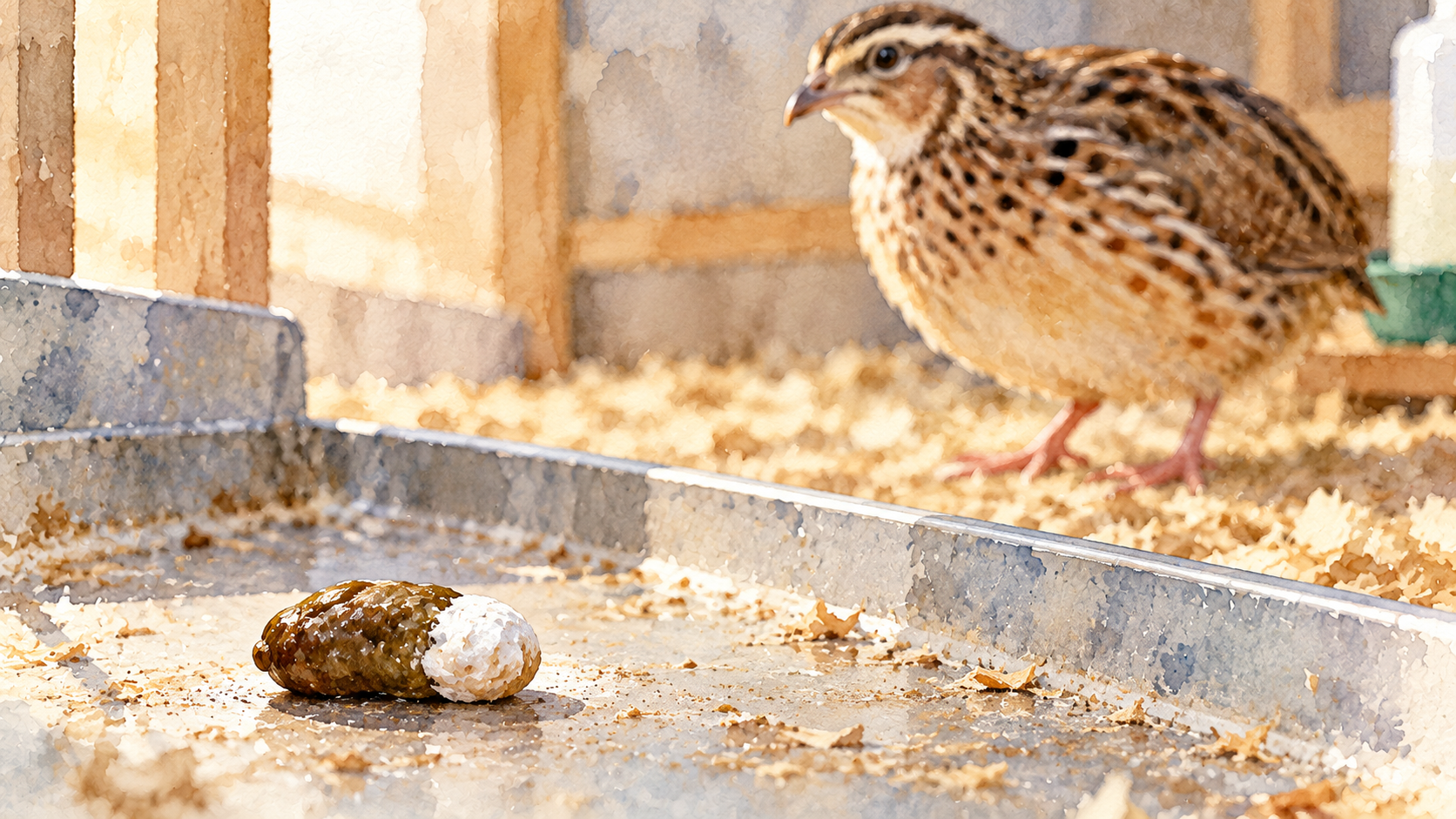
Healthy quail poop usually consists of formed brown or olive-brown fecal material with a white or cream-colored urate portion. There may also be a small amount of clear urine. Quail periodically pass softer, darker, stronger-smelling cecal droppings, which can be normal. Diet and hydration affect appearance, so a color alone cannot diagnose illness.
What Normal Quail Droppings Look Like
The brown or greenish-brown material is digestive waste; the white paste consists largely of urates, and clear liquid is urine. Avian veterinary guidance on normal droppings distinguishes these three components. Their proportions vary between birds and with feeding and drinking. A small amount of moisture around formed waste does not necessarily indicate diarrhea.
The best reference is the usual appearance of fresh droppings from your own healthy flock, observed while the birds remain active, eat regularly, and maintain condition.
What Are Cecal Droppings in Quail?
The two ceca are intestinal pouches involved in microbial fermentation. They periodically release pasty, sticky, strong-smelling material, often mustard-brown through dark brown. Veterinary diagnostic guidance distinguishes normal loose cecal waste from diarrhea in poultry.
These droppings occur intermittently. Exact frequency varies and chicken-specific daily counts should not be treated as established Coturnix or bobwhite figures. An isolated soft brown cecal dropping is not by itself evidence of disease.
Ordinary Droppings Versus Cecal Droppings
| Feature | Ordinary | Cecal |
|---|---|---|
| Texture | Formed or semiformed | Pasty or sticky |
| Color | Brown or olive-brown | Mustard to dark brown |
| White urates | Often visible | May not be obvious |
| Smell | Usually mild | More pungent |
| Occurrence | Regular | Intermittent |
These patterns resemble the normal poultry fecal reference examples. They are practical descriptions, not precise quail-specific laboratory standards.
How Feed Changes Affect Quail Poop
Feed ingredients, leafy plants, pigmented treats, and abrupt diet changes may alter fecal color or consistency. Water-rich foods can increase liquid waste. Poultry digestive physiology guidance describes normal variation with foods and drinking.
A consistent complete adult quail ration makes unusual changes easier to notice. Moderate amounts of appropriate quail treats help keep feeding balanced. Spoiled or moldy feed is not a harmless explanation for prolonged digestive changes.
Why Quail Droppings Sometimes Look Watery
Because feces, urates, and urine exit together, extra clear liquid can surround a normally formed fecal portion. This is different from true diarrhea, where the fecal material itself becomes unusually loose. Avian veterinary explanations of polyuria and diarrhea distinguish these appearances.
Heat, increased drinking, and some foods may change the watery portion. Persistent loose feces, weakness, or several affected birds still deserve investigation regardless of environmental conditions.
Dropping Changes That Deserve Attention
| Observation | Why it matters |
|---|---|
| Repeated liquid feces | Possible digestive disturbance |
| Visible blood | Prompt veterinary assessment needed |
| Persistent mucus | May accompany intestinal irritation |
| Black tar-like waste | May suggest serious intestinal problems |
| Repeated undigested feed | Digestion may be abnormal |
| Markedly reduced droppings | May reflect reduced intake or illness |
| Persistent vent soiling | May accompany ongoing abnormal waste |
The veterinary list of abnormal avian droppings includes blood, undigested food, and sustained changes in texture or volume. Color alone is never a reliable diagnosis. Seek urgent care for blood, major weakness, or rapidly worsening flock health.
What Droppings Can Reveal About Appetite
A quail eating less may produce smaller fecal portions or fewer droppings. This observation is meaningful only alongside behavior and body condition. Check whether the bird actually swallows feed, drinks, and remains active. Appetite loss in quail has several possible causes unrelated to the appearance of feces.
The veterinary approach to poultry intestinal disorders evaluates weight, feeding, activity, and vent condition together rather than drawing conclusions from a single dropping.
When to Request a Fecal Test
Persistent loose feces, weight loss, poor growth, reduced appetite, or multiple sick birds may justify veterinary fecal testing. A veterinarian might use flotation to identify parasite eggs or coccidial oocysts, then choose additional tests based on the findings. Coccidiosis diagnostic guidance explains that detecting oocysts does not alone confirm the cause of illness.
Ask the veterinary clinic how to collect and store a fresh sample. Do not select antibiotics, dewormers, or anticoccidials based on fecal color, especially for quail producing food. Coccidial infection in quail requires interpretation of clinical signs and appropriate testing.
How to Monitor Droppings Without Overreacting
Observe several fresh droppings over multiple days to learn normal variation, including periodic cecal waste. When something changes, note recent feed, temperature, activity, and whether more than one bird is affected. Photos of fresh samples and concise notes can assist a veterinarian.
Avoid interpreting dried colors or single unusual deposits as a disease. The wider signs of sickness in quail, including altered posture, feeding, and breathing, determine how urgently an abnormality should be investigated.
Questions About Healthy Quail Droppings
Is white material normal? Yes. White or cream-colored urates are part of ordinary avian waste.
Why is some poop dark and smelly? Periodic pasty cecal droppings can normally smell stronger than regular feces.
Can healthy quail have greenish poop? Yes. Diet can shift the color of the fecal portion; color alone is not diagnostic.
Is one watery dropping serious? Not necessarily. Repeated liquid feces, blood, weakness, or poor appetite are more concerning.