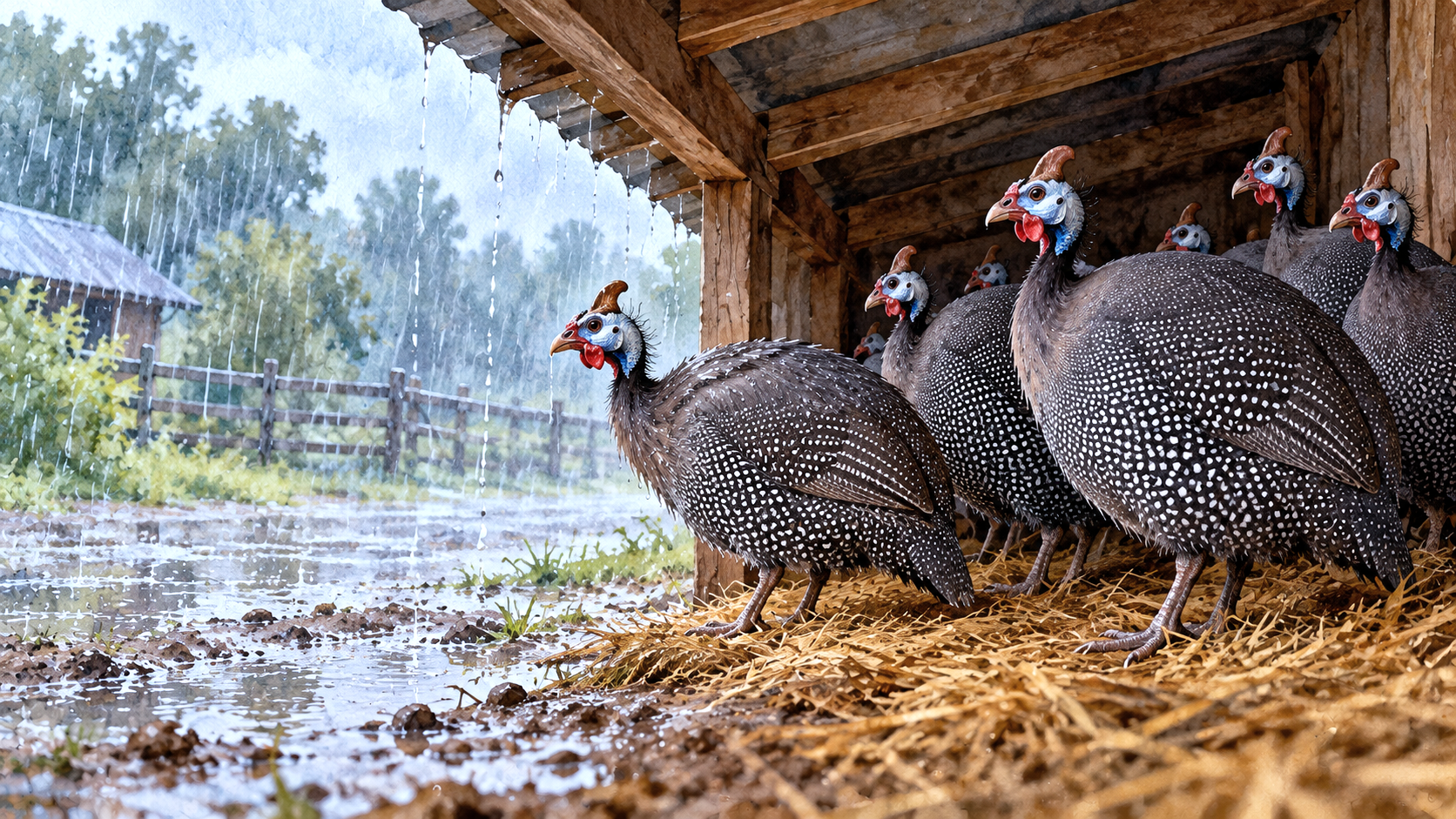
Guinea fowl can get wet and spend time outdoors in the rain, but prolonged exposure to heavy rainfall can become dangerous, particularly when temperatures are low or their feathers become thoroughly soaked. Healthy, fully feathered adults generally tolerate brief showers better than young keets, which are especially vulnerable to chilling.
Rain does not automatically require every adult guinea fowl to remain indoors. Their safety depends on the intensity and duration of rainfall, wind conditions, feather condition, and access to dry shelter. Birds that remain comfortable during a warm summer shower may struggle when exposed to hours of cold rain.
What Happens When Guinea Fowl Feathers Get Wet?
Guinea fowl feathers help retain body heat by trapping air near the skin. Their overlapping structure sheds some moisture, allowing healthy adults to tolerate light rainfall without immediately becoming soaked. However, feathers are not completely waterproof, and persistent rain can penetrate the plumage.
Once water reaches the insulating layers, the feathers become less effective at conserving warmth. Guinea fowl have relatively limited insulating down compared with some domestic poultry, making prolonged exposure to wet conditions particularly concerning when temperatures are low.
A few damp outer feathers do not necessarily indicate danger. A bird soaked close to the skin, however, may lose body heat faster than it can replace it, especially when exposed to wind.
Why Cold Rain Is More Dangerous Than Warm Rain
A brief shower during warm weather generally poses less immediate danger to a healthy adult than sustained rainfall in cool, windy conditions. Wet feathers reduce insulation, while moving air accelerates heat loss.
The combination can overwhelm a bird’s ability to maintain its normal body temperature even when the air temperature remains above freezing. The cold tolerance of guinea fowl therefore cannot be judged by temperature alone.
Guinea fowl that become chilled may appear unusually inactive, hunch their bodies, tremble, or move less confidently. Severe weakness, poor coordination, or reduced responsiveness requires urgent veterinary attention rather than continued observation outdoors.
How Do Guinea Fowl Behave When It Rains?
Some guinea fowl continue walking and foraging during light rainfall, while others move beneath trees, buildings, or overhead cover. Individual responses vary with previous experience, rainfall intensity, and available shelter.
The fact that a guinea fowl voluntarily remains outdoors does not establish that conditions are safe. Birds may continue foraging as their feathers become increasingly wet, particularly when the flock is accustomed to spending most of its time outside.
Outdoor cover also varies considerably in effectiveness. Dense foliage may intercept light showers but allow water to drip continuously during prolonged rain. Open-sided shelters can provide useful protection until strong winds drive precipitation beneath the roof.
Providing sheltered accommodation for guinea fowl allows birds to escape unfavorable weather without depending on trees or exposed farm structures. Those accustomed to daytime free-ranging should have an accessible retreat throughout their outdoor activity.
Why Rain Is Especially Dangerous for Guinea Keets
Young guinea keets are much more vulnerable to moisture than fully feathered adults. Their immature temperature regulation and developing plumage make it difficult to compensate for rapid heat loss after becoming wet.
During the first weeks of life, even moisture from dew-covered grass can be dangerous. Damp conditions during early guinea keet development are associated with serious chilling risks, including potentially fatal outcomes.
Their vulnerability decreases as they grow and develop mature feathers, although age alone does not guarantee that an individual keet can tolerate rain safely. Smaller, weakened, or poorly feathered birds may remain particularly susceptible.
A guinea hen accompanying her young outdoors does not guarantee protection from dangerous rainfall. Naturally reared broods can suffer losses when keets become soaked or chilled, especially where cover is inadequate. The early care requirements of guinea keets should account for their developing ability to maintain body temperature independently.
What Shelter Do Guinea Fowl Need During Rain?
An effective rain shelter needs a weather-resistant roof, protection from wind-driven precipitation, adequate ventilation, and a floor that remains reasonably dry. Poor drainage can leave birds standing on wet surfaces long after rainfall ends.
An accessible guinea fowl coop provides a protected resting area, while a roofed section of an outdoor enclosure allows birds to remain outside during milder showers. Good coop drainage and bedding management help prevent moisture from accumulating where the flock rests.
Repeatedly damp bedding can promote microbial growth, increase ammonia problems, and expose feet to prolonged moisture. Wet feathers and muddy feet also carry additional water indoors, making it important to inspect resting areas after heavy rain.
For birds living in an outdoor run full-time, sheltered space must accommodate the flock rather than provide cover for only a few individuals. Birds should be able to escape rainfall without crowding into a small corner or competing for the only dry resting place.
What Should You Do if a Guinea Fowl Becomes Soaked?
A wet guinea fowl that remains alert, active, and comfortable may need only access to a dry, sheltered environment. Allow it to dry naturally in a protected space with appropriate ventilation and no direct drafts.
A bird showing weakness, persistent trembling, poor coordination, or reduced responsiveness needs prompt veterinary assessment. Move it carefully into a dry, moderately warm environment while arranging professional help. These symptoms may indicate dangerous chilling or another medical problem and should not automatically be attributed to rainfall.
Avoid directing intense heat from a hair dryer or heater onto the bird. Uncontrolled heat can damage skin and feathers or cause additional distress. If several flock members repeatedly become soaked, the shelter itself needs attention rather than treating every incident separately.
Questions About Guinea Fowl and Rain
Can guinea fowl drink rainwater?
Rainwater collected in clean equipment may be suitable, but puddles and stagnant runoff can contain droppings, soil contaminants, or pathogens. Provide clean drinking water rather than relying on naturally accumulated rainwater.
Can guinea fowl take dust baths after rainfall?
They may resume dust bathing once suitable loose ground has dried. Saturated soil does not provide the same opportunity to work dry particles through their feathers.
Do guinea fowl need to be locked indoors during every thunderstorm?
Not necessarily, but severe thunderstorms involving dangerous winds, hail, or heavy rainfall warrant secure shelter. The predator-resistant housing used for guinea fowl can also provide a safer place during storms when the structure itself is weatherworthy.
Can guinea fowl develop health problems from repeatedly living on wet ground?
Yes. Persistent moisture can contribute to unhealthy bedding, contaminated surfaces, and foot problems. A wet environment also makes it harder for birds to avoid prolonged contact with damp material after rainfall has stopped.