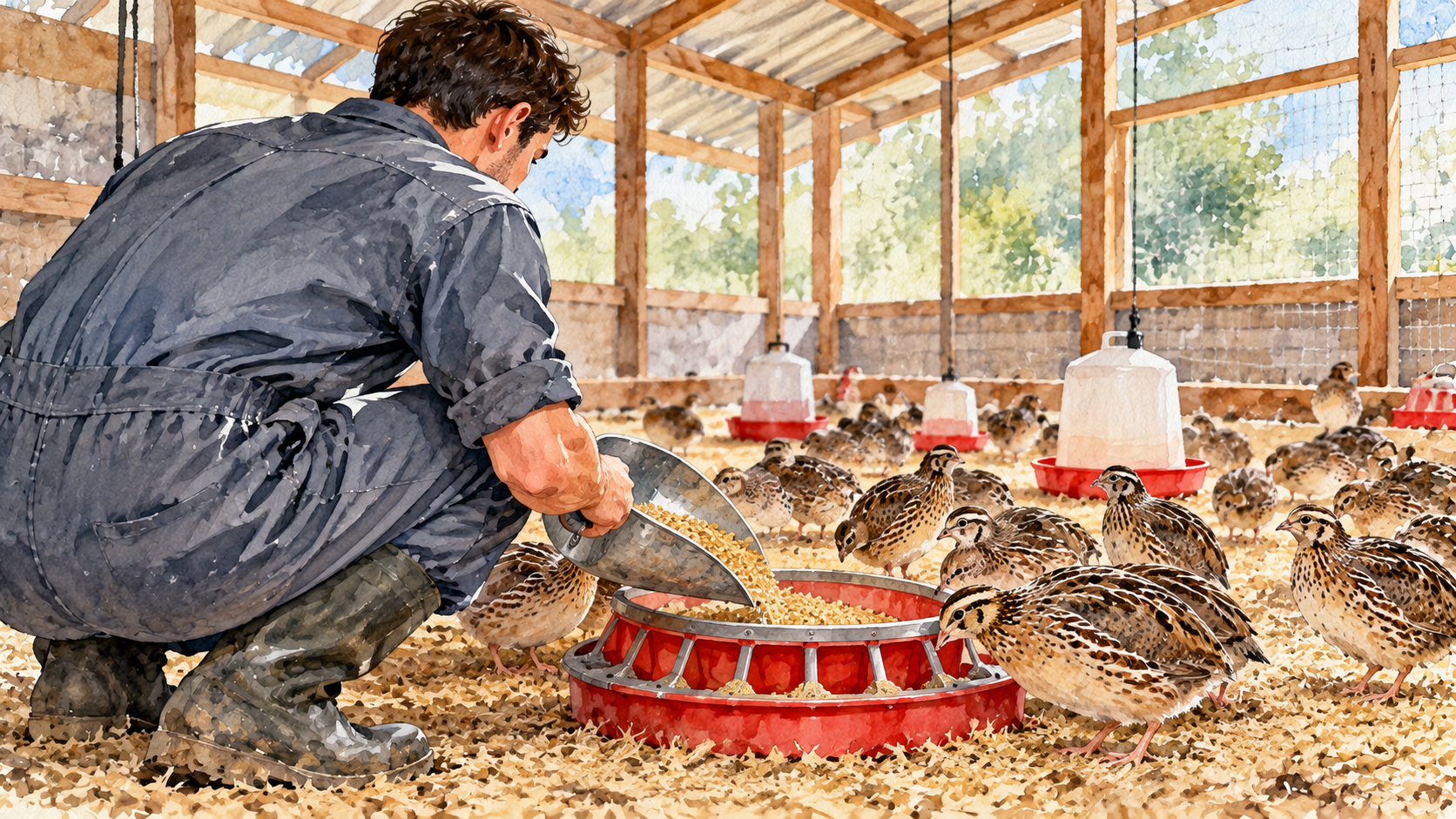
To raise quail for meat, begin with healthy meat-oriented stock, provide age-appropriate feed and secure grow-out housing, monitor growth and flock health, and arrange lawful, humane processing before birds reach finished weight. Japanese Coturnix mature rapidly and produce useful small carcasses. The grow-out goal is predictable growth, healthy body condition, low mortality, and manageable feed waste—not simply the largest bird possible.
Planning a Meat-Quail Grow-Out
Decide how many finished birds the farm needs, how each age group will be housed, and where the birds will go for processing. A batch of similar-aged birds makes feeding, weighing, observation, and health monitoring easier. Account for individual carcass sizes and possible losses when estimating how many chicks to start. The production limits of meat quail should inform capacity planning.
Arrange feed, secure accommodation, veterinary support, and an appropriate processor before chicks arrive. Avoid raising more birds than the farm can house and care for properly.
Choosing Healthy Chicks and Growing Stock
Select healthy birds from a hatchery or breeder that records age, growth, and flock history. Ask for average weights at consistent ages rather than maximum sizes achieved by exceptional individuals. Extension quail biosecurity guidance emphasizes sourcing healthy chicks and separating age groups.
Check appearance, mobility, and breathing and follow normal quail purchase health checks. The selection of meat quail stock affects growth potential, but good genetics cannot compensate for poor management.
Managing the Transition From Brooder to Grow-Out Pen
Chicks need suitable brooder conditions until feathering and development allow them to handle grow-out temperatures. Japanese quail small-flock guidance highlights safe heating, secure drinkers, escape prevention, and avoiding chick piling.
Prepare grow-out feed, drinkers, and housing before moving birds; avoid sudden environmental changes and mixing small chicks with substantially older quail. The right outdoor transition for young quail depends on feathering and actual weather, not age alone.
What to Feed Quail Raised for Meat
Use a complete quail or gamebird feed with appropriate protein, energy, amino acids, minerals, and vitamins. Quail feeding program recommendations distinguish high-protein starter diets from meat-bird finisher diets.
| Example Coturnix stage | Crude protein | Role |
|---|---|---|
| Starter, roughly 0–6 weeks | 24% | Supports early growth |
| Finisher, around 6 weeks to processing | 18% | Supports later development |
These are published feeding examples, not mandatory targets for every feed formulation. Meat birds processed young may spend little time on a distinct finisher. Diluting complete feeds with large quantities of grain, treats, or unnecessary supplements can compromise nutrient balance.
Making Feed and Water Easy to Access
Position enough feeders and waterers that smaller birds can obtain food without repeated competition. Reduce contamination and scattering, and check equipment routinely for blockages or leaks. The proper placement of feeders and waterers improves cleanliness as well as access.
Water should be continuously available. Spilled water creates wet litter and unpleasant conditions, while restricting water to slow growth or reduce waste is unsafe. Track whether uneven body weights correspond with unequal feeder access.
Housing Quail During Meat Grow-Out
Housing needs adequate ventilation, suitable temperature, dry footing, usable movement space, and protection from predators. Floor pens and other secure arrangements may be suitable when carefully managed. Production guidance for captive quail emphasizes sanitation, airflow, and preventing avoidable injuries.
Do not maximize stocking density at the expense of welfare. Excess crowding promotes moisture, competition, pecking, and illness. Match quail space requirements and suitable bedding to the birds’ age and housing design.
Temperature, Air Quality, and Lighting
Monitor whether birds are huddling, panting, avoiding parts of the enclosure, or becoming inactive. Ventilation should remove humidity, ammonia, and dust without exposing birds to chilling drafts. Strong ammonia odors indicate a need to improve litter management or airflow.
The Coturnix grow-out guidance describes reduced lighting in certain meat systems to discourage early reproductive activity and fighting. Birds must still have enough light to move, locate food and water, and be checked; welfare and applicable standards take priority over restrictive production routines.
Monitoring Growth and Body Condition
Regularly weigh a representative sample at known ages and record individual and average weights. Also note the range: an acceptable average may hide several birds growing poorly. Weigh calmly using a consistent method and avoid unnecessary repeated handling.
| Record | Information |
|---|---|
| Age | Days or weeks since hatch |
| Birds present | Current number alive |
| Weights | Individual and average grams |
| Feed | Amount supplied and remaining |
| Health | Injuries, illness, abnormal behavior |
| Housing | Temperature, litter, water and ventilation notes |
Understanding Feed Conversion and Growth Efficiency
Feed conversion ratio (FCR) is feed consumed divided by live-weight gain over a defined period. If a group eats 6 kg of feed and gains 2 kg of live weight together, its FCR for that period is 3.0. This is an illustration, not a universal quail target.
Measure feed eaten rather than only feed offered, since wastage distorts calculations. The importance of stage-specific nutrition helps explain why poor diets can reduce efficiency. If FCR rises, investigate spillage, growth, health, and environment instead of restricting feed.
Preventing Health Problems During Grow-Out
Biosecurity includes healthy source stock, separation of age groups, restricted entry, regular sanitation, and prompt identification of sick birds. Extension gamebird guidance notes limited approved medications in quail production, making prevention particularly important.
Check appetite, mobility, breathing, droppings, and social behavior each day. Birds showing quail illness warning signs need timely assessment. Avoid unapproved medicines; meat-producing birds may also be subject to drug residue and withdrawal requirements.
When Are Meat Quail Ready for Processing?
Japanese Coturnix often reach useful finished weight around five to eight weeks, varying by genetics, nutrition, and management. Coturnix development guidance and meat-quail production comparisons describe their rapid maturity and growth.
Check actual weight, body condition, uniformity, and whether keeping birds longer will meaningfully change carcass size. An undersized sick bird should not be considered finished simply because it reached a target age.
Preparing for Processing Without Compromising Welfare
Arrange a suitable, lawful, humane processing destination before the expected finished date. Confirm the processor accepts quail and can handle your flock size. Use secure ventilated transport containers and avoid overcrowding, long delays, and temperature extremes.
USDA descriptions of farm-type poultry include domesticated quail, but those classifications do not determine meat inspection rules. The FDA regulatory overview for non-amenable game meats identifies quail separately from conventional USDA-inspected poultry species. State and local processing and sales rules can add requirements; verify them with the relevant authorities.
What Records Should You Keep?
Log chick source, hatch or arrival date, numbers, feed purchases, consumption estimates, weekly sample weights, mortality, illnesses, and intended processing dates. Record finished weights when available and keep groups clearly identified.
Compare batches to spot differences in growth and feed efficiency attributable to stock, housing, nutrition, or seasonal conditions. A complete notebook or simple spreadsheet maintained regularly is more useful than an elaborate tracking system left incomplete.
Questions About Raising Quail for Meat
Should meat quail be separate from layers? Generally yes, because different ages and purposes require different feeds and management.
Is a distinct finisher feed always required? It depends on the timing of processing and the complete feed program used.
Can meat quail live outdoors? Fully feathered birds can use safe outdoor housing under appropriate conditions; chicks require suitable brooding warmth.
Is age alone enough to decide readiness? No. Weight, body condition, flock uniformity, and welfare also matter.