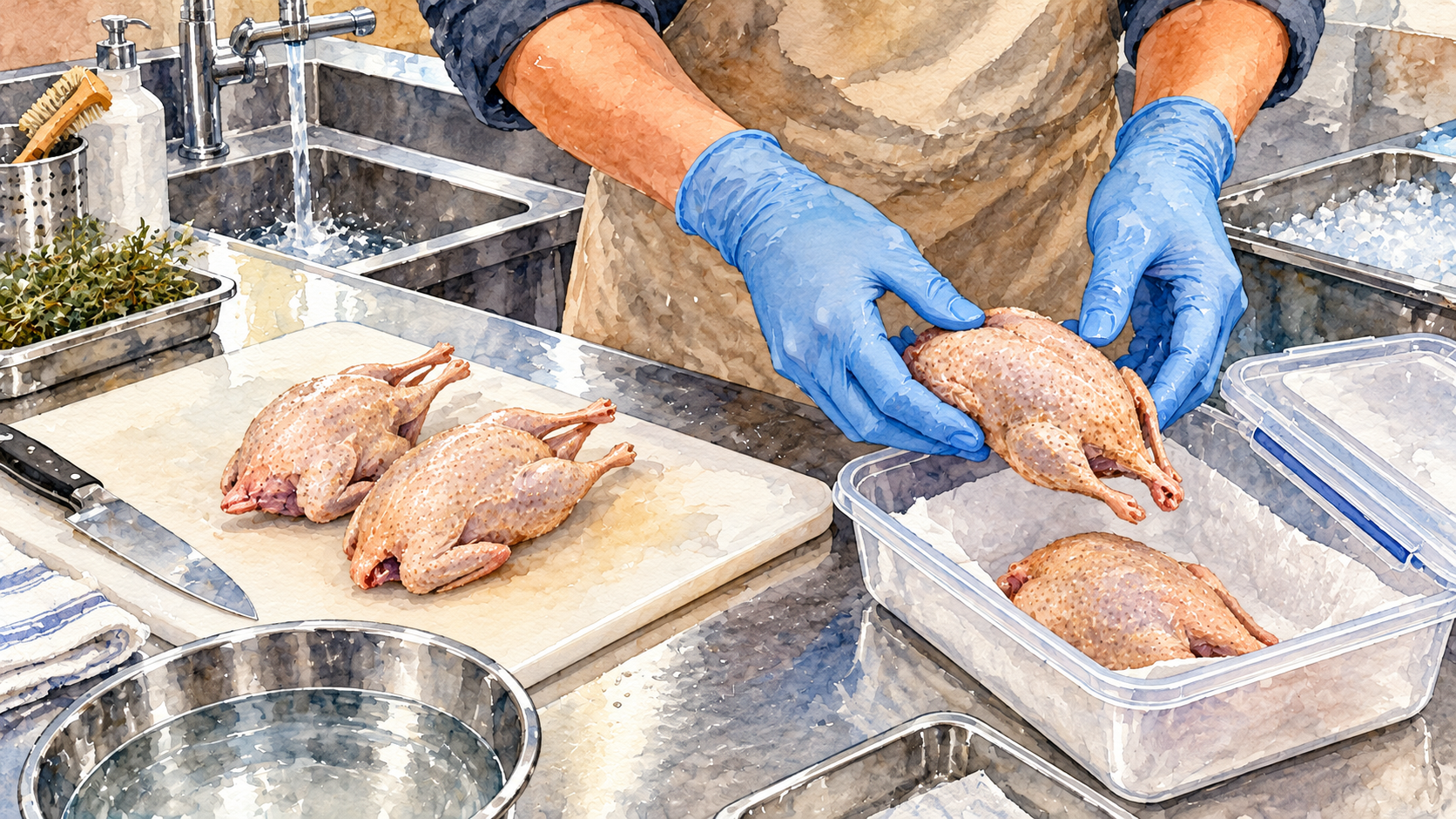
Processing quail for meat safely requires humane handling, suitable facilities, hygienic carcass preparation, prompt chilling, and compliance with applicable food-safety regulations. Although quail are small, their meat can carry harmful microorganisms just like other raw poultry. Careful handling from the live-bird stage through refrigerated storage is essential. Farmers should arrange appropriate processing facilities and equipment before bringing birds to the processing area. Anyone without the training, facilities, or confidence to carry out the work humanely should use a qualified processor experienced with quail.
In the United States, quail meat is generally regulated differently from chicken meat at the federal level. Requirements for personal consumption, direct sales, and commercial distribution may also differ by state.
Prepare a Safe Processing Plan
Before processing begins, establish where the birds will be handled, where carcasses will be prepared, and how the finished meat will be chilled and stored.
A suitable plan should address four priorities: animal welfare, contamination prevention, temperature control, and lawful handling of the finished product.
The guidance on small-scale poultry processing emphasizes organizing facilities so that potentially contaminated activities are separated from cleaner carcass-handling areas.
Processing should take place in a location with a reliable supply of potable water, washable surfaces, sufficient lighting, suitable waste containers, and protection from insects, pets, and environmental contamination.
Prepare refrigeration or chilling equipment before beginning. A delay caused by missing supplies can compromise meat safety, especially during warm weather.
Understand the Rules for Processing Quail in the United States
Quail are generally classified as non-amenable gamebirds under the federal meat-inspection framework. Their regulatory treatment differs from that of chickens, turkeys, ducks, and other federally amenable poultry species.
The FDA’s explanation of meat and gamebird regulation identifies quail among the gamebirds primarily regulated by the FDA rather than through mandatory federal poultry inspection.
However, that distinction does not mean all quail processing or meat sales are automatically exempt from inspection or other requirements.
For example, Texas specifically distinguishes quail from federally defined poultry and applies its own regulatory provisions to domesticated gamebirds. Other states may use different licensing, inspection, processing, or sales requirements.
Before processing, confirm:
- Whether on-farm processing is permitted for the intended purpose.
- Whether meat will be used personally or offered for sale.
- Whether state inspection, licensing, registration, or other approval is required.
- Whether a custom processor can legally handle the birds.
- Which labeling, refrigeration, transportation, and recordkeeping rules apply.
Contact the state agriculture department or relevant meat-inspection authority for requirements specific to quail and the intended sales arrangement. Do not assume that a small-flock exemption for chickens automatically applies to quail.
Handle Live Quail Humanely
Quail should experience as little fear, pain, and unnecessary disturbance as possible throughout catching, holding, and transportation.
Use secure, well-ventilated containers suitable for their small size. Avoid overcrowding, prolonged restraint, abrupt handling, and exposure to extreme temperatures.
Do not carry quail by their wings, legs, or feathers. Support the body securely and avoid pressure that restricts breathing.
Birds should not be left waiting unnecessarily in direct sunlight, cold drafts, or poorly ventilated containers. Handle one group at a time so that animals are not subjected to prolonged disturbance.
A humane process must use methods appropriate for the species and achieve rapid, effective loss of consciousness, with no avoidable suffering. The operator must be trained to recognize whether the method has worked and respond appropriately if it has not.
The USDA’s discussion of humane animal handling describes the broader principle of preventing needless suffering, although its livestock-specific statutory requirements should not be mistaken for the complete legal framework governing quail.
For an inexperienced keeper, a qualified processor is the safer option. The welfare objective is distinct from merely completing the work quickly.
Set Up Separate Clean and Contaminated Areas
A well-organized processing environment reduces the chance that microorganisms from feathers, droppings, or digestive contents will contaminate finished meat.
The University of Minnesota’s poultry-processing guidance recommends arranging the work area so that early, potentially contaminating activities are kept apart from carcass preparation, chilling, and packaging.
A practical layout distinguishes the following areas:
| Area | Main hygiene priority |
|---|---|
| Live-bird holding | Keep feces, litter, and feathers away from food-contact surfaces |
| Initial processing | Contain blood, feathers, and other waste |
| Carcass preparation | Prevent contamination from digestive contents and dirty equipment |
| Chilling | Use clean equipment, potable water, and controlled temperatures |
| Packaging | Handle chilled meat on clean, sanitized surfaces |
Avoid moving dirty tools, clothing, or waste containers into clean areas.
The work surface should be washable and in sound condition. Cracked wooden surfaces, dirty buckets, and equipment that cannot be properly cleaned increase contamination risks.
Keep children, pets, insects, and unnecessary visitors away from the processing area.
Maintain Good Personal Hygiene
People handling raw quail carcasses can transfer harmful microorganisms between birds, tools, surfaces, and finished meat.
Wash hands thoroughly with soap and running water before beginning work and after touching live birds, manure, waste, contaminated equipment, or other potentially dirty surfaces.
The CDC’s recommendations for preventing foodborne illness emphasize handwashing for at least 20 seconds and preventing cross-contamination between raw animal products and other foods.
Wear clean work clothing and suitable protective equipment. Gloves can reduce direct contact but must be changed when contaminated and do not replace handwashing.
Cover cuts and wounds securely. Anyone experiencing vomiting, diarrhea, or another potentially infectious illness should not handle meat.
Keep food, beverages, mobile phones, and personal belongings away from food-contact surfaces.
Prevent Carcass Contamination
One of the greatest food-safety concerns during processing is the transfer of microorganisms from feathers, skin, digestive contents, or contaminated equipment onto the carcass.
Quail may carry bacteria without appearing ill. A visibly healthy bird is not necessarily free of organisms associated with foodborne illness.
The USDA’s explanation of poultry-processing safety notes that processing does not make raw poultry sterile. Proper controls reduce contamination but do not guarantee that every harmful microorganism has been eliminated.
Use clean, food-safe equipment and potable water. Keep carcasses away from floors, dirty surfaces, litter, and containers previously used for waste.
Particular care is needed to avoid contamination from digestive contents. If a carcass becomes visibly contaminated, it must be handled under an appropriate sanitary corrective procedure rather than simply passed along with clean carcasses.
Do not use household cleaning chemicals directly on meat. Cleaning and sanitizing agents must be appropriate for food-contact equipment and used according to their labels.
Clean and Sanitize Tools Between Tasks
Cleaning removes visible material such as blood, fat, feathers, and organic debris. Sanitizing reduces microorganisms remaining on an adequately cleaned surface.
These are separate activities. Applying sanitizer to a heavily soiled knife or worktable may not produce the intended result.
Use equipment that can be dismantled or accessed sufficiently for cleaning. Follow the product manufacturer’s instructions for washing, sanitizing, contact time, and rinsing where required.
The small-scale processing recommendations emphasize sanitary equipment, appropriate water supplies, and facilities designed to prevent contamination.
Never mix bleach with ammonia-containing cleaners or other incompatible chemicals. Dangerous gases can be produced.
If a tool falls onto a contaminated floor or is used for waste handling, clean and sanitize it before bringing it back into contact with edible meat.
Chill Processed Quail Promptly
Rapid chilling is one of the most important steps in safe meat handling. Warm carcasses provide conditions in which bacteria can multiply, particularly when processing takes place in hot weather.
The goal is to bring the internal carcass temperature down to 40°F (4.4°C) or colder promptly and then maintain refrigeration.
The University of Minnesota’s home poultry-processing guidance recommends chilling poultry carcasses in clean ice water until their temperature reaches 40°F before packaging.
Quail are small and can cool relatively quickly when an appropriate chilling system is used. However, cooling time still depends on the initial carcass temperature, the number of birds, water or air temperature, and how effectively heat is removed.
Use a suitable food thermometer to verify temperatures. Do not rely entirely on whether the carcass feels cold to the touch.
Commercial and regulated operations must follow their applicable chilling standards and food-safety plans. Cooling requirements established for larger federally inspected poultry should not automatically be treated as a complete regulatory specification for quail.
Keep Chilling Water and Equipment Sanitary
When water or ice is used to chill carcasses, both should come from a potable source. Containers must be food-safe, clean, and suitable for maintaining cold temperatures.
Overcrowding a chilling container can slow cooling and complicate sanitary handling. Contaminated chilling water can also spread microorganisms between carcasses.
Guidance on small-scale poultry chilling practices recommends monitoring both chilling-water temperature and carcass temperatures with suitable thermometers.
The chilling arrangement should prevent dirty material from entering the water and should allow finished carcasses to drain hygienically when appropriate.
Do not attempt to extend storage life by soaking carcasses in questionable water or household chemical solutions.
Once the birds are chilled, move them promptly to clean packaging or appropriate cold storage.
Packaging and Refrigerated Storage
Packaging should protect the meat from contamination, moisture loss, and contact with other foods.
Use clean, food-safe bags or containers suitable for refrigerated or frozen meat. Remove excess air where practical, close packages securely, and label them for identification.
A simple label for personal farm records can include the processing date, batch identification, and product description.
The USDA’s food-storage recommendations advise maintaining refrigerated poultry at 40°F or below and frozen meat at 0°F (-18°C) or below.
Fresh raw poultry is generally best cooked or frozen within one to two days under USDA guidance. Longer storage requires freezing or another validated preservation method.
Store packages in a refrigerator where raw juices cannot drip onto ready-to-eat foods. Do not overload the refrigerator, because cold air must circulate to maintain safe temperatures.
Avoid Cross-Contamination After Processing
Processing-area sanitation does not eliminate the need for careful handling once carcasses enter storage.
Raw poultry can carry Salmonella, Campylobacter, and other microorganisms. These may spread through leaking packages, dirty hands, knives, or work surfaces.
Follow the CDC’s clean, separate, cook, and chill principles throughout storage and subsequent handling.
Keep raw quail away from fresh produce and ready-to-eat foods. Use separate utensils and work surfaces when possible, and thoroughly wash equipment after contact with raw meat.
Do not routinely rinse raw poultry in a household sink. Splashing can spread contamination onto countertops and surrounding surfaces.
Cooking poultry to a safe internal temperature remains necessary, because hygienic processing and refrigeration reduce risks without making raw meat sterile.
What to Do With Birds Showing Signs of Disease
Quail that appear severely ill, are found dead, or have unexplained injuries or abnormalities should not simply enter the normal meat supply.
A bird may have an infectious condition that requires veterinary assessment. Some diseases and certain medication residues can also affect whether meat is suitable for human consumption.
The warning signs of illness in quail are relevant before birds are presented for processing, while broader quail health problems may require veterinary investigation.
Do not assume that removing a visibly affected area makes the remainder of a questionable carcass safe.
If a flock has recently received medications, verify all applicable meat-withdrawal restrictions with the prescribing veterinarian. Some drugs may not be approved for use in food-producing quail.
For unexplained deaths or suspected contagious illness, contact a veterinarian or the relevant animal-health authority before proceeding.
Dispose of Processing Waste Responsibly
Blood, feathers, digestive material, and other processing waste should be contained promptly to avoid attracting flies, rodents, and predators.
Use covered containers and follow local rules governing agricultural and animal by-product disposal. Do not allow waste to enter wells, streams, storm drains, or food-preparation areas.
Cleaning should remove organic debris before sanitizing surfaces and equipment. Wash and dry reusable containers after the work is finished.
Manure from the live-bird holding area requires separate hygienic handling. The potential human-health hazards associated with quail droppings remain relevant when handling litter or contaminated equipment.
Do not assume that ordinary garden composting procedures are adequate for all animal processing waste. Local restrictions and suitable disposal methods should be confirmed separately.
Keep Basic Processing and Temperature Records
Records are useful even when processing a small flock for household use. They help identify handling or temperature problems and support traceability if concerns arise later.
Record the processing date, flock or batch identity, number of birds, any health exclusions, chilling temperatures, packaging date, and storage destination.
| Record | Why it matters |
|---|---|
| Flock or batch identification | Connects carcasses to the original birds |
| Processing date | Establishes when meat entered handling and storage |
| Health concerns | Documents birds excluded or referred for assessment |
| Chilling temperature | Confirms that carcasses were cooled properly |
| Storage temperature | Supports ongoing cold-chain monitoring |
| Packaging identification | Prevents confusion between batches |
The recordkeeping established during meat-quail grow-out can be extended through processing and storage. For commercial operations, additional documentation may be mandatory under the applicable state or federal rules.
Questions About Safe Quail Processing
Can quail be processed at home for personal consumption?
It may be permitted, depending on local and state laws. Processing for personal use and processing meat for sale can have different requirements, so confirm the rules before starting.
Does freezing eliminate bacteria from raw quail meat?
No. Freezing prevents most bacterial growth while meat remains frozen, but it does not reliably eliminate all harmful microorganisms. Safe handling and proper cooking are still required.
Why must quail carcasses be chilled before packaging?
Prompt chilling reduces the opportunity for bacteria to multiply. Packaging meat while it remains warm can slow cooling, particularly when several carcasses are packed together.
Is meat from a healthy-looking quail automatically safe?
No. Some microorganisms can be carried without visible illness. Hygienic handling, temperature control, and proper cooking remain necessary even when the flock appears healthy.