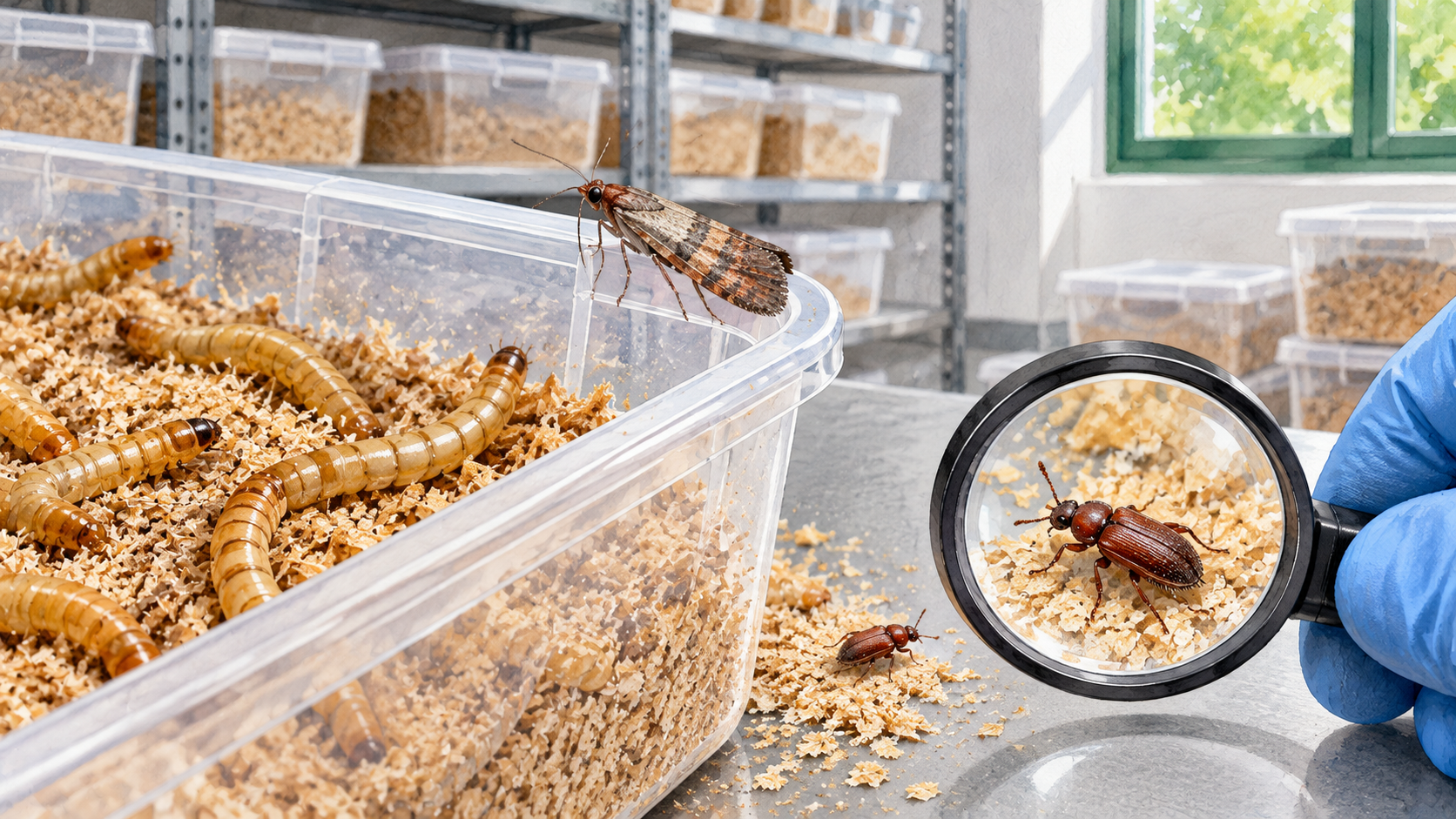
Mealworm colonies can attract unwanted flour beetles, grain beetles, pantry moths, dermestid beetles, ants, small flies, and other arthropods. These organisms may arrive in purchased feed, enter through openings, or spread from nearby infested products. Some compete for grain, prey on vulnerable insects, or contaminate the rearing substrate.
Identifying the organism and tracing its source are more reliable than assuming every unknown visitor requires destroying the colony. Chemical treatment of live insects intended for feed is not an appropriate default response.
Which Other Insects May Appear in a Mealworm Colony?
Flour beetles, grain beetles, pantry moths, dermestid beetles, ants, fungus gnats, and psocids can become associated with insect-rearing materials. Grain mites are also relevant arthropods, although they are not insects.
A safe insect-production guide identifies many of these groups as potential rearing-facility intruders. Not every species will occur in every colony, and a single visiting insect is not proof of an established infestation.
Can Flour Beetles and Sawtoothed Grain Beetles Infest the Feed?
Yes. Red and confused flour beetles (Tribolium castaneum and T. confusum) consume processed cereals, including bran, and can arrive in stored ingredients. Adult flour beetles are small and reddish-brown, quite different in size from adult yellow mealworm beetles.
The stored-product identification guide documents flour beetles in these materials.
Sawtoothed grain beetles (Oryzaephilus surinamensis) are small, flattened brown insects with toothlike projections along the sides of the thorax. They also infest processed grain and animal feed.
These beetles can compete for food, reproduce unnoticed in stored ingredients, and contaminate harvested mealworms. When they appear repeatedly, inspect unopened and nearby feed packages as well as active bins.
Can Pantry Moths Breed in Mealworm Substrate?
Yes. Indianmeal moths, Mediterranean flour moths, and related grain moths may develop in cereal-based rearing material. Their larvae may produce silk webbing that binds feed particles together.
The stored-products extension reference describes these moths and the damaged products in which they develop. Watch for pale caterpillars, silk threads, clumps, and adults flying near shelves.
Removing flying moths does not eliminate eggs and caterpillars already inside contaminated grain. Locate and isolate their breeding material rather than treating live feed insects with pesticide.
Are Dermestid Beetles a Problem?
They can be. Dermestid beetles are attracted to animal remains and certain stored products, and their often hairy larvae differ markedly from smooth yellow mealworms.
Insect-production safety guidance identifies Dermestes beetles among unwanted insects in mealworm culture. They may consume insects, feed, or remains and contaminate a batch.
Inspect dead-insect accumulations, discarded material, and nearby storage when dermestids appear. Their presence does not automatically prove they have attacked living mealworms.
Can Ants, Spiders, and Small Flies Enter Containers?
Ants may enter along shelves, walls, or tools bridging container rims. Some can take small insects or feed from the colony. Spiders can capture exposed insects, although finding one nearby is not evidence that the whole colony is infested.
Fungus gnats and certain other small flies may breed in persistently damp or deteriorating organic material. They are warning signs to inspect vegetables, spilled feed, and moisture pockets rather than proof of a particular mealworm disease.
The construction of a mealworm farming bin should account for intruder access while maintaining suitable ventilation.
What Are Tiny Pale Insects in the Bran?
Psocids, or booklice, are tiny soft-bodied insects sometimes mistaken for mites. The Canadian Grain Commission describes adults with long antennae and an association with damp stored grain.
Grain mites are arachnids, not insects: adult mites have eight legs rather than six. Correct identification may require a magnifier or sharply focused photograph. Mite-specific diagnosis and removal belong to managing mites in mealworm colonies.
Do not assume every white speck is alive or that every pale creature is a newly hatched mealworm.
How Do Intruders Reach a Mealworm Farm?
Unwanted organisms most often arrive through purchased bran, grain, other stored feeds, used equipment, and incoming breeding stock. They may also travel from nearby birdseed, animal feed, or infested pantry goods.
The stored-product pest guide emphasizes finding the infested commodity instead of removing wandering adults alone.
Inspect incoming materials, isolate questionable stock, and protect unopened feed from pests. The prevention of contamination in mealworm production begins before new ingredients reach the colony.
Can Intruders Harm Mealworms Without Eating Them?
Yes. They may consume feed, spread contamination, damage ingredients, or become mixed into harvested animals. Some species favor damp or spoiled material and indicate an underlying environmental problem.
Stored-grain guidance distinguishes grain feeders from scavengers associated with deteriorating products.
A single visitor deserves examination, but larvae and adults of an unfamiliar species reproducing inside the substrate indicate a more established problem. The identity and extent of infestation determine the response.
What Should You Do When You Find Another Insect?
Isolate the affected container before transferring material to healthy colonies. Examine the intruder and surrounding feed, check neighboring bins, and look for eggs, larvae, or additional adults.
Remove an isolated visitor when appropriate, then observe for recurrence. Where an infestation is established, replace contaminated substrate or discard material whose suitability for animal feed cannot be established. Keep dedicated equipment for suspect batches.
Do not spray pesticides, household repellents, or other unapproved chemicals into live mealworm containers. The routine maintenance of mealworm farms supports prevention but does not replace finding the entry source.
How Can You Prevent Future Infestations?
Store clean ingredients in secure pest-resistant containers, inspect packages before use, and prevent accumulated spilled feed. Secure ventilation screens without restricting airflow, and separate incoming stock from healthy established colonies.
Keep damp vegetable residues and dead insects from accumulating because they may attract scavengers. The moisture conditions for mealworms should be supported without creating soggy substrate.
Inspect material during mealworm harvesting so unfamiliar insects are not distributed with farm feed. Prevention is most effective when the original source is excluded rather than repeatedly removing the visible intruders.
Questions About Unwanted Insects in Mealworm Farms
Are little red beetles in bran always young darkling beetles? No. Small reddish flour or grain beetles are separate species and can arrive with stored feed.
Can pantry moth caterpillars live in mealworm substrate? Yes. Some feed on cereal products and leave silk webbing or clumped material.
Are tiny pale moving creatures always mites? No. Psocids and other small arthropods can be similar in appearance. Identify them under magnification.
Should I discard a colony after finding one intruder? Not automatically. Identify the organism, inspect for an established infestation, and assess whether feed quality has been compromised.