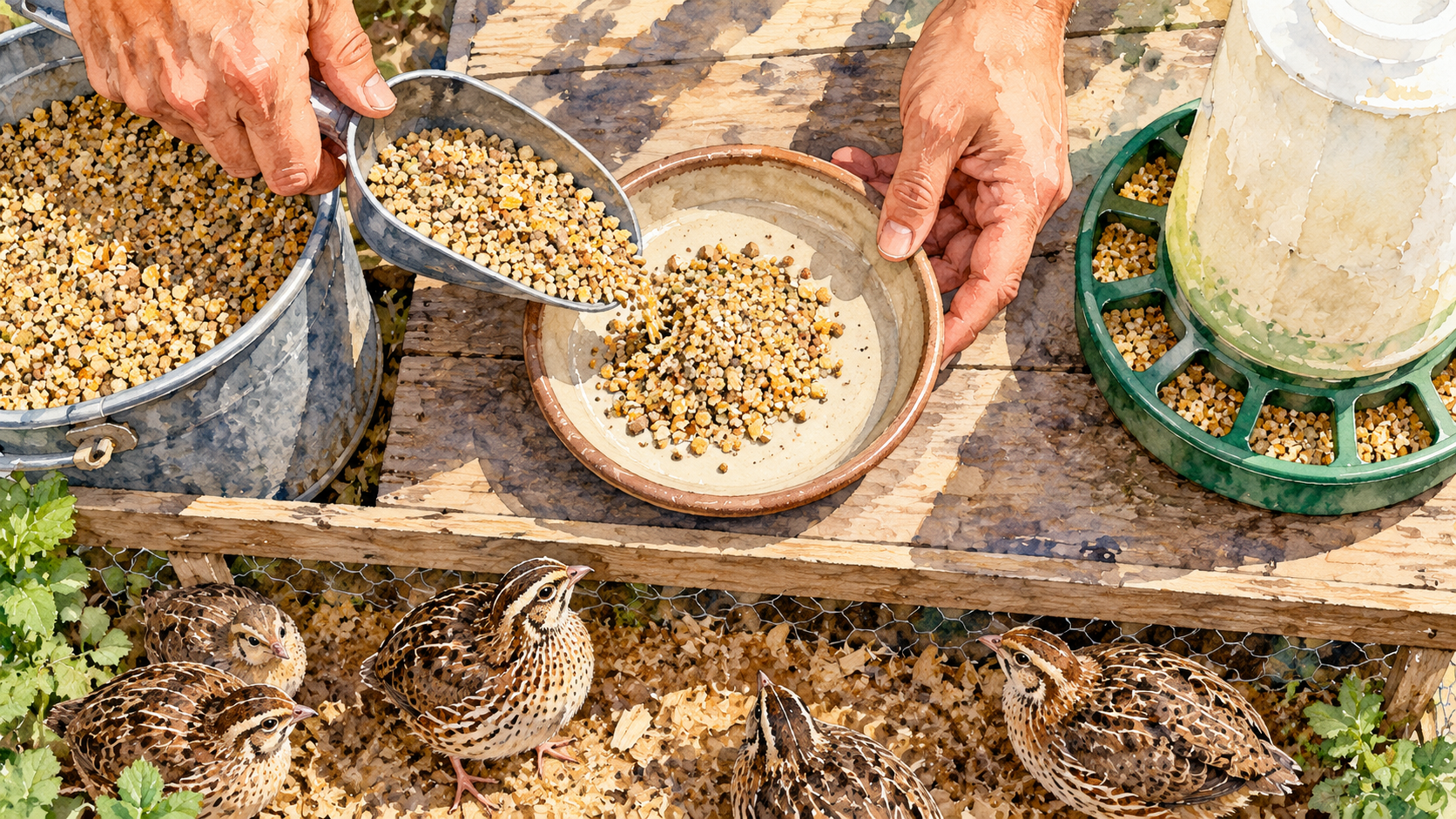
An adult Coturnix quail typically eats about 20–30 grams (0.7–1.1 ounces) of complete feed per day. Larger birds and productive females may consume more. For initial planning, 25–30 grams per adult daily is useful, but it is not a strict ration or safe upper limit. Intake varies with sex, strain, age, egg production, dietary energy, temperature, and individual condition. The meaningful measure is what birds actually swallow, not simply the amount poured into the feeder.
How Many Grams of Feed Does an Adult Coturnix Eat?
A practical typical range is 20–30 grams daily. In a 2024 study of individual Japanese quail intake, females averaged 29.67 grams and males 20.51 grams over a seven-day baseline. A balanced-feed consumption experiment recorded about 20 grams. The range is a starting estimate rather than a universal measurement.
A planning assumption of 25–30 grams per adult produces the following estimates. These figures exclude feed spilled, discarded, or otherwise wasted and should be revised using the flock’s own records.
| Adult birds | Per day | Per 30 days |
|---|---|---|
| 1 | 25–30 g | 0.75–0.90 kg |
| 5 | 125–150 g | 3.75–4.50 kg |
| 10 | 250–300 g | 7.50–9.00 kg |
| 20 | 500–600 g | 15–18 kg |
| 50 | 1.25–1.50 kg | 37.5–45 kg |
| 100 | 2.5–3 kg | 75–90 kg |
Do Male and Female Quail Eat Different Amounts?
Females may consume more because they are sometimes heavier and often produce eggs, creating additional nutrient demands. However, the difference depends on the bird’s reproductive stage and body condition, and a heavy male may eat more than a small non-laying hen.
A controlled sex-specific intake study recorded 29.67 ± 3.73 grams per female daily and 20.51 ± 4.32 grams per male. Those figures describe the study population, not mandatory daily allowances. Mixed flocks can have averages that shift as their sex ratios and laying activity change.
How Does Body Size and Strain Affect Feed Consumption?
Coturnix strains selected for larger meat-producing bodies may need more energy for maintenance than smaller laying strains. Yet feed intake does not rise in exact proportion to body weight, because metabolic weight, energy needs, activity and egg production also contribute.
Research on feed efficiency in two Japanese quail varieties found that metabolic body weight and egg mass helped explain expected intake. The variation among Coturnix strains therefore makes farm-specific measurements preferable to applying the smallest research figure to larger birds.
How Much Feed Do Growing Quail Eat Each Day?
Newly hatched chicks consume fewer grams than adults because they are small, but their daily intake increases rapidly with growth. The amount at any age depends on genetic line, weight gain, environment and nutritional energy density.
Japanese quail development and nutrient-requirement research measures feed intake at different growth stages. A fixed adult allowance should not be applied from hatch. The nutritional needs of Coturnix chicks are distinct from intake quantity; a chick eating less feed may still need a more nutrient-dense ration.
Measure intake for groups of similarly aged birds over several days, excluding obvious waste, then repeat as they grow. This provides meaningful values without pretending every chick has the same daily requirement.
Do Laying Quail Eat More Feed?
Egg production requires energy and nutrients, so laying females may eat more than comparable non-layers. Feed intake also depends on dietary concentration, size and temperature. Laying does not guarantee higher consumption during stressful conditions.
A 2025 laying-quail temperature study measured 26.11 grams consumed daily at 20°C, alongside 90.69% egg production. Consumption and laying both declined in hotter treatments. The nutritional demands of egg-producing Coturnix make unexpectedly low intake especially important to investigate.
Does Hot Weather Reduce How Much Quail Eat?
Yes. Quail exposed to heat may reduce eating as part of their physiological response. This can compromise nutrient consumption while birds are simultaneously trying to maintain body temperature.
In the 2025 controlled temperature experiment, birds averaged 26.11 g/day at 20°C, 24.05 g at 24°C, 22.69 g at 28°C and 20.21 g at 32°C. This approximately 23% decrease between the coolest and hottest treatments applies to that experimental population, not all farms.
A separate heat-stress study in Japanese laying quail measured 32.82 grams/day in thermal comfort conditions and 24.67 grams during heat stress. Both experiments support the same trend despite different starting quantities. Preventing heat stress in Coturnix protects more than feed intake alone.
Do Quail Eat More in Cold Weather?
Some quail increase energy consumption during cold exposure to maintain body heat, but intake depends on acclimation, shelter, diet concentration and bird health. An adult in a dry protected space differs from one enduring direct drafts or wet litter.
The relationship between Coturnix cold tolerance and exposure makes the weather reading alone an unreliable predictor of consumption. A chilled or sick bird may eat less even though it needs additional energy. Monitor intake against the flock’s normal pattern rather than expecting a universal winter percentage increase.
Does Feed Quality Change the Amount Quail Consume?
Yes. Energy density, particle size, freshness and palatability can affect voluntary intake. Birds offered different foods do not necessarily eat the same weight even if body size is unchanged.
A controlled Japanese quail cereal preference study recorded about 20 g/day with balanced feed versus 12.1–15.8 g/day for individual cereals. Lower grain intake is not evidence that those grains provide better nutrition.
The research on energy concentration and laying-quail performance illustrates why comparisons between different rations need care. When feed use changes, first check whether the formulation, particle size or feed quality changed.
How Can You Measure Daily Feed Consumption?
Weigh the feed added to a feeder and the amount remaining after a consistent measurement period. Subtract any estimated spills or spoiled material, then divide by the number of birds and days. A gram scale is more reliable than comparing scoop volumes.
Daily intake per bird = (feed offered − feed remaining − estimated waste) ÷ (birds × days). For example, if ten adult birds receive 2,400 grams over seven days, 250 grams remain and 120 grams are wasted, estimated consumption is 2,030 grams, or 29 grams per bird daily.
Several days of records will smooth ordinary fluctuations. The position and design of feeding equipment can strongly affect the waste estimate.
Why Is Feed Disappearance Different From Consumption?
Coturnix can scatter food from open troughs, while wet or contaminated feed may be discarded. Everything missing from a feeder is not necessarily swallowed. A farm’s feed usage can consequently exceed the amount birds actually eat.
Research on residual feed intake notes how labor-intensive individual measurement is and stresses feeder design to limit waste. Separating intake from losses makes comparisons between farms or feeding systems more meaningful.
How Much Feed Should You Plan for a Flock?
Multiply a starting estimate of 25–30 grams per adult daily by the number of birds and days. Thirty adults eating 28 grams each would consume about 840 grams daily and 25.2 kilograms over a 30-day period. These are consumption estimates, not instructions to restrict access.
Allow separately for the feed lost to handling, spills and contamination; the appropriate margin depends on equipment and management. Recording the number and composition of the flock together with feed use makes ongoing planning more accurate.
When Is a Change in Feed Intake Concerning?
Small variations are normal, but a sustained decline with weakness, poor growth, reduced activity or egg-production changes deserves attention. Check that feed is fresh and accessible and that a hopper or drinker has not failed.
Changes in temperature, bird condition or ration may explain the pattern, but the warning signs of illness in Coturnix can include reduced appetite. Seek veterinary assessment promptly when birds appear unwell or stop eating.
Common Questions About Daily Quail Feed Intake
Is 25 grams of feed enough for one adult quail? It matches some birds’ daily intake but is not a universal maximum or strict ration.
Do female Coturnix eat more than males? Often, especially when laying. A study found averages of about 29.7 grams for females and 20.5 grams for males.
How much feed do ten quail eat in a month? Approximately 7.5–9 kilograms at 25–30 grams per adult each day, before accounting for waste.
Do quail eat less in summer? They can reduce consumption significantly during heat stress, and persistent declines require assessment of birds and environment.
One thought on “How Much Feed Does a Quail Eat Per Day?”