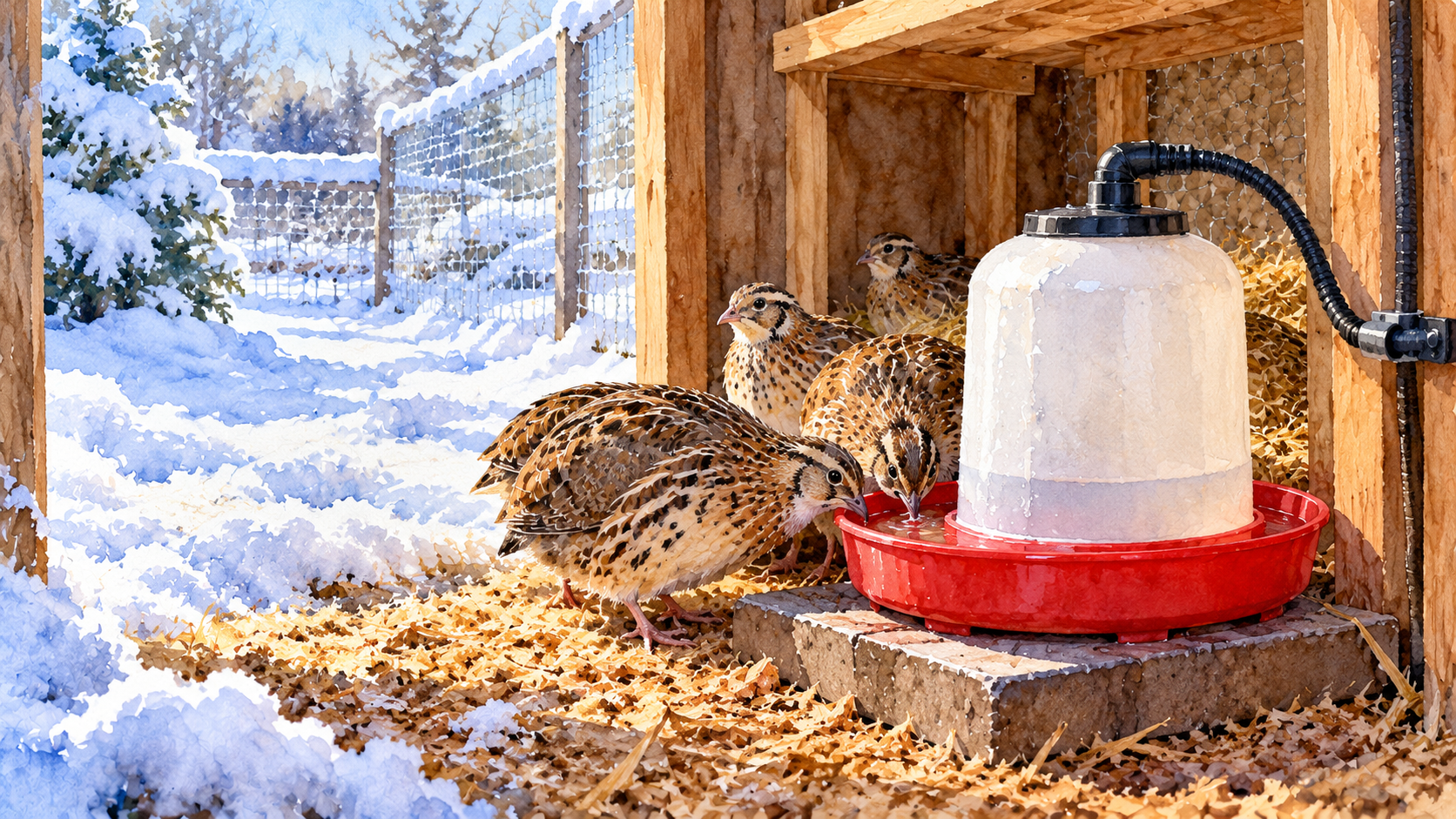
The most reliable way to prevent quail waterers from freezing is to use a properly rated heated drinking system or replace unfrozen water frequently throughout the day. A heated base or purpose-built heated waterer can maintain liquid water during freezing conditions, while rotating spare containers is a practical alternative where electricity is unavailable. Whichever method is used, the drinking point must remain accessible to small birds, not merely hold unfrozen water somewhere inside a reservoir.
Quail require liquid drinking water throughout winter, even when they consume less than they would during hot weather. Ice can block narrow drinking channels and nipples before an entire container freezes, so cold-weather management depends on frequent checks, suitable placement, and a backup plan for equipment failures.
Why Do Quail Waterers Freeze So Easily?
Small drinking troughs, shallow cups, and exposed nipple systems lose heat quickly when surrounding temperatures fall below freezing. A relatively large reservoir may still contain liquid water while its narrower outlet becomes blocked by ice. Wind and contact with frozen metal surfaces can accelerate cooling, particularly in outdoor aviaries or partially sheltered pens.
Quail are especially affected by blocked drinking points because they cannot reliably break through ice to obtain water. The University of Maryland Extension’s winter poultry guidance recommends checking water several times daily because a frozen surface prevents birds from drinking. Although the publication discusses poultry generally, the principle applies directly to captive quail.
The problem is not always obvious from a distance. A translucent container may look full, while its outlet has frozen solid. Every winter check should therefore confirm that liquid actually reaches the birds.
Are Heated Waterers the Best Way to Prevent Freezing?
A properly installed heated waterer is often the most dependable option for a quail enclosure with safe electrical access. Thermostatically controlled equipment can provide enough warmth to keep water liquid without unnecessarily heating the surrounding housing. Heated bases designed for compatible drinkers are another option, provided the equipment is approved for the intended container and environment.
The important limitation is that a heater beneath the reservoir does not always keep remote drinking cups, exposed tubing, or nipple valves from freezing. The entire delivery system must work at the lowest temperatures the setup is likely to experience. Equipment intended for larger poultry may also have openings positioned too high for quail or drinking surfaces unsuitable for very small birds.
Use only a heater approved by its manufacturer for the intended application. A device that keeps a bucket warm is not necessarily suitable for use beneath a plastic quail drinker, and equipment designed solely for indoor conditions should not be exposed to winter precipitation. Heated equipment still needs regular inspection because power interruptions and component failures can leave the birds without water.
How Can You Keep Quail Water Unfrozen Without Electricity?
The simplest non-electric method is to maintain at least two compatible waterers and rotate them between the enclosure and a protected indoor location. Bring in a frozen or partly frozen container, replace it with one holding fresh liquid water, and allow the removed container to thaw before its next use. This avoids leaving the flock dependent on a single vessel that may become unusable.
Insulated containers can slow freezing, particularly during milder cold spells, but insulation does not generate heat. Eventually the contents will freeze if temperatures remain sufficiently low. Adding comfortably lukewarm water may extend the period before ice forms, but it is a temporary measure rather than a way to guarantee access throughout a cold day.
A University of New Hampshire Extension response compiling winter poultry watering advice identifies spare-waterer rotation, insulated containers, and repeated water replacement as practical alternatives. How often these measures work depends on outdoor temperature, wind, container size, and exposure. During severe cold, a non-electric system may require several replacements each day.
Where Should a Quail Waterer Be Placed During Winter?
A sheltered location can reduce heat loss and make drinking easier, especially when it protects the waterer from direct wind, snow, and freezing rain. Position the drinking point where the quail normally spend time and can approach without crowding. A protected corner may help, but it should not become a cramped space where dominant birds block access.
Keep the equipment away from sources of contamination and places where spilled water will repeatedly saturate bedding. Icy ground around a trough can make the area difficult for small birds to use and create additional sanitation concerns. Stable mounting or a secure base can reduce tipping, while correctly positioned drinking openings make it easier to inspect the system.
The arrangement of quail feeders and waterers affects accessibility throughout the year, but winter adds another consideration: a drinker should remain usable after frost forms on nearby surfaces. Moving a container into a sheltered area can slow freezing, yet shelter alone should not be considered a substitute for checking the water.
How Do You Use an Electric Water Heater Safely Around Quail?
Water, dust, combustible bedding, and electrical equipment require particular care in poultry housing. Use heating equipment rated for the location, protect connections from moisture, and keep cables beyond the birds’ reach. Outdoor or damp-location installations should have appropriate ground-fault circuit-interrupter (GFCI) protection and weather-resistant connections, consistent with local electrical requirements.
The National Fire Protection Association’s outdoor electrical safety advice emphasizes GFCI protection, outdoor-rated equipment, and removal of damaged cords. Likewise, University of Maryland’s poultry farm electrical safety guidance describes how moisture, dust, damaged insulation, and overheated plugs create hazards in poultry buildings.
Avoid improvised heating systems, household heating pads not approved for wet agricultural use, exposed heating elements, and extension cords used as permanent wiring. A heat lamp placed near dry litter, wood, or feathers introduces additional fire risk and is generally an undesirable way to keep drinking water unfrozen. If a safe permanent electrical connection is unavailable, use a non-electric replacement routine rather than improvising a powered installation.
How Often Should You Check Quail Waterers in Freezing Weather?
Inspect winter drinking systems several times a day, particularly during severe frost, high winds, or changing weather conditions. A morning check is essential, but it should not be the only one when freezing can occur rapidly. A second or third visit may reveal ice forming in a shallow trough or a heated system that stopped working after the first inspection.
The University of Maryland’s small-flock winter recommendations explicitly advise checking and replacing water multiple times daily when it may freeze. For quail, a useful inspection means confirming that each drinking point delivers liquid water, that no ice blocks access, and that containers remain clean and stable.
A heated system deserves the same attention. Thermostats can fail, breakers can trip, and cables can become disconnected. In particularly cold weather, checking only whether a heater’s indicator light is on is insufficient: test whether the water is actually available at bird level.
How Can You Stop Nipple Drinkers and Water Lines From Freezing?
Nipple drinkers and piped systems require special consideration because exposed tubing and narrow valves may freeze before the main reservoir. Water that remains liquid inside a protected tank cannot benefit the birds if the delivery line is blocked. Even a small ice plug can interrupt an otherwise functioning automatic system.
Use only manufacturer-approved freeze-protection methods for the particular water line and fittings. Equipment specifically designed with protected tubing or compatible heating elements may be suitable, but household heat tape should not be applied indiscriminately to plastic hoses or drinking components. The product must be approved for the tubing material, moisture conditions, and installation method.
Check several outlets individually rather than assuming an entire line works because one nipple releases water. Where long exposed tubing cannot be protected reliably, replacing the arrangement with a simpler winter drinker may be more dependable. The goal is accessible liquid water, not the preservation of an unsuitable summer system.
Are Open Bowls Safe for Quail in Winter?
Open bowls can be convenient for short-term winter water replacement, especially where electricity is unavailable, but their safety depends on depth, stability, cleanliness, and the birds’ age. Quail can scatter litter into exposed water, and chicks may be unable to escape from a container that is too deep.
For newly hatched chicks, shallow exposed vessels present a drowning risk even before freezing becomes an issue. Bobwhite quail production guidance identifies the importance of chick-safe drinking arrangements. Use age-appropriate equipment that permits access without requiring a chick to enter or stand in the water.
Flexible containers that allow ice to be removed without breaking the vessel may be useful for mature birds when carefully positioned. However, a large bowl that stays liquid slightly longer is not automatically a better choice if it is easily tipped, contaminated, or too deep for the birds using it.
Should You Add Salt, Sugar, or Antifreeze to Quail Water?
No. Do not add salt, automotive antifreeze, alcohol, or other chemicals to drinking water to prevent freezing. Substances that lower the freezing point can make the water unsafe or unsuitable for consumption. Antifreeze products are particularly hazardous and should never be placed where birds can drink or contact them.
Adding sugar is also not a reliable substitute for properly managing water temperature. Amounts small enough to be reasonable for ordinary drinking will not provide dependable freeze protection, while heavily concentrated mixtures unnecessarily alter the water’s composition and may create sanitation problems.
The risks associated with unsafe foods, chemicals, and supplementation in quail include exposures that can be introduced through contaminated drinking supplies. Winter freeze prevention should rely on approved equipment, insulation, sheltered placement, and water replacement rather than chemical additives.
What Should You Do if a Quail Waterer Has Already Frozen?
Replace the frozen drinking source with an accessible container holding fresh liquid water as soon as the problem is discovered. Check whether all birds can reach it, especially smaller or less dominant individuals. If an automatic system has frozen, do not assume that warming the reservoir alone will clear the outlet.
Take the frozen equipment to a suitable location for safe thawing and inspect it for cracks, damaged seals, or other defects before reuse. Disconnect electrical components according to manufacturer instructions before maintenance. Never apply an open flame or uncontrolled high heat to a plastic waterer, its tubing, or powered fittings.
If quail appear weak, distressed, or unable to drink after a prolonged interruption, seek prompt veterinary advice. The signs associated with dehydration and inadequate drinking access deserve particular attention when a waterer may have been frozen for an unknown period. Do not attempt to force water into a struggling bird’s mouth.
How Do You Prepare for a Power Outage During Winter?
Every heated drinking system should have a plan for losing electrical power. Keep at least one suitable spare waterer available, with a means of supplying liquid water until power returns. Where temperatures are severe, the backup may involve repeated container exchanges rather than relying on stored water inside the unpowered reservoir.
Check whether the powered system resumes normal operation after an outage. A thermostat may need to restart, a protective breaker may require professional attention, or water may have frozen in an outlet before heating resumed. Avoid assuming that restored electricity means every drinking point is functional.
The broader management of quail during winter includes additional housing and weather considerations, but drinking access requires a separate, immediately workable contingency. Backup water equipment is useful precisely because freezing problems cannot always be corrected on the spot.
Common Questions About Frozen Quail Waterers
Can quail drink snow instead of water? Snow should not be relied upon as the flock’s drinking supply. Provide accessible liquid water rather than expecting birds to obtain enough moisture from snow or ice.
Will an insulated waterer stop water from freezing overnight? Insulation slows heat loss but does not prevent freezing indefinitely. Its effectiveness depends on temperature, exposure, water volume, and the duration of the cold period.
Do heated quail waterers need checking every day? Yes. Heated equipment can fail, and narrow outlets may freeze even while a reservoir remains liquid. Check the actual drinking points regularly, with more frequent inspections during severe cold.
What is the safest option when there is no electricity? Rotating spare waterers filled with fresh liquid water is a practical approach, provided replacements are frequent enough to prevent prolonged interruptions. A spare container should always be ready when temperatures are below freezing.