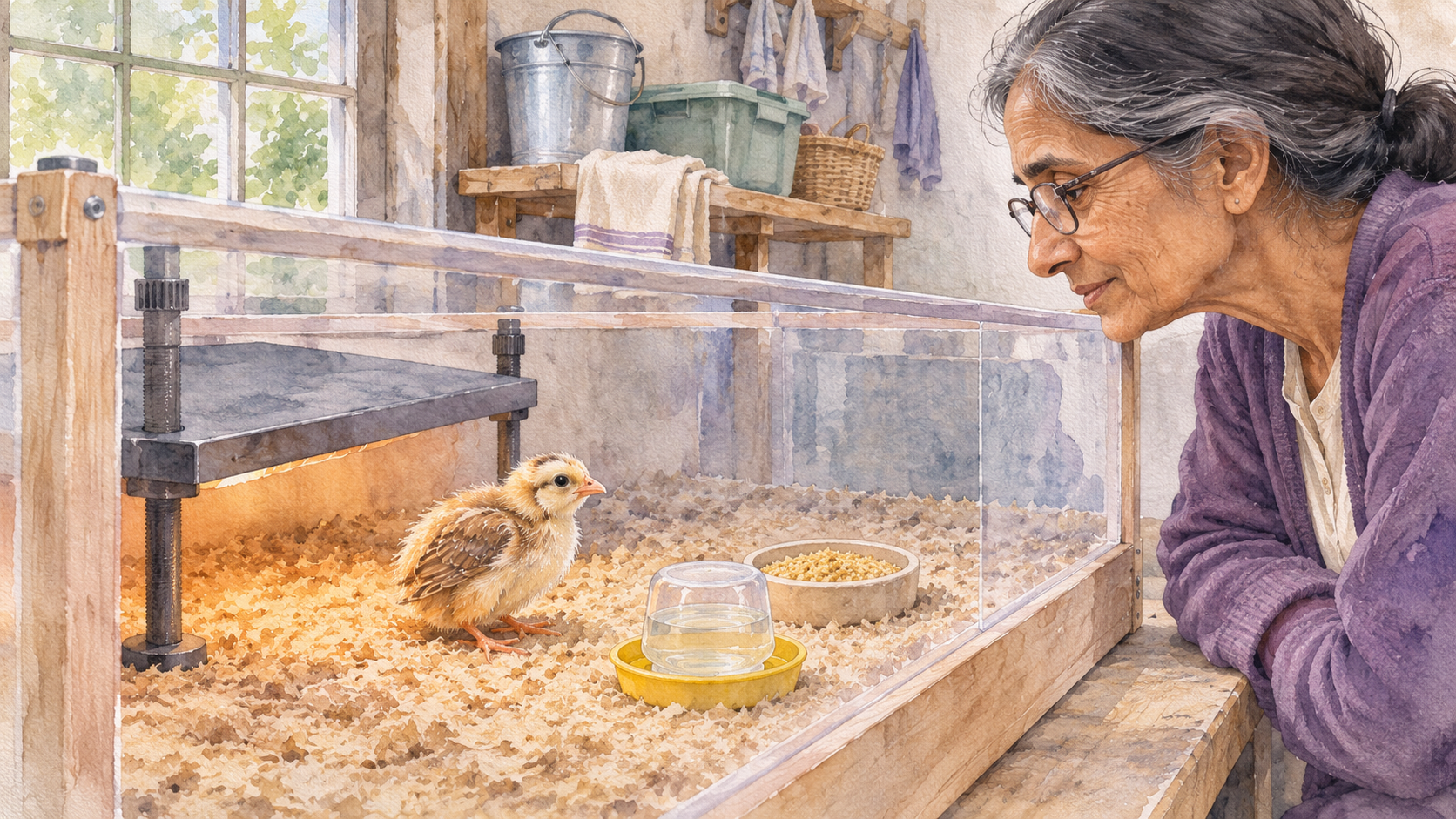
A weak or unthrifty chick may remain hunched while its hatchmates move around, struggle to reach a feeder, stand unsteadily, or fail to gain strength after hatching or shipment. A chick that cannot stand, has trouble breathing, is unresponsive, or cannot swallow needs urgent veterinary assessment. For a chick that is alert but lagging behind, the first safe actions are to observe it closely, confirm appropriate warmth, offer easy access to clean water and complete starter feed, and protect it from being trampled or excluded by stronger birds. Supportive care buys time to identify a problem; it does not establish the cause or replace treatment when illness or injury is present.
Weakness is a description of what a keeper sees, not a diagnosis. A chick may be chilled, dehydrated, unable to find food, injured, affected by hatch or transport conditions, or developing an infection. More than one factor can be present. The response should begin with the bird’s breathing, ability to stand, warmth, and actual access to resources, followed by a decision about temporary separation and qualified help. Do not force food or water into a chick’s mouth, attempt tube feeding, or give an improvised antibiotic or supplement dose.
Recognize a Chick That Is Not Keeping Up With Its Hatchmates
Newly hatched chicks often sleep between periods of activity, especially after the effort of emerging from their shells. Brief resting alone is not evidence that a bird is failing. A concerning chick stays inactive while its hatchmates feed and explore, repeatedly falls or remains on its side, or cannot reach the equipment without assistance. Other warning signs include closed or crusted eyes, a wet or unusually swollen navel, persistent distress calls, a dirty blocked vent, and abnormal breathing. These signs identify a need for closer examination rather than a single disease.
Observe the entire group before handling the individual. Chicks huddling tightly under heat may be cold; birds avoiding the warm area may be too hot. If only one chick is weak while its companions appear comfortable, adjusting the heater for the whole flock may make conditions worse. The distinction between normal sleep and persistent lethargy matters because lethargy and loss of interest in food warrant prompt veterinary attention even when a young bird has no dramatic external injury.
Note when the problem began. A bird that was weak immediately on arrival may have experienced delayed access to water, chilling, or a difficult hatch. A previously active bird that suddenly becomes weak deserves urgent attention to possible illness, injury, or environmental change. The normal progression of chick movement and feather development gives context for what an active bird of the same age typically does, but it cannot be used to diagnose a weak individual.
Check Breathing, Ability to Stand, and Immediate Hazards First
Look for open-mouth breathing when the bird is not simply hot, repeated gasping, obvious respiratory effort, collapse, loss of responsiveness, bleeding, or injury. Those conditions should trigger immediate veterinary contact rather than a home experiment. Remove the bird from a dangerous pile or equipment gap gently, keep it protected from rough handling, and avoid delaying help while searching for a home remedy. If several chicks show similar symptoms or start dying, seek veterinary or diagnostic-laboratory assistance for the flock.
A chick lying flat may be chilled, injured, seriously ill, or otherwise unable to support itself. Do not repeatedly stand it up, stretch the legs, or improvise splints before the cause has been assessed. The assessment of abnormal walking and leg function covers a different clinical question; in this situation, first determine whether the chick can remain upright and access basic necessities without harm.
Inspect the area for obvious causes of distress: a failed heat source, soaked litter, slippery floor, trapped bird, overturned drinker, or feed that smaller chicks cannot reach. Correct these hazards for the entire group while arranging the individual assessment. It is possible for a chick to be weak because it has been excluded from resources, but weakness can also make a chick less able to compete, so the original cause may remain uncertain.
Provide Safe Warmth Without Heating the Whole Pen Excessively
A chilled chick may be reluctant to move to food and water, and low body temperature can worsen an already compromised condition. Place it in an appropriately warmed, dry, draft-protected part of the brooder or a prepared observation enclosure, while ensuring it can move away from the heat source if it becomes too warm. The appropriate temperature depends on age, feather development, and heater type. For conventional overhead brooding, newly hatched birds commonly need about 90–95°F in the heated area during the first week, but that range is not a substitute for chick-level observation.
Measure where the chick rests and check whether it begins to hold itself more normally after its surroundings are corrected. Panting, spreading the wings, or avoiding the warm section can indicate overheating. A chick that remains collapsed or unable to swallow after environmental correction needs veterinary evaluation, not continually increasing heat. The chick-level heat measurement and safe adjustments help prevent overcorrecting for one bird while making the entire enclosure uncomfortable.
Heating plates, lamps, and radiant brooders expose chicks to warmth differently. Follow the equipment instructions and maintain clearances from bedding, cardboard, and electrical cords. Never put a chick directly against a hot lamp, wrap it in an electrically heated household blanket, or close it inside an unventilated container. Warmth should be stable and controllable, not an additional source of burns, fire, or breathing difficulty.
Decide Whether Temporary Separation Will Help or Increase Stress
A weak chick may benefit from temporary protective separation when larger chicks trample it, repeatedly knock it away from a feeder, or prevent it from resting. Isolation can also reduce direct contact while a veterinarian evaluates a possible infectious disease. However, chickens are social, and a bird left entirely alone can become more distressed. Guidance on hatchling management recognizes that protective isolation may be needed for weak chicks even though they usually settle better with companions. Separate only for a defined welfare or biosecurity reason and reassess the arrangement as the bird’s condition changes.
Use a clean, ventilated, secure observation pen with dry, nonslip footing, age-appropriate warmth, and reachable water and starter feed. Keep the enclosure within comfortable visual or auditory distance of compatible flockmates when disease-control requirements permit. If contagious illness is suspected, do not place it next to healthy birds merely for company; follow veterinary advice on physical separation and dedicated equipment. A small, calm companion may be an option only when both birds are healthy and the arrangement does not put either at risk.
Check the isolated chick more frequently than a healthy group because it cannot hide a spilled drinker or failed heater among active flockmates. Wash hands and handle the healthy group before the sick bird when practical, with dedicated tools and footwear if infection is a concern. Separation is not a cure. Continue only as long as protection or disease-control needs justify it, and reassess daily with veterinary advice when illness is suspected. Returning a bird to the group should wait until it can move, drink, eat, and avoid injury without being immediately overwhelmed.
Offer Clean Water That the Chick Can Drink Voluntarily
Dehydration can develop when hatchlings are delayed in a hatcher, endure a long journey, or fail to find a drinker after placement. Chicks may have residual yolk nutrients after hatching, but this does not give them an unlimited water reserve. The risk of dehydration from prolonged hatcher residence is documented in posthatch guidance on timely removal and drinking-water access. Once in a prepared brooder, drinking water should remain readily available.
Place a stable, chick-sized drinker near the bird, within easy walking distance and away from direct heat or electrical equipment. Watch whether the chick approaches the water and swallows voluntarily. An alert chick that does not recognize a water source can sometimes be shown it with a brief, gentle touch of the beak tip to the drinking surface, without covering the nostrils. Do not squeeze liquid into the mouth, hold the beak submerged, or syringe water into a chick that is weak or not swallowing normally. Aspiration can be fatal.
A very small or unsteady bird can also fall into an open bowl. The safe design and height of chick drinkers matter especially when a weakened chick cannot climb out. If the bird cannot drink voluntarily, call the veterinarian promptly. Whether professional fluid therapy is needed, and how it should be administered, are clinical decisions rather than a home recipe.
Make a Complete Chick Starter Ration Easy to Reach
A weak chick should be offered a fresh, nutritionally complete starter feed formulated for chickens of its age. Place it in a shallow, clean feeder or tray close enough that the bird does not need to struggle across the pen. Check that it can peck, swallow, and return to resting normally. Chicks may be overwhelmed when stronger hatchmates monopolize the only feeder, so access must be judged by actual eating rather than a full container.
Starter feed supplies the nutrients needed for early growth; bread, scratch grain, kitchen scraps, or a homemade mixture do not replace it. Consistent access to suitable starter feed and clean water is a central part of early chick feeding and drinking management. This does not mean every apparently hungry or unthrifty chick needs sugar water, vitamins, or antibiotics. Older extension literature sometimes includes broadly worded antibiotic advice, but treatments must be justified by a diagnosis, a current species-appropriate product label, and veterinary direction.
Do not attempt to tube-feed, force-feed, or push a slurry into a chick’s mouth. A bird unable to lift its head or swallow requires veterinary care; adding food to the airway can make the condition much worse. The nutritional requirements of young chickens explain why complete starter is the correct baseline feed, while the bird’s failure to eat remains a sign that its underlying condition needs evaluation.
Check the Vent, Navel, and Feet Without Performing Invasive Care
During a brief, gentle inspection, look for dried feces obstructing the vent, an unusually wet or inflamed navel, swelling, obvious injury, or a foot that cannot support weight. Do not pull dried material from fragile skin or probe an unhealed navel. A pasted vent can prevent normal passage of droppings and deserves timely attention; recognizing and safely managing a pasted vent includes the relevant hygiene and escalation boundaries. Blood, protruding tissue, severe abdominal swelling, or repeated failure to pass droppings needs qualified veterinary assessment.
A swollen, wet, or incompletely healed navel can be associated with infection acquired around hatching, but its appearance alone cannot establish the cause. The same is true of a lame chick: slippery footing, injury, development, and illness may all be involved. Repeatedly manipulating the joint, taping legs together, or applying unapproved products can injure the bird and delay the correct evaluation.
For chicks weak since hatch, keep the hatch and arrival history, including the time since emergence, whether the chick dried normally, and any problems visible on receipt. The investigation of neonatal deaths and hatch-related problems becomes especially important when other chicks are deteriorating or dying, but one weak bird still needs an individual welfare decision rather than waiting for a mortality pattern.
Use a Short Observation Record to Judge Whether Support Is Working
An observation log helps distinguish a chick that improves after correcting its environment from one that continues to deteriorate. Record what the bird can actually do instead of assigning it an invented illness. The table below is a farm-management checklist, not a validated medical score or a promise that supportive care will restore a compromised chick.
| What to check | Encouraging observation | Reason to escalate promptly |
|---|---|---|
| Breathing and alertness | Quiet breathing, responsive movement | Gasping, severe breathing effort, collapse or unresponsiveness |
| Posture and walking | Can stand, move and reach supplies | Repeated falling, inability to rise, marked lameness |
| Comfort and warmth | Rests without persistent huddling or panting | Ongoing chilling or overheating despite safe correction |
| Water intake | Voluntarily approaches and swallows water | Cannot swallow or persistently fails to drink |
| Feeding | Pecks and eats complete starter | Persistent refusal or inability to eat |
| Social and body condition | Can rest safely without being trampled; activity improves | Isolation with deterioration, injuries or worsening weakness |
Make an initial note at the time of discovery, then check again after the immediate environmental and access problems have been addressed. Do not use a fixed number of hours to justify delaying a veterinarian when the bird shows a serious sign. More frequent observation is justified for a bird that cannot compete with its flockmates. If it does not improve or develops another abnormality, communicate the record to the veterinarian rather than continuing the same unsuccessful intervention.
When Veterinary Care Cannot Be Delayed
Urgent veterinary attention is warranted for difficult breathing, inability to stand or swallow, unresponsiveness, active bleeding, severe injury, or a chick that is rapidly worsening. A bird that stays lethargic or refuses feed also needs prompt assessment. Poultry veterinary care may require examination for infectious disease, hatch-related problems, trauma, or other causes that look similar at home. Lethargy, persistent poor appetite, abnormal breathing, and lameness all warrant prompt veterinary assessment in baby chickens, rather than indefinite home treatment.
Contact a veterinarian promptly when several chicks are affected, especially if respiratory signs, marked weakness, or deaths appear in the same group. Restrict unnecessary movement between flocks, avoid transferring equipment without cleaning, and follow official animal-health advice if a reportable disease is suspected. Do not medicate the whole hatch on guesswork, administer a drug at an unverified dose, or assume one apparent recovery proves the problem is solved.
Sometimes a chick has a severe condition with a poor prognosis despite appropriate support. Continued distress, persistent inability to eat or drink, or serious injury requires an honest welfare discussion with a poultry veterinarian. Humane euthanasia may be the kindest option when suffering cannot be relieved; the method should be determined and performed by a properly trained person under applicable animal-welfare guidance. Prolonging ineffective home care is not a welfare success.
Return the Chick to Companions Only When It Can Cope
A chick that has improved should be able to stand and walk to resources, eat and drink voluntarily, maintain comfort in the appropriate brooder environment, and avoid being trapped or pushed aside. Reintroduce it carefully and watch what happens at feeding and rest, especially if it is noticeably smaller than the group. A protected adjoining area may be useful briefly if the bird is recovering physically but not yet able to compete.
Do not return a possibly infectious chick merely because it looks more active after warming. Follow veterinary guidance on the illness risk and whether continued separation is necessary. Equally, avoid isolating a healthy, recovering bird indefinitely without a specific protective reason. The aim is a bird that can carry out normal chick activities without distress, with the flock environment adjusted so it can reach food, water, and warmth.
The safest care for an unthrifty chick is practical but limited: observe closely, remove clear hazards, maintain appropriate warmth, offer feed and water without forcing them, and protect it from trampling when needed. These steps support recovery from manageable environmental problems, but they cannot identify or cure every illness. A chick that cannot resume normal activity, swallow, or stand should be evaluated promptly instead of undergoing repeated unvalidated home treatments.
One thought on “How to Care for Weak or Unthrifty Chicks”