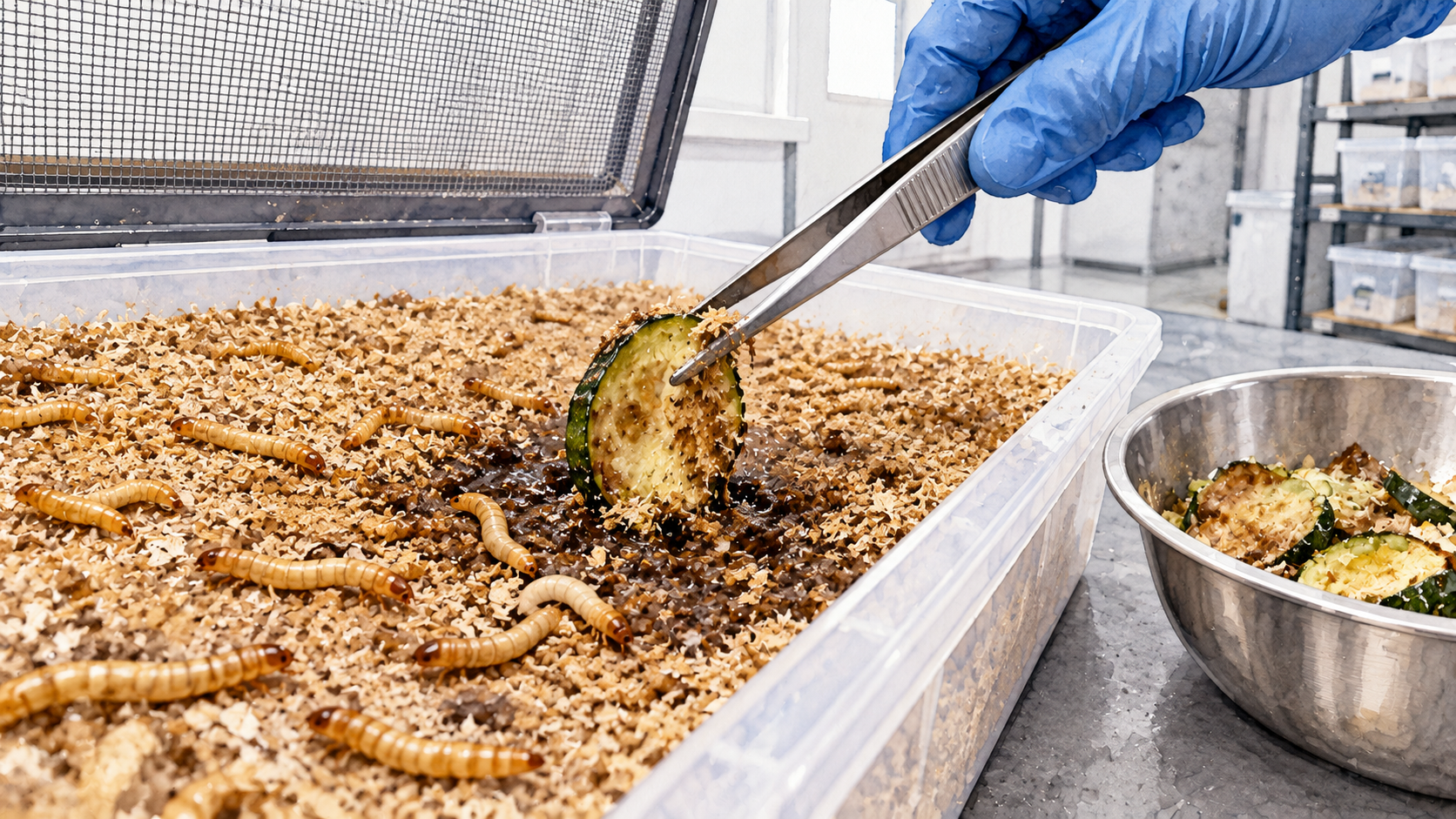
A bad smell in a mealworm farm usually means something is decomposing or excess moisture has accumulated. Spoiled vegetable scraps, damp grain substrate, dead larvae, and inadequate ventilation are common causes. A healthy yellow mealworm (Tenebrio molitor) colony should have a relatively mild grain-like or earthy smell, not a strong sour, rotten, or ammonia-like odor.
The quickest way to solve the problem is to identify where the odor originates. Remove the affected food or material, check whether the insects remain healthy, and correct the moisture or airflow conditions that allowed the smell to develop. A persistent odor deserves attention even when the larvae still appear active.
What Should a Healthy Mealworm Farm Smell Like?
A properly maintained mealworm container usually smells similar to the material in which the insects are raised. Wheat bran and oats can produce a mild cereal-like smell, while accumulated insect waste may contribute a faint earthy odor.
The EntoFARM mealworm husbandry guide describes sour, moldy, or rotten odors as warning signs, particularly when excess moisture or decaying food is present.
A strong smell should not be dismissed as an unavoidable consequence of raising insects. Although different feed materials have their own natural odors, a sudden unpleasant change suggests that something in the container needs investigating.
The condition of the insects, the location of the smell, and any visible wet or decomposing material help distinguish ordinary feed odors from a developing problem.
Why Do Spoiled Vegetables Make Mealworm Bins Smell?
Fresh vegetables provide moisture to mealworms, but uneaten pieces eventually soften and decompose. As microorganisms break down the material, unpleasant odors can develop.
Carrots, potatoes, squash, and other produce may remain suitable for a period before deteriorating. The speed depends on temperature, portion size, humidity, and how many larvae are feeding.
A review of yellow mealworm rearing substrates explains that fresh moisture sources can support larval growth but require careful management to avoid hygiene problems.
Inspect vegetables for soft, slimy, discolored, or unpleasant-smelling sections. Remove decomposing pieces promptly, including fragments that have become buried beneath the substrate.
If the smell is concentrated around leftover produce, reducing the quantity of fresh food offered at one time may prevent the problem from recurring. The feeding frequency of mealworms should reflect how quickly the colony consumes its food.
Can Wet Substrate Cause a Bad Smell?
Yes. Damp bran, oats, or other grain-based material can support microbial decomposition, especially when moisture collects in localized patches.
A container may appear dry on top while holding damp material beneath a vegetable slice or near the bottom. Compacted wet areas may have an unpleasant sour or fermented smell.
Research on mealworm rearing conditions emphasizes an important distinction: suitable humidity in the surrounding air does not mean the feeding substrate should be wet.
Investigate any clumped, sticky, or discolored material, particularly beneath moisture-rich foods. Remove obviously spoiled substrate rather than simply stirring it into the rest of the bin.
The best substrate for raising mealworms should remain suitable for feeding and movement without becoming a damp mass.
Why Does My Mealworm Farm Smell Like Ammonia?
A sharp, irritating odor sometimes described as ammonia-like can indicate decomposing organic material or poor conditions within the container.
However, smell alone cannot confirm the presence or concentration of ammonia. Different microbial processes can produce unpleasant volatile compounds, and a home grower generally cannot identify them reliably by scent.
First inspect the bin for decomposing insects, wet substrate, or spoiled food. If the odor is strong enough to irritate your nose or eyes, avoid leaning over the container and move it to an appropriately ventilated location before investigating further.
Do not add chemicals, perfumes, deodorizing powders, or household cleaners to the living colony to mask the odor. These substances may harm the insects or contaminate insects intended for animal feed.
A persistent sharp smell after obvious spoiled material has been removed may justify replacing the affected substrate and reassessing the entire colony environment.
Can Dead Mealworms or Beetles Cause Rotten Odors?
Yes. Dead insects eventually decompose, particularly in warm and damp conditions. A few dried insect remains may create little noticeable odor, but accumulations of decomposing larvae or beetles can smell strongly unpleasant.
Look for darkened, unusually soft, or deteriorating insects, especially beneath food scraps and in corners where material accumulates.
Do not assume every dark larva is dead. The normal appearance and color changes of mealworms can vary, so movement, body condition, and obvious decomposition provide additional clues.
Remove visibly decomposing insects using clean equipment. If many larvae have died at once, the odor may be a consequence of a larger husbandry problem rather than its original cause.
Temperature stress, overcrowding, unsuitable feed, and contamination are among the possible reasons mealworms die in a farm colony. Investigate a sudden die-off instead of treating the smell as an isolated issue.
Does Poor Ventilation Make Mealworm Odors Worse?
Poor ventilation can allow humidity to accumulate and may slow the drying of damp areas within a container. Stagnant conditions can make odors more noticeable and contribute to an environment in which unwanted microbial activity develops.
A scientific review of mealworm farming identifies adequate ventilation openings as important for air circulation.
Check whether lids are tightly sealed, ventilation openings are blocked, or bins are packed closely enough to restrict airflow. Look for condensation on container walls or beneath lids.
Improving airflow should not mean directing a powerful fan into exposed substrate. Strong airflow can blow dust around, disturb the insects, and introduce contamination.
A properly designed mealworm farming bin should allow air exchange while preventing escapes and protecting the colony.
Can Overcrowding Contribute to Unpleasant Smells?
Crowding can make an odor problem harder to control because more larvae produce waste and consume fresh food within the same limited space.
A dense colony can also make it difficult to identify wet patches, dead insects, or food that has become buried. High larval densities and deep substrate may produce uneven conditions inside a container.
Research examining larval density and substrate depth describes how these factors influence the rearing environment and insect performance.
Crowding alone does not prove why a bin smells. Nevertheless, if odors repeatedly return despite removing spoiled material, evaluate the amount of substrate, container size, and population.
The number of mealworms kept in one container should remain compatible with the available space and environmental controls.
What If the Bin Smells Musty Instead of Rotten?
A musty odor can indicate excess moisture or unwanted microbial growth, but it is not enough to identify a particular organism.
Inspect the substrate and food for discoloration or visible growth. Avoid inhaling disturbed dust or putting your face directly above suspect material.
A mealworm colony troubleshooting guide describes musty odors in association with damp conditions, while noting that rotten smells can accompany decomposing material.
Do not assume the entire colony is safe because the insects remain active. Isolate obviously compromised material and assess whether clean, unaffected insects can be separated appropriately.
Detailed fungal identification and the prevention of mold in a mealworm farm require their own controls. For odor troubleshooting, the immediate priority is recognizing the warning sign and removing compromised material.
How Do You Find the Source of a Bad Smell?
Start with the least disruptive checks before disturbing the whole colony. An unpleasant odor frequently comes from one localized problem rather than every part of the container.
| What you notice | Possible source | Immediate response |
|---|---|---|
| Sour smell near vegetable pieces | Uneaten produce decomposing | Remove the affected food and inspect beneath it |
| Sour odor with damp clumps | Wet or fermenting substrate | Remove compromised material and identify the moisture source |
| Rotten smell with dead larvae | Decomposing insects | Remove remains and investigate unusual mortality |
| Stale smell with condensation | Inadequate airflow or moisture buildup | Check ventilation and wet areas |
| Musty smell with visible growth | Suspect microbial contamination | Isolate affected material and avoid disturbing dust |
Gently inspect beneath food pieces, around the edges of the container, and at the bottom where moisture may collect.
If more than one problem is present, address all identified sources. Removing a rotten carrot will not solve the underlying issue if the surrounding grain remains wet.
What Should You Do Immediately When a Mealworm Bin Smells Bad?
Once the source is identified, remove spoiled food, decomposing insects, and visibly compromised substrate using clean utensils.
Check the condition of the surviving larvae and separate them from suspect material when appropriate. Do not transfer contaminated substrate into an otherwise healthy colony.
Next, correct the immediate cause. This may mean reducing fresh-food portions, repairing a water spill, improving ventilation, or moving a crowded group into a suitable additional container.
The water needs of mealworms can be met without soaking the grain substrate. A moisture source should not leave the living area persistently wet.
Avoid treating the colony with deodorants or disinfectants while insects remain inside. If the source cannot be identified or the material appears broadly spoiled, isolate the affected bin rather than using its insects for feed.
Routine cleaning and maintenance of a mealworm farm can resume once the immediate problem has been addressed.
When Is a Bad Smell a Serious Warning?
An odor deserves particular concern when it appears alongside widespread larval deaths, wet and decomposing substrate, unusual insect behavior, or extensive visible contamination.
An intense smell that returns quickly after the affected food is removed also suggests that the underlying environmental conditions have not been corrected.
Do not use insects from a visibly compromised colony as animal feed until their suitability has been established. A strong odor cannot identify a specific pathogen, but it provides a reason to investigate rather than ignore the condition of the insects.
Good odor control comes from correcting the cause, not concealing the smell. A healthy colony should not require fragrances or chemical treatments to make the rearing area tolerable.
Questions About Mealworm Farm Odors
Is a slight grain smell normal in a mealworm farm?
Yes. A faint cereal-like or earthy odor is generally expected from grain-based rearing material. Strong sour or rotten smells are different.
Why does my mealworm farm smell after adding carrots?
Carrots can release moisture and decompose when left uneaten. Check beneath the pieces for wet substrate and remove any deteriorating food.
Can a mealworm bin smell bad even if the larvae are alive?
Yes. Spoiled vegetables, damp grain, or dead insects can produce odors while many surviving larvae remain active.
Will better ventilation remove a rotten smell?
Ventilation may help manage accumulated humidity, but it will not eliminate the cause if decomposing food or insects remain in the container.