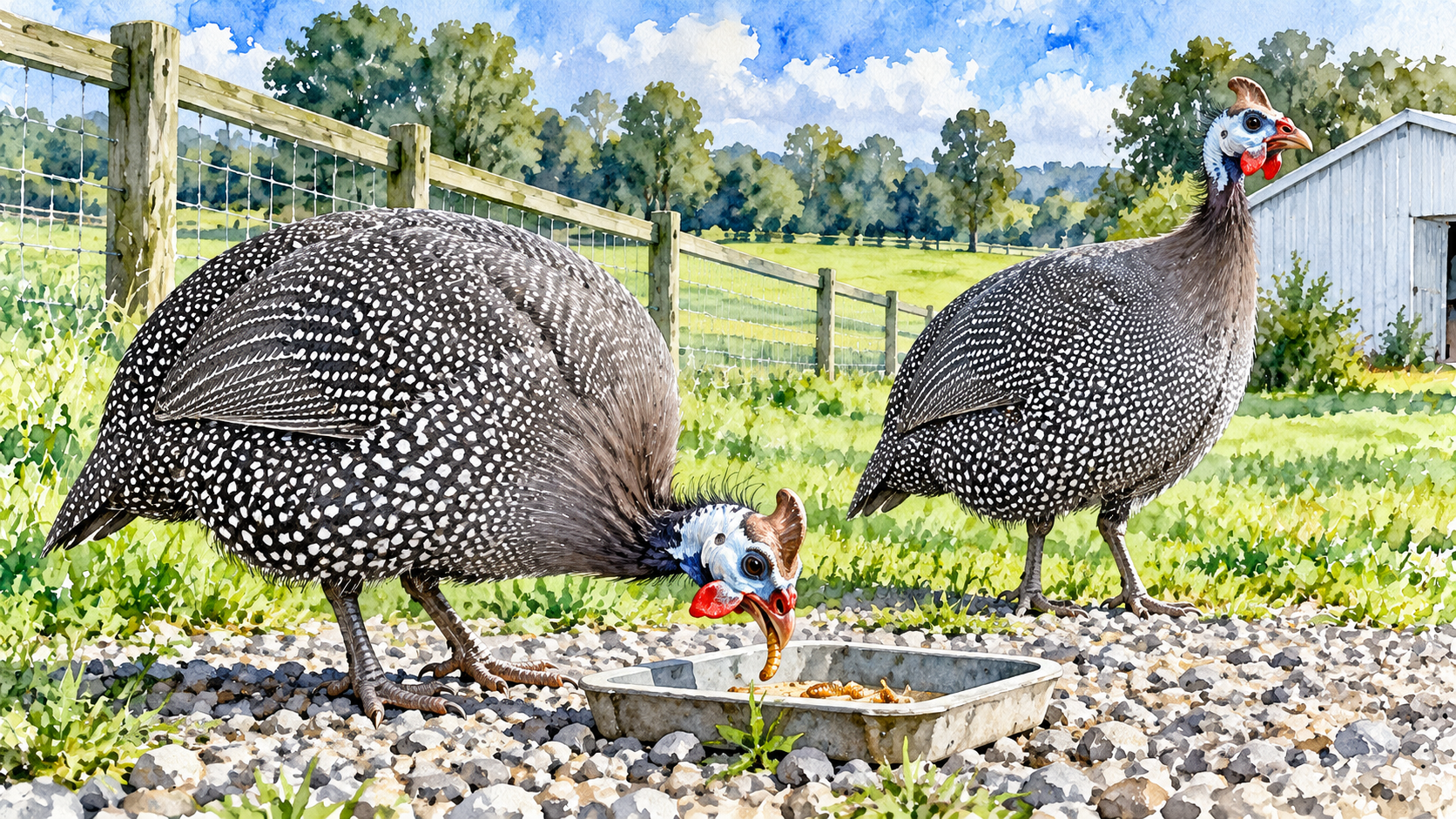
Guinea fowl can eat clean, farm-raised mealworms as a supplementary food. Yellow mealworm larvae (Tenebrio molitor) provide protein, fat, and energy, and their size and movement make them attractive to guinea fowl accustomed to searching for small invertebrates. However, mealworms should complement an appropriate poultry ration rather than replace it. Adult guinea fowl can generally handle ordinary mealworm larvae, whether live or suitably processed. The most important precautions are using healthy insects from a trustworthy source, keeping feeding areas clean, and ensuring the flock continues to receive balanced nutrition.
Are Mealworms Safe for Guinea Fowl?
Mealworms are broadly compatible with the feeding behavior of guinea fowl. These birds consume various insects and other invertebrates as part of their natural diet, as described in backyard guinea fowl management guidance.
Healthy adult birds should ordinarily be able to pick up and swallow appropriately sized yellow mealworm larvae. However, insects raised on contaminated feed or collected from unknown environments may introduce unnecessary risks.
Research on mealworm ingredients in poultry diets supports their potential nutritional usefulness, although most controlled studies concern chickens and other poultry rather than guinea fowl specifically. A review of insect-based poultry nutrition discusses these ingredients and their nutritional characteristics.
Mealworms are therefore a reasonable supplementary food, but claims that they produce particular growth, egg-laying, or health improvements in guinea fowl require stronger species-specific evidence.
What Nutrients Do Mealworms Provide?
Mealworms supply protein, essential amino acids, fat, and several minerals. Their protein contributes to tissue maintenance, while their relatively high fat content provides concentrated energy.
The yellow mealworm nutritional profile shows that nutrient levels vary according to the insects’ diet, developmental stage, and processing.
Fresh larvae also contain substantial water. Nutrient percentages expressed on a dry-matter basis should not be mistaken for the percentages present in an equal weight of living mealworms.
Mealworms generally provide much less calcium than phosphorus. This makes them unsuitable as a complete diet, particularly for laying birds that need adequate calcium to produce eggshells.
The overall nutritional characteristics of mealworms are useful for understanding their contribution, but guinea fowl still need the appropriate balance of nutrients from their regular feed.
Can Mealworms Replace Guinea Fowl Feed?
No. Mealworms cannot replace a properly balanced ration because they do not contain every required nutrient in suitable proportions.
Guinea fowl have changing nutritional requirements as they mature. The poultry extension guidance on raising guinea fowl emphasizes supplying feed suited to the birds’ age and keeping clean water available.
A flock that consumes too many supplementary insects may eat less of its complete feed, creating an imbalance despite the protein and energy supplied by the larvae.
Keep mealworms separate from the main ration so they remain a supplementary food rather than an uncontrolled replacement.
Can Adult Guinea Fowl Eat Live Mealworms?
Yes. Live mealworms can be presented to adult guinea fowl in a shallow, clean dish or on another suitable feeding surface.
Moving larvae may encourage pecking, investigation, and food-searching behavior. Some birds may approach them immediately, while others may need time to become familiar with them.
Use larvae that have been separated from their rearing material and inspected for obvious problems. The harvesting of farm-raised mealworms helps remove unwanted substrate and visibly unsuitable insects.
Avoid scattering live mealworms into dirty bedding or manure where they can become contaminated before being eaten. A controlled feeding area also makes it easier to remove leftovers.
Can Guinea Fowl Eat Dried Mealworms?
Appropriately processed dried mealworms may also be offered as a supplement, provided the product is suitable and lawful for its intended feeding use.
Drying removes water, so dried larvae contain more protein and fat per ounce than fresh mealworms. They may also have a firmer texture.
Choose products without mold, unusual odors, or signs of moisture damage. Hygienic drying of mealworms for animal feed requires adequate processing controls; simply allowing insects to decay or dry under uncontrolled conditions is not equivalent.
Live and dried mealworms should both be treated as additions to complete feed, not replacements for it.
Can Guinea Keets Eat Mealworms?
Young guinea fowl, called keets, require greater caution than adults. Newly hatched keets are small and have particularly demanding nutritional requirements.
A properly formulated starter ration should remain their primary food. Large whole mealworms may be difficult for very young keets to handle, and excessive treats can displace the nutrients needed for development.
An extension response concerning young keets recommends a suitable commercial starter diet and warns against overfeeding supplementary insects and scraps.
If mealworms are introduced as keets mature, choose insects suited to their size and feeding abilities. Do not assume that feeding methods appropriate for adults are equally appropriate for newly hatched birds.
How Should You Present Mealworms to a Guinea Fowl Flock?
Offering mealworms in a shallow dish or a clean, accessible area allows the birds to investigate them while limiting contact with contaminated ground.
Watch for crowding or aggressive competition. Guinea fowl can be active, excitable birds, and presenting an attractive food in one confined spot may encourage jostling.
Where necessary, use several feeding positions so subordinate birds can approach without being driven away. Remove uneaten larvae if they become dirty or begin to deteriorate.
Maintain clean drinking water and the flock’s normal feed throughout. Birds without suitable access to natural grit may also need appropriate insoluble grit to help the gizzard process whole foods; this does not replace complete nutrition.
What Problems Can Too Many Mealworms Cause?
Mealworms contain useful nutrients, but their fat and mineral proportions are not the same as those of a balanced guinea fowl ration.
If birds consume excessive supplementary food, they may reduce their intake of essential vitamins, minerals, and other nutrients provided by complete feed. Excess dietary energy can also contribute to unwanted weight gain.
A review of insect ingredients used in poultry diets notes that results depend on ingredient composition, inclusion level, and overall diet formulation.
These findings should not be converted into a universal guinea fowl serving amount. The evidence does not establish one suitable quantity for every flock, life stage, or feeding arrangement.
Why Does the Source of Mealworms Matter?
Mealworms raised in clean, controlled conditions have a more traceable history than insects collected from unknown grain stores, pesticide-treated areas, or spoiled materials.
Check that the larvae are correctly identified and have been raised on suitable feed. Reject dead or decomposing insects and any batch suspected of chemical or microbial contamination.
The prevention of contamination in a mealworm farm is relevant because poor rearing practices can affect the suitability of harvested insects for animal feeding.
For commercial products in the United States, biological suitability alone does not establish legal authorization. The FDA’s animal-food ingredient requirements apply according to the ingredient’s identity and intended use. Farmers should verify that a product is permitted for guinea fowl, especially when the birds produce meat or eggs for human consumption.
Questions About Feeding Mealworms to Guinea Fowl
Can guinea fowl swallow whole mealworms?
Healthy adult guinea fowl can generally handle ordinary yellow mealworm larvae. Younger or smaller birds may need a more appropriately sized food.
Are mealworms useful for laying guinea hens?
They provide supplementary protein and energy, but they cannot replace the balanced nutrition and calcium needed for egg production.
Can guinea fowl eat mealw8orms raised at home?
Yes, provided the insects are correctly identified, healthy, and raised on suitable materials in clean conditions.
Will feeding mealworms make guinea fowl less interested in their normal feed?
Excessive supplementary feeding can reduce complete-feed consumption. Mealworms should remain a small addition rather than the basis of the flock’s diet.
One thought on “Can Guinea Fowl Eat Mealworms?”