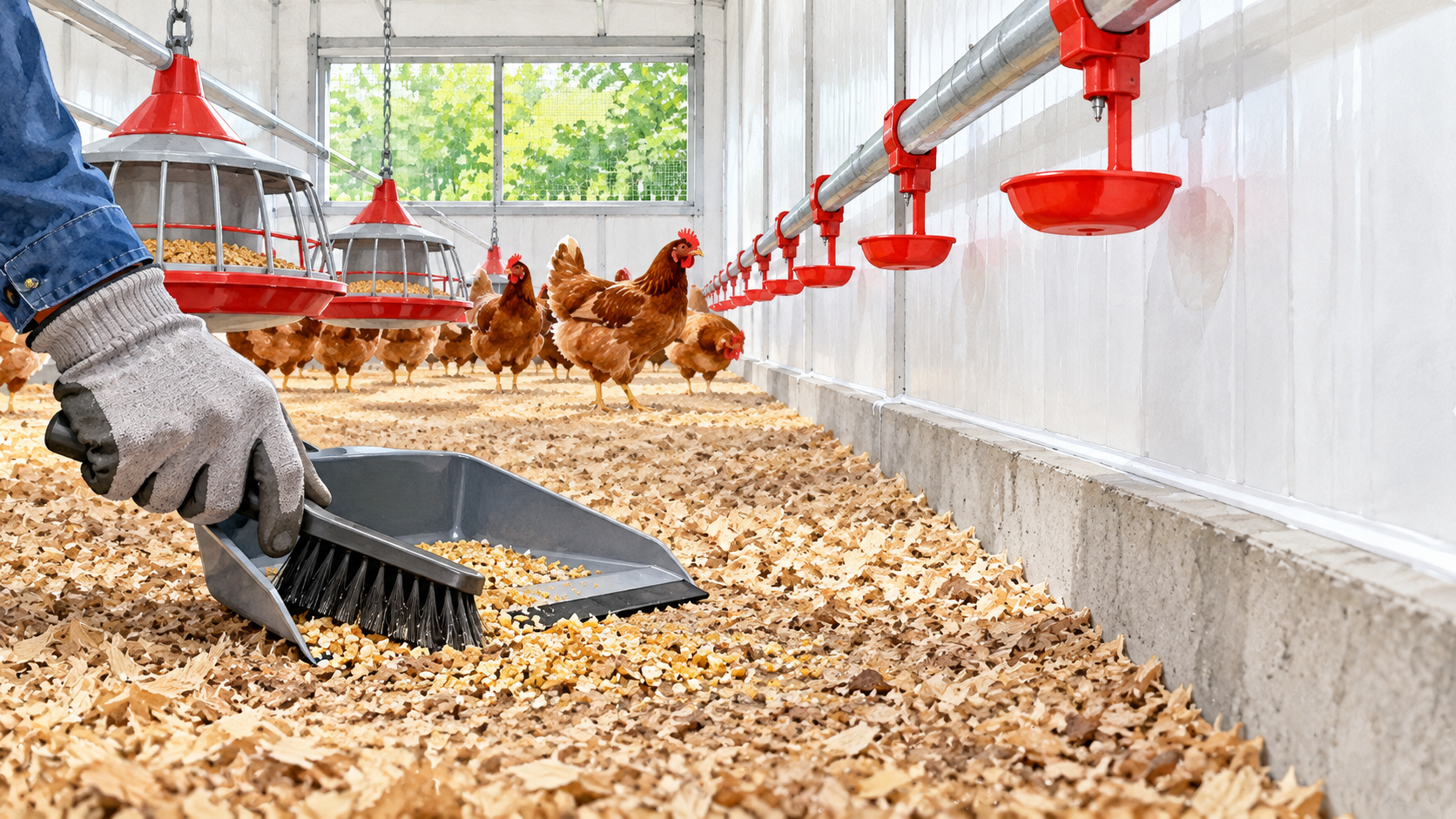
Preventing darkling beetles in poultry houses depends on controlling the conditions that allow them to survive and reproduce. Dry litter, minimal feed spillage, sound building maintenance, good biosecurity and regular inspections are the foundations of prevention. The main poultry-house pest is the lesser mealworm (Alphitobius diaperinus), a darkling beetle that develops in manure-rich litter and sheltered areas around equipment. Prevention is most effective when these conditions are managed before populations become established.
Keep Poultry Litter Dry and Manage Manure Accumulation
Lesser mealworms thrive where food, warmth and suitable moisture occur together. Damp areas beneath feeders, near drinkers and along compacted litter edges provide favorable conditions for development. Research-based poultry management guidance recommends controlling litter moisture and examining sheltered areas.
Remove localized manure buildup and wet, caked bedding before it spreads. Pay particular attention to corners, wall edges and areas beneath equipment, where loose organic material may accumulate. Deeper layers also need attention because larvae can remain concealed below the surface.
Between production cycles, evaluate whether litter replacement is necessary. Repeatedly adding fresh bedding over contaminated material can preserve favorable conditions underneath. The appropriate removal schedule depends on housing and flock management.
Prevent Water Leaks and Control Excess Humidity
Water leakage creates damp areas that encourage beetle development. Inspect nipple drinkers, water lines, connection points and waterers for dripping, overflowing or incorrect pressure. Repair leaks promptly and replace wet bedding.
Ventilation helps remove humidity from poultry housing. Poultry housing recommendations identify water management and dry litter as important ways to limit lesser mealworms.
Ventilation adjustments must preserve poultry comfort. Increasing airflow should not chill chicks or create excessive drafts. Review fan performance, air inlets and condensation whenever wet spots persist.
Minimize Feed Spillage and Protect Stored Poultry Feed
Spilled feed supplies food for developing darkling beetles. Grain fragments collect beneath troughs, feeding lines and storage equipment. Agricultural entomology guidance identifies spilled animal feed as an important attraction.
Adjust feeders to reduce waste, clean accumulated feed, inspect dispensing mechanisms and remove damp residues. Avoid leaving unused feed scattered after equipment maintenance.
Store feed in secure, dry bins or containers. Inspect storage areas for spilled grain, damaged packaging and insects. Consistent feed-storage protection reduces opportunities for pests to establish.
Seal Building Gaps and Maintain Poultry-House Materials
Darkling beetle larvae can enter cracks, insulation and sheltered structural spaces while seeking places to pupate. Poultry-house building guidance identifies framing joints and insulation as important inspection locations.
Seal accessible cracks with suitable materials. Repair damaged panels, close unnecessary openings around pipes and inspect floor-wall joints. Durable barriers can protect susceptible structural areas where appropriately installed.
Inspect accessible insulation edges and repair deteriorating coverings. These measures reduce shelter and help prevent structural damage associated with litter beetles.
Strengthen Biosecurity Between Poultry Houses and Flocks
Darkling beetles can move between agricultural buildings in equipment, contaminated litter and transported materials; adults may disperse independently. Avoid sharing dirty equipment and clean tools and transport carts before relocation.
Manage used bedding so insects cannot escape into clean storage. Agricultural biosecurity guidance identifies equipment sharing and contaminated material as concerns for beetle movement.
Between flocks, remove organic debris and clean before restocking. Follow USDA poultry biosecurity practices including controlled access and clean equipment, reducing opportunities for beetles and contaminants to circulate.
Inspect Poultry Houses Regularly for Early Beetle Activity
Darkling beetles often remain hidden until populations become noticeable. Adults and larvae concentrate beneath feeders, around support posts, near walls and in suitable litter. Lesser mealworm management recommendations emphasize consistent inspection.
During routine checks, safely lift movable equipment, inspect sheltered litter and look for larvae and adults. Familiarity with early signs of darkling beetles helps distinguish them from unrelated insects.
Record where insects appear and whether activity increases. A structured beetle monitoring program allows consistent comparisons without presuming one universal infestation threshold.
Establish a Preventive Maintenance Routine Throughout the Production Cycle
Daily tasks include checking drinkers for leaks, removing feed spills and identifying damp litter. Weekly inspections can cover concealed equipment edges and building joints. Incorporate these into existing poultry-house maintenance.
At flock turnover, assess litter, feeders, ventilation and repair needs before restocking. Keep tools separate from clean feed and prevent removed litter from returning insects to housing. Integrated pest management principles favor prevention and observation before escalation.
Prevention cannot guarantee no beetles will enter. If repeated inspections reveal a growing population, an established infestation may require comprehensive management rather than housekeeping alone.
Common Questions About Preventing Poultry-House Beetles
Can darkling beetles appear in a clean poultry house? Yes. Adults can enter from outside or arrive in contaminated materials. Cleaning reduces establishment opportunities, not every entry route.
Does fresh bedding prevent beetles? Dry fresh bedding can help, but insects may survive in structural gaps or retained litter.
Will better ventilation alone prevent beetles? No. Feed, shelter and existing insects may support survival despite improved humidity control.
Should prevention continue when no beetles are visible? Yes. Regular checks are most valuable before numbers grow.
One thought on “How to Prevent Darkling Beetles in Poultry Houses”