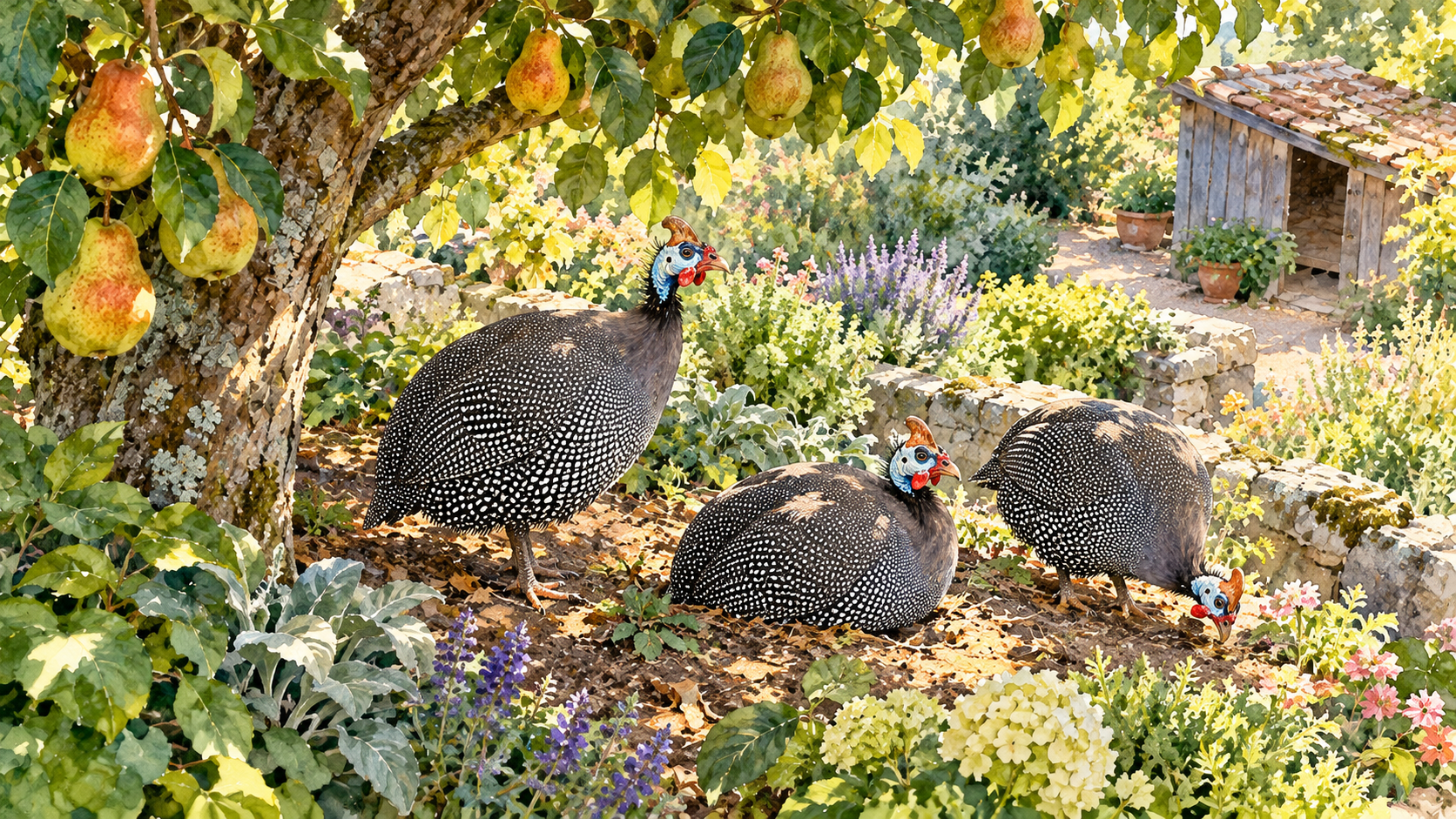
Guinea fowl can live approximately 10–15 years, particularly when protected from predators, provided with suitable shelter, and maintained in good health. Some individuals may live longer, but there is limited scientific evidence establishing a dependable average lifespan for domestic guinea fowl. A bird kept in a secure backyard enclosure may survive substantially longer than one allowed to roam freely through areas with frequent predator activity.
Lifespan estimates should not be confused with the age most birds actually reach. Although helmeted guinea fowl are sometimes reported to live 10–15 years, those figures are based largely on observations and anecdotal accounts rather than comprehensive survival records. Their maximum longevity has not been firmly established, and the number of years a particular bird survives depends heavily on its circumstances.
Guinea Fowl Lifespan in Different Environments
The conditions under which guinea fowl are kept can produce substantial differences in survival. Birds living in protected enclosures face different hazards from those spending their days and nights outdoors without dependable shelter.
| Living conditions | Lifespan expectations |
|---|---|
| Protected backyard flock | May reach 10–15 years with favorable conditions |
| Free-ranging flock with secure nighttime housing | Potentially long-lived, but exposed to greater daytime hazards |
| Unrestricted flock roosting outdoors | Survival is less predictable because of predation and environmental exposure |
| Wild helmeted guinea fowl | Reported maximum ages vary; reliable average survival figures are limited |
| Captive guinea fowl in managed collections | Some facilities report life expectancies around 12 years |
These figures are not scientifically established averages for each management system. A captive helmeted guinea fowl life expectancy of approximately 12 years illustrates the longevity possible under managed conditions, but it cannot be used to predict the lifespan of every domestic flock.
Wild birds experience natural sources of mortality that may be less common in protected captivity, including predators, environmental exposure, and competition for resources. Domestic birds face additional risks associated with human management, such as unsuitable housing, inadequate nutrition, and accidental injury. Consequently, domestication does not automatically guarantee a longer life.
Predation Can Shorten a Guinea Fowl’s Life Considerably
Predators are among the most important threats to guinea fowl allowed to move freely around rural properties. Depending on the region, foxes, coyotes, raccoons, domestic dogs, and birds of prey may attack guinea fowl. Their ability to run, fly, and recognize unusual activity does not make them immune to predation.
Guinea fowl commonly forage across open ground and may move considerable distances from their shelter. Their tendency to roam beyond their immediate surroundings can expose them to predators outside the area regularly monitored by their keeper. A bird may survive for years without encountering a serious threat, while another may be killed during its first season outdoors.
Nighttime is especially important because guinea fowl may attempt to roost in trees or other elevated locations. Although an elevated perch can offer protection against some ground predators, it does not provide dependable security against climbing animals, aerial predators, or severe weather. Secure nighttime housing substantially reduces exposure to several predictable hazards.
The use of sheltered nighttime accommodation for guinea fowl is preferable to leaving birds entirely responsible for finding safe places to sleep. A properly secured building should prevent predators from entering through doors, ventilation openings, damaged siding, and gaps near the foundation. The broader requirements for protecting guinea fowl from predators depend on local wildlife, enclosure construction, and whether birds are permitted outside during the day.
Predation also affects how survival figures should be interpreted. A bird killed by a predator at two years old has not reached the end of its biological lifespan. Its death reflects an environmental hazard rather than the natural limit of the species’ longevity.
How Housing and Weather Influence Survival
Guinea fowl can tolerate a range of environmental conditions, but prolonged exposure to unsuitable weather can undermine their health. Cold temperatures, excessive heat, driving rain, damp bedding, and poorly ventilated housing can become serious welfare concerns, particularly when several conditions occur together.
A sheltered bird should be able to escape wind and precipitation while remaining in an environment with adequate airflow. Excessive moisture inside poultry housing contributes to wet litter and deteriorating air quality. The importance of dry bedding, ventilation, shelter, and sufficient space is particularly relevant to birds kept indoors for extended periods.
Cold weather requires more than simply closing every opening in the coop. Restricting ventilation excessively can allow humidity and irritating gases to accumulate, while poorly designed heaters introduce additional fire and injury risks. Maintaining dry shelter, suitable roosts, access to unfrozen drinking water, and protection from drafts is more important than attempting to keep the building unusually warm. The winter management of guinea fowl must account for local conditions rather than assuming that all birds respond identically to freezing temperatures.
Hot weather presents different risks. A bird exposed to intense sunlight without adequate shade and drinking water may become overheated or dehydrated. Overcrowding can worsen these conditions by restricting movement and limiting access to cooler areas.
Housing should therefore support normal behavior and protect birds from foreseeable hazards without imposing unnecessary confinement stress. A secure coop is beneficial only when it also provides appropriate environmental conditions and sufficient room for its occupants.
Nutrition, Disease Prevention, and Long-Term Health
Guinea fowl depend on appropriate nutrition throughout their lives. Their dietary requirements change with age, and a ration suitable for newly hatched keets is not necessarily appropriate for mature birds. Long-term dietary deficiencies or an unbalanced feeding program can compromise physical condition, while excessive weight gain may create additional health concerns.
Adult guinea fowl need access to nutritionally suitable feed, clean drinking water, and a feeding arrangement that prevents individual birds from being persistently excluded. Their normal adult dietary requirements should be met consistently, regardless of how much natural food they obtain while foraging. Access to insects, seeds, and vegetation can contribute to their diet but does not guarantee nutritional adequacy.
Disease prevention is another significant factor in long-term survival. Guinea fowl can develop infectious and noninfectious health problems, and their reputation for hardiness should not be interpreted as immunity to poultry diseases. The risk of disease transmission through wild birds, contaminated equipment, and other animals makes routine biosecurity important even in small backyard flocks.
Wildlife access to feed and water can introduce additional hazards. Keeping feed protected, reducing opportunities for wild birds to enter poultry areas, and limiting contact with potential wildlife sources of infection help reduce preventable disease exposure. New birds should also be managed carefully before introduction to an established flock.
Changes in appetite, activity, breathing, droppings, or body condition deserve attention regardless of the bird’s age. Persistent illness should not be dismissed as ordinary aging, particularly when several birds become affected. Prompt veterinary assessment can identify problems that might otherwise become life-threatening. The range of health problems affecting guinea fowl means no single symptom can reliably establish a diagnosis.
Does Free-Ranging Reduce Guinea Fowl Lifespan?
Free-ranging gives guinea fowl opportunities to explore, forage, and engage in normal outdoor behavior, but it also exposes them to hazards that may be reduced through controlled access. The effect on lifespan depends on the property and the amount of protection provided.
A flock ranging across secure, supervised surroundings and returning to predator-resistant shelter each evening has a different risk profile from birds left outdoors continuously. The second group may encounter more threats from predators, roads, severe weather, and unfamiliar animals. These exposures can shorten survival even when the birds appear physically healthy.
The differences between free-ranging and confined guinea fowl extend beyond simple access to open space. A confined system can reduce some dangers but must still accommodate movement, social interaction, ventilation, and opportunities for normal behavior. Poorly managed confinement can introduce stress, injuries, and sanitation problems.
Owners can reduce avoidable exposure by establishing dependable nighttime routines and providing protected outdoor areas where appropriate. However, no management system completely eliminates risk. The most suitable arrangement balances the birds’ behavioral needs with the hazards present on the property.
Do Guinea Fowl Show Signs of Aging?
Older guinea fowl may develop gradual changes in activity, mobility, body condition, or resilience, but there is little published research establishing a predictable sequence of age-related changes specifically for domestic helmeted guinea fowl. A bird becoming less active is not necessarily experiencing normal aging, and changes should be evaluated in the context of its previous behavior and overall health.
Some older birds may spend more time resting or show reduced ability to negotiate difficult terrain. Others may remain active well into later life. Individual variation is substantial, and neither body size nor plumage color provides a dependable indication of chronological age.
Keeping accurate hatch dates and individual records is more useful than attempting to estimate age from appearance alone. A simple record of body condition, movement, appetite, and changes requiring veterinary attention can help distinguish gradual changes from an abrupt deterioration.
The routine cleaning and maintenance of poultry housing remains important as birds age because older individuals may be less able to compensate for adverse environmental conditions. Comfortable resting places, easy access to food and water, and surfaces that minimize slipping or injury can help maintain welfare when mobility becomes limited.
Veterinary evaluation is appropriate when an older guinea fowl develops persistent weakness, unexplained weight loss, difficulty breathing, inability to stand normally, or other significant changes. Age alone should never be used to explain away potentially treatable illness.
Additional Questions About Guinea Fowl Longevity
Can guinea fowl live for 20 years?
A lifespan of 20 years is sometimes mentioned in descriptions of helmeted guinea fowl, but reliable records supporting that age are limited. The species’ documented maximum longevity remains uncertain, so 20 years should be treated as an exceptional possibility rather than a normal expectation.
Do male guinea fowl live longer than females?
There is insufficient species-specific evidence to establish that one sex consistently lives longer. Reproductive demands, injuries, individual health, and environmental exposure may influence survival, but a dependable male-versus-female lifespan difference has not been demonstrated.
Can a guinea fowl live alone for many years?
Guinea fowl are social birds that normally associate with other members of their species. A surviving bird may remain alive after losing its flockmates, but prolonged isolation is not an ideal welfare arrangement. Suitable companionship and social stability are important considerations when caring for a lone guinea fowl.
Can you tell how old a guinea fowl is by its feathers?
Not reliably once the bird is mature. Juvenile and adult plumage can help distinguish broad developmental stages, but the feathers of a five-year-old guinea fowl do not necessarily differ visibly from those of a younger adult. Hatch records or other documented age information provide a much more dependable answer.