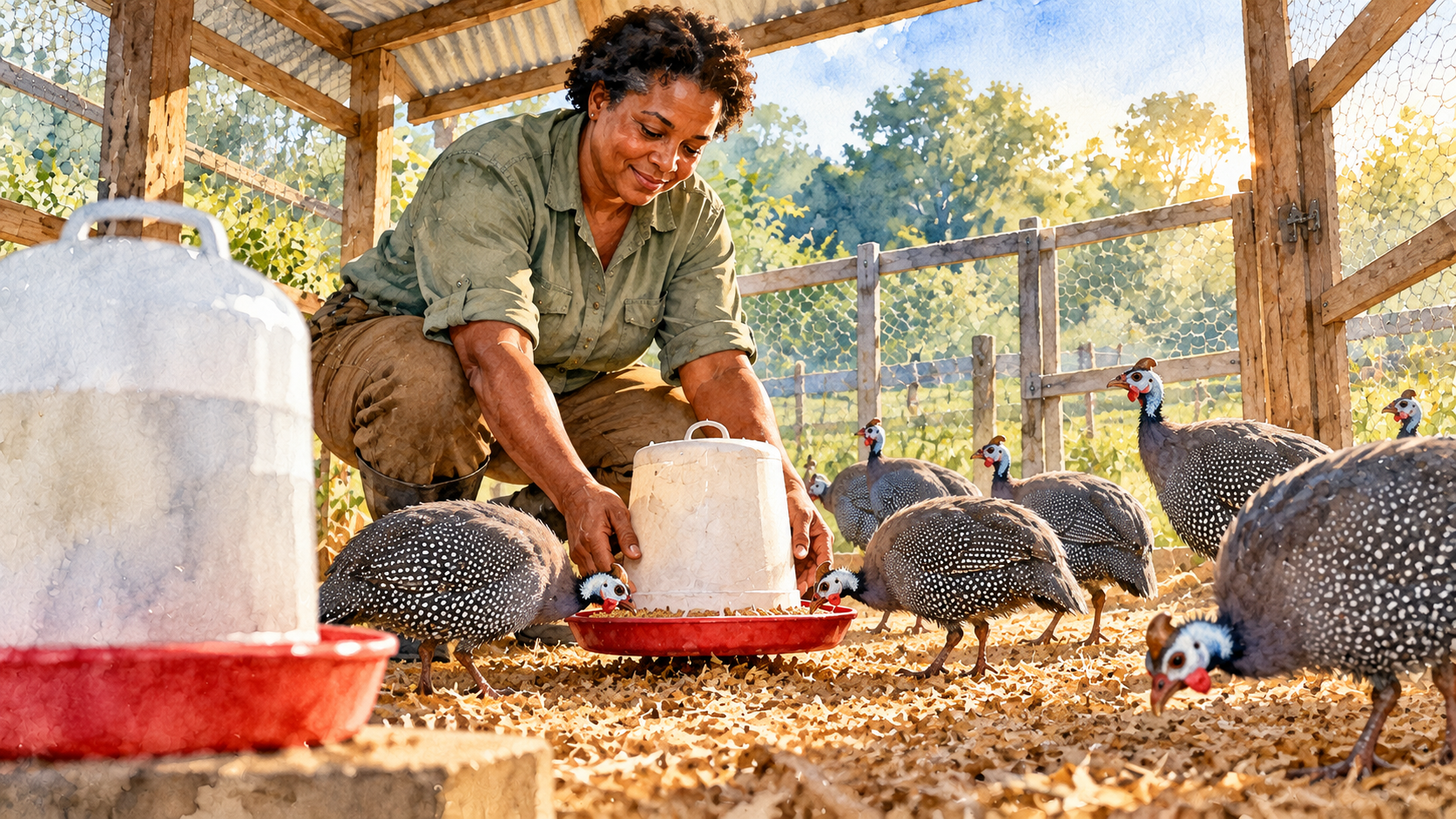
Raising guinea fowl on a farm begins with choosing a suitable group of birds, preparing secure housing, arranging appropriate feed, and establishing a routine before the flock arrives. Unlike poultry that readily settles into a small backyard, guinea fowl can be strong flyers, active foragers, and persistent roamers. They also produce loud alarm calls when disturbed, so their behavior should influence where they are kept and how their first weeks are organized.
Beginners are generally better off starting with a small group of healthy guinea fowl and expanding only after gaining experience. Young birds, called keets, require a properly heated brooder, while older birds need secure accommodation and time to become accustomed to their new surroundings. Neither approach requires a large commercial operation, but both demand preparation before the first birds arrive.
Decide Whether Your Farm Is Suitable for Guinea Fowl
Before purchasing birds, examine the property from the perspective of a flock that may not remain wherever it is released. Guinea fowl spend considerable time moving across the ground, but they can also fly over ordinary fences, settle on elevated structures, and wander beyond the area where they are fed. Farms with nearby roads, densely occupied neighboring properties, or unrestricted access to predator habitats may face greater management difficulties than isolated properties with secure poultry facilities.
Noise deserves equal consideration. Guinea fowl produce conspicuous calls in response to disturbances, and these vocalizations can carry beyond the farm boundary. Their tendency to make loud alarm calls may be acceptable on a rural property but troublesome where houses are close together. The fact that a location permits chickens does not automatically mean that guinea fowl are allowed under the same conditions.
Check local zoning ordinances, nuisance provisions, property restrictions, and any applicable poultry limits before buying birds. Depending on the jurisdiction, rules may address animal numbers, setbacks, agricultural use, or the location of shelters. Backyard guinea fowl keeping requires particular attention to property boundaries because the birds may leave areas that appear sufficiently enclosed for less mobile poultry.
The intended purpose of the flock should also be clear. Guinea fowl may be kept for eggs, meat, ornamental interest, or their natural foraging behavior, but these activities can require different facilities and management arrangements. Choosing birds because they might eat insects is not sufficient justification for keeping them if the property cannot accommodate their welfare and behavior.
Choose the Right Birds for Your First Flock
Three common starting options are newly hatched keets, older juvenile birds, and adults. Each involves a different balance of purchase cost, equipment requirements, and management experience.
| Starting option | Main advantage | Principal consideration |
|---|---|---|
| Day-old keets | Opportunity to raise birds from an early age | Require controlled brooder conditions and close monitoring |
| Older, fully feathered juveniles | Avoid the most demanding early brooding period | Still need protection and time to settle |
| Adult guinea fowl | Mature appearance and established physical development | May be difficult to acclimate after relocation |
Keets allow the keeper to establish regular feeding and handling routines from the beginning, but they are especially vulnerable to chilling, dampness, and unsuitable brooder conditions. Adults remove the need for initial brooding, although their familiarity with a previous property can make relocation challenging. The choice between guinea keets, adults, and hatching eggs should account for available equipment, experience, and the time someone can devote to the birds.
A small flock of approximately six birds can be a manageable starting point where facilities and local rules permit, although this is a planning example rather than a biological minimum or universal ideal. Guinea fowl are social animals, so buying a solitary bird is not a suitable default. The number of guinea fowl kept together should reflect the available space, intended flock structure, and ability to maintain compatible birds.
Buy from a breeder or hatchery that can provide useful information about the birds’ age, origin, health, and any relevant testing. Participation in the National Poultry Improvement Plan provides a framework for specified poultry disease testing and certification, although participation does not guarantee that an individual bird is free from every illness. Interstate purchases may also be subject to state entry or testing requirements.
Avoid choosing birds solely because they are unusually inexpensive or have an attractive feather color. Healthy activity, normal breathing, clean surroundings, and dependable seller records are more useful considerations when selecting guinea fowl before purchase.
Prepare the Coop and Outdoor Area Before Arrival
The adult accommodation should be ready even if the first birds will initially live in a brooder. Guinea fowl need protection from predators, precipitation, excessive heat, and unsuitable cold-weather conditions, along with a secure place to sleep. A suitable building may be a dedicated guinea fowl house or a properly adapted section of an existing farm structure.
The accommodation needs dependable latches, intact walls, secure openings, adequate ventilation, dry flooring, and perches suitable for the birds. General small-flock guidance suggests at least 2–3 square feet of indoor floor area per confined guinea fowl, but that is a basic reference rather than a generous allowance for continuous confinement. Birds kept indoors for prolonged periods need sufficient additional space and opportunities for normal movement. The amount of coop space guinea fowl require also depends on flock size and access to an outdoor area.
A covered enclosure is valuable during acclimation because ordinary fencing cannot reliably contain birds capable of flight. Strong mesh should prevent escape while resisting predator entry, and the enclosure should not contain exposed wire ends, unstable fittings, or openings that could trap a bird. Whether using a new building or adapting an existing one, the basic requirements of a guinea fowl coop should be addressed before purchasing the flock.
Pay particular attention to locations that attract wildlife. Feed spills, accessible drinking water, damaged screens, and gaps beneath doors can encourage unwanted visitors. Keeping wild birds and other animals away from poultry feed and housing also reduces opportunities for disease exposure.
Choose the housing location with future access in mind. Feed deliveries, cleaning, daily inspections, and emergency handling should be possible without chasing birds across the property or repeatedly entering other livestock areas.
Arrange Feed, Water, and Essential Supplies
The first feeding decision depends on the age of the birds. Newly hatched keets have different nutritional requirements from older growers and mature guinea fowl, and an ordinary adult chicken ration should not automatically be used for every stage of guinea fowl development.
Young keets are commonly started on an appropriate unmedicated game-bird or turkey starter containing approximately 24–26% crude protein. The protein requirements described for young guinea fowl decrease as the birds mature, making it important to arrange feed appropriate to their changing developmental stage. Medicated poultry products should not be used without confirming their suitability and legal labeling for guinea fowl; a veterinarian familiar with poultry can advise where a suitable product is unavailable.
For adults, obtain an appropriate complete ration rather than assuming that free-ranging will meet every nutritional requirement. The normal feeding needs of adult guinea fowl differ from those of rapidly developing keets and may also change with reproductive status. Feed should be stored in a dry, pest-resistant container to prevent spoilage and contamination.
Every flock also needs accessible drinking water, sturdy feeders, bedding, cleaning equipment, and a way to separate a bird safely if illness or injury occurs. Keets require drinkers designed to reduce the risk of becoming wet, trapped, or submerged. Adults need containers that remain stable and can be cleaned without difficulty.
The routine cleaning of poultry housing and equipment should be planned before the birds arrive, including how dirty bedding will be removed and where used materials will be stored or disposed of. Feeders and drinkers should be positioned to limit contamination by droppings.
Set Up a Brooder if Starting With Keets
A brooder provides the controlled environment that newly hatched guinea fowl need before they can regulate their body temperature effectively. It must offer a safe source of warmth, dry bedding, adequate ventilation, suitable feed and water, and enough room for the keets to move away from the heated area.
A commonly published starting guideline is approximately 95°F (35°C) at chick level during the first two weeks, followed by gradual reductions of about 5°F per week as the birds develop. The precise arrangement depends on the heating equipment and surrounding conditions. Keet behavior is an important indicator: birds huddling beneath the heat source may be too cold, while those persistently avoiding it may be overheated. A brooder should provide a temperature gradient rather than exposing every bird to the same heat.
Use equipment specifically intended for poultry brooding and install it according to the manufacturer’s instructions. Heating equipment must be securely mounted, protected from contact with bedding, and connected safely to reduce fire and burn risks. Damp litter should be replaced promptly because newly hatched keets are particularly vulnerable to chilling when wet.
The brooder also needs secure sides and a suitable covering or lid as the birds become increasingly mobile. Provide enough ventilation to prevent stale, humid conditions without exposing the keets to direct drafts. The care requirements of guinea keets become more demanding when problems such as chilling, dehydration, crowding, or poor bedding hygiene occur.
Prepare and test the entire setup before collecting or receiving the birds. A functioning heat source is not sufficient unless the brooder also maintains safe conditions throughout the area the keets can occupy.
Organize the First Weeks Around Three Stages
The early weeks are easier to manage when each stage has a defined purpose. The exact timing depends on the age of the birds, their development, weather conditions, and the facilities available.
| Stage | Immediate priorities |
|---|---|
| Before arrival | Verify housing, feed, water, equipment, supplier details, and legal requirements |
| First days | Confirm that birds are eating, drinking, comfortable, and behaving normally |
| Following weeks | Maintain hygiene, monitor development, adjust facilities, and establish consistent routines |
| Before outdoor release | Confirm adequate feathering, suitable weather, secure surroundings, and familiarity with the home area |
Arrival and the First 48 Hours
Transfer birds into their prepared accommodation calmly and without unnecessary handling. Keets should enter a preheated brooder, while older birds should be placed directly into secure housing with feed and water available. Allow them to settle while checking that every bird can reach the essentials.
Observe the group repeatedly during the first day. A bird remaining isolated, unable to stand normally, showing respiratory difficulty, or refusing food and water requires prompt attention. Newly arrived birds may temporarily behave differently because of transport and unfamiliar surroundings, but significant or persistent signs of illness should not be dismissed as ordinary relocation stress.
If poultry are already present on the farm, keep the newcomers separate rather than immediately combining them. Maintaining new arrivals apart from an established flock for at least 30 days is an important disease-prevention measure. Separate equipment and footwear routines help prevent pathogens from moving between groups.
Establishing a Predictable Daily Routine
During the following weeks, check feed and water availability, bedding condition, enclosure security, and the behavior of individual birds every day. Establish regular times for opening and closing housing, cleaning, and inspections. Consistency makes it easier to notice when something changes.
Keep a simple written record of the flock’s arrival date, source, age, feed changes, unusual observations, and any veterinary concerns. This is especially useful when raising keets because development and feeding requirements change over time. The information can also help a veterinarian assess the history of a bird that becomes ill.
Biosecurity should be routine rather than something introduced only after disease appears. Limiting unnecessary visitors and using clean, dedicated footwear reduces opportunities for contamination through people, clothing, and shared equipment.
Introducing the Flock to Outdoor Space
Older guinea fowl should not be released immediately after arriving at an unfamiliar farm. They need time to associate the new accommodation with shelter, food, water, and other flock members. Keeping newly acquired adults securely enclosed for an initial settling period of approximately one to two weeks is commonly recommended, but some birds may need longer and no duration guarantees that they will remain nearby.
For birds raised from keets, outdoor access should be introduced only when their feathering, health, weather conditions, and enclosure security make the transition appropriate. Begin with protected access rather than unrestricted roaming. Abruptly moving incompletely feathered birds into cold, wet conditions can create avoidable welfare risks.
A flock intended for eventual free-ranging should first become familiar with its outdoor enclosure and nighttime accommodation. The timing and method of letting guinea fowl free-range must account for the birds’ ability to fly, nearby roads, predator activity, and the possibility that they will wander beyond the property.
Plan for the Expenses That Continue After Purchase
The price of the birds is only one part of getting started. Housing materials, covered runs, brooding equipment, feed, bedding, predator-resistant fittings, veterinary services, and replacement equipment can account for a substantial share of the initial investment.
Some expenses are one-time purchases, while others continue for the life of the flock. Feed and bedding must be replenished, facilities require maintenance, and unexpected veterinary or repair costs can arise. The ongoing cost of raising guinea fowl also changes with local feed prices, management choices, and flock size.
A small initial flock allows a beginner to evaluate actual consumption, housing performance, and labor requirements before making larger commitments. It also gives the keeper an opportunity to correct problems without exposing a substantially larger group to the same conditions.
Questions About Starting Your First Guinea Fowl Flock
What is the best time of year to start raising guinea fowl?
Spring or early summer can be convenient for beginners in many parts of the United States because milder weather may simplify the transition from indoor brooding to outdoor accommodation. However, keets still require appropriate supplemental heat, and local conditions are more important than the calendar alone. Fully feathered birds can be acquired at other times when suitable facilities are available.
Do you need a rooster or male guinea fowl to start a flock?
A male is not required simply to keep guinea fowl, and females can lay eggs without one. Fertile eggs require mating, so a breeding flock has different requirements from a group maintained without reproduction as an objective. The intended purpose should determine the sex composition rather than assuming that every flock needs a male.
Can you start with guinea fowl if you already have chickens?
Yes, but the presence of chickens does not eliminate the need for separate planning. Guinea fowl and chickens can differ in behavior, feeding requirements, and social interactions. New birds should initially remain separate for disease-prevention purposes, and keeping guinea fowl with chickens requires assessment of compatibility and available space.
How much time should a beginner spend checking guinea fowl each day?
There is no universal daily time requirement. Newly hatched keets need more frequent observation than healthy adults in established housing, especially while heat, feeding, and drinking routines are being stabilized. Every flock requires dependable daily care, and the keeper should be able to respond promptly to equipment failure, injuries, illness, or predator activity.