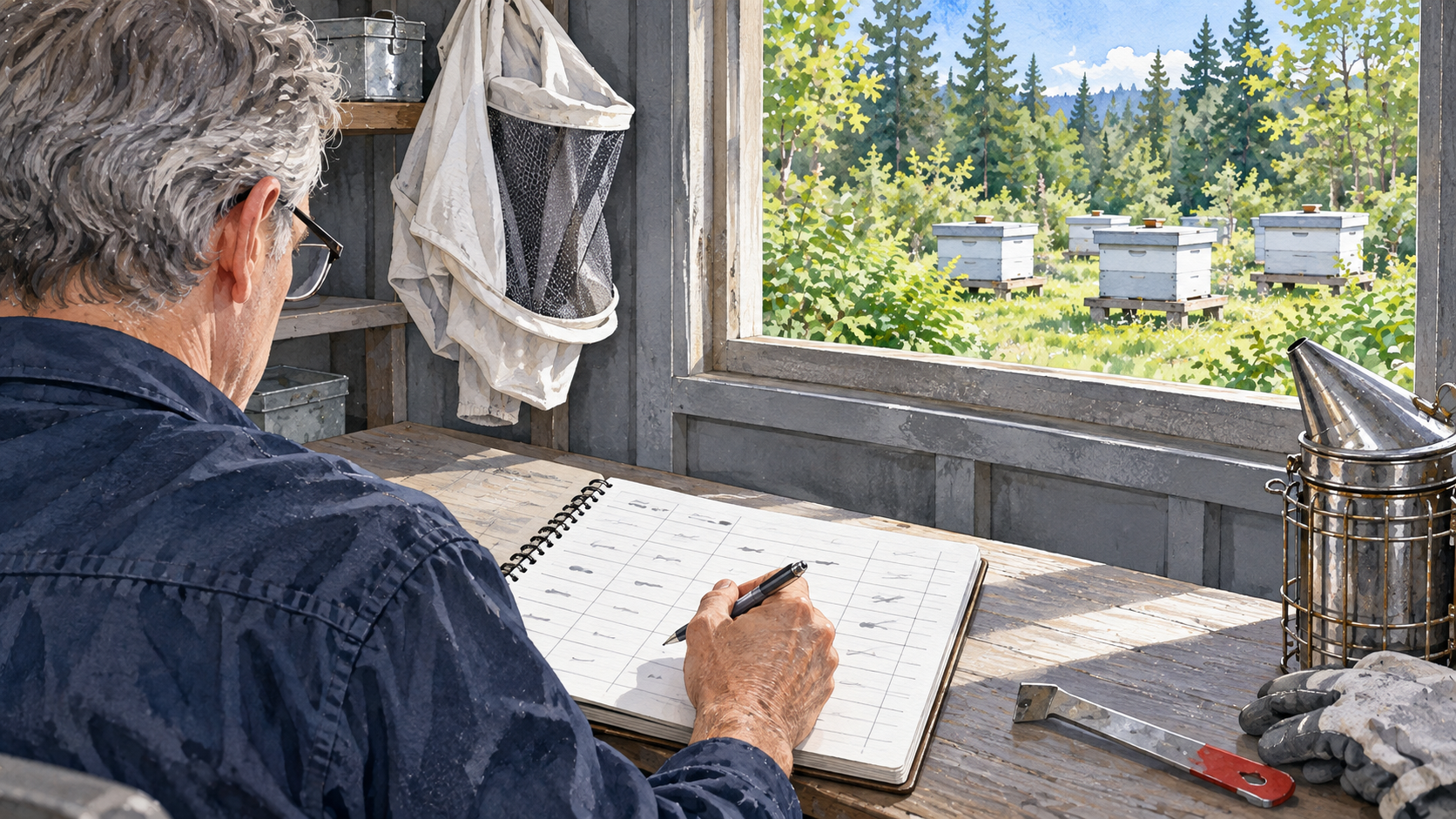
Inspect a healthy honey bee colony about every one to two weeks during rapid spring buildup, roughly every two weeks through much of the active season, and less often when conditions are stable or opening the hive would cause more harm than benefit. During a period of strong swarm risk, a return within seven to ten days may be appropriate. In cold winter weather, routine brood-nest inspections usually stop, but outside checks continue.
These are starting intervals, not universal rules. A new package with an unreleased queen, an expanding spring colony, and an established hive preparing for winter have different deadlines. The useful question is how soon something important could change inside the colony and whether you need to open it to find out. This guide concerns managed Apis mellifera colonies on US farms and homesteads, not a prescribed calendar for every climate.
How Often to Inspect a Hive by Season
A seasonal schedule is useful for planning, provided it remains flexible. The active-season guidance on colony inspections describes a broad range of roughly ten days to three weeks, while spring beekeeping guidance uses about two weeks in spring and early summer and lengthens the interval after the main nectar flow. These differences reflect changes in colony growth, swarming pressure and local conditions, not a single nationally mandated schedule.
| Colony period | Practical planning interval | Why the next visit matters |
|---|---|---|
| Early spring, before rapid buildup | A purposeful inspection on a suitable warm day, then a date based on food, brood and weather | Overwintered colonies may need attention while cold spells still threaten brood and stores |
| Rapid spring buildup and local swarm season | About 7–14 days; consider the shorter end when swarm pressure is high | Queen-cell development, brood expansion and available space can change quickly |
| Summer with sustained forage and a stable colony | Often around 10–21 days, adjusted to the hive’s condition | Track brood, stores and crowding without dismantling the hive unnecessarily |
| Summer nectar dearth or unusually defensive conditions | Favor brief, purpose-specific checks; adjust timing to the risk | Prolonged openings can encourage robbing and disrupt a colony already under pressure |
| Late summer and fall | Often about 2–4 weeks for a stable hive, with additional deadline-based checks | Food stores, colony strength and winter readiness still need verification |
| Cold winter in climates where bees cluster | No routine frame-by-frame inspections | Watch the entrance and monitor weight or stores with minimal disturbance |
These intervals are planning ranges, not guarantees. Urgent concerns may require an earlier check; unsuitable weather may delay a routine one. A detailed beekeeping calendar addresses seasonal management tasks; this article focuses on deciding when to open the hive again.
Shorten the Interval During Spring Buildup and Swarm Season
An overwintered colony can grow rapidly once flowers supply nectar and pollen. Within a relatively short period, the brood nest may become congested, room for egg laying may decrease, and the colony may begin raising new queens. Spring inspections therefore have a tighter deadline than routine checks on a stable colony later in the season.
A schedule near every seven to ten days gives a beekeeper more opportunities to notice changes while they can still be managed. An interval around fourteen days also appears in published spring inspection recommendations, but it leaves less room for delay if queen cells are developing. Neither interval prevents swarming by itself. Effective management depends on correctly interpreting what is observed and responding appropriately. The specific warning signs are covered in how to tell if a beehive is about to swarm.
A colony with a growing adult population, substantial incoming nectar and little unused comb may need a shorter follow-up than a modest colony with open brood space. Conversely, an empty queen cup alone is not proof that a swarm is imminent. Avoid cutting queen cells automatically or assuming all cells mean the same thing. If queen status is uncertain, get experienced help before making changes that could leave the colony without a viable queen.
Let Summer Forage and Colony Condition Set the Pace
During a productive nectar flow, established colonies may be collecting food rapidly and filling available comb. That can warrant a timely check of usable space even when the bees are bringing in pollen and the entrance looks busy. A stable colony with adequate room, steady laying and no unresolved health concern may instead manage on a longer interval. In either case, use the previous inspection to decide what must be reassessed and how soon.
The summer management recommendations in the regional beekeeping calendar specifically connect decisions with nectar conditions, colony health and Varroa monitoring. A calendar written for Utah cannot simply be moved to a different state, but the underlying reasoning applies: forage and colony condition can change the next inspection date.
A nectar dearth brings a different risk. When little nectar is available, opening a hive for a long time, exposing comb or spilling feed can attract robber bees from nearby colonies. A practical colony-inspection curriculum describes robbing signs around entrances and hive seams and the value of limiting open-hive time. If robbing is active, do not continue a routine full inspection merely to satisfy the calendar. Close exposed equipment safely, avoid accessible syrup or honey, and obtain local help when the situation is difficult to control.
Make Fall Inspections Timely Rather Than Simply Frequent
As the main nectar flow ends in many US regions, colony growth may slow and the pressure to inspect for spring-style swarming often declines. A stable colony may not need its brood nest opened every week. That reduction in frequency must not be mistaken for permission to ignore late-season food and health concerns.
The practical deadline becomes the remaining time for useful action before cold weather. If an inspection shows uncertain food reserves, a sharply declining population or another issue requiring follow-up, the next visit should occur while conditions still permit a safe check and the relevant response. Waiting a full month simply because a generic fall schedule says so could use up the available weather window.
Late-season Varroa monitoring deserves separate scheduling. It is particularly important when colonies are raising bees that will survive into winter. The Utah beekeeping calendar emphasizes continued mite checks through the season and the possibility of reinfestation. Opening the hive every two weeks is not itself a reliable mite-monitoring method; sampling and treatment decisions need an evidence-based plan.
A final suitable-weather assessment may confirm that the hive has enough food, that the colony is strong enough for its local winter conditions, and that necessary management tasks have been completed. Do not keep opening brood frames after temperatures turn unsuitable just to obtain one more reassuring look.
In Winter, Check the Hive Without Breaking Up the Cluster
Where winters are cold enough for honey bees to form a tight cluster, routine frame-by-frame inspection is generally inappropriate. Opening a hive for an extended period can expose the cluster and brood to cold, disturb temperature regulation and create a problem that did not exist before the visit. Instead, inspect the condition of the hive from outside and use a minimally disruptive assessment of stores when appropriate.
The cold-weather inspection guidance favors entrance observation and checks of hive weight rather than routine winter opening. Look for a blocked entrance after snow or debris, storm damage, an unsecured lid or a substantial change in hive heft. A brief weight or entrance check is not a brood inspection. Do not assume quiet flight activity means the bees are dead: colonies fly less, or not at all, during unsuitable weather.
Some local winter management requires brief access to provide emergency food or check an immediate concern. Such work should be done with techniques appropriate to the equipment, climate and colony condition, ideally with guidance from an experienced local beekeeper. A mild afternoon does not automatically make a lengthy brood inspection safe. Guidance sometimes mentions around 55°F for a brief inspection, but wind, sun, colony strength, brood exposure and the duration of opening also matter; there is no universal temperature that makes every full winter inspection harmless.
This distinction changes in mild-winter regions. In Florida’s beekeeping conditions, queens may continue laying much of the year and mite reproduction can continue as brood remains present. Southern beekeepers may therefore have seasonal management and monitoring needs in months when northern colonies are clustered, although poor-weather days still call for restraint.
New Colonies and Queen Events Need Their Own Follow-Up Dates
A newly installed package should not be put on a routine two-week inspection schedule without considering queen release. The first visits address particular stages: confirming release of the caged queen and then checking whether laying has begun. Some package-installation instructions describe a short queen-release check after three or four days, followed by an egg check around seven to ten days after installation. Exact handling depends on the cage and supplier instructions.
A nucleus colony, or nuc, arrives with existing brood and a queen that is generally already laying. Its early schedule therefore emphasizes food, brood continuity and room to grow rather than a package’s queen-cage release. Once the early checks are complete and the colony is developing normally, it can transition toward an ordinary active-season interval. Those first-month distinctions belong in how to care for a new beehive during the first month.
Queen changes, splits and suspected queen loss also create schedules that differ from ordinary checks. A colony raising a replacement queen may experience a natural gap in egg laying. Repeatedly opening it to search for eggs before mating and laying are reasonably expected can create unnecessary disturbance. Choose a follow-up date based on what stage was observed and obtain help if the sequence or queen status is uncertain.
A new hive is not automatically a weak hive, and an established hive is not automatically safe to neglect. An initial event, a known queen question or rapid growth can each shorten the interval for a specific reason.
Adjust the Schedule for Colony Strength and Local Weather
A weak colony needs attention because it has less margin for a food shortage, brood problem or pest pressure. That does not mean taking apart every frame more often. Start by identifying what is uncertain: stores, new eggs, population trend, visible damage or a previously observed concern. Make the next visit answer that question. A short feeder or entrance check may be more useful than repeatedly exposing all brood frames.
A rapidly expanding colony can need another space assessment sooner than a smaller one with unused comb. Compare frame observations with your previous record instead of judging strength from one crowded entrance.
The regional Mississippi beekeeping calendar points out that blooming dates differ even within one state and that drought or prolonged rain can change the work needed. Apply the same caution nationally. Warm coastal winter weather, spring freezes in the northern states, mountain elevations and a summer drought all change how much a beekeeper can learn from an open-hive visit and how quickly conditions may worsen.
If wind, rain, excessive heat, darkness or unusual defensiveness makes an inspection unsafe, postpone routine handling and use external observation. Avoid abandoning a serious concern, though: if the colony needs urgent help, contact a knowledgeable local beekeeper, an appropriate bee inspector or a qualified veterinarian for the safest next step.
Warning Signs That Override Your Routine Interval
A printed inspection date is useful only while the colony is behaving as expected. A new warning sign may demand a sooner, narrower investigation. You should not necessarily dismantle a hive immediately, especially if the weather or behavior makes doing so unsafe, but you should not ignore an apparent emergency until the next scheduled appointment either.
- Unexpectedly heavy mortality at the entrance: Look for an abrupt change, unusual clusters of dead or disoriented bees, and possible recent pesticide exposure. Keep people and livestock away from suspected contamination and seek competent advice rather than assuming a cause.
- Active robbing: Fighting at the entrance, bees probing cracks, and frantic attention to exposed honey warrant a prompt response. Avoid extending the open-hive exposure that can make the problem worse.
- Sudden food concern: A hive that feels much lighter than it did recently, especially after poor forage or during cold weather, needs a store assessment appropriate to the conditions.
- Queen or brood warning identified on the last visit: Missing fresh eggs, an unusual brood pattern or a developing queen cell calls for a follow-up based on what was actually observed, not an automatic diagnosis.
- Storm, animal or equipment damage: A displaced roof, tipped hive or flooded entrance can require immediate safe access even when the next brood inspection is weeks away.
When brood shows signs consistent with a serious infectious disease, stop moving suspect comb or equipment between colonies. Contact the relevant state bee inspector or animal-health authority for diagnostic guidance rather than trying treatments based on appearance alone. A broad disease overview is available in common honey bee diseases and health problems.
Use the Least Disruptive Check That Answers Your Question
An inspection does not always mean removing every frame. Some needs can be assessed with an outside visit, while others require looking at brood, stores or queen cells. Choosing the smaller necessary action helps avoid unnecessary handling without sacrificing colony oversight.
An outside check can take place whenever you visit the property. Notice whether the hive is upright, the entrance is clear, the feeder is leaking, robbing appears active or the lid has been disturbed. These observations are useful even on days unsuitable for opening the hive. Their limit is equally important: flight activity does not reveal the condition of the brood nest.
A targeted check answers one defined question. Examples include confirming the status of a queen cage, checking whether a feeder has run dry or determining whether a known space problem has changed. Open only what the task requires and close promptly. If the task becomes unsafe, do not expand it into a full inspection.
A full brood-nest inspection is appropriate when you genuinely need to assess laying evidence, brood development, food, space and visible health concerns together. It should be done in suitable weather with appropriate protection and handling skills. The frame-by-frame procedure belongs in how to inspect a beehive; frequency decisions do not require repeating that entire technique here.
Unnecessary inspection has costs. Moving frames increases the chance of accidentally injuring bees or a queen, opening the hive disrupts its internal conditions, and exposed stores can attract robbers. Conversely, never opening brood frames throughout the active season makes important problems easier to miss. Aim for purposeful access, not maximum or minimum opening frequency as an end in itself.
Set Two Follow-Up Dates Instead of One
A practical way to schedule inspections is to record two dates: the next outside observation and the next necessary open-hive check. Then attach a specific question to each date. This is an editorial scheduling method based on the different time pressures described in the technical sources, not a formally validated algorithm.
For example, suppose a healthy overwintered colony is expanding in spring. You see eggs, substantial brood and limited empty comb, but no convincing sign that swarming has begun. You might plan an outside look during the coming week and an internal space and swarm-status check in seven to ten days, weather permitting. The short interval reflects rapid growth and the possibility of changing swarm risk.
Now suppose a stable summer colony has adequate room and food, no unresolved queen concern and reliable forage. An external look can still occur when you are near the hive, while its next routine frame inspection might be about two weeks away. If robbing begins or a storm damages the equipment, that new event takes priority. If a Varroa sample is due, its own required date belongs on the record and should not be postponed merely because the next broad inspection is later.
Finally, consider a colony in a cold-climate winter. You might make outside checks after storms and periodically assess weight without disturbing the brood nest. You would not schedule a weekly frame inspection merely because the same interval was useful in May. Any suspected food emergency changes the response, but the goal remains the smallest safe action that addresses it.
Before closing an active-season hive, write down three things: what could change first, what evidence would show it changed, and the latest sensible time to look again. Use the earliest meaningful deadline to determine the next necessary inspection. This prevents both habitual overinspection and long gaps with no planned follow-up.
Keep an Inspection Record That Explains the Next Visit
A short, dated record makes frequency decisions more reliable than memory. Write the colony identifier, weather, reason for opening, what you actually observed, any actions taken and the next question to answer. Separate direct observations from interpretations. For example, “fresh eggs seen on two frames” is more useful than “queen definitely healthy,” and “food stores appear light” should be followed by a plan to verify the concern.
Record changes in occupied frames, brood stages, food, available space, queen-cell observations and relevant mite-monitoring results when available. The recommended colony inspection record includes brood, food, space and the next action. Entries need not be elaborate; consistency matters more than elaborate forms.
A useful one-line entry could read: “May 12: mild weather; fresh eggs present; brood expanding; two frames of open comb; no confirmed swarm preparation; recheck available space in 9 days, outside check before then.” This is an illustrative example, not a report of a real hive or a promise that its inspection interval would suit every colony.
If you cannot explain what the next opening is meant to establish, consider whether an external observation is enough for now. If you cannot explain why a major concern can safely wait, schedule appropriate follow-up sooner or seek experienced help.
Common Questions About Inspection Timing
Should I inspect a beehive every day? Usually not. Daily frame handling adds disturbance without giving proportionally more useful information. Brief outside observations can be made much more often, but new queen-release issues, urgent damage and other specific events may need their own targeted check.
Can I leave a healthy hive unopened for a month in summer? Sometimes an experienced beekeeper may use longer intervals under stable conditions, but a whole month can be too long during rapid growth, swarming pressure or unresolved health concerns. Decide from the previous findings, local forage and what monitoring tasks are due. A calendar gap alone does not establish safety.
Does an inspection count if I only watch bees at the entrance? It counts as external monitoring, not as a full colony inspection. Entrance activity can reveal obvious hazards or changes but cannot establish what the brood looks like, whether there is enough laying space or what the mite level is.
What if rain makes me miss a scheduled inspection? Delay the routine brood check until conditions are suitable, maintain external observation, and bring forward any urgent issue through appropriate local help. Avoid forcing a full inspection in unsuitable weather to remain exactly on schedule.
3 thoughts on “How Often Should You Inspect a Beehive?”