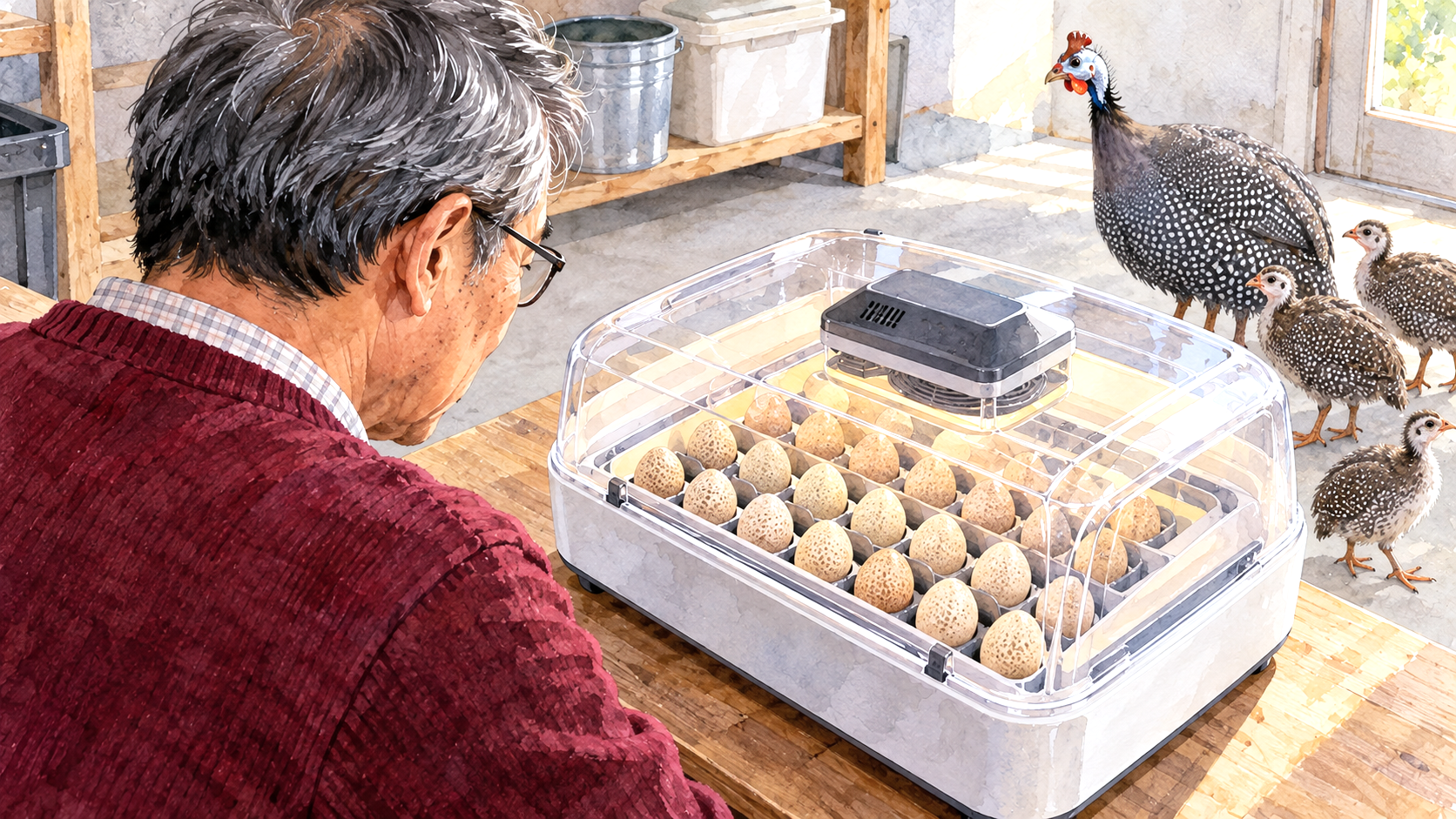
To incubate guinea fowl eggs, maintain a steady forced-air temperature of approximately 99.5–100°F (37.5–37.8°C), turn the eggs four to six times a day, and stop turning on day 25. Initial humidity around 55–60% is a common starting point, adjusted according to moisture loss, with approximately 65–70% for the final hatch. Guinea eggs generally hatch around day 28. The incubation settings for guinea fowl specify the importance of temperature, humidity, ventilation and turning.
Prepare and Test the Incubator
Choose an incubator with a dependable thermostat, vents, water reservoirs and enough room for the eggs. Clean it according to the manufacturer’s instructions and run it empty for at least 24 hours, using an independent thermometer and hygrometer. Forced-air models circulate heat; still-air models require approximately 102°F measured at the tops of the eggs, because still-air temperature varies by height. Place the machine away from sunlight and drafts and verify that its turner operates before use.
Select and Position Eggs
Choose clean, intact hatching eggs from healthy birds, rejecting cracked, leaking, badly misshapen and heavily soiled eggs. Appropriate collection and storage of hatching eggs protects embryo viability before incubation. Set the broad ends upward and the narrow ends downward in upright trays, or place eggs horizontally in a tray designed for that arrangement. Check that the tray fits the size and shape of guinea eggs and record the setting date.
Maintain Temperature, Humidity and Turning
Keep temperature stable rather than responding to brief drops whenever the lid opens. Sustained overheating can kill developing embryos, while low temperatures can delay hatch. Eggs gradually lose water through their shells, enlarging their air cells. The relationship between humidity and air-cell growth explains why a hygrometer percentage is a starting point rather than a guarantee. Adjust water surface area and observe air cells during candling; do not block vents to retain moisture.
Turn eggs at least four to six times daily or use a functioning automatic turner. Mark opposite sides lightly with pencil when turning manually. Move them gently, without shaking, and stop turning on day 25. Keep ventilation openings unobstructed throughout development, since the embryo consumes oxygen and releases carbon dioxide.
Candle the Eggs
Examine eggs with a focused LED candler in a dark room around days 7–10. Branching reddish blood vessels and a dark embryo indicate development. Pigmented guinea shells can be difficult to interpret; an uncertain result may be clearer around days 10–14. The difference between fertility and visible embryo development matters: an apparently clear egg may have been unfertilized or may have suffered very early loss. Keep inspections brief and carefully remove eggs that are leaking or foul-smelling.
Begin Lockdown on Day 25
On day 25, discontinue turning, place eggs securely on the hatching surface and increase humidity to approximately 65–70%. The day-25 lockdown process gives embryos time to position themselves for hatching. Avoid opening the incubator unnecessarily, but continue adequate ventilation. Keep eggs away from fans, moving parts and open water channels.
Allow Keets to Hatch and Dry
A developing keet may pip the shell and then rest for many hours before emerging. Do not pull the shell apart merely because progress looks slow; premature assistance can cause bleeding and injury. Leave newly hatched keets inside the warm machine until dry and alert, minimizing interruptions to eggs still hatching. Before transferring them, prepare appropriate warmth, secure footing, starter feed and shallow drinking water as part of early guinea keet care. After the hatch, clean and disinfect the incubator according to the manufacturer’s instructions.
Frequently Asked Questions
Can a chicken incubator hatch guinea eggs? Yes, if its temperature, humidity and turning controls can be adjusted for guinea eggs.
When do you stop turning? Day 25, as lockdown begins.
What humidity should I use? Approximately 55–60% initially, adjusted using moisture-loss observations, rising to about 65–70% for hatch.
When should eggs be candled? Around days 7–10, with a later check for uncertain eggs.
Should I open the incubator while eggs are pipping? Avoid unnecessary opening, which can disrupt temperature and humidity.