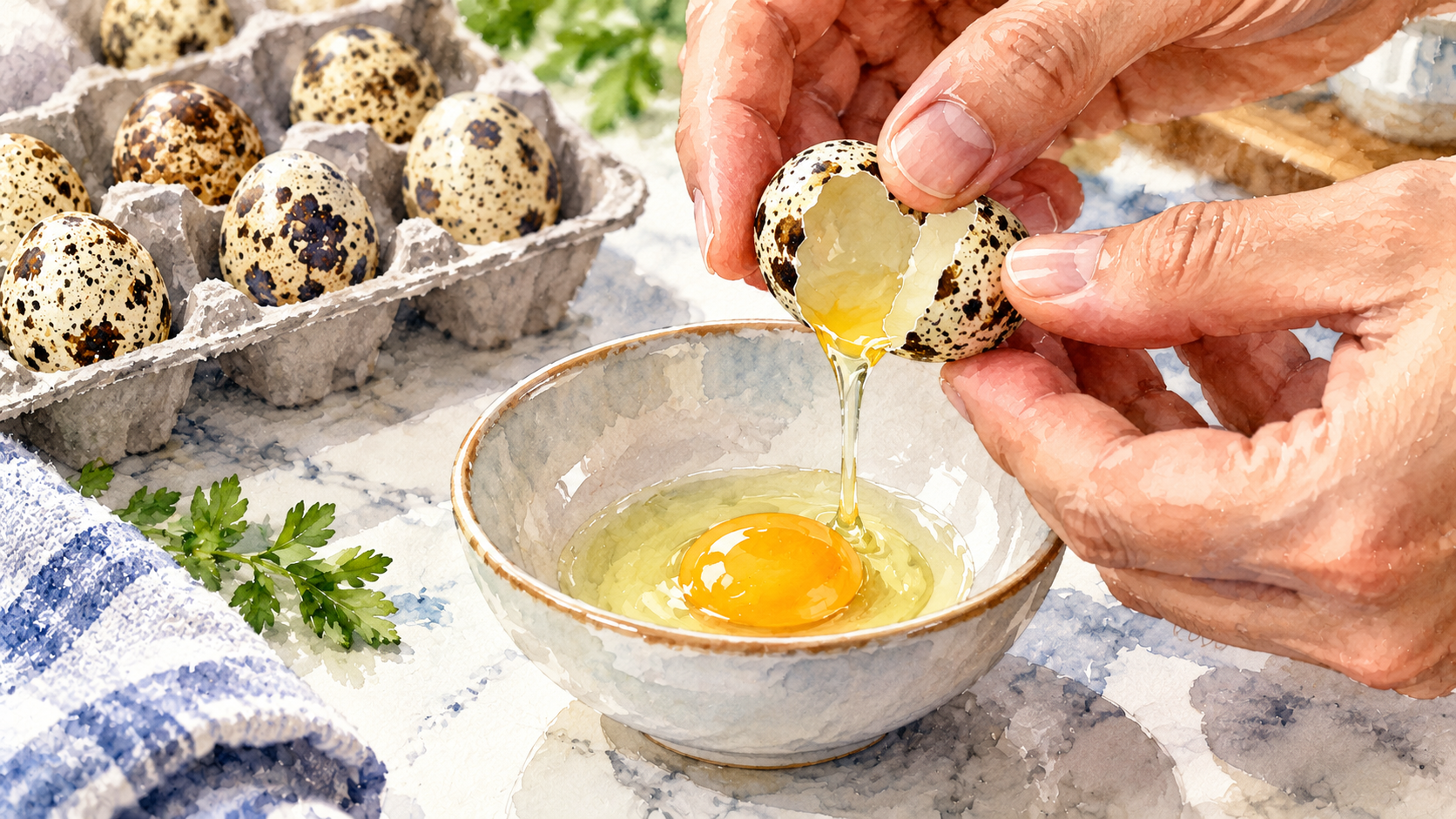
A quail egg may be bad if its shell is cracked or leaking, it gives off a rotten or otherwise unpleasant smell when opened, or its contents show unusual discoloration, mold, or obvious decomposition. But an egg can carry harmful bacteria even when it looks and smells normal. Its collection date, refrigeration history, and shell condition are therefore just as important as what you see after cracking it.
The familiar water float test can suggest that an egg has aged, but it cannot prove whether that egg is safe to eat. For home-raised Coturnix and other quail, it is safest to reject eggs with uncertain histories or clear signs of damage rather than depend on a single test.
The Signs That a Quail Egg Should Be Discarded
Look first at factors that make an egg unsuitable for household use without needing to open or test it.
Discard an egg if the shell is broken, leaking, moldy, or heavily contaminated with droppings; if it was exposed to unsafe temperatures for an unknown period; or if its collection date and storage history are unreliable. A pronounced rotten odor or an unusually pink, greenish, or otherwise decomposed appearance after opening also means it should not be used.
A clean, intact shell is a necessary starting point, but not a guarantee. Eggs can carry Salmonella even when they look normal, so the absence of these warning signs does not prove an egg is free of pathogens.
What Does a Bad Quail Egg Smell Like?
An egg that has undergone obvious microbial spoilage may give off a strong sulfurous, rotten, sour, or otherwise offensive odor when its shell is opened. If the smell is abnormal, discard the egg and clean anything the contents touched.
The USDA describes an unpleasant odor as a characteristic sign of a spoiled egg. Because quail eggs are small, their odor may be less noticeable before cracking than after the contents are exposed.
Do not taste suspicious egg contents to decide whether they are spoiled. Smelling an egg is also an imperfect screen: contamination with bacteria capable of causing foodborne illness may produce no detectable odor at all.
How Can You Check the Inside Without Contaminating Other Eggs?
If an egg has a reliable cold-storage history and an intact shell but you want to examine its contents, crack it into a separate, clean small bowl rather than directly into food containing other ingredients.
Look for an obviously abnormal color, signs of mold, or a pronounced offensive odor. Dispose of the egg if anything is suspicious, and wash the bowl and work surface afterward. Avoid putting the contents of questionable eggs back into a recipe.
Pink or iridescent egg white can indicate bacterial spoilage. A naturally cloudy white, by contrast, can occur in fresh eggs; a thinner white may reflect aging without establishing that a dangerous pathogen is present.
This inspection can reveal some types of deterioration, but it is not a laboratory safety test. An egg that passes it still needs appropriate handling and thorough cooking.
Does the Float Test Work for Quail Eggs?
The float test works on a physical principle, but it is often misunderstood. As an egg ages, gases and moisture pass through the shell, the internal air cell grows, and the egg becomes more buoyant. A quail egg may sink on its side when its air cell is small, stand more upright as it ages, or float when the air cell is large.
Floating indicates an enlarged air cell, not proof that an egg is rotten. Sinking does not prove that an egg is safe. The USDA explicitly notes that a floating egg may still be usable, while egg-handling guidance cautions that floating is not an accurate measure of edibility.
The test cannot detect Salmonella, confirm safe refrigeration, or account for contamination that entered through a damaged shell. A quail egg’s small size also makes changes in tilt less useful as a precise age scale. Do not use the float result to override a known temperature problem or questionable collection history.
What Does It Mean When a Quail Egg Sinks, Tilts, or Floats?
A sinking egg lying relatively flat is consistent with a smaller air cell. An egg that tilts or stands upright may be older. Floating suggests greater buoyancy and a more developed air cell. None of these positions establishes whether the edible contents contain harmful bacteria.
Some perfectly edible older eggs can float, and a recently laid egg could still be contaminated. For this reason, age-related buoyancy is not the same as food-safety testing.
If you already know an egg has been stored improperly, testing whether it sinks adds no meaningful reassurance. Follow the handling history and discard when safety cannot be established.
Can You Tell an Egg Is Bad From Its Shell?
Visible cracks, leaks, and mold are reasons to reject a quail egg. Microorganisms can enter through a damaged shell, and leakage can spread contamination to other eggs in a carton. Food-safety guidance advises against using eggs with cracked shells.
A heavily soiled egg is also a poor choice for household consumption. Dirt and droppings can carry bacteria even when the egg remains structurally intact. Cleaning a badly contaminated shell does not guarantee that its contents are safe.
The normal dark marks on many Coturnix eggs are pigment deposited during shell formation, not evidence of rot. The natural spotting of quail eggs should not be confused with raised mold growth, leaking material, or other surface contamination.
Do Watery Whites or a Flat Yolk Mean the Egg Has Gone Bad?
A white that spreads easily and a yolk that flattens can be signs of age-related quality loss. As eggs are stored, the internal structure changes even under refrigeration. These changes do not, by themselves, demonstrate dangerous spoilage.
Egg quality declines as albumen becomes thinner and the yolk membrane weakens. The extent of deterioration depends on temperature, elapsed time, and the egg’s starting condition.
However, a badly discolored white, mold, or offensive odor is different from an ordinary texture change and warrants disposal. Do not use the appearance of the white or yolk as the sole safety criterion.
How Does Egg Age Affect Whether It Is Safe?
The longer an egg is held, the more important its storage history becomes. Proper refrigeration slows deterioration and microbial growth, but it cannot reverse contamination that occurred before the egg was chilled.
For clean, intact shell eggs under consistent household refrigeration, a conservative guideline is about three to four weeks. The recommended shelf life of refrigerated quail eggs depends on the conditions under which they were collected and kept.
If the date is unknown, or eggs spent an uncertain period outdoors or unrefrigerated, do not use a float test, absence of odor, or normal shell appearance to declare them safe.
Can an Egg Look Fine but Still Make Someone Sick?
Yes. This is the central limitation of home spoilage checks. Salmonella may occur inside an egg with a clean, unbroken shell. Infected poultry and contaminated surroundings do not necessarily produce changes that can be seen or smelled in a particular egg.
For that reason, refrigerate shell eggs appropriately and cook them thoroughly, with both yolk and white firm. Federal food-safety guidance recommends discarding cracked eggs and fully cooking eggs, particularly when serving people more vulnerable to serious illness.
The basic precautions for eating quail eggs apply even to eggs that appear fresh and sound.
When Should You Discard Eggs After a Refrigerator Problem?
A power outage, failed refrigerator, or prolonged period on a warm counter makes storage history more important than visible appearance. Previously refrigerated eggs should not be treated as safe merely because they still sink in water.
Health Canada advises discarding eggs left at room temperature for more than two hours. Conditions hotter than ordinary room temperature can increase the risk further. If you cannot establish that the eggs remained adequately chilled, discard them rather than relying on a home test.
The safe handling and refrigeration of collected quail eggs is the foundation of judging whether a batch remains suitable for food.
Does a Blood Spot Mean a Quail Egg Is Rotten?
A tiny blood spot can occur during normal egg formation. On its own, it does not establish bacterial spoilage or mean an embryo is developing. The USDA distinguishes ordinary blood spots from signs of spoilage.
That does not mean every reddish or unusual-looking egg interior is normal. Extensive discoloration, an unusual smell, or an egg whose handling history cannot be trusted should lead to disposal. If a flock repeatedly produces unusual eggs, assess the hens’ overall condition rather than judging health from one isolated spot.
The health indicators of adult quail are relevant when abnormalities recur, but identifying specific poultry diseases is separate from determining whether an egg should be eaten.
A Practical Decision Before Using a Quail Egg
Start with what is known, rather than trying every household test.
1. Check the history. Is the collection or purchase date known, and were the eggs kept adequately refrigerated?
2. Examine the shell. Reject eggs with cracks, leaks, mold, or heavy fecal contamination.
3. Do not rely on floating. Buoyancy provides limited clues about age, not evidence of microbial safety.
4. Open intact eggs separately if needed. Reject any with a rotten smell or clearly abnormal contents.
5. Cook acceptable eggs thoroughly. A normal appearance does not remove the need for proper cooking.
The egg laying locations used in captive quail can influence exposure to dirt, but no nest site makes an egg automatically safe. If you are unsure about a particular egg, discarding it is safer than trying to prove it is edible using unreliable signs.
Common Questions About Suspect Quail Eggs
Is a floating quail egg always rotten? No. Floating usually means its air cell has enlarged, which may indicate age or declining quality. It does not establish whether the egg is microbiologically safe.
Can a fresh-looking quail egg contain Salmonella? Yes. Bacteria can be present without visible changes, an unusual smell, or a floating result.
Should I eat a quail egg with a hairline crack? No. Reject eggs found cracked during collection or inspection because a damaged shell provides a route for contamination.
Does a cloudy egg white mean the quail egg is bad? Not necessarily. Naturally cloudy egg white can be associated with freshness. Offensive odor, abnormal colors, and unsafe handling history are more significant concerns.