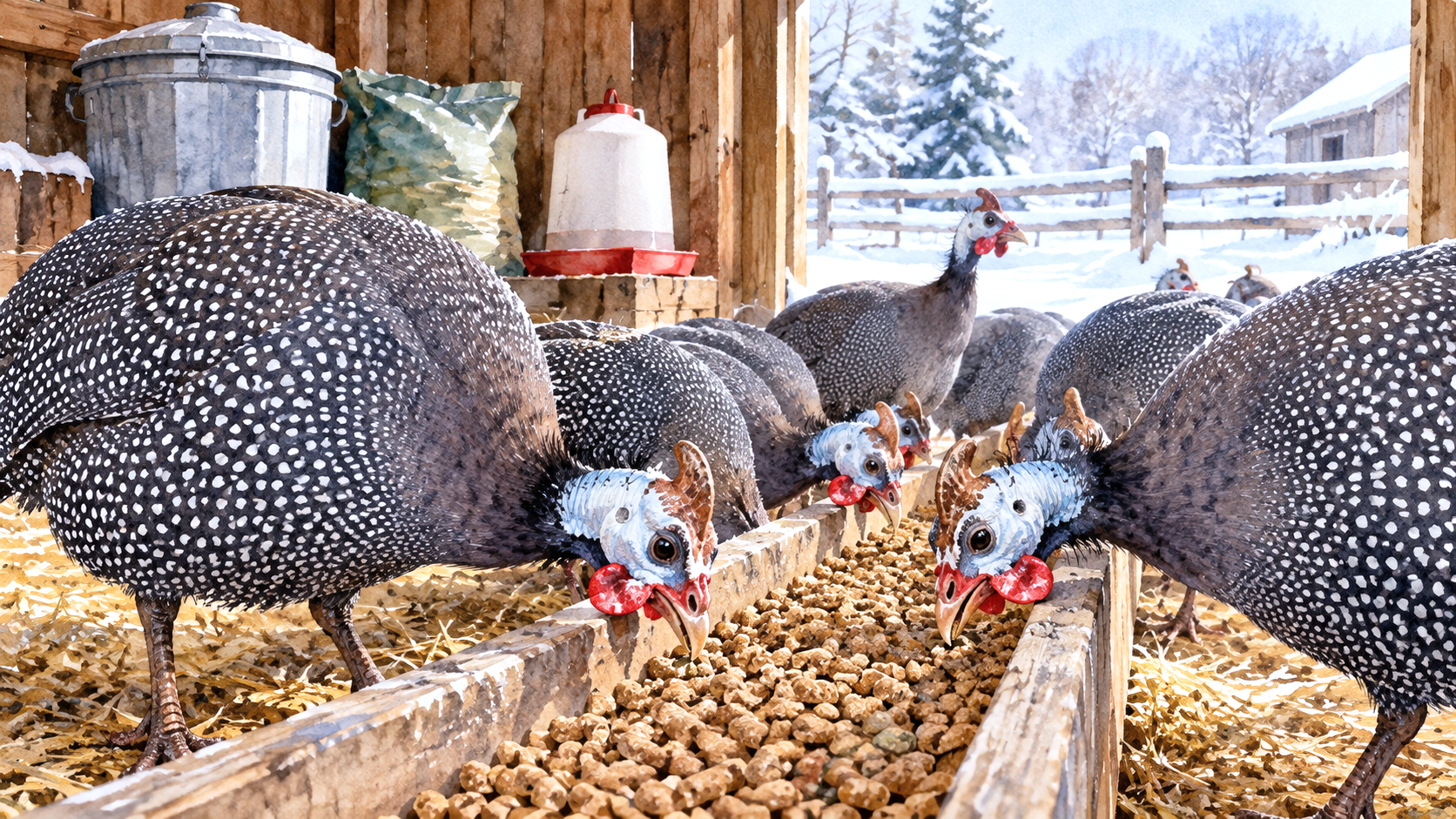
Winter changes how guinea fowl obtain food. Insects become scarce, vegetation stops growing in many regions, and snow or frozen ground can prevent birds from reaching seeds and other natural foods. Guinea fowl that forage successfully throughout summer may become almost entirely dependent on supplied feed once these conditions develop.
Adult guinea fowl should receive a complete, nutritionally balanced poultry ration throughout winter, with enough feed available to compensate for reduced foraging and potentially increased energy demands during cold weather. Their usual commercial ration often remains suitable, although the quantity consumed may increase as temperatures fall.
Why Guinea Fowl Need More Reliable Feeding in Winter
During warmer months, free-ranging guinea fowl spend considerable time eating insects, seeds, and vegetation. Winter removes many of these opportunities, especially in regions experiencing prolonged snow cover or frozen soil. Even where the ground remains accessible, dormant vegetation and lower insect activity can substantially reduce the amount of food available.
The natural foraging behavior of guinea fowl allows them to obtain much of their food independently when environmental conditions are favorable. That ability becomes less dependable during winter, making regular supplemental feeding essential for birds that previously relied heavily on pasture.
Keepers should not assume that guinea fowl are obtaining adequate food simply because they continue walking around outdoors. Their usual diet of insects, seeds, and vegetation becomes less accessible as seasonal conditions change, and the amount of commercial feed required may rise considerably.
Should You Increase Their Feed During Cold Weather?
Guinea fowl expend energy maintaining their body temperature, and colder environments can increase the amount of dietary energy needed to support normal physiological functions. The additional requirement depends on temperature, activity, body condition, feather coverage, and the protection available to the birds.
Research into poultry responses to lower environmental temperatures demonstrates that temperature can affect feed consumption and dietary energy utilization. However, figures established for commercial chickens should not be treated as exact intake requirements for guinea fowl.
Rather than automatically increasing each bird’s ration by a fixed percentage, observe how much feed the flock consumes. Birds finishing their normal allowance rapidly, losing body condition, or repeatedly searching empty feeders may need more food. Healthy adults with continuous access to a complete ration can often adjust their intake according to changing demands.
A decline in body weight despite adequate feeding deserves attention because illness, parasites, competition, and other problems can also influence condition. The physiological effects of cold exposure on guinea fowl cannot be addressed through additional feed alone when environmental conditions are unsafe.
Do Guinea Fowl Need a Different Feed in Winter?
Most healthy adult guinea fowl do not require an entirely different commercial ration solely because winter has arrived. A complete feed appropriate to their age and reproductive condition can remain the foundation of their diet throughout the year.
The important adjustment is often availability rather than formulation. A flock that previously consumed relatively little purchased feed may need considerably more once natural food sources disappear. Maintaining the appropriate nutritional balance for adult guinea fowl is preferable to replacing their regular ration with large quantities of grain.
Protein, essential amino acids, vitamins, and minerals remain necessary during winter. Feed should be appropriate to the birds’ actual condition rather than chosen solely for its calorie content. Research on guinea fowl nutrition and production requirements supports the importance of providing a balanced ration instead of relying entirely on scavenged foods or supplementary grains.
Laying activity may also change seasonally. Guinea hens that stop producing eggs generally do not need the same calcium intake as actively laying females. Their nutritional program should reflect reproductive status rather than automatically continuing a high-calcium laying ration throughout winter.
Should You Give Guinea Fowl Corn or Scratch Grains to Keep Them Warm?
Corn, wheat, millet, and other grains supply dietary energy and may be offered occasionally, but scratch grain should not replace complete poultry feed during winter. Grain mixtures generally lack the balanced protein, amino acids, vitamins, and minerals required for long-term maintenance.
A small amount of scratch scattered through a clean feeding area can encourage activity when birds have fewer opportunities to forage. It should remain a minor addition to their daily intake rather than becoming the main winter meal.
The nutritional limitations of scratch grains are relevant to poultry generally, although exact portions and energy requirements vary by species. Feeding large quantities of corn simply to make guinea fowl warmer is not a substitute for an adequate environment or a balanced ration.
There is also no reliable guinea-fowl-specific evidence establishing that feeding corn immediately before bedtime provides meaningful protection against severe cold. Normal digestion generates metabolic heat, but all suitable dietary energy sources contribute to maintaining body temperature.
Make Feed Accessible During Snow and Freezing Conditions
Snow and ice can interfere with feeding even when sufficient food has been provided. Guinea fowl may hesitate to cross deep snow, while exposed feeding stations can become buried, wet, or difficult to reach.
Position feeders inside a protected building or beneath a suitable roof, with enough room for the flock to approach without crowding. If birds normally eat outdoors, establish an alternative feeding location before severe weather arrives. The winter housing arrangements used for guinea fowl should allow feeding without forcing birds to stand in snowdrifts or exposed wind.
Feed placed directly on frozen ground is more easily contaminated or lost beneath fresh snowfall. Covered, stable feeders help keep the ration dry and reduce waste. Outdoor equipment should also be inspected for ice around its openings, since feed can remain trapped inside a container that appears full.
Continuous access is generally preferable when birds remain confined for extended periods. The frequency of feeding guinea fowl may therefore need adjustment when their usual outdoor activity becomes restricted.
Prevent Winter Feed From Becoming Damp or Spoiled
Cold temperatures do not guarantee that stored feed will remain fresh. Condensation can develop when containers experience repeated temperature changes, while melting snow, roof leaks, and damp flooring may introduce moisture into feed bags.
Store commercial rations in clean, closed containers protected from rodents and wildlife. Keep bags off damp floors, check for clumping or unusual odors, and discard feed showing visible mold. Protecting poultry feed from contamination also reduces opportunities for wild birds and rodents to introduce disease.
Winter feeding stations may attract wildlife when other food sources become scarce. Remove spills, avoid leaving exposed grain overnight, and inspect storage containers for chewing damage.
A predictable coop cleaning and maintenance routine helps keep feeding areas free of manure, damp bedding, and spoiled leftovers.
Watch for Unequal Feeding Within the Flock
Winter confinement can change flock interactions, particularly when birds that normally spread across a large area must share a smaller feeding space. Dominant guinea fowl may occupy preferred positions around a feeder and prevent quieter individuals from eating comfortably.
Provide additional feeding stations when competition occurs, keeping them far enough apart that one bird cannot easily control access to every location. Observe the flock during meals rather than assuming every bird eats because feed disappears from the container.
Birds that become unusually thin, inactive, or reluctant to approach food require closer evaluation. Reduced appetite, weight loss, or weakness may indicate illness rather than a problem with feeding frequency. Persistent symptoms warrant assessment by a poultry-experienced veterinarian.
Questions About Feeding Guinea Fowl in Winter
Can guinea fowl survive on natural forage during winter?
Some birds in mild climates continue finding insects, seeds, and vegetation throughout winter, but availability varies considerably. A dependable commercial ration is necessary whenever natural food cannot reliably meet their nutritional needs.
Should guinea fowl receive extra protein in winter?
Not automatically. Their protein requirements depend primarily on age, development, reproductive status, and general condition. Cold weather may increase energy needs without creating a corresponding requirement for a much higher-protein feed.
Can guinea fowl eat fresh greens during winter?
Yes. Small amounts of clean, suitable leafy greens can provide variety when natural vegetation is unavailable. They should remain supplementary rather than displacing the complete ration. The safe treats offered to guinea fowl should always be limited to appropriate portions.
Should you feed guinea fowl before a winter storm?
Ensure feeders are stocked and accessible before severe weather restricts normal routines. Maintain adequate feed reserves in case roads become impassable or deliveries are delayed, rather than offering one unusually large meal.
Do guinea fowl still need grit when the ground is frozen?
Guinea fowl consuming whole grains or fibrous foods may need access to appropriately sized insoluble grit when frozen ground prevents them from finding small stones naturally. Grit helps the gizzard grind food but does not replace dietary nutrients.