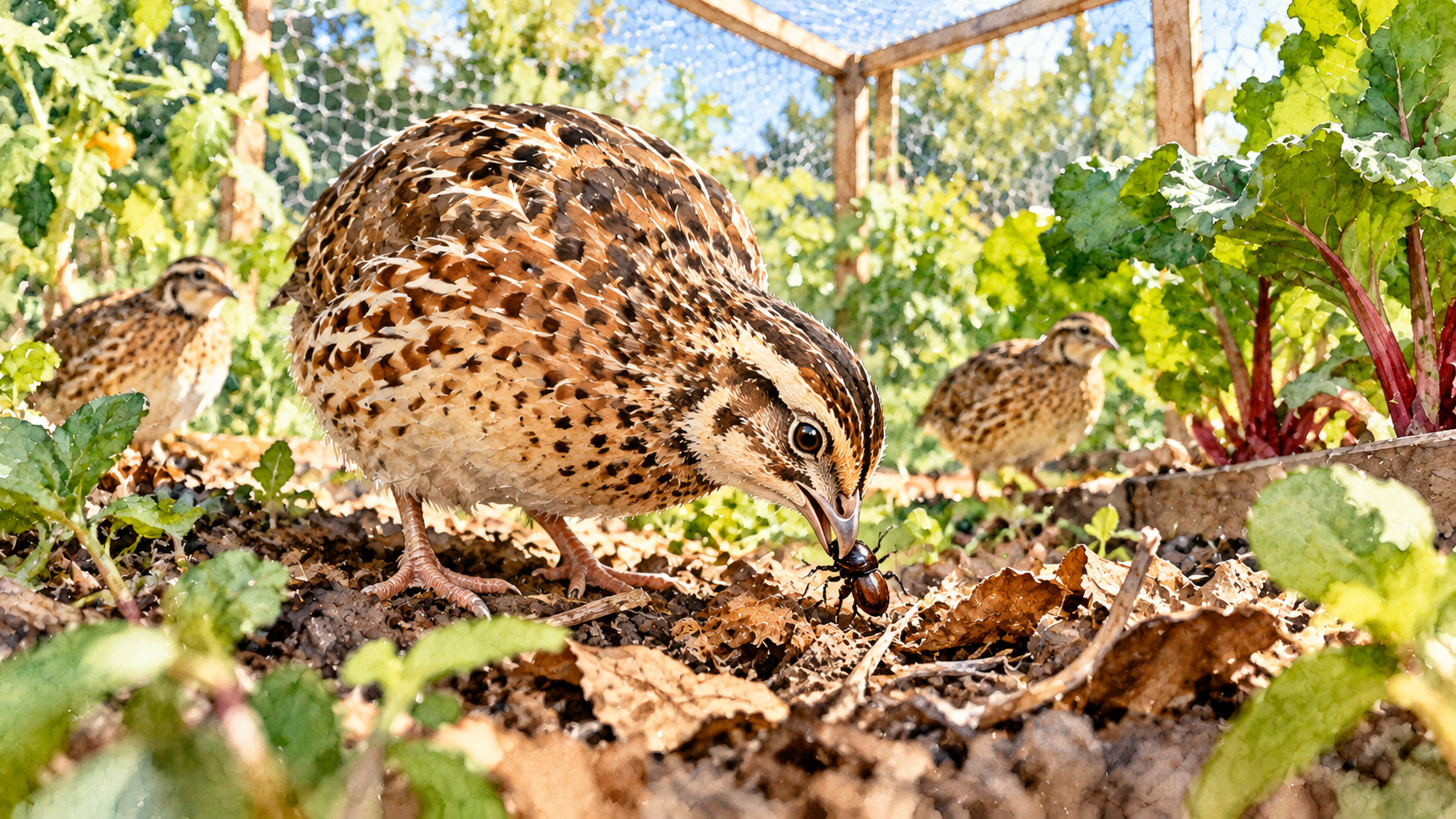
Quail eat many insects and other small invertebrates, including grasshoppers, crickets, beetles, caterpillars, ants, and spiders. Birds allowed to forage in suitable outdoor enclosures may find these prey animals among grasses, loose soil, and low vegetation. Eating them is normal behavior for many quail species, although the insects available—and the birds’ interest in them—vary with age, weather, and habitat.
That does not make farm-raised quail dependable garden pest controllers. They consume only the prey they can find and catch, cannot distinguish a crop pest from a beneficial insect, and may disturb seedlings or vegetation while searching. Their contribution is best regarded as opportunistic foraging rather than a guaranteed reduction in insect damage.
Which Insects Do Quail Commonly Eat?
Field observations and diet studies document a broad range of prey, especially ground-accessible arthropods. Texas A&M’s northern bobwhite account identifies grasshoppers, beetles, crickets, ants, termites, and spiders. Scaled quail also consume insects, while different captive species may investigate the same kinds of prey without selecting them in identical proportions.
The prey most likely to be eaten in a farm pen are those that move through the birds’ usual foraging area: small beetles on the ground, crickets in plant litter, caterpillars within reach, and ants on exposed surfaces. Their small beaks impose practical size limits, particularly for button quail and young chicks. Insect consumption can be substantial under favorable conditions, but a list of recorded prey is not proof that every individual quail will eat every insect it encounters.
Will Quail Eat Grasshoppers, Crickets, and Caterpillars?
Grasshoppers and crickets are familiar prey for quail because they are often encountered close to the ground. Caterpillars and other insect larvae may also be taken when accessible on low plants or soil. The US Forest Service’s review of northern bobwhite ecology includes grasshoppers, crickets, moth and butterfly larvae, and numerous other insect groups in documented diets.
A bird may chase a moving cricket enthusiastically yet ignore a caterpillar hidden high in a plant canopy. Foraging success depends on visibility, insect movement, prey size, vegetation density, and whether the quail feels safe enough to feed in that spot. Large, defensive, or unfamiliar insects are not automatically suitable prey.
Do Quail Eat Beetles, Ants, and Other Ground Insects?
Beetles are well documented in quail diets, and ants and termites are among the many small insects consumed by some species. North Carolina State Extension’s bobwhite account lists beetles, crickets, spiders, grasshoppers, and caterpillars among common animal foods. Small ground insects are available where open soil, grass edges, and plant litter intersect.
Not all beetles are pests. Ground beetles and lady beetles can help suppress unwanted insects, so quail eating them is not necessarily beneficial for a garden. The birds forage for food rather than selecting prey according to human pest-control goals. An enclosure containing many insects may offer enrichment while still providing no measurable improvement in crop health.
Can Quail Eat Slugs, Snails, Spiders, and Worms?
Some quail consume spiders, snails, slugs, and other small invertebrates. The US Forest Service’s bobwhite species review records spiders and mollusks in the diet, although their importance varies by habitat. Small earthworms may be investigated by foraging birds, but their appearance in a pen does not guarantee consumption.
These animals vary in size and may carry environmental hazards. Slugs and snails can act as intermediate hosts for parasites, and invertebrates from contaminated areas may be exposed to chemicals. Captive quail should not be deliberately encouraged to consume unknown prey from polluted ground simply to clear the enclosure.
Will Quail Eat Aphids, Ticks, or Mosquitoes?
Quail may consume some small plant-dwelling insects and other arthropods, but their ability to affect aphids, ticks, or mosquitoes should not be overstated. Aphids often cluster high on leaf undersides, adult mosquitoes fly beyond normal ground-foraging reach, and ticks may be difficult to locate. Even where a quail eats an individual specimen, that does not establish effective population control.
The Texas A&M discussion of quail arthropod diets documents broad prey groups, including true bugs and spiders, rather than demonstrating reliable suppression of particular garden pests. Claims that quail will eliminate ticks or mosquitoes from a property require evidence that ordinary feeding observations do not provide.
Are Insects Especially Important to Young Quail?
Insects are particularly valuable in the natural diet of many young quail because they provide protein and other nutrients needed during rapid development. The Alabama Cooperative Extension bobwhite management guidance describes chicks feeding almost entirely on insects during the first two to three weeks in the wild. This is a species-specific example of a broader ecological pattern, not a feeding formula for all chicks in captivity.
A newly hatched farm chick should nevertheless not be expected to obtain a dependable diet by catching insects in a brooder or pen. The needs of baby quail during early growth differ from the incidental insect hunting that occurs outdoors. Suitable prey must also be small enough to swallow without difficulty.
Does Insect Foraging Change With the Season?
Many quail encounter more active insects during warm months, especially where ground vegetation supports beetles, grasshoppers, and larvae. Rainfall, temperature, plant growth, and insect life cycles influence opportunities to forage. Cold weather, drought, or heavily managed bare ground can reduce the number of accessible prey.
Mississippi State Extension’s discussion of native vegetation and bobwhite chicks connects insect abundance with flowering broadleaf plants and developing broods. Seasonal opportunity is not a predictable pest-control schedule: a quail may eat numerous insects during one part of the year and far fewer when those insects are scarce or inaccessible.
Can Farm Quail Reduce Garden Pest Numbers?
They may remove some insects as they forage, particularly ground-active prey encountered repeatedly inside their enclosure. Whether this reduces damage to vegetables or other crops is a separate question. A quail could eat beetles near the ground while missing caterpillars higher on leaves, aphid colonies under foliage, or insects outside the area it can reach.
The Washington State University Extension account of quail in gardens describes insects being consumed alongside occasional damage to tender plants. This captures the tradeoff: quail can participate in garden food webs without functioning as precise biological-control agents. Their presence should not be counted on to prevent an infestation or replace monitoring of crop damage.
Why Aren’t Quail Reliable Pest-Control Animals?
Quail select prey based on access, movement, size, and preference—not on which insects are economically damaging. Many garden pests live high on plants, beneath leaves, inside stems, or underground, beyond the birds’ effective reach. They also eat neutral and beneficial species. Even a substantial amount of foraging may therefore have little effect on the pest that concerns a gardener most.
Bird movements create another limitation. Quail tend to forage where they feel sheltered and where vegetation allows walking, rather than systematically patrolling every garden bed. Alabama’s quail habitat guidance explains how dense vegetation can restrict access to ground-level foods. A pen that is accessible for birds may cover only a small fraction of the places insects breed or feed.
Can Quail Damage a Garden While Hunting Insects?
Yes. Quail can peck at seedlings, tender shoots, fallen fruit, and seeds while looking for insects. They may scratch loose soil, scatter mulch, or disturb very young plants. These behaviors are not necessarily severe, but they matter in a densely planted vegetable bed or seed-starting area.
The practical limits of free-ranging farm quail include loss, predation, and containment concerns, in addition to garden disturbance. Allowing access to crops solely to obtain insect reduction can expose birds to risks without providing dependable crop protection.
Is It Safe for Quail to Eat Insects From Sprayed Gardens?
Do not deliberately place quail in recently treated areas or collect insects from places where pesticides may be present. Insects, vegetation, soil, and puddles can carry residues that are invisible. A product permitted for use on a particular crop is not automatically safe for birds to encounter or ingest.
Follow pesticide labels and applicable restrictions, and keep quail away from treated surfaces until safety for the birds can be established. EPA guidance on pesticide labeling explains the legal importance of labeled directions and precautions. The hazards of contaminated foods and unsafe exposures for quail also apply to foraged insects. If exposure is suspected and a bird becomes unwell, contact an avian veterinarian.
How Can You Let Quail Forage Without Depending on Them for Pest Control?
Provide a secure enclosure with some accessible natural ground and vegetation appropriate to the birds, while maintaining their established feeding arrangement. Observe whether they investigate insects, avoid crowded spots, and remain protected from predators. Small, clean prey items encountered naturally can enrich activity without becoming the flock’s sole food source.
A well-planned outdoor quail pen can support normal pecking and exploration. If additional invertebrates are offered as occasional food, keep the limits on quail treats in mind. Treat foraging as one aspect of husbandry, not a measured pest-suppression service.
Common Questions About Quail Eating Garden Insects
Do quail eat grasshoppers and crickets? Yes. Both are documented prey for several quail species, particularly when the insects are small and reachable on the ground.
Will quail get rid of ticks or mosquitoes? There is no sound basis for promising that farm quail will eliminate either pest. Individual arthropods may be eaten, but access and population effects are uncertain.
Can quail eat caterpillars and beetles? They often do, but prey size and chemical exposure matter. Some beetles are beneficial predators, so their consumption does not automatically help crops.
Can quail replace garden pest management? No. Incidental foraging cannot reliably target all pests or protect every plant, and the birds may disturb garden vegetation themselves.
One thought on “Can Quail Eat Insects and Garden Pests?”