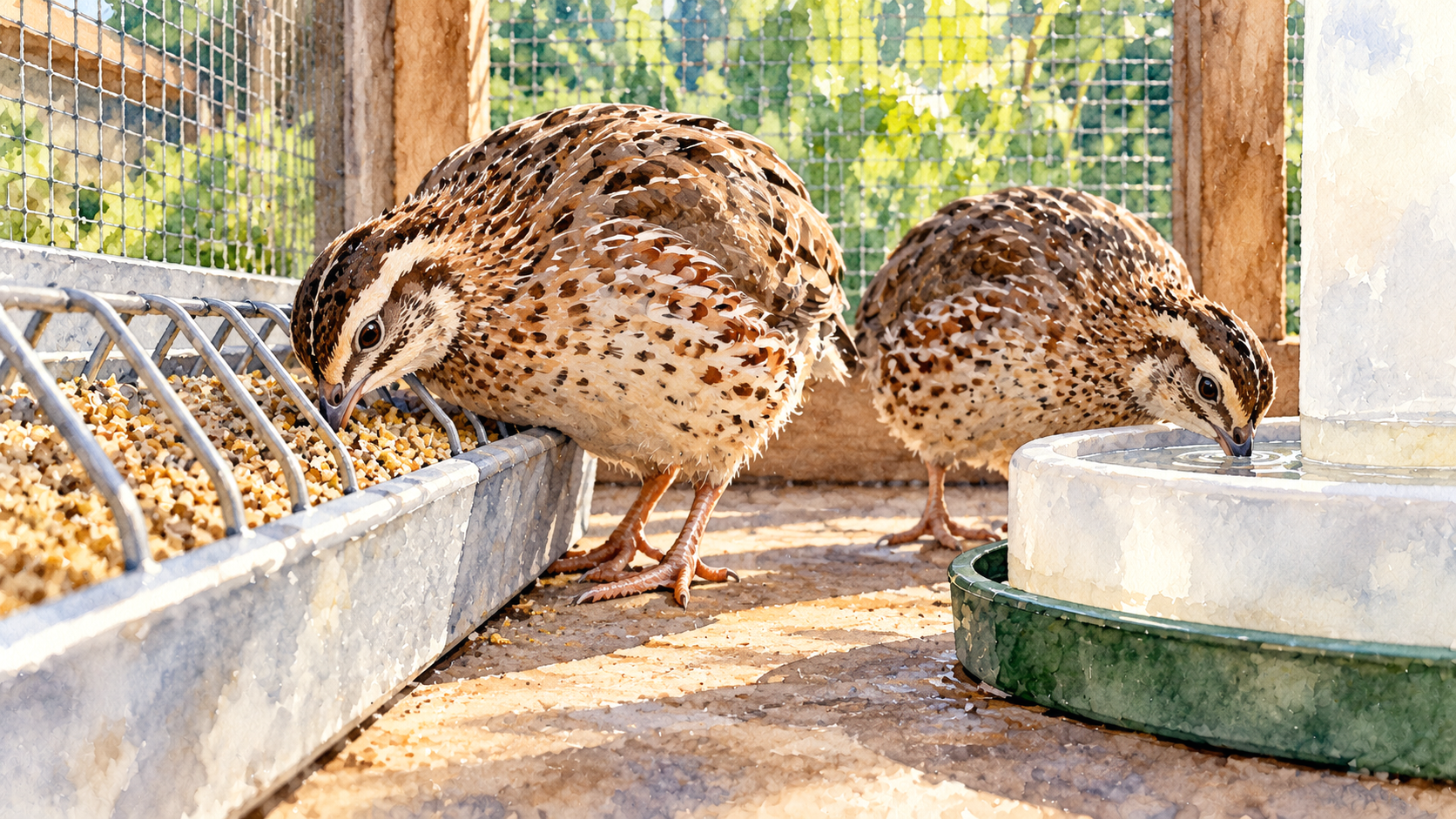
Setting up quail feeders and waterers is not simply a matter of placing two containers inside a pen. Domestic Coturnix feed and drink close to the ground, scatter loose material while pecking, and may startle suddenly. Equipment that is oversized, unstable, difficult to reach, or poorly positioned can waste feed and leave flooring wet.
A reliable setup keeps food and water within easy reach of every bird while preventing tipping, contamination, and unnecessary spillage. The correct arrangement depends on whether the birds are newly hatched chicks or adults, and whether they live in a floor pen, cage, or outdoor enclosure.
Choose Feeder Styles That Suit Coturnix
A low trough with a protective grille, a covered gravity feeder, or a properly designed external-access feeder can all serve adult Coturnix. The important features are a reachable feeding opening, a stable container, smooth edges, and a design that discourages birds from stepping into the food. Large chicken feeders are not automatically suitable for smaller quail.
Covered or partitioned openings usually waste less feed than a broad open dish because quail cannot easily rake large amounts out with their beaks or feet. However, a narrow opening that excludes smaller flock members is counterproductive. Small-scale poultry equipment guidance emphasizes stability, correct height, easy cleaning, and lips that reduce feed loss.
Choose materials that tolerate repeated washing and inspect for cracks or sharp edges. The general needs of a new Coturnix flock should guide whether a simple movable unit or a securely mounted system makes more sense.
Compare Common Waterer Types
Adult quail can drink from suitable shallow gravity waterers, cup systems, and nipple drinkers, but they need access to a design they understand. Open dishes are simple to inspect yet collect litter and droppings quickly. Nipple systems can reduce standing water when correctly positioned, though a blocked nipple or lost water supply may be less obvious.
| Equipment | Main advantage | Watch for |
|---|---|---|
| Covered trough feeder | Multiple feeding openings | Birds pulling feed through wide slots |
| Gravity feeder with restricted ports | Less frequent refilling | Bridging or feed trapped inside |
| Shallow gravity waterer | Visible water and simple operation | Contamination, tipping, chick drowning risk |
| Drinking cups | Localized drinking points | Stuck mechanisms and debris |
| Nipple drinkers | Little exposed water | Bird familiarity, flow and mounting height |
Poultry water-equipment guidance favors systems that minimize spillage and calls for frequent inspection of automatic devices. Chicken-specific equipment quotas should not be copied blindly for quail; judge the flock’s access and the manufacturer’s recommendations.
Position Feeders Where Birds Can Eat Comfortably
Set the feeding lip roughly around the adults’ back height as a starting point, then watch their posture. The birds should reach food without climbing onto the feeder, stretching awkwardly, or plunging their heads so deeply that they spill the contents. Chicks need equipment much lower and specifically sized for them.
Penn State’s small-flock housing advice uses back height for feeder and conventional waterer lips as a practical way to reduce soiling and waste. Its instructions for nipple drinkers differ: the drinking point should be above eye level so birds reach upward. Adjust according to the actual quail and device rather than treating one measurement as absolute.
Use stable, level footing and leave enough room around the feeder for birds to approach without crowding. A suitable usable floor area should remain available after equipment is installed.
Place Waterers Away From Bedding and Feed Spills
Put drinkers where quail can find them easily but where drips will not soak the main resting area. A firm, level support keeps gravity waterers from tipping. Position feeding equipment far enough away that an overturned waterer cannot immediately wet and spoil the ration.
Keep the drinking point accessible from the ground. A tray or protected splash-management area may limit localized wetness if it does not trap feet, create slippery footing, or become a reservoir of dirty standing water. The water-equipment placement guidance for poultry recommends maintaining accessible height and reducing humidity from spills.
Outdoor equipment needs protection from rain and wildlife access; seasonal temperature extremes can also disrupt drinker function. The covered activity and sheltered service areas of an outdoor pen help determine sensible positioning.
Reduce Feed Waste Without Restricting Access
Quail may flick food from open trays or step into low containers, especially when a feeding area is crowded. A narrow lip, protective grille, or restricted feeding port often helps, provided birds can reach the food normally. Fill containers according to their design rather than heaping feed above the rim.
Check whether pellets or crumbles are becoming lodged in the dispenser. A full hopper can still deliver little food if a bridge forms above the port. The FAO’s feeder design principles stress correct depth, stability, and barriers that prevent birds from scraping food onto the floor.
Waste reduction is not a reason to force all birds to share one small opening. The size and social makeup of the flock influence how many simultaneous feeding opportunities are needed.
Provide Enough Separate Access Points
A feeder or drinker may work perfectly yet still be unsuitable if dominant birds monopolize it. Watch the flock at busy periods: smaller or subordinate individuals should be able to reach equipment without constant displacement.
Distributing feeding or drinking points can limit congestion and provide some backup when equipment fails. Small-scale poultry management recommendations note that social ranking influences access to essential resources and advise separating stations for larger groups.
Do not assume every bird is drinking because the reservoir is filled. Observe actual use, particularly after moving birds or replacing a familiar waterer with a different mechanism.
Set Up Feeders and Waterers Differently for Chicks
Newly hatched Coturnix need equipment they can reach without climbing. Feeding trays or small chick feeders should expose suitable feed without creating spaces where tiny birds can become wedged or trapped. Adult-size feeder guards may be too widely spaced for chicks.
Water is the greater immediate safety concern. Very young quail can drown in surprisingly shallow open water. University of Kentucky quail-rearing guidance recommends chick-appropriate waterers, screens, or clean smooth marbles in exposed trays during the earliest period. Penn State’s bobwhite production guidance offers similar precautions. These sources focus on bobwhite chicks, but the hazard is relevant to tiny Coturnix hatchlings too.
Use clean, securely fitted anti-drowning components that do not introduce choking, trapping, or contamination hazards. Test the station before chicks enter, watch them drink, and confirm the floor stays dry. A properly prepared chick brooder must include accessible, age-appropriate feeding and drinking equipment from the start.
Help Birds Adjust to New Water Equipment
Quail accustomed to an open drinker may not immediately understand nipples or drinking cups. A sudden switch can lead to inadequate water intake even if the new equipment is functioning correctly. Observe individual birds using the outlets rather than assuming the system is self-explanatory.
When changing systems, keep a familiar safe drinking option available temporarily until the flock demonstrably uses the replacement. Check every outlet by hand according to manufacturer instructions, especially after installation or repairs. Commercial poultry care standards emphasize verifying water function and making adjustments when birds are unfamiliar with new devices.
Monitor the birds’ behavior over the following day. A thirsty or unusually weak bird needs prompt attention, and the signs of an unwell quail should not be dismissed as ordinary adaptation to equipment.
Make Refilling and Cleaning Easy
Equipment should be serviceable without chasing the flock or leaving doors open for long periods. Containers with removable lids, accessible interiors, smooth surfaces, and minimal inaccessible seams are easier to inspect for residue and blockages.
Check drinkers for film, debris, or leakage; clear spoiled or damp feed from ports. USDA biosecurity recommendations distinguish physical washing from disinfection, stressing that organic debris must be removed first. The complete quail housing sanitation routine also applies to contaminated detachable equipment.
A system that saves a few minutes at refill time but cannot be inspected properly may cause more problems than a straightforward manually serviced unit.
Keep Feed and Water Protected From Wildlife
Position stations inside a secured enclosure or otherwise shield them from outside animals. Feed spills around the perimeter can attract rodents and wild birds, while uncovered drinkers may become contaminated by droppings.
The USDA’s wildlife-exclusion guidance recommends securing feed, repairing leaks, and removing attractants. This matters even when no animal is seen eating: contamination can occur without an obvious attack.
For outdoor housing, protecting feeding stations complements the physical security of quail enclosures. External-access hoppers still need covers and attachments that cannot be manipulated by wildlife.
Check the Setup After Installation
Before relying on the equipment, make sure the containers are stable, lids remain closed, feed reaches every port, and clean water flows from every outlet. Inspect the floor for drips or scattered food after birds have used the stations.
Watch both confident and timid birds approach. Adjust height or location if they stretch, climb, compete excessively, or avoid a particular point. Recheck after birds grow, equipment is moved, or weather changes; the principle of readjusting feeder and drinker height as poultry grow remains useful for domestic Coturnix.
The best arrangement is not necessarily the most automated. It is the one the birds can use reliably and the keeper can inspect without difficulty.
Common Questions About Quail Feeders and Waterers
Can quail use chicken feeders? Sometimes, but large openings or high lips may waste feed or prevent Coturnix from reaching it comfortably. Check the actual fit.
Are nipple waterers suitable for adult Coturnix? Yes, when installed at the correct height, kept functional, and introduced so the birds learn to use them.
What waterer is safest for quail chicks? A purpose-made shallow chick system with appropriate anti-drowning protection is preferable to an exposed deep dish.
Should feeders and waterers stand next to each other? They can be in the same accessible area, but separate them enough that leaking or tipped water cannot soak the feed.
8 thoughts on “How to Set Up Quail Feeders and Waterers”